How to Hold Two Dumbbells in One Hand
Holding two dumbbells in one hand is a powerful technique that builds grip strength, forearm size, and overall arm stability. This guide breaks down the proper grip, common mistakes, and step-by-step instructions so you can train safely and effectively. Whether you are a beginner or a seasoned lifter, you will find actionable tips to level up your dumbbell workouts.
If you have ever tried to curl or press two dumbbells with a single hand, you know it is no easy feat. The how to hold two dumbbells in one hand technique is an advanced move that challenges your grip, builds massive forearm strength, and takes your arm workouts to the next level. It is not just about grabbing two weights and squeezing. There is a real method behind it that keeps your wrists safe and your gains coming.
In this guide, we walk you through everything you need to know. From the correct finger placement to the best exercises that use this hold, you will get a complete picture. We also cover mistakes to avoid and tips from experienced lifters. By the end, you will feel confident trying this technique in your next session.
Key Takeaways
- Proper grip matters: The way you hold two dumbbells in one hand affects your results and injury risk.
- Start light: Always begin with lighter weights before progressing to heavier dumbbells.
- Grip strength is key: This technique builds serious forearm and hand strength over time.
- Avoid common mistakes: Wrist hyperextension and poor finger placement are the top errors to watch for.
- Use it in real workouts: This hold works great for curls, presses, and carries.
- Recovery is important: Give your grip and forearms time to rest between sessions.
📑 Table of Contents
Why Hold Two Dumbbells in One Hand?
You might wonder why anyone would hold two dumbbells in a single hand. The answer is simple. This technique doubles the resistance your muscles must handle. It forces your forearms, fingers, and wrists to work much harder than a standard single-dumbbell exercise. Over time, this leads to serious gains in grip strength, forearm size, and overall arm power.
Many athletes and bodybuilders use this method to break through plateaus. If your bicep curls or tricep extensions feel too easy, adding a second dumbbell in the same hand creates a new challenge. It also mimics real-world lifting where you may need to carry or press awkward loads with one hand.
Benefits You Will Notice
- Thicker forearms: Holding two dumbbells forces your forearm muscles to contract harder.
- Better grip endurance: You will last longer during sets without your hands giving out.
- Improved wrist stability: Your wrists learn to stay aligned under heavier loads.
- Balanced strength: It exposes and fixes side-to-side imbalances in your arms.
- More muscle activation: Your biceps, triceps, and shoulders work overtime to stabilize the extra weight.
The Correct Grip Technique
Getting the grip right is the most important part of holding two dumbbells in one hand. A bad grip leads to wasted effort, wrist pain, and even injury. Let us break down the proper setup step by step.
Step 1: Position Your Fingers
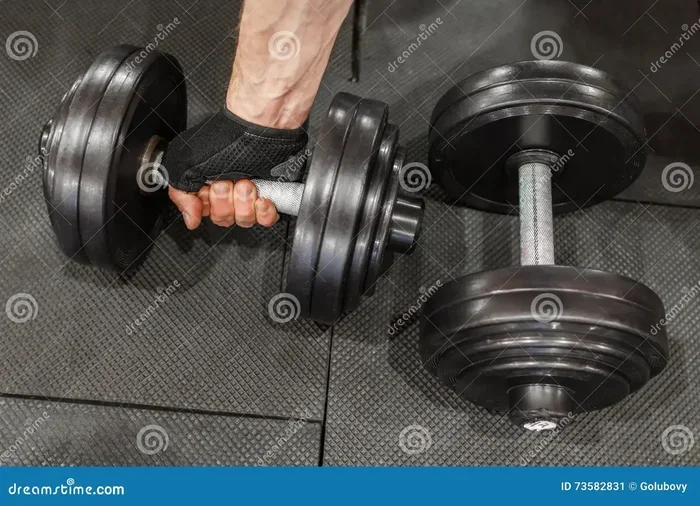
Place your fingers around both dumbbell handles at the same time. Your thumb should wrap over the top of the handles, creating a full lock. Think of it like a double handshake with the dumbbells. Your index and middle fingers should sit on one handle while your ring and pinky fingers wrap around the other. Some lifters prefer stacking the dumbbells side by side, while others angle them slightly for comfort.
Step 2: Squeeze the Dumbbells Together
Once your fingers are in place, squeeze both dumbbells toward each other. This isometric squeeze creates friction and stability. It prevents the dumbbells from rotating or sliding in your hand. The tighter you squeeze, the more control you have. Many lifters find that wrist strap training complements this grip technique, especially when working with heavier loads.
Step 3: Align Your Wrist
Your wrist should stay in a neutral position. Do not let it bend backward or to the side. Imagine a straight line running from your forearm through your hand to the dumbbells. If your wrist bends too far, you risk strain or long-term injury. Keeping the wrist straight also transfers more force from your arm into the dumbbells.
Step 4: Brace Your Forearm
Tighten your forearm muscles before you lift. Think of it as wrapping a natural “corset” around your lower arm. This bracing action locks the dumbbells in place and gives you a solid foundation for every rep. The more you practice this, the more natural it becomes.
Best Exercises Using the Two-Dumbbell Hold
Now that you know how to grip two dumbbells in one hand, let us talk about the best exercises to use this technique with. Each exercise targets different muscle groups and offers unique benefits.
Double Dumbbell Curl
This is the most popular exercise for this hold. Stand tall, hold two dumbbells in one hand, and curl them up slowly. The extra weight forces your biceps to work twice as hard. Keep your elbow pinned to your side and avoid swinging. This is a fantastic way to build bigger biceps at home without needing a barbell.
Single-Hand Overhead Press
Hold two dumbbells in one hand and press them overhead. This hits your shoulders and triceps hard. It also demands incredible core stability because the uneven load tries to pull you off balance. Start with lighter weights and focus on controlled movement.
Two-Dumbbell Farmer’s Walk
Hold two dumbbells in one hand and walk for time or distance. This is an amazing forearm workout that builds real-world grip strength. Walk slowly and keep your posture tall. Your forearms will burn fast, so start with short distances and build up.
Double Skull Crusher
Lie on a flat surface and hold two dumbbells in one hand. Extend your arms upward, then lower the weights behind your head. This targets the long head of your triceps and works wonders for arm size. Keep your upper arms still and only move at the elbow.
Common Mistakes to Avoid
Even with the best intentions, many people make mistakes when holding two dumbbells in one hand. These errors can slow your progress or lead to injury. Here are the most common ones to watch out for.
Letting the Wrist Collapse
The number one mistake is letting your wrist bend under the weight. This puts enormous pressure on the wrist joint and can cause pain over time. Always keep your wrist in a neutral, straight position. If you feel your wrist starting to bend, the weight is too heavy.
Gripping Too Wide or Too Narrow
Placing your fingers too far apart or too close together reduces your control. Find a comfortable middle ground where both dumbbells feel secure. Your grip should feel natural, not strained. If you struggle to hold both dumbbells, your fingers may be positioned incorrectly.
Using Too Much Weight Too Soon
This is a mistake even experienced lifters make. Jumping to heavy dumbbells before your grip is ready leads to dropped weights and potential injuries. Progress slowly. Add weight in small increments and only move up when you can complete your full set with perfect form.
Neglecting the Non-Working Arm
When you train one hand heavily, the other arm can become weak by comparison. Always train both hands equally to maintain balanced strength. Uneven development can lead to compensation injuries in your shoulders and elbows.
How to Progress Safely With This Technique
Progression is the key to long-term gains. But with the two-dumbbell hold, you need to be smart about how you increase the challenge. Rushing the process is the fastest way to hit a wall or get hurt.
Start With Lighter Weights
Begin with dumbbells that are easy to hold for 10 to 12 reps. Your goal is to master the grip first. Once you can do 3 sets of 12 reps with perfect form, you can increase the weight slightly. A good rule is to add no more than 2 to 5 pounds at a time.
Use Grip Training to Support Your Progress
Grip strength does not improve overnight. You can speed up the process by doing dedicated grip strength training exercises. Squeeze a stress ball, use a grip trainer, or do dead hangs from a pull-up bar. These simple exercises build the hand and forearm strength you need for the two-dumbbell hold.
Track Your Progress
Keep a training log. Write down the weight, reps, and sets for each session. This helps you see improvements over time and stay motivated. It also helps you identify when a plateau hits and you need to change your approach.
Rest Your Grip Between Sessions
Your forearms and hands need recovery time just like any other muscle group. Do not train the two-dumbbell hold every single day. Aim for 2 to 3 sessions per week with at least one rest day in between. This gives your grip muscles time to repair and grow stronger.
Expert Tips for Better Results
We asked experienced lifters and coaches for their best advice on mastering the two-dumbbell hold. Here are the top tips they shared.
- Use chalk: Gym chalk absorbs sweat and improves your grip. Dust your hands before each set to prevent slipping.
- Warm up your hands: Do a few light wrist circles and finger stretches before grabbing heavy dumbbells.
- Focus on the squeeze: The harder you squeeze the dumbbells together, the more stable your hold becomes.
- Train your forearms separately: Add forearm-specific exercises like wrist curls and reverse curls to your routine for balanced development.
- Consider wrist wraps for heavy sets: Wrist wraps provide extra support when you are pushing your limits. They help keep the wrist in a safe position under heavy loads.
One of the most valuable pieces of advice is to practice the hold without any exercise movement first. Simply stand and hold two dumbbells in one hand for 30 to 60 seconds. This builds the specific grip endurance you need for full sets. Over time, you will notice that holding the dumbbells feels more natural and secure.
How Heavy Should Your Dumbbells Be?
The right weight depends on your current strength level and training goals. For beginners, start with dumbbells that are roughly 30 to 40 percent of what you would normally use for a single-arm exercise. For example, if you curl 20 pounds in one hand, start with two 8 to 10 pound dumbbells held together. As your grip endurance improves, you can increase the weight gradually.
For intermediate and advanced lifters, the weight will depend on the specific exercise and your training history. The key is to challenge yourself without sacrificing form. If your technique breaks down, the weight is too heavy. Always prioritize clean reps over heavy weight.
Final Thoughts
Mastering the how to hold two dumbbells in one hand technique opens up a world of new training possibilities. It builds incredible grip strength, thickens your forearms, and pushes your arm muscles to new levels. The key is to start light, focus on proper form, and progress steadily over time. Avoid the common mistakes, use the expert tips, and give your grip the rest it needs to recover.
This technique is not just a novelty. It is a legitimate training method used by serious lifters around the world. Whether you want bigger arms, a stronger grip, or better overall upper body strength, holding two dumbbells in one hand delivers real results. Start practicing today, and you will feel the difference in your next workout.
Remember, the best dumbbell training tips are the ones you actually put into practice. Grab a pair of dumbbells, find your grip, and get to work. Your forearms and arms will thank you.
Frequently Asked Questions
Can beginners hold two dumbbells in one hand?
Yes, beginners can try this technique, but they should start with very light weights. The key is to learn the correct grip and wrist position before adding any significant load. Begin with weights that feel easy to control for 10 to 12 reps.
Does holding two dumbbells build bigger forearms?
Absolutely. Holding two dumbbells in one hand forces your forearm muscles to work much harder than a single dumbbell. Over time, this leads to noticeable increases in forearm size and grip strength.
How often should I train the two-dumbbell hold?
Two to three times per week is ideal. This gives your grip and forearm muscles enough recovery time between sessions. Overtraining your grip can lead to fatigue and slower progress.
What weight should I start with?
Start with dumbbells that are about 30 to 40 percent of your normal single-arm weight. For example, if you normally curl 20 pounds per hand, start with two 8 to 10 pound dumbbells held together. Gradually increase as your grip gets stronger.
Is this technique safe for my wrists?
When done with proper form, it is safe and effective. The most important thing is to keep your wrist in a neutral position and avoid bending it backward. If you feel wrist pain, stop immediately and reduce the weight.
Can I use wrist straps with this technique?
Yes, wrist straps can help provide extra support, especially when using heavier weights. However, it is best to train without straps first to build natural grip strength. Use straps only for your heaviest sets or when your grip is the limiting factor.