How to Get Your Chest Bigger with Dumbbells
Want to build a bigger chest using just dumbbells? This guide covers the best exercises, workout plans, and nutrition tips to help you achieve serious chest gains from home. You will learn how to target every part of your pectoral muscles, avoid common mistakes, and follow a routine that delivers real results.
Key Takeaways
- Dumbbells are highly effective: They allow a full range of motion that builds chest muscle faster than many machines.
- Progressive overload is key: Gradually increasing weight or reps drives continuous chest growth over time.
- Target all chest areas: Flat, incline, and decline movements ensure balanced development across the entire pectoral region.
- Consistency matters most: Training your chest 2 to 3 times per week with proper form yields the best long-term results.
- Nutrition supports growth: Eating enough protein and calories fuels muscle repair and hypertrophy after every workout.
- Avoid these common mistakes: Skipping warm-ups, using poor form, and neglecting recovery can stall your chest gains.
📑 Table of Contents
How to Get Your Chest Bigger with Dumbbells
Building a bigger chest is one of the most popular goals in any chest workout routine. Whether you are a beginner or have been lifting for a while, dumbbells give you the tools to grow your pectoral muscles effectively. You do not need a fancy gym or a barbell. A pair of dumbbells and a solid plan are all you need.
The reason dumbbells work so well is simple. They let each arm work independently, which fixes strength imbalances. They also allow a greater range of motion compared to machines or a barbell. This means more muscle fiber gets activated during every rep. In this guide, we walk you through everything you need to know about getting a bigger chest with dumbbells at home.
You will learn the best exercises, how to structure your routine, what to eat, and how to avoid the mistakes that hold most people back. Let us get into it.
Why Dumbbells Are Great for Chest Growth
Many lifters start with a barbell and stay with it. But dumbbells offer unique advantages that can accelerate your chest muscle development. Here is why they deserve a permanent spot in your routine.
Greater Range of Motion
With a barbell, your hands are locked in place. Dumbbells let your arms travel freely. This means your chest stretches more at the bottom of every movement and contracts harder at the top. That extra stretch and squeeze leads to better muscle activation and growth.
Unilateral Training Benefits
Each arm handles its own weight with dumbbells. This prevents your stronger side from taking over. Over time, both sides of your chest grow evenly. Symmetry matters a lot when you want a full, impressive chest.
Joint-Friendly Training
Dumbbells are easier on your shoulders and wrists than a barbell. You can rotate your arms naturally during exercises like presses and flyes. This reduces strain and lets you train more frequently without pain or injury.
Best Dumbbell Exercises for a Bigger Chest
Not all chest exercises are created equal. Some target the upper chest, others hit the middle or lower fibers. A well-rounded routine includes all of them. Below are the top dumbbell chest exercises you should be doing.
1. Dumbbell Flat Bench Press
This is the king of chest exercises. Lie on a flat bench, hold a dumbbell in each hand, and press them up until your arms are straight. Lower them slowly until your elbows drop just below your shoulders. This movement builds overall chest mass and strength.
2. Dumbbell Incline Press
Set your bench to a 30 to 45 degree angle. Press the dumbbells upward just like the flat press. The incline shifts the focus to your upper chest. This is crucial for building that full, rounded look up top.
Want a complete upper chest routine? Check out our guide on how to build upper chest at home with dumbbells for more targeted exercises.
3. Dumbbell Flyes
Lie on a flat or incline bench with a slight bend in your elbows. Lower the dumbbells out to your sides in a wide arc. Bring them back up and squeeze your chest at the top. Flyes stretch the pecs in a way pressing movements cannot.
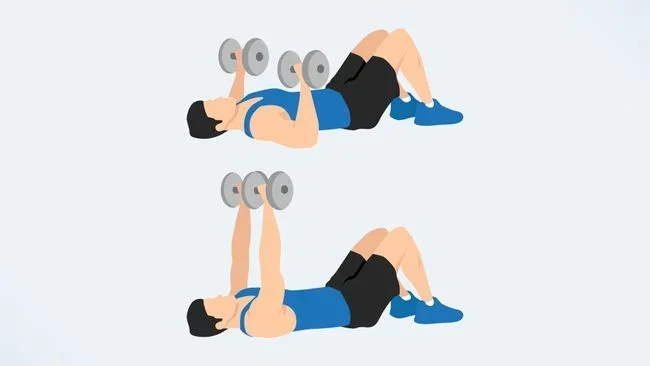
4. Dumbbell Floor Press
No bench? No problem. Lie on the floor, hold dumbbells, and press them up. The floor limits your range of motion slightly, but it still builds serious chest strength. This is a great home chest workout option.
For more options without a bench, see our article on how to work chest with dumbbells and no bench.
5. Dumbbell Pullover
Lie perpendicular on a bench with only your upper back supported. Hold one dumbbell with both hands and lower it behind your head. Bring it back up over your chest. This exercise hits the chest and lats, adding thickness and width.
How to Build a Chest Workout Routine
Knowing the exercises is only half the battle. You need a plan. A good chest training routine balances volume, intensity, and recovery. Here is how to structure your workouts for maximum growth.
Training Frequency
Train your chest 2 to 3 times per week. This gives your muscles enough stimulus to grow while allowing proper recovery. Each session should last about 30 to 45 minutes. Keep your rest between sets to 60 to 90 seconds.
Sets and Reps for Growth
For hypertrophy, aim for 3 to 4 sets of 8 to 12 reps per exercise. This rep range hits the sweet spot for muscle growth. When the last few reps feel challenging, that is exactly where you want to be.
Progressive Overload Explained
Your muscles grow when you constantly challenge them. Add a small amount of weight each week. Or add one or two extra reps. This principle of progressive overload is the foundation of all muscle building. Without it, your chest will plateau.
| Exercise | Sets | Reps | Rest |
|---|---|---|---|
| Dumbbell Flat Press | 4 | 8-10 | 90 sec |
| Dumbbell Incline Press | 3 | 10-12 | 75 sec |
| Dumbbell Flyes | 3 | 10-12 | 60 sec |
| Dumbbell Pullover | 3 | 8-10 | 60 sec |
| Dumbbell Floor Press | 3 | 10-12 | 75 sec |
Common Mistakes That Slow Down Chest Growth
Even with the best exercises, bad habits can hold you back. Here are the most common mistakes lifters make when training their chest with dumbbells.
Skipping the Warm-Up
Jumping straight into heavy dumbbells without warming up is a recipe for injury. Do 5 to 10 minutes of light cardio first. Then perform a few warm-up sets with lighter weights. Your joints and muscles need to be ready before you push hard.
Using Too Much Weight
ego lifting might feel impressive, but it hurts your progress. If you cannot complete a full range of motion, the weight is too heavy. Sacrificing form for heavier dumbbells reduces chest activation and increases injury risk. Choose a weight where your last two reps are challenging but doable.
Neglecting the Mind-Muscle Connection
You are not just moving weights. You are trying to feel your chest working. Focus on squeezing your pecs at the top of every press. Control the negative (lowering) phase. This simple focus makes a huge difference in muscle activation.
Overtraining Without Recovery
Muscles grow during rest, not during the workout. Training your chest every single day will lead to burnout and injury. Give your muscles 48 hours between sessions. Sleep at least 7 to 8 hours per night. Your body repairs and builds muscle while you rest.
Nutrition Tips for Building a Bigger Chest
Exercise is only half the equation. What you eat plays a massive role in muscle growth. Without proper nutrition, even the best chest workout plan will not deliver results.
Eat Enough Protein
Protein provides the building blocks your muscles need to repair and grow. Aim for 0.7 to 1 gram of protein per pound of body weight each day. Good sources include chicken, eggs, fish, Greek yogurt, and plant-based options like lentils and tofu.
Do Not Fear Carbohydrates
Carbs fuel your workouts. They give you the energy to lift heavier and perform more reps. Eat complex carbs like oats, brown rice, sweet potatoes, and whole grain bread. These provide steady energy without spiking your blood sugar.
Stay in a Slight Calorie Surplus
To build muscle, you need to eat slightly more calories than you burn. A surplus of 250 to 500 calories per day is ideal. This supports muscle growth without adding excess fat. Track your intake for a few weeks to make sure you are on target.
Hydration Matters
Muscles are about 75 percent water. Dehydration reduces strength and performance. Drink at least 8 to 10 glasses of water daily. More on workout days. Proper hydration helps with recovery and keeps your joints lubricated.
Quick Tips for Faster Chest Gains
Here are some quick, actionable tips to speed up your progress:
- Slow down your reps: Take 3 seconds to lower the dumbbells. This increases time under tension and boosts muscle growth.
- Vary your grip: A neutral grip (palms facing each other) reduces shoulder strain and hits the chest from a different angle.
- Add squeeze pauses: Pause for 2 seconds at the top of each press to maximize the chest contraction.
- Track your workouts: Write down your weights and reps. This helps you apply progressive overload consistently.
- Train with a partner: A spotter keeps you safe and pushes you to do one or two extra reps.
For a complete beginner-friendly approach, check out how to workout with dumbbells at home for beginners to build a solid foundation.
Conclusion
Getting your chest bigger with dumbbells is one of the most rewarding fitness goals you can pursue. You have everything you need right now: a pair of dumbbells, a plan, and the knowledge to use them correctly. Focus on compound movements like presses, add isolation work like flyes, and always prioritize progressive overload.
Avoid the common mistakes that slow most people down. Warm up properly, use controlled form, and give your body the nutrition and rest it needs. Consistency is the real secret. Show up, put in the work, and trust the process.
Your dream chest is not built overnight. But with the right exercises, the right routine, and the right mindset, you will see real results. Start today and your future self will thank you.
Frequently Asked Questions
How long does it take to see chest growth with dumbbells?
Most people notice visible changes in 4 to 6 weeks with consistent training and proper nutrition. Individual results vary based on your experience level, genetics, and how closely you follow your routine. Stay patient and trust the process.
Can I build a big chest with just dumbbells at home?
Absolutely. Dumbbells are one of the most effective tools for chest development. You do not need a barbell or a gym membership. A well-designed dumbbell routine targeting all areas of the chest can produce impressive results at home.
How heavy should my dumbbells be for chest exercises?
Choose a weight that challenges you in the 8 to 12 rep range. Your last two reps should feel difficult but still doable with good form. Start lighter and increase gradually as you get stronger.
Should I train chest every day for faster growth?
No. Training chest every day leads to overtraining and injury. 2 to 3 sessions per week is the sweet spot. This gives your muscles enough stimulus to grow while allowing adequate recovery time between workouts.
What is the best dumbbell exercise for upper chest?
The dumbbell incline press is widely considered the best exercise for upper chest development. Set your bench to a 30 to 45 degree angle and press the dumbbells upward. This movement specifically targets the upper pectoral fibers.
Do I need a bench for dumbbell chest exercises?
A bench helps but is not essential. You can perform floor presses, standing chest squeezes, and other effective movements without one. For more ideas, check out how to work chest with dumbbells and no bench.
=== END OF ARTICLE ===