How to Get in Shape on a Treadmill

Getting in shape on a treadmill is one of the most effective and accessible ways to transform your fitness. Whether you want to lose weight, boost endurance, or build strength, a treadmill gives you full control over your workout. This guide covers everything from beginner routines to advanced treadmill workout strategies that deliver real results.
There is a reason treadmills are the most popular piece of home gym equipment. They are convenient, effective, and work for almost every fitness level. Whether you are just starting out or you are a seasoned runner, a treadmill can help you get in shape without leaving your house.
But here is the thing. Just hopping on and walking at a slow pace will not get you the results you want. You need a plan. You need the right treadmill workout strategies, the right intensity levels, and the right mindset. That is exactly what this guide gives you.
Below, you will find everything you need to know about using a treadmill to lose weight, build endurance, and improve your overall fitness. We cover beginner routines, advanced techniques, common mistakes, and practical tips you can start using today.
Key Takeaways
- Treadmill workouts are versatile: You can walk, jog, run, or use incline training to match any fitness level.
- Consistency beats intensity: A regular fitness routine on the treadmill beats sporadic intense sessions every time.
- Incline and intervals boost calorie burn: These techniques make your cardio exercise far more effective for fat burning.
- Proper form and footwear matter: Wearing the right gear prevents injury and improves performance during your home workout.
- Tracking progress keeps you motivated: Monitoring speed, distance, and heart rate helps you stay on track and see real gains.
📑 Table of Contents
Why a Treadmill Is Great for Getting in Shape
A treadmill is one of the best tools for a home workout. It lets you control every variable. Speed, incline, duration, and intensity are all in your hands. You do not need to worry about weather, traffic, or uneven sidewalks.
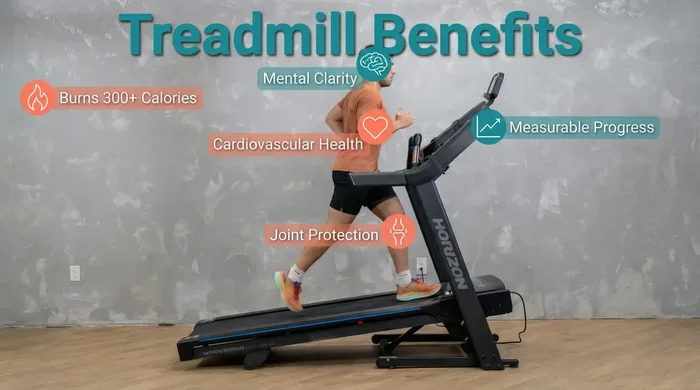
Here are some key benefits of using a treadmill for your cardio exercise:
- Convenience: Work out anytime, rain or shine, without leaving home.
- Joint-friendly: The belt absorbs some impact, making it easier on your knees than pavement.
- Customizable: You can adjust speed and incline to match your current fitness level.
- Trackable: Most modern treadmills display distance, calories, heart rate, and pace.
- Safe: You exercise in a controlled environment with no traffic or obstacles.
Compared to outdoor running, a treadmill gives you a more predictable surface and a safer setting. This is especially helpful if you are new to exercise or recovering from an injury. If you want to learn more about avoiding common treadmill injuries, check out our guide on how to not get shin splints on a treadmill.
How to Build a Treadmill Workout Plan
A solid plan is the foundation of any fitness journey. Without one, it is easy to fall into a rut or skip workouts altogether. A good treadmill workout plan balances different intensities and keeps things interesting.
Start With Your Fitness Level
Before you design a plan, be honest about where you stand. Are you a complete beginner who has not exercised in months? Or are you intermediate and looking to push harder?
Here is a simple breakdown:
- Beginner: Walk or brisk walk for 20-30 minutes at a comfortable pace.
- Intermediate: Alternate between jogging and walking for 30-45 minutes.
- Advanced: Run at higher speeds with incline intervals for 45-60 minutes.
Set Realistic Goals
Goals keep you focused. Instead of saying “I want to get fit,” try something specific like “I want to walk 3 miles in 30 minutes within 8 weeks.” Clear goals give you something to work toward and a way to measure progress.
For tips on how long your sessions should be, read our article on how much time on a treadmill to lose weight.
Schedule Your Workouts
Consistency is everything. Aim for at least 3 to 5 treadmill sessions per week. Morning workouts can boost your energy for the day, while evening sessions help you decompress. Find a time that fits your life and stick with it.
Best Treadmill Workouts for Getting in Shape
Not all treadmill workouts are created equal. Some are great for fat burning, while others focus on building endurance or speed. Here are the most effective types of treadmill workouts you should try.
Steady-State Walking or Jogging
This is the simplest and most accessible workout. You maintain a constant pace for 20 to 45 minutes. It is perfect for beginners and great for active recovery days.
Start with a brisk walk at 3.5 to 4.0 mph. As your fitness improves, gradually increase your pace or add a slight incline. This type of steady state cardio is excellent for building a base level of endurance.
Incline Walking for Maximum Calorie Burn
Walking on an incline is a game-changer. It targets your glutes, hamstrings, and calves more effectively than flat walking. It also significantly increases your heart rate and calorie burn.
Try this simple routine:
- Warm up with flat walking for 5 minutes.
- Set the incline to 6-8% and walk at 3.0 to 3.5 mph for 15 minutes.
- Return to flat walking for 5 minutes to cool down.
Incline walking is one of the best ways to lose weight on a treadmill without running. For more on maximizing your burn, see our guide on how to burn the most calories on a treadmill.
Treadmill Intervals for Fat Loss
Interval training is one of the most efficient ways to get in shape. You alternate between high-intensity bursts and recovery periods. This style of workout is often called HIIT treadmill training.
Here is a beginner-friendly interval workout:
- Warm up: 5 minutes at 3.0 mph
- Sprint: 30 seconds at 7.0-8.0 mph
- Recover: 90 seconds at 3.5 mph
- Repeat: 8-10 rounds
- Cool down: 5 minutes at 3.0 mph
Intervals torch calories and boost your metabolism for hours after the workout. They also help improve your endurance training capacity faster than steady-state cardio alone.
Progressive Distance Workouts
This approach focuses on gradually increasing the distance you cover each week. It is ideal for building cardiovascular fitness and preparing for outdoor runs or races.
Start with 1 mile and add 0.25 miles each week. Over time, you will notice your pace improving and your effort decreasing. This is a fantastic way to track your progress and stay motivated.
Essential Tips for a Safe and Effective Treadmill Session
Using a treadmill correctly makes a huge difference. Poor form or skipping preparation can lead to injury or slow progress. Follow these tips to get the most out of every session.
Warm Up Before You Start
Never jump straight into a fast pace. Spend 5 minutes walking at a slow speed to warm up your muscles and joints. A proper warm-up increases blood flow and prepares your body for higher intensity work. For a detailed warm-up routine, check out our guide on what to do before running on a treadmill.
Focus on Your Posture
Keep your head up, shoulders relaxed, and arms swinging naturally. Avoid gripping the handrails tightly, as this can throw off your balance and reduce the effectiveness of your workout. Your posture should be upright and relaxed.
Wear the Right Shoes
Your footwear matters more than you think. Invest in running shoes with good cushioning and arch support. Proper shoes reduce the impact on your joints and help you maintain correct form throughout your session. For more on this, read our tips on what to wear when running on a treadmill.
Stay Hydrated
You sweat more than you might think, even on a treadmill. Keep a water bottle nearby and take small sips between intervals. Dehydration can cause dizziness, fatigue, and poor performance.
Cool Down and Stretch
After your workout, slow your pace gradually for 5 minutes. Then stretch your calves, quads, hamstrings, and hip flexors. Cooling down helps prevent muscle soreness and improves flexibility over time.
Common Mistakes to Avoid
Even the most motivated people make mistakes on the treadmill. Here are the most common ones and how to fix them.
Skipping the Warm-Up
Jumping into a fast pace cold is a recipe for injury. Your muscles need time to loosen up. Always start with a 5-minute warm-up walk.
Holding the Handrails Too Tightly
Gripping the rails changes your natural stride and reduces the number of calories you burn. It also puts extra strain on your shoulders and neck. Let your arms swing naturally instead.
Doing the Same Workout Every Day
Your body adapts quickly. If you do the exact same workout every day, you will plateau. Mix up your routines with intervals, incline work, and long-distance sessions to keep challenging your body.
Neglecting Incline
Flat walking is fine for beginners, but adding incline is one of the fastest ways to boost your results. It engages more muscle groups and increases your heart rate without making you feel like you are running faster.
Overtraining Without Rest
Rest days are just as important as workout days. Your muscles recover and grow stronger during rest. Aim for at least one or two rest days per week to avoid burnout and injury.
Tracking Your Progress on the Treadmill
One of the best things about a treadmill is that it gives you data. Use that data to track your progress and stay motivated.
Here are the key metrics to watch:
- Distance: How far you walk or run each session.
- Pace: Your speed per mile or kilometer.
- Calories burned: An estimate of energy expenditure.
- Heart rate: A measure of workout intensity.
- Incline level: Shows how challenging the terrain was.
Keep a workout journal or use a fitness app to log your sessions. Over weeks and months, you will see real improvement. For more tips on counting your steps and tracking progress, read our article on how many steps on a treadmill to lose weight.
Remember, progress is not always linear. Some weeks will feel harder than others. That is completely normal. The key is to stay consistent and trust the process.
Conclusion
Getting in shape on a treadmill is absolutely achievable with the right approach and a solid plan. You do not need fancy equipment or a gym membership. You just need a treadmill, a good pair of shoes, and the willingness to show up consistently.
Start where you are. Use beginner walking workouts if you are just getting started. Push yourself with intervals and incline training as your fitness grows. Track your progress, avoid common mistakes, and always listen to your body.
The treadmill is one of the most powerful tools you can have in your home workout arsenal. Use it wisely, stay consistent, and you will see the results you are looking for. Now get out there and start moving.
Frequently Asked Questions
How long should I walk on a treadmill to see results?
Most people start seeing noticeable results within 4 to 6 weeks of consistent treadmill walking. Aim for at least 30 minutes per session, 4 to 5 times per week. The key is staying consistent and gradually increasing your pace or incline over time.
Can I get in shape just by walking on a treadmill?
Absolutely. Walking on a treadmill is a highly effective form of cardio exercise that can help you lose weight and build endurance. Adding incline and increasing your pace over time will boost the benefits even further.
Is it better to walk or run on a treadmill for weight loss?
Walking is gentler on your joints and easier to sustain long-term. Running burns more calories per minute but comes with a higher injury risk. The best choice is the one you can do consistently. For more details on calorie burn, check our guide on how to burn the most calories on a treadmill.
How often should I use the treadmill each week?
Aim for 3 to 5 sessions per week for meaningful progress. If you are a beginner, start with 3 sessions and add more as your fitness improves. Always include at least one or two rest days for proper recovery.
What should I eat before a treadmill workout?
A light snack with carbohydrates and a small amount of protein works best. Think a banana with peanut butter or a small bowl of oatmeal. Eat it about 30 to 60 minutes before your workout to fuel your session without feeling too full.
Can beginners use incline on a treadmill?
Yes. Start with a gentle incline of 2 to 3 percent and gradually increase it over a few weeks. Incline walking is one of the best ways for beginners to boost calorie burn and build leg strength without the impact of running.