How Much Time on a Treadmill to Lose Weight

The time you need on a treadmill to lose weight isn’t one-size-fits-all. Most guidelines suggest 150 to 300 minutes of moderate-intensity cardio per week, but your personal factors like weight, fitness level, and diet play a huge role. Consistency and intensity are just as critical as the clock. Pairing your treadmill sessions with a sustainable calorie deficit and strength training is the proven formula for shedding fat and keeping it off long-term.
So, you’ve decided to take the plunge (or the step) and start using a treadmill to lose weight. It’s a fantastic, accessible, and low-impact way to burn calories. But the very first question that echoes in your mind, often before you even step on the belt, is: “How much time on a treadmill to lose weight?” It’s a simple question with a beautifully complex answer. There is no magic number etched in stone—no single “30 minutes a day” decree that works for every single person. The truth is a tapestry woven from your current weight, your fitness level, your diet, the intensity of your walk or run, and your sheer consistency over time. This guide will unravel that tapestry. We’ll move beyond vague advice and dive into the science, the practical strategies, and the real-world application so you can build a treadmill routine that actually works for your body and your life.
Think of the treadmill not as a punishment device, but as a precise, controllable furnace for your metabolism. The goal is to stoke that furnace consistently enough to burn through stored fat. But to do that, you need to understand the fuel (calories), the fire (your workout), and the air supply (your recovery and nutrition). Let’s break it all down, step by step.
Key Takeaways
- Time is a range, not a fixed number: Aim for 150-300 minutes of weekly treadmill time, broken into 30-60 minute sessions, 3-5 days a week, depending on intensity.
- Intensity trumps pure duration: Higher-intensity workouts (like HIIT) burn more calories in less time and boost metabolism longer after the session.
- Consistency is the ultimate key: Regular, sustained effort over weeks and months matters far more than occasional marathon sessions.
- You cannot out-treadmill a bad diet: Weight loss is primarily driven by a calorie deficit; the treadmill is a tool to create that deficit, not a license to eat freely.
- Progression is mandatory: Your body adapts. To keep losing weight, you must gradually increase time, speed, incline, or incorporate intervals.
- Rest and recovery are part of the plan: Overtraining leads to burnout and injury. Include rest days and prioritize sleep for hormone balance and muscle repair.
- Individual factors dictate the starting point: Your current weight, joint health, and fitness level determine your safe and effective starting duration and speed.
📑 Table of Contents
- The Science Behind Treadmill Weight Loss: It’s All About the Deficit
- Decoding the “How Much Time”: Your Personalized Formula
- The Intensity vs. Duration Showdown: What’s More Effective?
- Building Your Treadmill Weight Loss Plan: A Week-by-Week Blueprint
- The Invisible Half: Diet and Nutrition for Treadmill Success
- Common Mistakes That Sabotage Your Treadmill Time and Results
- Conclusion: Your Journey is a Marathon, Not a Sprint
The Science Behind Treadmill Weight Loss: It’s All About the Deficit
Before we talk minutes, we must talk fundamentals. Weight loss, at its core, is governed by the principle of a calorie deficit. This means you must consume fewer calories than your body burns in a day (your Total Daily Energy Expenditure, or TDEE). The treadmill helps you increase the “burn” side of that equation. When you walk or run on a treadmill, your muscles require energy. Your heart pumps harder, your lungs work deeper, and your body taps into its stored energy reserves—primarily fat and glycogen—to fuel the motion.
How the Treadmill Burns Calories
The number of calories you burn during a treadmill session depends on three primary factors: your body weight, the speed/incline, and the duration. A person weighing 250 pounds will burn significantly more calories walking at 3.5 mph for 30 minutes than a person weighing 150 pounds doing the exact same thing, because it takes more energy to move a larger mass. This is why generic calorie counters on treadmill consoles are often inaccurate; they use average formulas. For a more personalized estimate, use an online calculator that inputs your exact weight, speed, and time.
But there’s a second, more powerful effect: Excess Post-Exercise Oxygen Consumption (EPOC), often called the “afterburn effect.” After a particularly challenging workout, your body’s metabolism remains elevated for hours as it works to restore oxygen levels, repair muscle tissue, and return to its resting state. High-intensity interval training (HIIT) on a treadmill is exceptionally potent at triggering EPOC, meaning you continue to burn extra calories long after you’ve stepped off the machine. This is why a 20-minute HIIT session can sometimes be more effective for fat loss than a steady 45-minute jog.
Decoding the “How Much Time”: Your Personalized Formula
Now for the meat of the question. General health organizations like the American College of Sports Medicine (ACSM) and the CDC provide excellent baseline guidelines. They recommend at least 150 minutes of moderate-intensity aerobic activity (like brisk walking) or 75 minutes of vigorous-intensity activity (like running) per week for substantial health benefits. For weight loss, they often suggest aiming for the higher end of that spectrum—300 minutes of moderate activity per week.
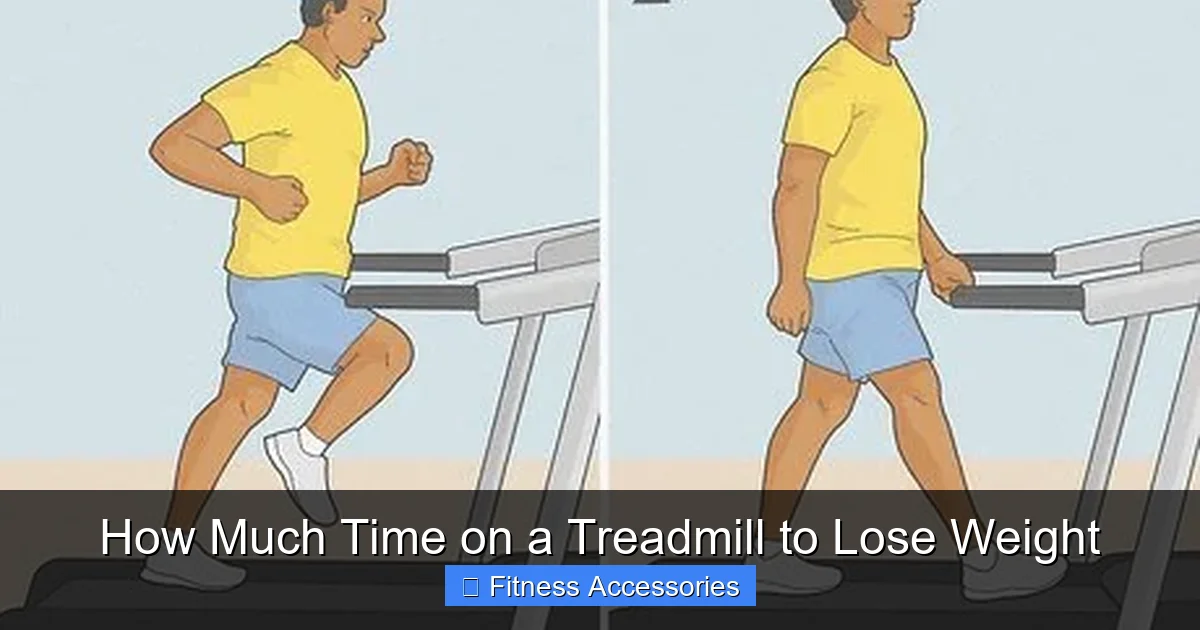
Visual guide about How Much Time on a Treadmill to Lose Weight
Image source: wikihow.com
Let’s translate that into treadmill time:
- Moderate Intensity (Brisk Walk): 300 minutes per week = 60 minutes, 5 days a week.
- Vigorous Intensity (Run/Jog): 150-225 minutes per week = 30-45 minutes, 3-5 days a week.
But these are starting points. Your personal formula depends on your starting point.
Calculating Your Baseline: The Honest Assessment
Before you set a timer, do this. Ask yourself: What is the longest continuous period I can walk on a treadmill at a pace that feels “challenging but sustainable” (you can talk in short phrases, but not sing)? For a complete beginner, that might be 10 minutes. For someone returning from a layoff, maybe 20. That is your baseline duration. Your first week’s goal is simply to hit that duration, 3-4 times, without stopping. This builds the habit and conditions your joints and cardiovascular system. From there, you apply the principle of progressive overload: each week, aim to add 5-10% more total time, or slightly increase the speed/incline. If your baseline is 20 minutes, next week try 22 minutes. The week after, 25. You get the idea.
For example, Sarah, a 45-year-old weighing 200 pounds with no recent exercise history, starts with 20-minute walks at 3.0 mph, 4 days a week. Her weekly total is 80 minutes. She focuses on consistency for two weeks. Then, she increases to 25 minutes, 4 days a week (100 minutes). She might also add a 1% incline for the last 5 minutes. By month three, she could be comfortably walking 35 minutes at 3.5 mph with a 2% incline, hitting 140 weekly minutes and seeing noticeable changes.
The Intensity vs. Duration Showdown: What’s More Effective?
This is the eternal debate. Should you do long, slow cardio or short, brutal intervals? The answer is: both work, and the best approach often blends them. Let’s compare the two main schools of thought for treadmill weight loss.

Visual guide about How Much Time on a Treadmill to Lose Weight
Image source: womendailymagazine.com
Steady-State Cardio (The Long Haul)
This is your classic 45-60 minute walk or jog at a consistent, moderate pace. Its benefits are profound for beginners and essential for building an aerobic base.
- Pros: Lower injury risk, excellent for building endurance, burns a high number of calories during the session, psychologically manageable (you know exactly what you’re in for), great for active recovery.
- Cons: Time-consuming, can be monotonous, the afterburn effect (EPOC) is relatively modest, your body can adapt quickly, leading to a plateau in calorie burn.
Practical Example: Set the treadmill to 3.5-4.5 mph (a brisk walk to a light jog for most). Maintain that pace for 45 minutes. Aim for a heart rate in the 60-70% of your max (a rough estimate: 220 minus your age, then multiply by 0.6 and 0.7).
High-Intensity Interval Training (HIIT) (The Sprint Strategy)
HIIT alternates short bursts of all-out effort with periods of low-intensity recovery or complete rest. A typical treadmill HIIT session might last only 20-30 minutes.
- Pros: Extremely time-efficient, maximizes EPOC (you keep burning calories for up to 24-48 hours after), preserves muscle mass better than long steady-state, dramatically improves cardiovascular fitness quickly.
- Cons: Higher perceived effort and discomfort, greater injury risk if form breaks down (especially for beginners), requires a good baseline of fitness, not ideal for daily repetition.
Practical Example (Beginner HIIT): 5-minute warm-up walk. Then repeat 8 times: 30-second jog/run at a challenging pace (7-8/10 effort), 90-second slow walk to recover. Finish with a 5-minute cool-down walk. Total time: ~25 minutes.
The Smart Hybrid Approach: The most sustainable and effective long-term strategy is to combine both. Structure your week with 2 days of steady-state cardio (for endurance and calorie burn), 1-2 days of HIIT (for metabolic boost), and ensure you have at least 1-2 full rest or active recovery days. This prevents adaptation, reduces injury risk, and keeps your workouts mentally fresh.
Building Your Treadmill Weight Loss Plan: A Week-by-Week Blueprint
Knowledge is power, but a plan is everything. Here is a sample, adaptable weekly structure for someone with 4-5 days available to train. This plan assumes you’ve completed the baseline assessment and are ready to progressive overload.

Visual guide about How Much Time on a Treadmill to Lose Weight
Image source: i.pinimg.com
Sample Weekly Schedule (Intermediate Level)
Monday: HIIT Day
- 5 min warm-up walk (3.0 mph, 0% incline)
- Main Set: 8 rounds of [1 min run at 6.0-7.0 mph (or a pace that feels “hard”) / 1.5 min walk recovery at 3.0 mph]
- 5 min cool-down walk
- Total Time: ~30 minutes
Tuesday: Steady-State & Core
- 45 min brisk walk/jog at a pace where you can hold a conversation (4.0-5.0 mph). Add 1-2% incline for the last 10 minutes.
- Post-treadmill: 15 minutes of core work (planks, bridges, bird-dogs).
- Total Time: 60 minutes
Wednesday: Active Recovery or Rest
- Complete rest, or a 20-30 minute very easy walk (<3.0 mph) if you feel up to it. Focus on mobility.
Thursday: Incline Walk (Fat-Burning Focus)
- 5 min warm-up
- Main Set: 40 minutes total. Alternate 5 min at 3.5 mph with a 3-4% incline, then 5 min at 3.0 mph with 0% incline. Repeat 4 times.
- 5 min cool-down
- Total Time: 50 minutes
Friday: HIIT Day (Variation)
- 5 min warm-up
- Main Set: 10 rounds of [30-second sprint at a pace you can only hold for 45 seconds / 60-second slow walk]. This is shorter but more intense than Monday.
- 5 min cool-down
- Total Time: ~25 minutes
Saturday: Long Steady-State
- 55-60 minute walk/jog at a comfortable, sustainable pace. This builds endurance and burns significant calories.
- Total Time: 60 minutes
Sunday: Rest
- Full rest. This is non-negotiable for muscle repair and hormone regulation.
Weekly Total Treadmill Time: 225-250 minutes. This falls right in the sweet spot for weight loss. Remember, this is a template. Swap days, adjust times, and listen to your body. If you’re a beginner, start with just 3 days: two steady-state (20-30 min each) and one very light HIIT (15 min).
The Invisible Half: Diet and Nutrition for Treadmill Success
Here is the most critical, often understated truth: You cannot out-treadmill a bad diet. The treadmill is a fantastic tool for increasing your calorie expenditure, but if you immediately replenish those burned calories with extra snacks or large portions, you will not create a deficit. Weight loss is 80% diet, 20% exercise. Let’s get the diet piece right to make every minute on the treadmill count.
Creating Your Calorie Deficit
First, estimate your TDEE using an online calculator. This is the number of calories you need to maintain your current weight. To lose weight safely and sustainably (1-2 pounds per week), subtract 500 calories from that number. This creates your daily target. For example, if your TDEE is 2,500 calories, aim for 2,000 calories per day. The calories you burn on the treadmill are extra deficit. If you burn 300 calories on your run, your net deficit for the day is 800 calories (500 from diet + 300 from exercise).
Practical Nutrition Tips to Pair with Your Treadmill Time:
- Prioritize Protein: Aim for 0.7-1 gram of protein per pound of your target body weight. Protein is highly satiating (keeps you full) and has a high thermic effect (your body burns more calories digesting it). Include a source (chicken, fish, eggs, tofu, Greek yogurt) in every meal.
- Fiber is Your Friend: Load up on vegetables, fruits, and whole grains. They add volume to meals for few calories, aiding in hunger control.
- Hydrate, Hydrate, Hydrate: Often, thirst mimics hunger. Drink water throughout the day. A glass before your treadmill session can also improve performance.
- Time Your Carbs: Consume the majority of your carbohydrate intake around your workouts. A small banana or a piece of toast 30-60 minutes before can fuel your session. A combo of protein and carbs (like chocolate milk or a protein shake) within 60 minutes after helps with recovery.
- Ditch Liquid Calories: Sodas, juices, and fancy coffee drinks are “empty calories” that sabotage a deficit. Stick to water, unsweetened tea, or black coffee.
Common Mistakes That Sabotage Your Treadmill Time and Results
You can have the perfect plan, but if you fall into these common traps, your scale will refuse to budge. Awareness is the first step to avoidance.
Mistake 1: The “Treadmill-Only” Trap
Relying solely on cardio for weight loss is a recipe for a plateau and muscle loss. Muscle is metabolically active tissue; the more you have, the higher your resting metabolism. If you only do long cardio, your body may start to conserve energy by shedding muscle along with fat, slowing your metabolism over time. The Fix: Incorporate 2-3 days of full-body strength training per week. This doesn’t have to be heavy barbells; bodyweight exercises, dumbbells, or resistance bands are perfect. This builds and preserves muscle, making you a more efficient calorie-burning machine 24/7.
Mistake 2: Ignoring Non-Exercise Activity
You might sweat for 45 minutes, but then spend the rest of the day sitting. Your Non-Exercise Activity Thermogenesis (NEAT)—the calories burned from all daily movement (fidgeting, gardening, taking the stairs, cleaning)—can vary by up to 2,000 calories per day between individuals. The Fix: Be a “movement opportunist.” Park farther away, take walking meetings, stand while on phone calls, pace while you think. These small choices add up and support your treadmill efforts.
Mistake 3: Not Progressing the Workout
Your body is an adaptation machine. If you do the same 30-minute walk at 3.5 mph every single day for a month, it will become incredibly efficient. You’ll burn fewer calories doing it by week four. The Fix: Follow the progressive overload principle. Each week, make one small change: add 5 minutes, increase speed by 0.1-0.2 mph, add 1% incline, or make your HIIT intervals 10 seconds longer. Keep challenging your system.
Mistake 4: Overcompensating with Food
“I earned this” is a dangerous mindset. It’s shockingly easy to “eat back” the 300 calories you burned with a single coffee drink or a small cookie. You also may experience increased hunger from the exercise, leading to unplanned snacking. The Fix: Do not use exercise as a reason to eat more unless you are truly, physically hungry. Pre-plan your post-workout meal as part of your daily calorie budget. Focus on high-protein, high-fiber foods to manage appetite.
Mistake 5: Sacrificing Form and Recovery
Leaning on the handrails, watching your feet, or hunching your shoulders to “get through” a tough interval is a fast track to injury (shin splints, knee pain, back issues). Similarly, skipping rest days to “get more time in” leads to overuse injuries and burnout. The Fix: Maintain good posture—look ahead, engage your core, swing your arms naturally. If you need support, use the handrails lightly for balance only. Take at least 1-2 full rest days per week. Prioritize 7-9 hours of sleep. Recovery is when your body repairs and gets stronger.
Conclusion: Your Journey is a Marathon, Not a Sprint
So, how much time on a treadmill to lose weight? The definitive, personalized answer is this: Enough time to consistently create a calorie deficit, combined with a supportive diet and recovery plan, for a sustained period. For most, that means carving out 150 to 300 minutes per week, intelligently split between steady-state walks and high-intensity intervals.
Start where you are. If 10 minutes is your current max, celebrate that and do it. Then, next week, do 12. The treadmill will be your constant companion on this journey—a reliable, measurable tool. But it is just one tool. Your most powerful tools are your fork (choosing nutritious foods that fuel you) and your patience (understanding that true, lasting weight loss happens at a rate of 0.5 to 2 pounds per week).
Lace up, set a realistic time, focus on form and intensity, and pair it with smart nutrition. The minutes will add up, the scale will move, and your health and fitness will transform. The time is now. Literally.
Frequently Asked Questions
Can I lose weight by walking on a treadmill for 30 minutes a day?
Yes, absolutely. A daily 30-minute brisk walk (approx. 3.5-4.5 mph) can contribute significantly to your weekly calorie burn and health goals. However, for noticeable weight loss, this should be combined with a consistent calorie-controlled diet. You may also need to gradually increase the duration, speed, or incline to continue seeing results as your body adapts.
What treadmill speed is best for weight loss?
There is no single “best” speed. The best speed is one that gets your heart rate into your target zone (typically 60-80% of your max heart rate) for your desired workout type. For fat-burning steady-state, a pace where you can talk in short phrases (a brisk walk to a light jog) is ideal. For HIIT, you’ll use speeds that feel “hard” to “very hard” for short bursts. Focus on perceived exertion and heart rate more than a specific mph number.
Is it better to walk or run on a treadmill to lose weight?
Running burns calories at a much higher rate per minute than walking, making it more time-efficient. However, walking is lower impact, sustainable for longer durations, and carries a lower injury risk, especially for beginners or those with joint issues. The best choice is the one you can do consistently. A combination is often optimal: walk on recovery days, run or do intervals on others.
How long on a treadmill before I see weight loss results?
This varies dramatically based on your starting point, diet, and consistency. You may notice changes in how your clothes fit or energy levels within 2-4 weeks. On the scale, a safe and sustainable rate is 1-2 pounds per week. If your treadmill and diet plan creates a 500-1000 calorie daily deficit, you should see a measurable change on the scale within 2-3 weeks. Patience and consistency are key.
Should I use incline on the treadmill for weight loss?
Yes, using incline is one of the most effective ways to boost your treadmill workout. Walking or running uphill dramatically increases the calorie burn, engages more muscle groups (glutes, hamstrings, calves), and builds lower-body strength. Even a 1-2% incline can make a significant difference. Start with a low incline and gradually increase as you get stronger.
Is it safe to use a treadmill every day for weight loss?
For most people, using a treadmill every day is not advisable or optimal. Your body needs rest days to recover, repair muscles, and prevent overuse injuries like stress fractures or tendonitis. A better approach is 3-5 days per week of treadmill work, interspersed with rest days or active recovery (like light stretching or walking). Listen to your body—if you feel persistent pain, take a break.