How to Fold a Yoga Mat for Travel
Folding a yoga mat for travel doesn’t have to be complicated. This guide covers easy folding techniques, packing tips, and smart storage solutions to keep your yoga mat travel-ready. You’ll learn how to fold different mat types, avoid damage, and carry your mat effortlessly wherever your practice takes you.
Traveling with a yoga mat can feel like a chore. You stuff it into a bag, it unfolds halfway through your trip, and suddenly you’re juggling a slippery rectangle of rubber on the airplane floor. Sound familiar? The good news is that learning how to fold a yoga mat for travel changes everything. A proper fold keeps your mat compact, protected, and ready to use the moment you unroll it.
Whether you’re heading to a hotel room, a retreat center, or a friend’s house for a quick session, knowing the right folding technique saves time and hassle. This guide walks you through every method, tip, and trick you need. You’ll also learn how to choose the best mat for travel and keep it in great shape between sessions.
Key Takeaways
- Multiple folding methods exist: Choose from rolling, folding in thirds, or using the envelope fold depending on your mat type and bag.
- The right mat matters: Thin, travel-friendly mats fold much easier than thick beginner mats or heavy rubber mats.
- Protect your mat: Always clean and dry your mat before folding to prevent mold, odors, and material breakdown.
- Use accessories wisely: A yoga strap, carrying bag, or sleeve keeps your folded mat secure and compact during travel.
- Practice makes perfect: Once you master the technique, folding and unfolding becomes a quick, effortless habit.
📑 Table of Contents
Why Proper Folding Matters for Travel
Many people just ball up their yoga mat and toss it in a bag. That might work in a pinch, but it causes problems over time. Creases form, the material weakens, and the mat stops lying flat. When you fold a yoga mat correctly, you preserve its lifespan and performance.
Proper folding also matters for hygiene. A mat that stays bunched up traps moisture. That leads to bacteria growth, bad smells, and even skin irritation. A clean, well-folded mat stays fresh and ready for your next session. Plus, a compact fold fits easily into luggage, backpacks, and carry-on bags.
Common Problems with Improper Folding
- Crease damage: Repeated folding in the same spot weakens the material and creates permanent lines.
- Moisture buildup: Trapped sweat and humidity encourage mold and mildew growth.
- Bulkiness: A poorly folded mat takes up more space than it needs.
- Slip and unfold: A loose fold comes apart during transit, making it messy to handle.
Best Yoga Mats for Travel Folding
Not all yoga mats fold the same way. The material, thickness, and size all affect how easily a mat packs down. If you travel often, choosing the right mat makes a huge difference.
Thin Travel Mats
Thin mats, typically around 3mm to 5mm thick, fold down to a small package. They’re light, flexible, and perfect for people who want to travel light. These mats are ideal for travel yoga routines where you don’t need heavy cushioning. Look for mats made from TPE or lightweight rubber for the best folding experience.
Standard Thickness Mats
Standard mats, usually 6mm thick, offer more cushioning but fold bulkier. They still work well for travel if you use the right folding method. The key is to fold them loosely and avoid sharp creases. If you’re using a thicker mat, consider whether how thick should a yoga mat be for beginners applies to your needs — sometimes a thinner travel-specific mat works better.
What to Look For in a Travel-Friendly Mat
When shopping for a mat you’ll fold and carry often, look for these features:
- Lightweight material: You don’t want to carry extra weight on your trip.
- Compact foldability: The mat should lie flat and fold without resistance.
- Non-slip surface: Even when folded and stored, a good mat stays grippy.
- Durability: Frequent folding and unfolding takes a toll. Choose a mat that can handle the repetition.
- Easy to clean: Travel mats get dirty fast. Pick one that’s simple to wipe down or wash.
For more guidance on selecting the right mat, check out what to look for in a good yoga mat before making your purchase.
Step-by-Step Folding Methods
Here are three proven methods to fold your yoga mat for travel. Each works best with different mat types and storage situations. Try them all and pick the one that suits you.
Method 1: The Classic Roll
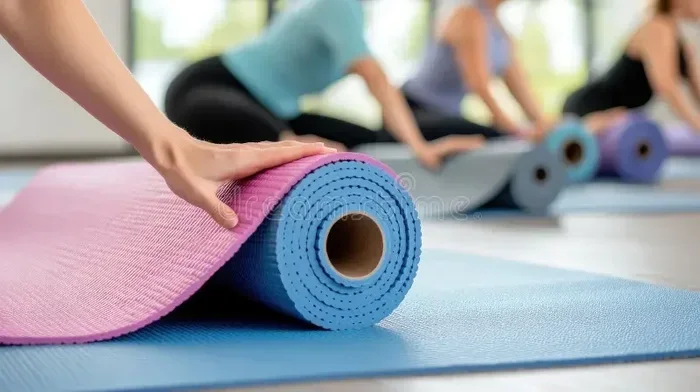
The roll is the most popular way to fold a yoga mat. It works with nearly every mat type and keeps the mat compact and tidy.
- Lay your mat flat on the floor, face down.
- Fold it in half lengthwise, bringing the top edge down to meet the bottom.
- Starting from one short end, roll the mat tightly toward the other end.
- Once rolled, secure it with a yoga strap or rubber band.
This method creates a neat cylinder that slides easily into a bag or suitcase. It also minimizes creases because the mat curves naturally rather than bending sharply at fixed points.
Method 2: The Fold in Thirds
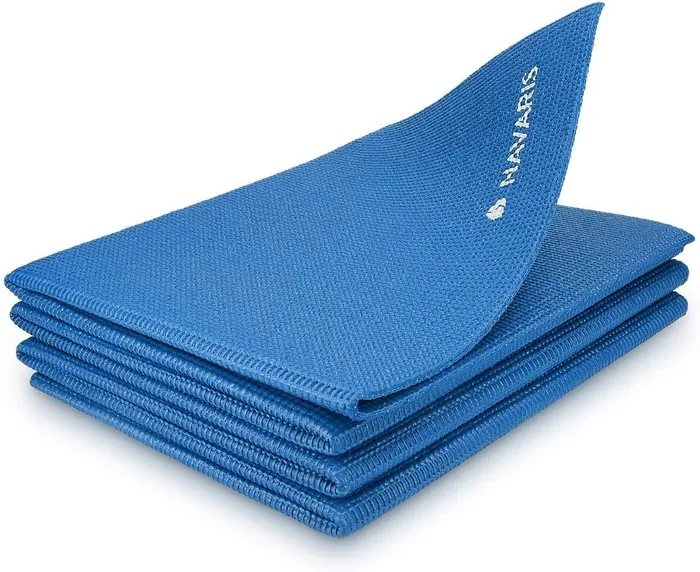
The thirds fold works well for wider mats or when you need a flat, rectangular package. This is great if you’re packing inside a suitcase where space is tight.
- Lay the mat flat on the ground.
- Fold the right third toward the center.
- Fold the left third over the right, creating a long, narrow strip.
- Fold the strip in half or thirds again to create a compact square.
This method produces a flat, stackable package. It’s ideal for people who pack their mat alongside clothing or other gear. The flat shape also prevents the mat from rolling around inside your bag.
Method 3: The Envelope Fold
The envelope fold is a newer technique that keeps the mat partially rolled and secured in a self-contained package. It’s especially useful for mats that come with a carrying strap.
- Lay the mat flat and fold it in half lengthwise.
- Starting from one end, roll the mat loosely about halfway.
- Fold the unrolled portion over the rolled portion, creating an envelope shape.
- Use the mat’s built-in strap or a separate one to hold it shut.
This method is fast, easy, and requires no extra accessories. It also lets the mat breathe slightly, which reduces moisture buildup during travel.
How to Pack Your Folded Yoga Mat for Travel
Folding is only half the battle. Packing the mat correctly ensures it stays clean, dry, and crease-free throughout your trip.
Using a Yoga Mat Bag
A dedicated yoga mat bag is the easiest way to transport a folded mat. Most bags have a shoulder strap, zipper closure, and enough room for a rolled or folded mat plus a water bottle. Look for bags made from breathable fabric to prevent trapped moisture. A good bag also protects your mat from dirt, rain, and other travel messes.
Packing Without a Bag
Not everyone wants to carry a separate bag. You can carry a yoga mat without a bag by wrapping it in a towel or using a yoga strap to bind it tightly. Some people tuck the folded mat into a large backpack or duffel bag alongside their clothes. Just make sure nothing heavy sits on top of the mat, which can create permanent creases.
If you’re flying, check out how to pack a yoga mat in a suitcase for airline-friendly tips and space-saving tricks.
Carrying a Yoga Mat on a Bike
If you cycle to your yoga spot, you need a secure way to carry your mat. A handlebar strap or rear rack works well for rolled mats. The envelope fold method is especially handy for cyclists because it creates a flat, stable package that won’t shift while riding. For detailed advice, see how to carry a yoga mat on a bike.
Keeping Your Yoga Mat Clean While Traveling
Traveling exposes your mat to gym floors, airplane trays, hotel carpets, and all sorts of surfaces you can’t fully see. Keeping it clean is essential for hygiene and longevity.
Quick Wipe-Down Tips
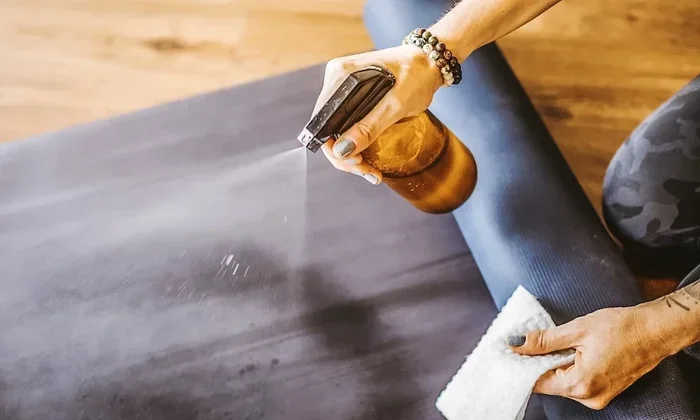
- Carry a small spray bottle with water and a few drops of tea tree oil.
- Wipe down the mat before and after each use.
- Let the mat air dry completely before folding it back up.
- Pack a clean towel to place between you and the mat in public spaces.
Deep Cleaning After Travel
When you return home, give your mat a thorough clean. You can wash most mats in a washing machine on a gentle cycle. Just make sure to air dry them completely before storing. Never put your mat in a dryer, as the heat can warp and shrink the material. For step-by-step instructions, read how to wash a yoga mat in the washer.
Drying Before Folding
This point deserves special emphasis. Folding a damp mat is the fastest way to grow mold and create permanent odors. Always let your mat dry fully — ideally in open air — before you fold it for storage. If you’re traveling in humid climates, pack a small towel to pat the mat dry before folding.
Quick Tips and Common Mistakes
Quick Tips for Perfect Folding
- Always fold on a clean surface. Dirt and debris can get trapped inside the fold and scratch the mat.
- Avoid sharp creases. Gentle curves and loose folds preserve the mat’s structure far better than tight, sharp bends.
- Use a strap or band. Even a simple hair tie works to keep your folded mat secure during transit.
- Store in a breathable bag. Avoid plastic bags that trap moisture and heat.
- Unfold regularly. If the mat stays folded for weeks, take it out and let it relax flat for a few hours.
Common Mistakes to Avoid
- Balling up the mat: This creates deep creases and strains the material unevenly.
- Folding a wet mat: Moisture leads to mold, bad smells, and material breakdown.
- Over-tightening straps: This can warp the mat and leave permanent pressure marks.
- Ignoring mat thickness: Thick mats don’t fold the same way as thin ones. Adjust your technique accordingly.
- Storing in direct sunlight: UV rays degrade yoga mat material over time, especially when the mat is folded and compressed.
Expert Insights on Yoga Mat Travel
Many experienced yoga teachers and frequent travelers have strong opinions about how to handle yoga mats on the road. The consensus is simple: treat your mat like a piece of gear that deserves care, not an afterthought stuffed in the corner of a suitcase.
One yoga instructor who travels weekly recommends the roll method with a cotton strap. She says, “A rolled mat stays tight and doesn’t shift during travel. The cotton strap breathes better than elastic and won’t leave marks on the mat.” Another teacher swears by the envelope fold for its speed and simplicity, especially when packing in a rush.
The key takeaway from these experts is consistency. Whatever method you choose, use it every time. Repetitive, careful folding builds the habit and keeps your mat in top condition trip after trip.
Conclusion
Learning how to fold a yoga mat for travel is a small skill that makes a big difference. A properly folded mat stays compact, clean, and ready for practice wherever you are. Whether you prefer the classic roll, the fold in thirds, or the envelope fold, the most important thing is to be consistent and gentle with the process.
Remember to always clean and dry your mat before folding, use the right accessories like straps and bags, and avoid common mistakes like creasing or trapping moisture. With these habits in place, your yoga mat becomes a reliable travel companion rather than a burden. Take a few minutes to practice your folding technique at home, and you’ll thank yourself every time you unroll a fresh, flat mat in a hotel room or studio halfway around the world.
The right fold keeps your mat protected, your practice consistent, and your travel experience smoother. Start using these techniques today, and your yoga mat will be the most organized piece of gear in your bag.
Frequently Asked Questions
What is the best way to fold a yoga mat for a suitcase?
The fold in thirds method works best for suitcases because it creates a flat, rectangular package that slides neatly between clothing. Lay the mat flat, fold it into thirds lengthwise, then fold it again into a compact square. This keeps the mat from rolling around and saves valuable suitcase space.
For more suitcase-specific packing tips, check out how to pack a yoga mat in a suitcase.
Can I fold a thick yoga mat for travel?
Yes, but thick mats require a different approach. Use the classic roll method rather than sharp folds, which can crack dense materials. Roll the mat loosely and secure it with a strap. If the mat is too bulky for comfortable travel, consider switching to a thinner travel mat that folds more easily.
How do I keep my folded yoga mat from unfolding in my bag?
Use a yoga strap, rubber band, or even a hair tie to secure the folded mat tightly. The envelope fold method also works well because it naturally holds its shape. For extra security, place the folded mat in a compression bag or wrap it in a towel before putting it in your luggage.
Should I wash my yoga mat before folding it for travel?
Yes, always clean your mat before folding it for travel. A quick wipe-down with a mild cleaner removes sweat, dirt, and oils that can cause odors and bacteria growth during storage. Make sure the mat is completely dry before folding to prevent mold and mildew.
What type of yoga mat is easiest to fold for travel?
Thin TPE or lightweight rubber mats are the easiest to fold for travel. They’re flexible, light, and compress into small packages without permanent creasing. Avoid thick, heavy rubber mats if portability is your main concern. For guidance on choosing the right thickness, see how thick does a yoga mat need to be.
How often should I replace my travel yoga mat?
Most yoga mats last between 12 and 24 months with regular use. Signs you need a replacement include persistent odors, visible wear, loss of grip, and permanent creases that don’t flatten out. To extend your mat’s life, always fold it properly, clean it after each use, and store it in a breathable bag.