How to Do Weighted Pull Ups with Dumbbells
Weighted pull ups with dumbbells are one of the most effective upper body exercises you can perform. This guide walks you through proper form, common mistakes, and smart progression strategies. Whether you are a beginner or advanced lifter, you will find practical tips to build strength and muscle safely.
Key Takeaways
- Weighted pull ups with dumbbells build serious back, arm, and shoulder strength using just a bar and a dumbbell.
- Proper form is critical. Focus on scapular retraction, controlled tempo, and full range of motion for best results.
- Avoid common mistakes like swinging, shrugging your shoulders, and using too much weight too soon.
- Progressive overload is the key to long-term gains. Add weight or reps gradually over time.
- You do not need expensive equipment. A pull up bar and a dumbbell are all you need to get started.
- Start with assisted variations if you cannot yet perform a strict bodyweight pull up.
- Consistency and patience will deliver the best results. Aim for 2 to 3 sessions per week.
📑 Table of Contents
What Are Weighted Pull Ups With Dumbbells
Weighted pull ups with dumbbells are a compound upper body exercise that adds resistance to the standard pull up. You hold a dumbbell between your feet or ankles while hanging from a pull up bar. This extra load forces your back, arms, and shoulders to work much harder than a regular pull up.
The movement primarily targets your lat muscles, which are the large muscles across your back. It also heavily engages your biceps, forearms, and core. Because so many muscle groups work together, this exercise is a staple in strength training programs worldwide.
Unlike machines or cable systems, dumbbell pull ups require nothing but a bar and a weight. This simplicity makes them perfect for home workouts and gym routines alike. You can scale the difficulty up or down by adjusting the weight you hold. That flexibility is one reason so many lifters prefer this movement.
If you already perform bodyweight pull ups with ease, adding dumbbell resistance is the natural next step. It challenges your muscles in a new way and promotes continued muscle hypertrophy. The exercise also builds incredible grip strength and functional strength that carries over to sports and daily life.
Benefits of Weighted Pull Ups With Dumbbells
Adding weight to your pull ups brings a host of benefits that bodyweight-only versions simply cannot match. Here is why you should consider making this exercise a regular part of your routine.
Builds Serious Back and Arm Strength
Weighted pull ups with dumbbells are one of the best upper body workout movements you can do. The added resistance forces your muscles to adapt and grow stronger. Over time, you will notice improvements in your pulling power across many other exercises too.
Targets Multiple Muscle Groups at Once
This exercise works your lats, biceps, forearms, rear delts, and core all in one movement. That makes it incredibly efficient. Instead of doing five separate exercises, one set of weighted pull ups hits them all. It is the definition of a compound exercise that saves time and delivers results.
Improves Grip and Core Stability
Holding a dumbbell between your feet or ankles demands serious grip strength. Your forearms and hands must work hard to keep hold of the weight. At the same time, your core stabilizes your entire body throughout the movement. This dual benefit makes weighted pull ups with dumbbells a full-body functional exercise.
For those interested in resistance training without machines, this exercise is a top choice. It builds muscular endurance and raw strength simultaneously. Many athletes include it in their training for improved performance in sports like climbing, rowing, and wrestling.
Supports Muscle Hypertrophy
If your goal is to build bigger muscles, weighted pull ups with dumbbells are hard to beat. The progressive nature of the exercise allows you to steadily increase the load. This progressive overload is the primary driver of muscle growth. Over weeks and months, your back and arms will grow noticeably.
How to Perform Weighted Pull Ups With Dumbbells
Proper technique is essential for getting the most out of this exercise and staying injury-free. Follow these steps carefully to nail your form.
Step-by-Step Instructions
- Set up your pull up bar. Make sure it is secure and at a comfortable height. Stand on a bench or box if needed to reach the bar.
- Grab the bar with an overhand grip, hands slightly wider than shoulder-width apart.
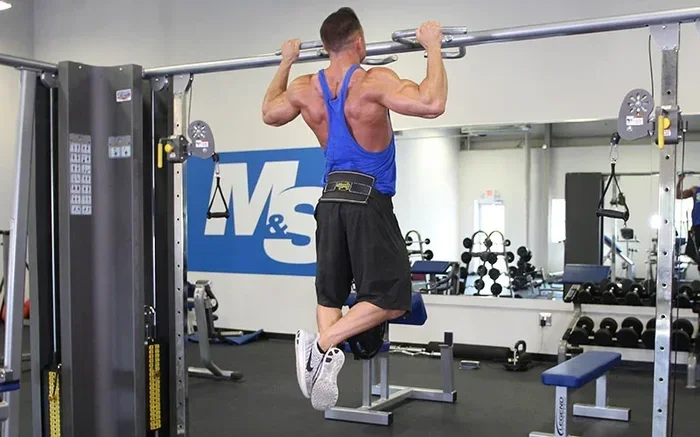
- Hang from the bar with your arms fully extended. Your shoulders should be packed and depressed, not shrugged up toward your ears.
- Hold the dumbbell securely between your feet or ankles. Choose a weight that allows you to maintain control throughout the movement.
- Pull yourself up by driving your elbows down and back. Focus on squeezing your lat muscles as you rise.
- Continue pulling until your chin clears the bar. Keep your body straight and avoid excessive swinging.
- Lower yourself slowly back to the starting position. Control the descent for a full count of two to three seconds.
- Repeat for your desired number of reps, maintaining strict form throughout each rep.
Breathing and Tempo
Breathe in as you lower yourself down. Exhale forcefully as you pull yourself up. Using a tempo training approach works very well here. Try a 2-1-3 tempo: two seconds up, one second pause at the top, and three seconds down. This slow and controlled pace maximizes muscle tension and boosts strength training gains.
How to Hold the Dumbbell
There are two common ways to hold the dumbbell. You can place it between the arches of your feet, gripping it with your inner arches. Alternatively, you can loop a dumbbell handle between your ankles. The foot method tends to be more stable for heavier weights. The ankle method works well for lighter loads. Choose whichever feels secure and comfortable for you.
Some lifters prefer to hold a dumbbell in one hand and dangle it at their side. However, this can cause twisting and imbalance. The between-feet or between-ankles approach keeps your body centered and balanced. Stick with the symmetrical method for the best results.
Common Mistakes to Avoid
Even with good intentions, it is easy to make errors when performing weighted pull ups with dumbbells. Avoiding these mistakes will keep you safe and help you get stronger faster.
Using Too Much Weight Too Soon
The biggest mistake lifters make is jumping to a heavy dumbbell before they are ready. This leads to sloppy form and increased injury risk. Start with a light weight and master the movement pattern first. You can always add more weight later. Progressive overload works best when it is gradual and controlled.
Swinging and Kipping
Using momentum to get your chin over the bar reduces the effectiveness of the exercise. It also puts unnecessary stress on your shoulders and spine. Keep your body as still as possible throughout each rep. If you find yourself swinging, the weight is likely too heavy. Drop back to a lighter load and focus on smooth, controlled movements.
Shrugging Your Shoulders
Many people let their shoulders creep up toward their ears during the pull. This shifts tension away from the lat muscles and places strain on your upper traps. Before each rep, consciously depress your shoulder blades. Think about pulling your shoulders down and back. This small cue makes a big difference in muscle activation.
Partial Reps
Only pulling up part of the way limits your gains. Full range of motion is essential for muscle hypertrophy and strength development. Lower yourself all the way down until your arms are fully extended. Pull all the way up until your chin clears the bar. Half reps might feel easier, but they do not deliver the same results.
Progression Tips for Weighted Pull Ups With Dumbbells
Progression is the backbone of any effective strength training program. Without it, your muscles have no reason to grow or get stronger. Here is how to progress safely with weighted pull ups with dumbbells.
Start With Assisted Variations
If you cannot yet perform a strict bodyweight pull up, do not jump straight to weighted reps. Build your base strength first. You can use assisted pull ups with a resistance band or an assisted pull up machine. Once you can do 8 to 12 clean bodyweight pull ups, you are ready to add weight.
Add Weight Gradually
Increase the dumbbell weight by no more than 2.5 to 5 pounds per week. Small jumps add up over time without overwhelming your muscles. This steady approach supports long-term muscle hypertrophy and reduces the risk of plateaus or injuries.
Increase Reps Before Weight
Before adding more weight, try adding more reps first. For example, if you can do 5 reps with a 10-pound dumbbell, aim for 6 or 7 reps at that weight before moving up. This approach builds muscular endurance and strengthens your tendons and joints alongside your muscles.
Track Your Workouts
Keep a simple log of your sets, reps, and weight. Tracking your progress helps you see how far you have come and keeps you motivated. It also makes it easy to plan your next progression step. Write down every session and review it weekly.
If you want to build even more pulling power, check out our guide on how to get bigger arms at home with dumbbells for additional exercises that complement weighted pull ups perfectly.
How to Choose the Right Weight for Your Workout
Selecting the proper dumbbell weight is crucial for getting the most out of weighted pull ups with dumbbells. Too light, and you will not challenge your muscles enough. Too heavy, and your form will break down.
As a general rule, start with a weight that allows you to complete 5 to 8 reps with strict form. If you can easily do more than 8 reps, the weight is too light. If you cannot complete 5 reps with good technique, the weight is too heavy. Adjust accordingly.
For beginners, a 5 to 10-pound dumbbell is often a good starting point. Intermediate lifters might work in the 15 to 25-pound range. Advanced lifters can go heavier, but should always prioritize form over ego. Remember, weighted pull ups with dumbbells are a compound movement. Your lat muscles, biceps, and forearms will fatigue quickly with heavier weights.
Also consider your grip strength. Holding a heavier dumbbell requires stronger hands and forearms. If your grip gives out before your back and arms do, the weight may be too much. Over time, your grip will adapt and improve. Be patient and let your body adjust.
For more guidance on selecting the appropriate dumbbell weight for your fitness level, check out our article on how do you know what weight dumbbells to use. It covers key factors like your experience level, goals, and current strength baseline.
Conclusion
Weighted pull ups with dumbbells are a fantastic exercise for building upper body strength, muscle, and functional fitness. They require minimal equipment but deliver maximum results. By mastering proper form, avoiding common mistakes, and progressing steadily, you can transform your back, arms, and shoulders.
Start where you are. Use a light weight, focus on each rep, and build from there. Consistency is more important than the number on the dumbbell. Give your body time to adapt and grow. Within a few weeks, you will notice real improvements in your pulling strength and overall upper body development.
Add weighted pull ups with dumbbells to your upper body workout routine two to three times per week. Pair them with complementary exercises for balanced development. Stay patient, stay consistent, and enjoy the journey of getting stronger.
Frequently Asked Questions
Can beginners do weighted pull ups with dumbbells?
It is best to master bodyweight pull ups first before adding any external weight. Start with assisted pull ups or banded variations to build your base strength. Once you can comfortably perform 8 to 12 strict bodyweight pull ups, you can begin adding light dumbbell weight and progress from there.
What weight dumbbell should I use for weighted pull ups?
Start with a weight that lets you complete 5 to 8 reps with perfect form. Beginners often start with 5 to 10 pounds. As you get stronger, gradually increase the load by 2.5 to 5 pounds per week. Always prioritize controlled movement over lifting heavier weight.
How often should I do weighted pull ups with dumbbells?
Two to three sessions per week is ideal for most people. This gives your muscles enough stimulus to grow while allowing adequate recovery time between sessions. Make sure you rest at least 48 hours between workouts targeting the same muscle groups.
Are weighted pull ups with dumbbells safe for your shoulders?
When performed with proper form, they are generally safe and effective. Keep your shoulders packed and depressed throughout the movement. Avoid shrugging or swinging. If you feel any sharp pain in your shoulders, stop immediately and reduce the weight. Warming up your shoulders before each session also helps prevent injury.
Can I use any type of dumbbell for this exercise?
Adjustable dumbbells work great because you can quickly change the weight. Hex dumbbells are stable and less likely to roll. The key is choosing a dumbbell you can hold securely between your feet or ankles. Avoid using dumbbells with smooth surfaces that might slip during the exercise.
What muscles do weighted pull ups with dumbbells target?
The primary muscles worked are the latissimus dorsi, biceps, and forearms. Secondary muscles include the rear delts, rhomboids, traps, and core. Because it is a compound movement, almost every muscle in your upper body and core contributes to the exercise in some way.