Connecting your Apple Watch to a Life Fitness treadmill is a straightforward process that unlocks a powerful, unified fitness tracking experience. By pairing your devices, you can automatically sync your treadmill workout data—like distance, pace, heart rate, and calories—directly to your Apple Health and Fitness apps, eliminating manual entry. This connection requires your Apple Watch to be updated, Bluetooth enabled, and the Life Fitness app installed. The process typically takes under a minute and transforms your treadmill session into a fully integrated part of your Apple fitness ecosystem, providing a holistic view of your activity and progress.
So, you’ve invested in a sleek Life Fitness treadmill for your home gym, and you live your life by the rings on your Apple Watch. You want these two powerful fitness tools to work together, not in silos. The frustration of finishing a great run on the treadmill, only to realize your Apple Watch was just counting steps in your pocket while the treadmill’s console held the real data, is all too real. Connecting your Apple Watch to your Life Fitness treadmill bridges this gap. It’s about creating a single source of truth for your workout, where your wrist-based health data meets the precise metrics of your cardio machine. This isn’t just about convenience; it’s about accuracy, motivation, and getting the most comprehensive picture of your fitness journey. Let’s walk through exactly how to make this connection happen, why it matters, and what to do if things don’t go as planned.
Key Takeaways
- Seamless Data Sync: Connecting your Apple Watch to the Life Fitness treadmill automatically transfers all workout metrics (heart rate, distance, pace, elevation) to the Apple Health and Fitness apps, creating a complete activity record without manual logging.
- Prerequisites are Essential: Successful pairing requires a compatible Apple Watch (Series 1 or newer), the latest watchOS and iOS updates, Bluetooth turned on, and the free Life Fitness app downloaded and logged in on your iPhone.
- NordicTrack/ProForm Compatibility: This method works for Life Fitness treadmills that are part of the NordicTrack or ProForm families, as they use the same iFit platform and connectivity protocols.
- One-Time Setup: The initial pairing process is a one-time setup per treadmill. Once your Apple Watch is connected to a specific machine via the Life Fitness app, it should remember the connection for future workouts on that same treadmill.
- Heart Rate is Key: The primary benefit is the real-time, accurate transmission of your heart rate from the Apple Watch’s sensor to the treadmill’s console, allowing the machine to calibrate calorie burn and intensity metrics more precisely.
- Troubleshooting is Simple: Most connection issues are resolved by restarting devices, ensuring Bluetooth is on, updating software, or re-pairing. The treadmill must be powered on and the Life Fitness app must be open on your iPhone during pairing.
- It Enhances Accountability: Seeing your real-time heart rate and having the workout automatically saved to your Apple Fitness rings provides immediate feedback and long-term motivation, making your treadmill sessions more effective and engaging.
📑 Table of Contents
Why Connect Your Apple Watch to Your Treadmill?
Before we dive into the “how,” let’s establish the “why.” Connecting these devices isn’t just a tech gimmick; it fundamentally improves your workout tracking and experience.
The Unified Fitness Dashboard
Your Apple Watch and the Apple Health app are designed to be the central hub for all your physical activity. When your treadmill workout data flows directly into this ecosystem, you avoid the “data silo” problem. Instead of having your outdoor runs, strength sessions, and treadmill walks scattered across different apps, they all converge. This unified view allows you to see trends, understand your total weekly active energy, and correlate different types of exercise with your resting heart rate, sleep, and recovery metrics. It’s the difference between having a fragmented puzzle and seeing the complete picture of your health.
Accurate Heart Rate Integration
This is the crown jewel of the connection. While many treadmills have hand pulse sensors, they are notoriously inaccurate and interrupt your running form. Your Apple Watch, with its optical heart sensor on the back, provides continuous, chest-strap-level accuracy (for most users) directly from your wrist. When paired, this heart rate data is transmitted to the treadmill’s console. The treadmill then uses this more reliable heart rate to calculate your calorie burn and determine your heart rate-based training zones. This means the “Calories” readout on your treadmill screen is now personalized to *your* actual heart rate, not a generic formula based on speed and incline alone.
Eliminate Manual Logging
How many times have you finished a treadmill workout, looked at the console stats, and then thought, “I’ll log that in my app later,” only to forget? Automatic sync erases this step. The moment your workout is complete and you stop the treadmill, the session—with all its details—is wirelessly sent to the Life Fitness app on your phone and then synced to Apple Health. This ensures no data is ever lost and your activity rings close reliably. It’s a small time-saver that removes a big mental barrier to consistent tracking.
Prerequisites: What You Need Before You Start
Success hinges on preparation. Skipping these checks is the most common reason for pairing failures. Gather your devices and check these boxes.

Visual guide about How to Connect Apple Watch to Life Fitness Treadmill
Image source: lifefitnessindia.com
Compatible Equipment & Software
First, confirm your hardware and software are up to date.
- Apple Watch: You need an Apple Watch Series 1 or newer running watchOS 8.0 or later. While older models may work, using the latest compatible software is crucial for stable Bluetooth communication.
- iPhone: Your iPhone must be running iOS 15.0 or later. The Life Fitness app runs on your iPhone, which acts as the intermediary between your watch and the treadmill.
- Life Fitness Treadmill: Your treadmill must be a model with Bluetooth connectivity. This is standard on most Life Fitness units manufactured in the last 5-7 years, especially those branded as NordicTrack or ProForm (which are part of the same parent company, iFit). Look for a Bluetooth symbol on the console or in the settings menu.
- Life Fitness App: Download the free “Life Fitness” app from the App Store. Do not download “iFit” unless your treadmill specifically requires it for initial setup, as the Life Fitness app is the primary app for Apple Watch integration.
Account and Power
Two more critical steps:
- Create/Log into Your Life Fitness Account: Open the Life Fitness app on your iPhone and create a free account or log in. This account is what ties your workout data to your identity and enables cloud syncing to Apple Health.
- Treadmill Must Be Powered On: The treadmill needs to be fully powered up and at the home screen or main menu. It cannot be in sleep mode or powered off. The Bluetooth radio on the treadmill is only active when the console is on.
Step-by-Step Connection Guide
With everything ready, the actual pairing is a simple, linear process. Follow these steps in order.
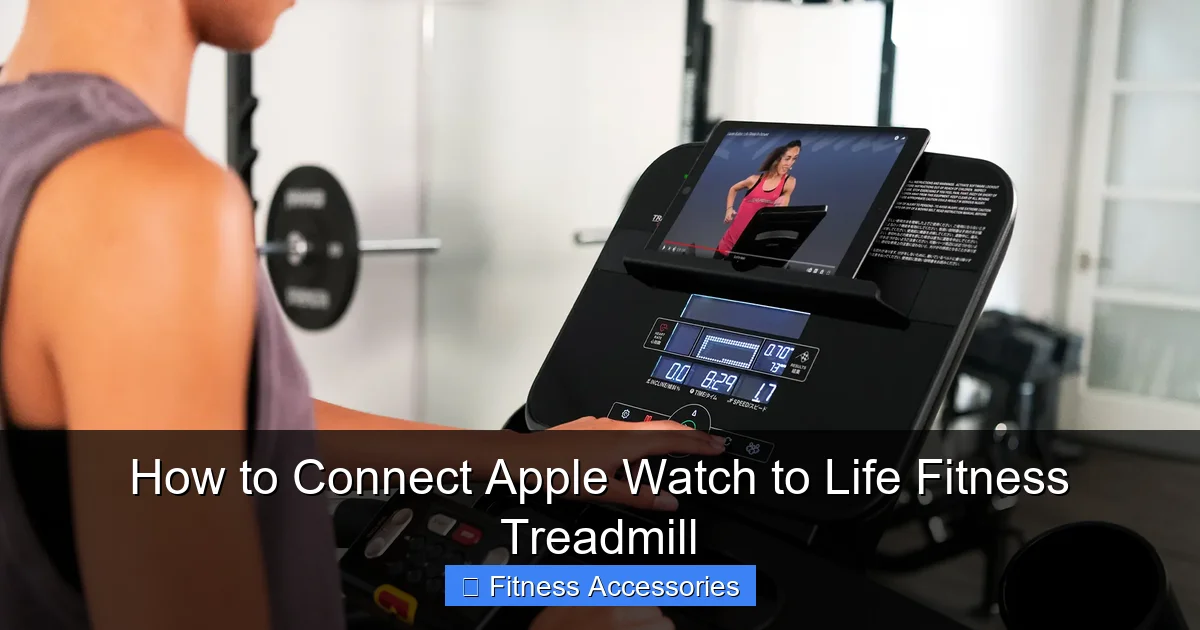
Visual guide about How to Connect Apple Watch to Life Fitness Treadmill
Image source: i.shgcdn.com
Step 1: Prepare Your iPhone and Apple Watch
On your iPhone, ensure Bluetooth is turned on (Settings > Bluetooth). On your Apple Watch, press the Digital Crown to see your apps. You do not need to open any specific app on the watch yet; the connection is managed through the iPhone app.
Step 2: Open the Life Fitness App and Initiate Pairing
Open the Life Fitness app on your iPhone. Tap on the “More” tab (usually three horizontal lines in the bottom right corner). From the menu, select “Settings”. Within Settings, look for “Device Connections” or “Connect Devices”. Tap it. The app will begin scanning for nearby compatible Life Fitness equipment. Make sure you are standing close to your treadmill (within 10-15 feet).
Step 3: Select Your Treadmill
After a few seconds, your treadmill’s name (e.g., “Life Fitness Treadmill 12345” or a custom name you set) should appear in the list on your iPhone screen. Tap on it. Your iPhone may prompt you to confirm pairing; accept any prompts.
Step 4: The Crucial Apple Watch Permissions
This is the step where most people get stuck. After selecting the treadmill, the Life Fitness app will automatically trigger a permission request on your Apple Watch. You will see a screen on your watch that says something like “Life Fitness would like to connect to your Apple Watch” with options to “Allow” or “Don’t Allow.” You must tap “Allow” on your Apple Watch screen. If you miss this pop-up or accidentally dismiss it, the connection will not be established. If you don’t see a prompt on your watch, ensure your watch is unlocked and the screen is active (raise your wrist or tap the screen).
Step 5: Confirmation and Final Sync
Once you tap “Allow” on the watch, you should see a confirmation message on your iPhone screen stating that your Apple Watch is connected. The Life Fitness app might also show a small watch icon next to your treadmill’s name. At this point, the connection is live. To finalize, start a workout on your treadmill. As you walk or run, you should see your real-time heart rate from your Apple Watch appear on the treadmill’s console display, usually in the heart rate zone or metrics section.
Troubleshooting Common Connection Issues
Technology doesn’t always cooperate. Here’s how to solve the most frequent problems.
Visual guide about How to Connect Apple Watch to Life Fitness Treadmill
Image source: fitnesszone.com
“Device Not Found” or Scanning Fails
If your treadmill doesn’t appear in the Life Fitness app list:
- Restart Everything: Power cycle your treadmill (turn it off and unplug it for 30 seconds), restart your iPhone, and restart your Apple Watch. This clears temporary Bluetooth glitches.
- Check Treadmill Bluetooth: Go into your treadmill’s settings menu (often a gear icon). Navigate to Bluetooth or Wireless Settings. Confirm Bluetooth is Enabled and the treadmill is Discoverable or in Pairing Mode. Some models require you to manually enable “Mobile Connectivity” or “App Connection.”
- Proximity and Interference: Move your iPhone closer to the treadmill. Turn off other Bluetooth devices nearby (like wireless headphones or other fitness sensors) that might be causing congestion.
No Heart Rate Data on Treadmill Console
If the treadmill connects but your heart rate doesn’t show up:
- Re-grant Permissions: On your iPhone, go to Settings > Privacy & Security > Health > Life Fitness. Ensure all categories (Heart Rate, Workouts, etc.) are toggled ON. Then, return to the Life Fitness app and try disconnecting/reconnecting the device.
- Watch App Not Running: The Life Fitness app must be running in the background on your iPhone for the link to work. Double-check it’s not force-closed. Also, ensure your Apple Watch is not in Power Saving Mode or Do Not Disturb, which can sometimes interrupt background communication.
- Firmware Update: Check for a firmware update for your treadmill. This is often done through the Life Fitness app itself (Settings > Equipment > Check for Update). Outdated treadmill firmware is a common culprit.
Data Not Syncing to Apple Health After Workout
If the workout saves in the Life Fitness app but doesn’t appear in Apple’s Fitness or Health apps:
- Check Health Permissions (Again): This is the #1 fix. Go to iPhone Settings > Privacy & Security > Health. Scroll to Life Fitness and verify that “Workouts” and “Heart Rate” are permitted. Without these, data is blocked at the gate.
- Manual Sync: Open the Life Fitness app, go to your workout history, find the saved session, and look for a share or sync icon. Sometimes a manual trigger is needed.
- Restart the Bridge: After confirming permissions, force-close the Life Fitness app on your iPhone and reopen it. This often prompts a fresh sync with Apple Health.
Maximizing the Connected Experience: Tips and Best Practices
Once connected, you can optimize the setup for the smoothest, most insightful workouts.
Use a Consistent Workflow
Build a ritual. Before you start, glance at your Apple Watch to ensure it’s on your wrist and has a good heart rate signal (the green sensors are lit). Open the Life Fitness app on your iPhone to confirm it’s running. Then, start your treadmill workout from the console. This pre-check prevents the “oh no, it didn’t connect” moment mid-run.
Leverage the Data for Training
Don’t just let the data passively collect. Use the heart rate zones displayed on the treadmill console, driven by your watch’s data, to guide your effort. Aim to spend time in specific zones (Fat Burn, Cardio, Peak) based on your fitness goals. After your workout, review the session in the Apple Fitness app. Look at your average and peak heart rate, your active energy burn, and how it contributed to closing your Move ring. This feedback loop is where real adaptation happens.
Maintain Your Equipment
A clean watch and treadmill sensor area ensure good connection. Wipe the back of your Apple Watch with a soft, lint-free cloth to remove sweat and oils that can interfere with the optical heart sensor. Also, clean the treadmill’s console and the area around its Bluetooth antenna (usually a small plastic window on the front or side). Dust and grime can impede signal strength.
The Bigger Picture: Your Connected Fitness Ecosystem
Connecting your Apple Watch to your Life Fitness treadmill is a single node in a vast network. This connection is a gateway to a truly integrated smart gym.
Beyond the Treadmill: Other Compatible Equipment
The same Life Fitness app and Apple Watch connection protocol works with a wide range of other cardio machines from the same family—including ellipticals, stationary bikes, and rowers—from brands like NordicTrack, ProForm, and Freemotion. Once your Apple Watch is paired with the Life Fitness app, it will automatically seek to connect to any compatible machine you use. This means you can walk into a gym with this equipment or add another machine to your home, and your watch will seamlessly integrate, maintaining your consistent tracking method across all cardio activities.
The Role of Third-Party Apps
For power users, apps like RunGap (paid) or Health Auto Export can serve as intermediaries, allowing you to manually or automatically export workouts from the Life Fitness/iFit platform into Apple Health with more control. However, for the vast majority of users, the official Life Fitness app-to-Apple Health connection is perfectly sufficient, reliable, and free.
Ultimately, this connection is about removing friction from your fitness routine. It’s about your technology working for you, quietly and efficiently in the background, so you can focus on the run, the interval, the hill. You put in the work; your devices capture the results, compile them, and show you your progress. That’s the promise of a connected home gym, and it starts with a simple pairing between your wrist and your treadmill.
Frequently Asked Questions
Do I need an iFit membership to connect my Apple Watch?
No. An iFit membership is not required for the basic Bluetooth connection and data sync between your Apple Watch and Life Fitness treadmill. The connection is facilitated by the free Life Fitness app and the built-in Bluetooth on your equipment. An iFit subscription is only needed for accessing guided workouts and additional content streams on the treadmill console itself.
Why isn’t my heart rate showing on the treadmill even though it’s connected?
First, ensure your Apple Watch has a good heart rate signal (green lights on the back are active). Then, on your iPhone, go to Settings > Privacy & Security > Health, find Life Fitness, and verify that “Heart Rate” and “Workouts” permissions are toggled ON. Finally, restart your treadmill and iPhone to refresh the connection.
Can I connect my Apple Watch to multiple Life Fitness treadmills?
Yes. Your Apple Watch can be paired with the Life Fitness app, which can then connect to any compatible Life Fitness treadmill you use. The connection is typically made on a per-machine basis the first time you use it. Your watch will remember each machine, but you may need to select it in the Life Fitness app if you use a different treadmill than your last workout.
Will this connection drain my Apple Watch battery faster?
Minimally. The constant Bluetooth Low Energy (BLE) communication with the treadmill uses a tiny amount of power. The biggest battery drain during a treadmill workout is the watch’s own heart rate monitoring and screen usage. The additional drain from maintaining the machine connection is negligible and not a cause for concern.
My treadmill is a NordicTrack, not a Life Fitness branded one. Can I still connect?
Almost certainly, yes. NordicTrack and ProForm treadmills are manufactured by the same parent company (iFit) and use the identical Life Fitness mobile app for connectivity and Apple Watch integration. The process is exactly the same. Download the Life Fitness app, not the iFit app, for the best Apple Watch sync results.
What if the Life Fitness app doesn’t recognize my treadmill model?
If your treadmill is Bluetooth-enabled but doesn’t appear in the app’s device list, check for a firmware update first (in the app’s equipment settings). If that fails, consult your treadmill’s manual for specific instructions on enabling “Mobile Connectivity” or “App Pairing” mode. Some older models may require you to press a specific button combination on the console to make it discoverable.