How to Check Engine Oil on Bmw
Checking your BMW engine oil is one of the simplest yet most important maintenance tasks you can do at home. This guide walks you through the exact steps to check your BMW oil level safely, whether you drive a 3 Series, 5 Series, or X Series. You will learn where the dipstick is located, how to read the oil markings, and when to add or change your oil to keep your engine running smoothly.
Owning a BMW comes with the joy of driving a finely engineered machine. But with that joy comes the responsibility of keeping everything running right. One of the most basic yet essential tasks is learning how to check engine oil on BMW vehicles. Whether you own a sleek 3 Series or a powerful X5, your engine depends on clean oil to run smoothly. In this guide, we will walk you through every step of the process. You will also learn when to change your oil, what type to use, and how to avoid common mistakes that BMW owners make.
Many BMW drivers skip oil checks until something goes wrong. That is a risky habit. Low oil levels can lead to engine overheating, increased wear, and expensive repairs. The good news is that checking your BMW oil takes just a few minutes. You do not need to be a mechanic. All you need is a clean rag, the right oil, and a few minutes of your time. Let us get into it.
Key Takeaways
- Regular oil checks prevent engine damage: Low oil can cause serious BMW engine problems over time.
- Check oil when the engine is cool: Wait at least 10 minutes after turning off the engine for an accurate reading.
- Use the right BMW-approved oil: Always match your oil type to what your BMW manual recommends.
- Know your BMW model specifics: Some newer BMWs use electronic oil level sensors instead of a traditional dipstick.
- Change oil on schedule: Regular oil changes keep your BMW engine performing at its best.
- Look for warning signs: Dark or gritty oil means it is time for a change.
📑 Table of Contents
- Why Checking BMW Engine Oil Matters
- Tools You Need to Check BMW Engine Oil
- Step-by-Step Guide to Check Engine Oil on BMW
- How to Add Oil to Your BMW
- Common Mistakes to Avoid When Checking BMW Oil
- When to Change Your BMW Engine Oil
- BMW Oil Check Tips for Different Models
- Final Thoughts on BMW Oil Maintenance
Why Checking BMW Engine Oil Matters
Engine oil is the lifeblood of your BMW. It lubricates every moving part inside your engine. Without proper oil levels, metal parts grind against each other. This causes friction, heat, and eventually engine failure. Checking your oil regularly helps you catch problems early. It also keeps your engine running at peak performance. Most BMW experts recommend checking your oil at least once a month. This is especially true if you drive your BMW frequently or in tough conditions like stop-and-go traffic or extreme heat.
BMW engines are precision machines. They are designed to run with specific oil weights and formulations. Using the wrong oil or letting the level drop too low can void your warranty. It can also shorten the life of your engine. So taking a few minutes each month to check your oil is one of the best investments you can make. Think of it as a quick health check for your car.
How Often Should You Check BMW Oil?
As a general rule, check your BMW oil once a month. You should also check it before any long road trip. Newer BMW models may have electronic oil monitoring systems. These systems will alert you when oil levels drop. However, a manual check is still the best way to confirm what the sensor is telling you. If you notice any warning signs like engine noise or dashboard lights, check your oil right away.
Tools You Need to Check BMW Engine Oil
Checking your BMW oil is simple. You do not need a lot of tools. Here is what you will need:
- A clean lint-free rag or paper towel – to wipe the dipstick clean.
- The correct BMW-approved engine oil – check your owner manual for the right type.
- A funnel – this helps you add oil without spilling.
- Your BMW owner manual – this has all the specifics for your model.
- A level surface – park on flat ground for an accurate reading.
That is it. You do not need any fancy equipment. Just these basic items and a few minutes of your time. If you are comparing this to other maintenance tasks, it is much simpler than something like oiling a treadmill belt, which also requires specific products and care. Both tasks keep your machine running well, but checking BMW oil is even easier.
Step-by-Step Guide to Check Engine Oil on BMW
Now let us walk through the actual process. Follow these steps carefully for the most accurate reading.
Step 1: Park on a Level Surface
Start by parking your BMW on a flat, level surface. Turn off the engine and let it cool for at least 10 minutes. This allows the oil to settle back into the oil pan. If you check the oil right after driving, the reading will be inaccurate. The oil will be distributed throughout the engine, giving you a false low reading.
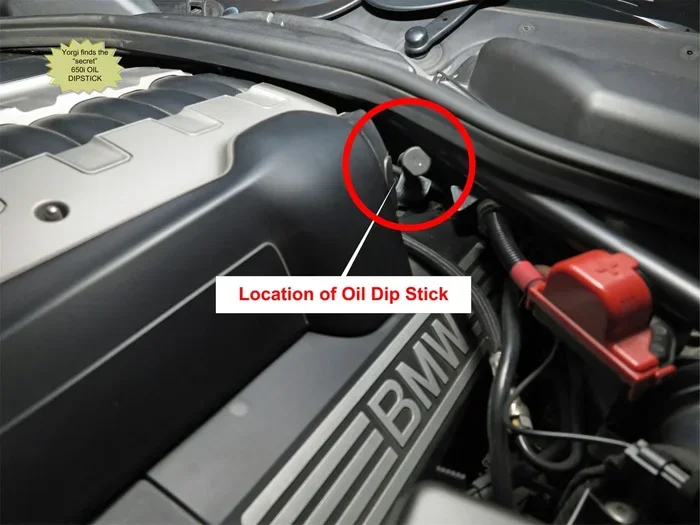
Step 2: Locate the Oil Dipstick
Open the hood of your BMW. The dipstick handle is usually yellow or orange and has a circular grip. It is typically located near the front of the engine bay. On some BMW models, especially newer ones, the dipstick may be harder to access. Refer to your owner manual if you are having trouble finding it. Pull the dipstick out gently.
Step 3: Wipe the Dipstick Clean
Take your clean rag and wipe the dipstick completely clean. You want to remove all old oil from the stick. This ensures that your next reading is accurate. Hold the rag flat and pull the dipstick through it slowly.
Step 4: Reinsert the Dipstick
Push the dipstick all the way back into its tube. Do not force it, but make sure it is seated fully. Wait a second, then pull it out again. This second reading is the one you will use.
Step 5: Read the Oil Level
Look at the tip of the dipstick. You will see two marks or holes. These indicate the minimum and maximum oil levels. The oil should fall between these two marks. If the oil line is below the minimum mark, you need to add oil. If it is above the maximum mark, you have too much oil, which can also cause problems.
Step 6: Check the Oil Color and Condition
While you have the dipstick out, look at the color of the oil. Fresh oil is amber or golden brown. Dark brown or black oil means it is time for an oil change. If the oil looks milky or frothy, this could indicate a coolant leak. That is a serious issue that needs immediate attention from a mechanic.
How to Add Oil to Your BMW
If your oil level is low, you will need to add more. Here is how to do it safely.
- Find the oil fill cap. It is usually on top of the engine and labeled with an oil can symbol.
- Open the cap and insert a funnel. This prevents spills and keeps the engine bay clean.
- Add small amounts of oil. Pour a little at a time. Wait a few seconds between additions.
- Recheck the level with the dipstick. Repeat until the oil falls between the minimum and maximum marks.
- Replace the fill cap securely. Make sure it clicks into place.
Always use the oil type recommended in your BMW owner manual. Using the wrong oil can affect engine performance and void your warranty. If you are unsure which oil to use, check the label on your previous oil bottle or consult your dealer.
Common Mistakes to Avoid When Checking BMW Oil
Even simple tasks can go wrong if you are not careful. Here are some common mistakes BMW owners make when checking their oil:
- Checking oil while the engine is hot: This gives inaccurate readings. Always wait for the engine to cool.
- Overfilling the oil: Too much oil can cause foaming and pressure buildup. It can damage your engine.
- Using the wrong oil type: BMW engines require specific oil weights. Using generic oil can reduce performance.
- Skipping oil changes: Even if the oil level is fine, old oil loses its lubricating properties over time.
- Ignoring warning signs: If your dashboard oil light comes on, do not ignore it. Check your oil immediately.
Avoiding these mistakes will keep your BMW engine healthy for years. It is also worth noting that maintaining proper oil levels is similar to knowing how to maintain other machines. For example, just like you would check tire pressure or keep an exercise bike well-maintained, engine oil care is part of routine ownership.
When to Change Your BMW Engine Oil
Checking oil is not enough on its own. You also need to change it regularly. BMW recommends oil changes every 10,000 to 15,000 miles for most models. However, this can vary based on your driving habits and the oil type you use. Synthetic oil tends to last longer than conventional oil. If you drive in harsh conditions, you may need to change your oil more frequently.
Signs that your BMW needs an oil change include:
- Dark or gritty oil on the dipstick
- Increased engine noise or knocking sounds
- Oil pressure warning light on the dashboard
- Reduced fuel efficiency
- A burning smell coming from the engine bay
Sticking to a regular oil change schedule is one of the easiest ways to protect your BMW investment. It keeps the engine clean, reduces wear, and ensures smooth performance mile after mile.
BMW Oil Check Tips for Different Models
Every BMW model has its own quirks. Here are a few tips tailored to popular BMW series:
BMW 3 Series
The 3 Series is one of the most popular BMW models. The dipstick is easy to access under the hood. Use BMW LL-01 or LL-04 approved oil depending on your engine type. These oils meet the strict BMW specifications for performance and protection.
BMW 5 Series
The 5 Series has a larger engine compartment, which makes the dipstick straightforward to find. Check your oil monthly if you drive long distances frequently. The 5 Series benefits from high-quality synthetic oil for optimal engine protection.
BMW X Series (SUVs)
BMW X models like the X3 and X5 have more ground clearance and larger engines. The oil check process is the same, but these vehicles often use more oil. Keep an extra quart in your trunk for emergencies.
Newer BMW Models with Electronic Oil Sensors
Some newer BMW models do not have a traditional dipstick. Instead, they use electronic sensors to monitor oil levels. In these cases, you can check your oil level through the iDrive system on the dashboard. However, it is still a good idea to have a manual check done during oil changes at a service center.
Final Thoughts on BMW Oil Maintenance
Checking your BMW engine oil is a simple task that pays off big time. It takes just a few minutes each month and can save you from costly engine repairs. Remember to check your oil on a cool engine, use the right BMW-approved oil, and never ignore warning signs. Your BMW is a premium machine, and it deserves premium care. By staying on top of your oil checks and changes, you keep your engine running strong for years to come. Make it a habit. Your future self and your BMW will thank you.
Whether you are a new BMW owner or have been driving one for years, never underestimate the power of regular oil maintenance. It is the foundation of engine health. And once you get into the routine, it becomes second nature. So grab your rag, pop the hood, and give your BMW the care it deserves.
Frequently Asked Questions
How do I check the oil level on my BMW?
Park your BMW on a level surface, turn off the engine, and wait 10 minutes. Open the hood, locate the yellow dipstick, pull it out, wipe it clean, reinsert it, and pull it out again. Look at the two marks on the dipstick. The oil level should fall between the minimum and maximum marks for a healthy reading.
What type of oil does a BMW need?
BMW recommends using BMW-approved synthetic oils, typically LL-01 or LL-04 certified. Always check your owner manual for the exact oil weight and specification for your specific BMW model. Using the wrong oil can affect engine performance and may void your warranty.
How often should I check my BMW engine oil?
Check your BMW oil at least once a month. You should also check it before any long road trips. If your BMW has an electronic oil monitor, still do a manual check periodically to confirm the reading and catch any issues early.
Can I check my BMW oil while the engine is running?
No. You should always check your BMW oil with the engine off and cooled down for at least 10 minutes. Checking oil while the engine is hot gives inaccurate readings because the oil is still circulating and has not settled back into the oil pan.
What should I do if my BMW oil level is low?
If your oil level is low, add BMW-approved oil slowly using a funnel. Add small amounts and recheck with the dipstick after each addition. Stop when the oil level reaches between the minimum and maximum marks. Do not overfill, as too much oil can cause engine damage.
Do all BMW models have a dipstick for checking oil?
Not all newer BMW models have a traditional dipstick. Some BMW models use electronic oil level sensors that you can check through the iDrive display system. If your BMW does not have a dipstick, consult your owner manual or visit a BMW service center for a manual oil level check.
=== CONCLUSION ===
Learning how to check engine oil on BMW is one of the most valuable skills every BMW owner should have. It is quick, easy, and incredibly important for keeping your engine healthy. Follow the steps in this guide, avoid common mistakes, and stick to a regular oil change schedule. Your BMW will reward you with smooth, reliable performance for many miles to come. Start today. Pop the hood, grab your rag, and give your engine the care it deserves.