How to Burn the Most Calories on a Treadmill

To burn the most calories on a treadmill, you must combine high-intensity interval training (HIIT), strategic incline work, and consistent progressive overload. Focus on intensity over leisurely strolls, engage your core, and fuel properly. This guide breaks down the exact protocols, common mistakes to avoid, and how to structure your weekly routine for maximum metabolic impact.
So, you’ve stepped onto the treadmill. Maybe you’re aiming to shed a few pounds, boost your endurance, or simply feel stronger. The machine hums beneath you, a direct line to your fitness goals. But here’s the critical question: are you truly burning the most calories on a treadmill that you possibly can, or are you just going through the motions? Many people fall into the trap of the same, steady-paced walk or jog, wondering why the scale won’t budge. The truth is, the treadmill is an incredibly potent tool for calorie incineration, but you need to know how to wield it correctly. It’s not about mindlessly plodding along while watching TV. It’s about strategy, science, and sweat. This comprehensive guide will transform your treadmill sessions from a simple cardio footnote into the starring act of your fat-loss journey.
We’ll move beyond basic advice. We’ll dive into the physiological mechanisms of calorie burn, dissect the most effective workout structures, and highlight the subtle form cues that make a world of difference. Whether you’re a beginner looking for a safe, effective starting point or a seasoned runner hitting a plateau, the principles here will help you maximize every single minute you spend on the belt. Forget guesswork. It’s time to engineer your workouts for maximum metabolic output.
Key Takeaways
- Intensity is King: High-Intensity Interval Training (HIIT) and sprint intervals burn significantly more calories per minute than steady-state cardio and create an “afterburn” effect (EPOC).
- Incline is Your Secret Weapon: Walking or running uphill dramatically increases calorie expenditure by engaging more muscle groups and demanding greater energy output.
- Form Fuels Fat Loss: Proper posture, arm drive, and avoiding handrail reliance maximize efficiency and prevent injury, allowing you to work harder for longer.
- Consistency & Progression are Non-Negotiable: Your body adapts. To keep burning calories, you must gradually increase speed, incline, or duration over weeks and months.
- Nutrition is Half the Battle: You cannot out-run a poor diet. Calorie burn on the treadmill must be paired with a sustainable, nutrient-dense eating plan for visible fat loss.
- Track Everything: Use treadmill metrics, heart rate monitors, and perceived exertion to objectively measure effort and ensure you’re pushing into the optimal calorie-burning zones.
- Recovery Enables Performance: Adequate sleep and rest days are crucial. Overtraining leads to burnout and injury, halting your calorie-burning progress.
📑 Table of Contents
- Understanding the Science of Calorie Burn
- Method 1: High-Intensity Interval Training (HIIT) – The Afterburn Architect
- Method 2: Incline Walking – The Low-Impact Powerhouse
- Method 3: The Hybrid: Incline Intervals
- The Critical Role of Form and Technique
- Nutrition and Recovery: The Unseen Calorie Burners
- Putting It All Together: Your Weekly Treadmill Plan
- Conclusion
Understanding the Science of Calorie Burn
Before we talk workouts, we need to understand the “why.” Calories are units of energy. Your body burns them to keep you alive (your Basal Metabolic Rate) and to power all your activities, including exercise. The number of calories you burn during a treadmill session depends on several key factors.
The Big Three: Weight, Intensity, and Duration
It’s a simple equation, but the variables matter. A 150-pound person will burn fewer calories than a 200-pound person doing the exact same workout for the same time—their body simply requires more energy to move more mass. This is why treadmill calorie counters, which often ask for your weight, are more accurate than generic online estimates.
Intensity is the most powerful lever you can pull. Intensity refers to how hard your body is working, typically measured by heart rate or perceived exertion. A brisk walk (low intensity) uses primarily fat as fuel but burns fewer total calories per minute. A hard run (high intensity) burns more glycogen (carbohydrates) but torches a vastly higher number of total calories in that same minute. Furthermore, high-intensity work creates a significant “afterburn” effect, scientifically known as Excess Post-exercise Oxygen Consumption (EPOC). Your body remains in a heightened metabolic state for hours after a brutal interval session, burning extra calories to repair muscle, replenish energy stores, and return to homeostasis. This is the metabolic goldmine.
Duration is the other obvious factor. Longer sessions burn more total calories. But here’s the strategic insight: a 20-minute HIIT session can burn the same or more total calories (including EPOC) as a 45-minute steady-state jog, while also preserving muscle mass better. Time is a precious commodity; intensity helps you get more return on your investment.
The Incline Multiplier
Adding an incline isn’t just about making it harder; it fundamentally changes the demand on your body. Walking on a 5% incline can burn nearly 50% more calories than walking on a flat surface at the same speed. Why? You’re fighting gravity. You’re engaging your glutes, hamstrings, and calves in a way flat running doesn’t. You’re also often forced into a more upright, powerful posture. The incline is a direct, linear multiplier for calorie expenditure.
Method 1: High-Intensity Interval Training (HIIT) – The Afterburn Architect
If your goal is to burn the most calories on a treadmill in the shortest possible time, HIIT is your primary tool. The structure is simple: alternate periods of near-maximum effort with periods of active recovery or complete rest.

Visual guide about How to Burn the Most Calories on a Treadmill
Image source: beautyepic.com
Crafting the Perfect HIIT Treadmill Session
A classic and highly effective protocol is the 1:2 ratio. For example:
- Warm-up: 5 minutes of easy walking or light jogging.
- Work Interval: 30 seconds of sprinting (at a pace that feels like an 8-9 out of 10 on your effort scale).
- Recovery Interval: 60 seconds of slow walking or standing.
- Repeat: This cycle 8-10 times.
- Cool-down: 5 minutes of easy walking.
That’s a total time of under 25 minutes. The key during the work interval is to go truly hard. You should be gasping, your legs burning. The recovery interval is not a time to check your phone; it’s a non-negotiable period of lower effort that allows you to recover enough to hit the next work interval with high intensity again.
Advanced HIIT Variations
Once you master the basics, you can manipulate the variables:
- Tabata Protocol: 20 seconds of all-out effort, 10 seconds of rest, repeated 8 times. Brutally effective, but only for those with a solid fitness base.
- Pyramid Intervals: Gradually increase the work interval duration (e.g., 30s, 45s, 60s, 45s, 30s) with consistent recovery periods. This builds mental and physical stamina.
- Incline Sprints: Instead of just increasing speed, add a 2-4% incline during your work intervals. This is a serious glute and hamstring activator that skyrockets calorie burn.
Method 2: Incline Walking – The Low-Impact Powerhouse
Not everyone can or should run. High-impact running can be tough on joints. Enter incline walking: the arguably most underrated calorie-burning activity on the planet. It’s low-impact, highly accessible, and torches fat.

Visual guide about How to Burn the Most Calories on a Treadmill
Image source: progymguide.com
The “12-3-30” Method Explained
Popularized by social media, this is a specific, repeatable protocol: set your treadmill to a 12% incline and a speed of 3.0 miles per hour, and walk for 30 minutes. It’s simple, effective, and brutal. At that incline and slow speed, you are forced to engage your posterior chain (glutes, hamstrings, calves) powerfully. You’ll feel a burn in muscles you didn’t know you had. This method is fantastic for building leg strength and endurance without the pounding of running.
Building Your Own Incline Walking Protocol
Don’t have a 12% incline? No problem. The principle is the key:
- Find Your “Hard” Incline: Start at a 4-5% incline at a brisk walking pace (3.5-4.0 mph). You should be breathing heavily but able to talk in short phrases.
- Duration is Key: Aim for 30-45 minutes of continuous incline walking. The steady, moderate-to-high demand on large muscle groups leads to significant calorie expenditure.
- Mix It Up: Create an “incline ladder.” Start at 2%, increase by 1% every 5 minutes until you reach your max (e.g., 8-10%), then work your way back down. This keeps the mind engaged and the body guessing.
Method 3: The Hybrid: Incline Intervals
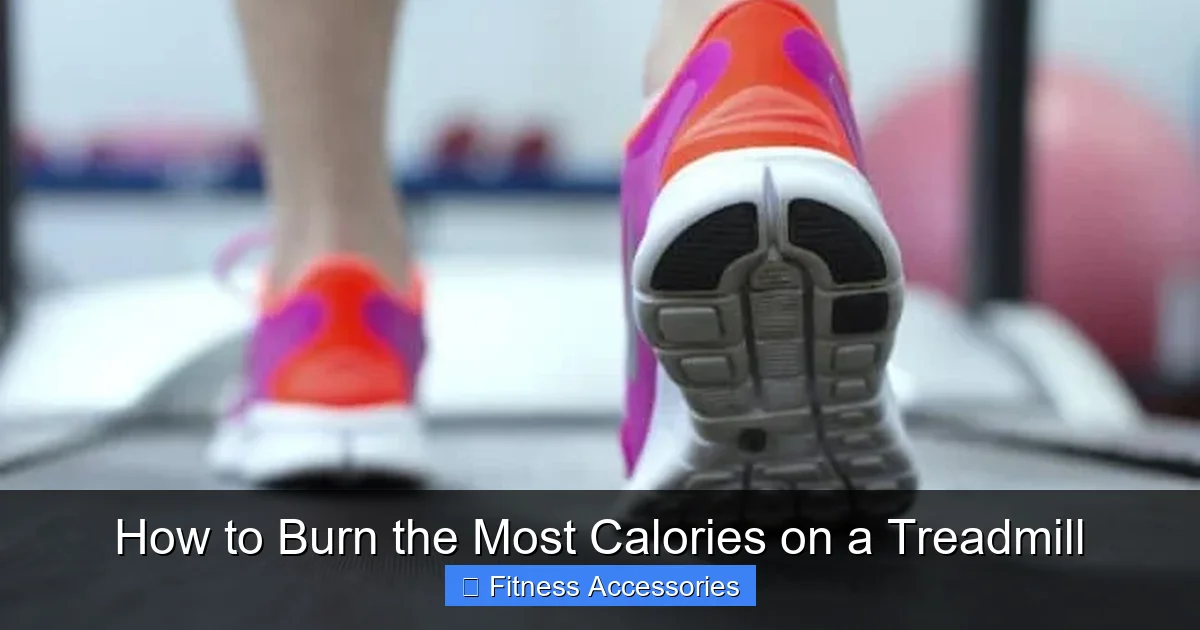
Why choose between HIIT and incline when you can combine them? This hybrid approach is arguably the most efficient treadmill workout for calorie burn.
Visual guide about How to Burn the Most Calories on a Treadmill
Image source: caloriesecrets.net
Sample Hybrid Workout
- Warm-up: 5 min walk, 0% incline.
- Round 1: 3 minutes at 4% incline, brisk walk/jog pace. 1 minute flat, slow walk recovery.
- Round 2: 3 minutes at 6% incline, same pace. 1 minute flat recovery.
- Round 3: 3 minutes at 8% incline, same pace. 1 minute flat recovery.
- Round 4: 3 minutes at 6% incline. 1 minute flat recovery.
- Round 5: 3 minutes at 4% incline.
- Cool-down: 5 min walk, 0% incline.
This workout lasts about 30 minutes and systematically taxes your cardiovascular system and lower body musculature. The changing incline prevents adaptation, and the active recovery periods keep your heart rate elevated without complete rest, maximizing total calorie burn.
The Critical Role of Form and Technique
You could have the perfect workout structure, but poor form will rob you of calories and set you up for injury. Efficiency is everything.
Posture and Arm Drive
Stand tall. Imagine a string pulling the crown of your head toward the ceiling. Your shoulders should be relaxed and down, not hunched by your ears. Look ahead, not down at your feet. Your arm swing is crucial—it drives your leg turnover. Keep your elbows bent at about 90 degrees and swing them forward and back in a controlled motion, not across your chest. This engages your core and upper body, increasing overall energy expenditure.
The Handrail Dilemma
This is a major calorie-burning mistake. Grabbing the handrails for support, especially during incline walking or running, significantly reduces the workload on your legs and core. It takes weight off your lower body, directly decreasing the number of calories you burn. Use the handrails only for balance when starting or stopping, or if you need a very brief balance check. Let your legs and core do the stabilizing work.
Stride and Foot Strike
Focus on a quick, light stride. Overstriding (landing with your foot far out in front of your body) acts as a brake, wasting energy and stressing your knees. Aim to land with your foot almost underneath your hips. Listen to your footfall; it should be a quiet patter, not a heavy thud. A higher stride rate (cadence) is generally more efficient and less impactful.
Nutrition and Recovery: The Unseen Calorie Burners
You can’t out-train a bad diet. The treadmill creates the demand; nutrition supplies the fuel and determines the outcome.
Fueling for Performance and Fat Loss
Do not exercise in a fasted state expecting to burn more fat. While you may oxidize a higher percentage of fat during the session, the total calorie burn is lower, and you risk muscle loss and poor performance. Eat a small, easily digestible carbohydrate-based meal or snack (e.g., banana, oatmeal) 60-90 minutes before your workout. This provides the glycogen your muscles need to work at high intensity, which is what burns the most total calories. Post-workout, prioritize protein to aid muscle repair (a protein shake, Greek yogurt, chicken). This muscle repair process itself burns calories.
Hydration and Sleep
Even mild dehydration (1-2% loss of body weight) can impair performance, making your perceived effort higher and your actual output lower. Drink water consistently throughout the day. Regarding sleep: this is when your body recovers, hormones regulate (including cortisol and growth hormone), and your metabolism resets. Chronic sleep deprivation increases cravings for high-calorie foods and lowers willpower, while also reducing exercise performance. Aim for 7-9 hours of quality sleep per night to support your treadmill calorie-burning goals.
Putting It All Together: Your Weekly Treadmill Plan
Knowledge is useless without application. Here is a sample weekly schedule that integrates the principles above for sustainable, high-calorie-burn results.
- Monday: HIIT Session (e.g., 1:2 ratio intervals, 25 min total). Focus on speed on a flat or 1% incline.
- Tuesday: Incline Walking (e.g., 12-3-30 method or custom ladder, 30-45 min). Active recovery day.
- Wednesday: Rest or Light Activity. Gentle stretching, walk.
- Thursday: Hybrid Incline Intervals (as described above, 30 min).
- Friday: HIIT Session (vary the intervals—try Tabata or pyramid).
- Saturday: Long Incline Walk (45-60 min at a moderate, sustainable pace and 4-6% incline). Builds endurance and burns a huge total calorie count.
- Sunday: Complete Rest. Focus on nutrition and sleep.
This plan provides variety to prevent mental and physical boredom, balances high-impact (HIIT) with low-impact (incline walking), and allows for crucial recovery. Remember the principle of progressive overload: each week, try to add a tiny increment. Maybe it’s an extra interval on Monday, an extra 0.1 mph on your Thursday intervals, or 2 more minutes on your Saturday walk. This constant, small challenge forces your body to adapt and burn more calories over time.
Conclusion
Burning the most calories on a treadmill is an art and a science. It’s about rejecting the autopilot mode of steady-state cardio and embracing intelligent, varied, and intense stimulus. Make HIIT and incline training the cornerstones of your routine. Master the form cues that make every step count. Understand that your nutrition and recovery are not separate from the workout—they are the foundation that allows the workout to happen. Track your efforts, push your limits safely, and be patient. The treadmill belt will turn, and if you command it with strategy and effort, it will become one of the most powerful engines for calorie burn and body transformation you own. Now, go make every minute matter.
Frequently Asked Questions
How long should I run on a treadmill to burn 500 calories?
The time varies dramatically based on your weight and intensity. For a 155-pound person, running at a 10-minute mile pace (6 mph) burns about 298 calories per 30 minutes. To burn 500 calories, that would require roughly 50 minutes. However, using HIIT or a significant incline can slash that time to 25-35 minutes by increasing intensity and metabolic demand.
Is it better to run faster or add incline to burn more calories?
Adding incline is generally more efficient for calorie burn per unit of time and is lower impact. A 5% incline at a brisk walk can burn more calories than running on a flat surface at a moderate pace. The best strategy is to combine them: use intervals that manipulate both speed and incline to maximize total energy expenditure.
Can I lose weight by just walking on a treadmill?
Yes, absolutely. Consistent, brisk incline walking creates a significant calorie deficit and builds leg muscle, which boosts your resting metabolism. The key is duration (aim for 45-60 minutes) and/or intensity (use a challenging incline). Pair this with a healthy diet for effective and sustainable weight loss.
What heart rate zone burns the most fat?
While lower-intensity exercise (60-70% of max heart rate) burns a higher *percentage* of fat as fuel, higher-intensity zones (70-85%+) burn a vastly greater *total number of calories* and trigger a powerful afterburn effect (EPOC). For maximum calorie and fat loss over 24 hours, prioritize time in the higher intensity zones through intervals.
Should I hold onto the handrails on an incline?
No. Holding the handrails supports your body weight, taking the load off your legs and core. This directly reduces the number of calories you burn and diminishes the muscle-strengthening benefits of incline walking. Use the handrails only for balance when starting, stopping, or if you feel dizzy.
How often should I change my treadmill workout to avoid plateaus?
Change your workout stimulus every 2-4 weeks. Your body adapts quickly. You can change the interval structure (e.g., from 30/60 to 45/45), increase the incline maximum, add 5-10% more total time, or increase your speed by 0.1-0.2 mph. Keeping the workout novel ensures your calorie burn continues to climb.