How Much Weight Can You Lose with Rowing Machine
Rowing machines can torch calories, boost metabolism, and help you shed pounds fast—if you pair them with smart nutrition and consistent workouts. In this guide we break down the science, estimate realistic weight‑loss numbers, and give you a practical plan to maximize results.
Key Takeaways
- Understanding How Much Weight Can You Lose With Rowing Machine: Provides essential knowledge
📑 Table of Contents
- Introduction: Why Rowing Is a Weight‑Loss Powerhouse
- Understanding the Basics: Calories, Metabolism, and Weight Loss
- Estimating Weight Loss: Realistic Numbers for Different Scenarios
- Designing Your Rowing‑Based Weight‑Loss Plan
- Rowing Form: The Secret to Burning More Calories Safely
- Beyond the Numbers: Other Benefits of Rowing for Weight Loss
- Putting It All Together: A 12‑Week Sample Program
- Conclusion: Rowing Can Be Your Shortcut to Sustainable Weight Loss
Introduction: Why Rowing Is a Weight‑Loss Powerhouse
When you think about cardio, running or cycling often steal the spotlight. Yet the rowing machine quietly sits in many home gyms, offering a low‑impact, high‑calorie‑burn workout that works the whole body. Imagine pulling a boat across a lake—your legs push, your core stabilizes, and your arms pull. That same motion, repeated on a machine, can torch calories while building lean muscle.
If you’re asking yourself, “How much weight can you lose with a rowing machine?” the answer isn’t a single number. It depends on your weight, fitness level, diet, and how often you row. This article breaks down the math, shares realistic expectations, and gives you a step‑by‑step plan to get the most out of every stroke.
Understanding the Basics: Calories, Metabolism, and Weight Loss
How Calories Translate to Pounds
One pound of body fat stores roughly 3,500 calories. To lose one pound, you need a net deficit of 3,500 calories over time. This deficit can come from eating less, moving more, or a combination of both. Rowing creates the “moving more” part.

Visual guide about How Much Weight Can You Lose with Rowing Machine
Image source: rowingcrazy.com
How Rowing Burns Calories
Calorie burn depends on three main factors:
- Body weight: Heavier people expend more energy per minute.
- Intensity: Faster strokes and higher resistance raise the heart rate.
- Duration: Longer sessions naturally burn more calories.
For example, a 155‑lb person rowing at a moderate pace (about 5 METs) burns roughly 260 calories in 30 minutes. Increase the pace to a vigorous 7 METs and the same person burns about 400 calories in the same time.
Metabolic After‑Burn (EPOC)
After a hard rowing session, your body continues to use extra oxygen to recover. This “excess post‑exercise oxygen consumption” (EPOC) can add 5‑15% more calories burned over the next few hours. High‑intensity interval rowing (HIIT) maximizes this effect.
Estimating Weight Loss: Realistic Numbers for Different Scenarios
Scenario 1: Beginner Rowing 3 Times a Week
Assume a 150‑lb beginner rows 30 minutes at a moderate pace (≈260 calories) three times weekly.
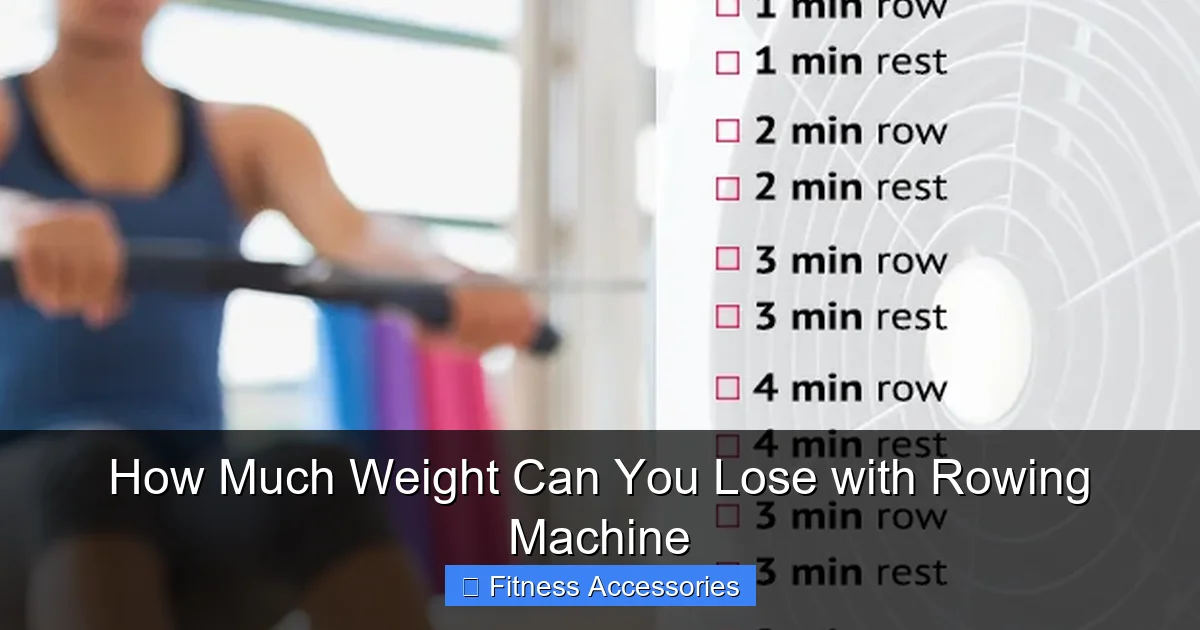
Visual guide about How Much Weight Can You Lose with Rowing Machine
Image source: trimmedandtoned.com
- Weekly burn: 260 × 3 = 780 calories
- Monthly burn: 780 × 4 = 3,120 calories ≈ 0.9 lb
Result: Roughly 1 lb lost per month if diet stays the same.
Scenario 2: Intermediate Rowing 5 Times a Week + Light Diet Cut
Now a 180‑lb intermediate rower does 45‑minute vigorous sessions (≈400 calories) five days a week.
- Weekly burn: 400 × 5 = 2,000 calories
- Monthly burn: 2,000 × 4 = 8,000 calories ≈ 2.3 lb
- Add a 250‑calorie daily diet reduction: 250 × 30 = 7,500 calories ≈ 2.1 lb
Total possible loss: About 4.4 lb per month.
Scenario 3: Advanced HIIT Rowing 6 Times a Week + Strict Nutrition
A 200‑lb athlete incorporates 20‑minute HIIT rows (≈350 calories) plus a 45‑minute steady‑state row (≈300 calories) each session.
- Calories per session: 350 + 300 = 650
- Weekly burn: 650 × 6 = 3,900 calories
- Monthly burn: 3,900 × 4 = 15,600 calories ≈ 4.5 lb
- Nutrition cut of 500 calories/day: 500 × 30 = 15,000 calories ≈ 4.3 lb
Total possible loss: Around 8.8 lb per month, which is aggressive but achievable for a dedicated athlete.
Key Insight
Across all three scenarios, the common thread is consistency. Even modest weekly rowing can add up over months, especially when paired with a sensible calorie deficit.
Designing Your Rowing‑Based Weight‑Loss Plan
1. Set a Realistic Goal
Aim for 0.5‑1 lb per week. This range is safe, sustainable, and keeps muscle loss to a minimum.
2. Choose the Right Frequency
Beginners: 3‑4 sessions/week, 20‑30 minutes each.
Intermediate: 4‑5 sessions/week, 30‑45 minutes each.
Advanced: 5‑6 sessions/week, mix of HIIT and steady‑state, 45‑60 minutes.
3. Pick an Effective Workout Structure
- Steady‑State Row: 20‑45 minutes at a moderate pace (65‑75% max HR).
- HIIT Row: 30‑seconds sprint, 60‑seconds easy, repeat 8‑12 times.
- Pyramid Row: Increase stroke rate every 2 minutes, then reverse.
4. Track Your Numbers
Use a spreadsheet or fitness app to record:
- Duration
- Distance (meters or miles)
- Average stroke rate (spm)
- Calories burned (machine estimate + manual estimate)
Seeing progress on paper (or screen) fuels motivation.
5. Pair Rowing with Smart Nutrition
Calculate your maintenance calories (many online calculators do this). Subtract 250‑500 calories to create a deficit. Focus on:
- High‑protein foods (keep muscle)
- Fiber‑rich vegetables (satiety)
- Whole grains (steady energy)
- Limited sugary drinks and processed snacks
6. Incorporate Strength Work
Rowing preserves muscle, but adding 2‑3 strength sessions per week (bodyweight, dumbbells, resistance bands) ensures you stay lean and improve rowing power.
7. Prioritize Recovery
Sleep 7‑9 hours, stay hydrated, and stretch after each row. Foam‑rolling the hamstrings, glutes, and back reduces soreness and keeps you rowing longer.
Rowing Form: The Secret to Burning More Calories Safely
The Four Phases of the Rowing Stroke
- Catch: Knees bent, shins vertical, arms extended, torso leaned forward.
- Drive: Push with legs, then lean back slightly, finally pull the handle to the chest.
- Finish: Legs straight, slight lean back, handle at the lower ribs.
- Recovery: Extend arms, hinge at hips forward, then bend knees to return to the catch.
Common Form Mistakes and Fixes
- Rounding the back: Keep a neutral spine; engage core.
- Using only arms: Drive primarily with legs; arms finish the pull.
- Over‑gripping the handle: Light grip reduces fatigue.
- Too fast a recovery: Slow, controlled recovery maintains rhythm and reduces injury risk.
Tips for Maximizing Calorie Burn
- Maintain a stroke rate of 24‑30 spm for steady‑state; 30‑36 spm for HIIT.
- Increase damper setting (resistance) gradually; too high can compromise form.
- Incorporate short “power bursts” (10‑second all‑out sprints) every 5 minutes.
Beyond the Numbers: Other Benefits of Rowing for Weight Loss
Preserves Lean Muscle
Because rowing is a full‑body workout, you burn fat while keeping muscle mass—essential for a higher resting metabolic rate.
Low Impact, Joint Friendly
Unlike running, rowing puts minimal stress on knees and hips, making it ideal for people with joint concerns.
Mental Health Boost
Rhythmic rowing can be meditative. Endorphin release improves mood, which helps you stick to your diet plan.
Convenient Home Workout
One machine, all weather, no commute. Consistency often improves when you can row in pajamas.
Putting It All Together: A 12‑Week Sample Program
Weeks 1‑4: Building Habit
- 3 sessions/week
- 20‑minute steady‑state rows at moderate intensity
- Focus on perfect form and breathing
- Nutrition: 250‑calorie deficit, high protein (1.2 g per lb body weight)
Weeks 5‑8: Adding Intensity
- 4 sessions/week
- Two steady‑state (30 min) + two HIIT (20 min: 30 sec sprint/60 sec easy)
- Introduce light strength work (2 days/week, 30 min)
- Nutrition: Increase deficit to 350‑500 calories if weight loss stalls
Weeks 9‑12: Peak Performance
- 5‑6 sessions/week
- Mix of HIIT, pyramid rows, and longer steady‑state (45 min)
- Strength training 3 days/week
- Deload week at week 12 (reduce volume by 30%) to prevent burnout
Tracking Example
John, 180 lb, followed the 12‑week plan. He logged:
- Average weekly calorie burn from rowing: 2,200
- Dietary deficit: 400 cal/day ≈ 2,800 cal/week
- Total weekly deficit: ~5,000 cal → ~1.4 lb loss per week
Result: 16 lb lost in 12 weeks, with improved rowing speed (2,000 m in 7 min) and stronger core.
Conclusion: Rowing Can Be Your Shortcut to Sustainable Weight Loss
Answering the core question—how much weight can you lose with a rowing machine?—the truth is you can lose anywhere from a pound a month (casual rower) to nearly nine pounds a month (dedicated athlete) when you combine consistent rowing with a sensible calorie deficit. The key is to stay patient, focus on form, track progress, and fuel your body right.
Rowing offers a unique blend of cardio, strength, and low‑impact movement that makes it one of the most efficient tools for fat loss. Follow the plan, listen to your body, and you’ll watch the numbers on the scale—and the confidence in the mirror—move in the right direction.
Frequently Asked Questions
Can I lose weight on a rowing machine without changing my diet?
Yes, but results will be slower. Rowing creates a calorie deficit, yet diet typically accounts for 70‑80% of weight‑loss success. Pairing moderate rowing with small diet tweaks accelerates progress.
How many calories does a 30‑minute rowing session burn?
For a 155‑lb person, moderate rowing burns about 260 calories; vigorous rowing can reach 400 calories. Heavier individuals burn more, lighter individuals less.
Is rowing better than running for weight loss?
Rowing burns similar calories to running but is low‑impact, engages more muscle groups, and preserves joint health. It’s a great alternative if you have knee or hip concerns.
How often should I change my rowing workout to keep losing weight?
Every 4‑6 weeks, vary intensity, duration, or interval structure. This prevents plateaus and keeps your body adapting, which maintains calorie burn.
Do I need a fancy rowing machine to see results?
No. Any quality rowing machine that tracks time, distance, and calories will work. Focus on consistency and proper form rather than high‑tech features.
Can rowing help me lose belly fat specifically?
Spot‑reduction isn’t possible, but rowing’s full‑body calorie burn and core engagement reduce overall body fat, including the abdominal area, over time.