Can I Drink Coffee Before a Treadmill Stress Test

No, you should not drink coffee before a treadmill stress test. Caffeine is a powerful stimulant that directly interferes with the test’s purpose: to measure your heart’s true function under stress. It can artificially elevate your heart rate and blood pressure, leading to inaccurate or false-positive results. Always follow your doctor’s specific pre-test instructions, which will almost certainly include avoiding all caffeine for a significant period, typically 12-24 hours. The goal is a clean baseline to ensure any detected issues are real and not caused by a substance like coffee.
Key Takeaways
- Caffeine is a potent stimulant: It directly increases heart rate and blood pressure, masking your heart’s natural baseline function during the test.
- It can cause false positives: Artificially elevated readings might suggest coronary artery disease or rhythm problems that don’t actually exist, leading to unnecessary further testing and anxiety.
- Doctor’s orders are absolute: The pre-test instructions, including caffeine avoidance, are non-negotiable medical guidance designed for your safety and test accuracy.
- Avoidance window is long: You typically need to stop all caffeine (coffee, tea, soda, energy drinks, chocolate) at least 12 hours, often 24 hours, before the test.
- Decaf is not always safe: Even decaffeinated coffee contains trace amounts of caffeine and should be avoided unless explicitly cleared by your doctor.
- Other stimulants matter too: Avoid nicotine, certain over-the-counter medications (like cold remedies with pseudoephedrine), and some pre-workout supplements.
- Hydration with water is key: Drink plenty of plain water before the test to stay hydrated, which supports optimal cardiovascular performance during exercise.
📑 Table of Contents
- What Exactly Is a Treadmill Stress Test?
- The Caffeine Connection: How Coffee Messes with Your Heart
- Official Guidelines: What the Experts Say
- Real-World Scenarios: What Happens If You Drink Coffee?
- The Right Way to Prepare: A Step-by-Step Guide
- Beyond the Test: Long-Term Heart Health and Caffeine
- Conclusion: Your Heart, Your Test, Your Clarity
What Exactly Is a Treadmill Stress Test?
So, you’ve been scheduled for a treadmill stress test. Maybe your doctor mentioned some chest discomfort, shortness of breath, or you have risk factors for heart disease. This test, formally called an exercise electrocardiogram (ECG or EKG), is a cornerstone of cardiac evaluation. Its primary goal is to see how your heart muscle responds to increased physical demand—essentially, how well your heart pumps blood when it’s working hard.
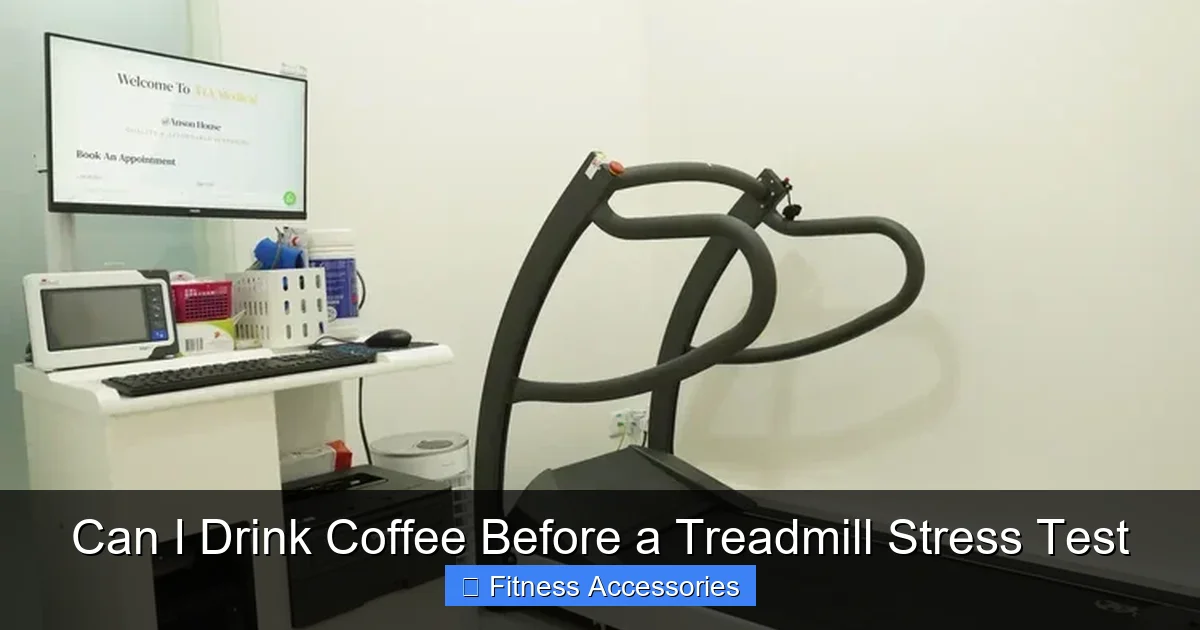
During the test, you’ll walk on a treadmill (or sometimes pedal a stationary bike) while its speed and incline gradually increase. At the same time, technicians and your doctor will be closely monitoring your heart’s electrical activity via electrodes stuck to your chest, your blood pressure, and your perceived level of exertion. They’re looking for specific things: abnormal changes in your ECG waveform that might indicate reduced blood flow to the heart muscle (ischemia), dangerous heart rhythm disturbances (arrhythmias), or an inadequate rise in blood pressure. The results help diagnose coronary artery disease, evaluate the severity of known heart conditions, and guide treatment plans. It’s a dynamic picture of your heart’s health, far more revealing than a resting ECG.
The “Stress” Part is Crucial
The word “stress” here doesn’t mean emotional anxiety (though that can happen too!). It means the physiological stress of exercise. Your heart must beat faster and stronger to pump more blood to your working muscles. For a person with healthy arteries, the coronary arteries dilate to allow this increased blood flow. For someone with a significant blockage, that artery can’t open up enough, so the heart muscle it supplies becomes starved of oxygen. This oxygen deprivation shows up as characteristic changes on the ECG. The test is designed to expose this weakness under controlled, supervised conditions.
The Caffeine Connection: How Coffee Messes with Your Heart
This brings us to the central question: coffee. That morning ritual is so ingrained for millions of people. But to understand why it’s forbidden before a stress test, we need to look at what caffeine actually does to your cardiovascular system. Caffeine is a central nervous system stimulant. Its primary mechanism of action is blocking adenosine receptors in your brain. Adenosine is a neurotransmitter that promotes sleep and suppresses arousal. When caffeine blocks it, you feel more alert, but the effects ripple throughout your body.

Visual guide about Can I Drink Coffee Before a Treadmill Stress Test
Image source: aerospacecardiology.com
The Direct Cardiac Effects
First, caffeine stimulates your adrenal glands to release more adrenaline (epinephrine) and noradrenaline. These “fight or flight” hormones directly act on your heart. They increase the rate at which your heart’s natural pacemaker (the sinoatrial node) fires, leading to a higher heart rate (positive chronotropy). They also increase the force of each heartbeat (positive inotropy), making your heart contract more strongly. Furthermore, they can cause your blood vessels to constrict slightly, raising blood pressure. The net effect is that your heart is working harder and beating faster, even at rest.
The Problem for the Stress Test
Now, imagine this stimulated state as your baseline. You walk into the lab, already jacked up on caffeine. Your resting heart rate might be 85 bpm instead of your true, caffeine-free resting rate of 65 bpm. As the treadmill starts, your heart has less “headroom” to increase its rate appropriately. More critically, the test’s computer and the interpreting cardiologist are comparing your ECG during exercise to your baseline. An artificially elevated baseline can make normal exercise-induced changes look more dramatic or create the illusion of abnormal ST-segment depression (the key sign of ischemia). It’s like starting a race halfway to the finish line—the measurements of your performance are all skewed.
Caffeine can also increase the likelihood of premature ventricular contractions (PVCs) or other extra beats, especially in sensitive individuals. These benign, often harmless beats can be misinterpreted as a significant arrhythmia induced by exercise, again clouding the diagnostic picture. The test’s value lies in its purity; we need to see your heart’s unadulterated response to physical work.
Official Guidelines: What the Experts Say
There is no debate in the medical community about this. Major cardiology associations and hospital testing protocols are unequivocal. The American Heart Association and the American College of Cardiology, which set guidelines for cardiovascular testing, explicitly state that patients should avoid all stimulants, including caffeine, for a specified period before a stress test. The typical instruction is to avoid caffeine for at least 12 hours, with many centers, especially for pharmacological stress tests (which use drugs like adenosine), requiring a full 24-hour avoidance.
Visual guide about Can I Drink Coffee Before a Treadmill Stress Test
Image source: healthscreening.sg
It’s Not Just Coffee
When your doctor’s office or the testing facility says “no caffeine,” they mean all sources. This is a comprehensive list that often surprises people:
- Coffee and espresso: Both regular and most “decaf” (which typically contains 2-15 mg per cup).
- Tea: Black, green, white, and oolong all contain caffeine. Herbal teas like chamomile or peppermint are usually safe, but always check.
- Soda and energy drinks: Major sources, with energy drinks often containing very high doses plus other stimulants like taurine and guarana.
- Chocolate: Both milk and dark chocolate contain theobromine, a stimulant similar to caffeine, and some caffeine itself.
- Certain medications: Some over-the-counter pain relievers (like Excedrin Migraine), cold/flu medicines, and diet pills contain caffeine. Always read labels.
- Pre-workout supplements: These are often loaded with caffeine and other stimulants and are absolutely forbidden.
The “Why” Behind the Strictness
The reason for the blanket ban is twofold: safety and accuracy. On the safety side, in rare cases, a high caffeine load combined with the stress of exercise could theoretically provoke a dangerous arrhythmia in a susceptible person. On the accuracy side, as discussed, the goal is a pristine diagnostic signal. Any extraneous variable that could alter heart rate, rhythm, or blood pressure is a contaminant. Your doctor needs to interpret the test results with the confidence that every deflection on the ECG is a response to the treadmill, not a triple espresso from breakfast.
Real-World Scenarios: What Happens If You Drink Coffee?
Let’s be real. People accidentally drink coffee before tests. What actually happens? The consequences range from minor to significant, depending on the amount consumed and your individual physiology.

Visual guide about Can I Drink Coffee Before a Treadmill Stress Test
Image source: bhvs.org
The Best-Case Scenario: A Cancellation or Repeat
The most common outcome if you show up having consumed caffeine is that the test will be cancelled or rescheduled. The technician or supervising nurse will likely ask you point-blank if you’ve had any caffeine. If you admit it, or if your resting heart rate is suspiciously high (e.g., over 100 bpm at rest for a non-anxious person), they will often stop the test before it even begins. You’ll be sent home and asked to return another day after properly fasting from caffeine. This is frustrating and wastes time and resources, but it’s the responsible medical choice.
The Middle Ground: A “Borderline” or Inconclusive Result
If the test proceeds despite a minor caffeine intake (e.g., one small cup 14 hours prior), the results might come back as “borderline” or “inconclusive.” The cardiologist might see slight ST changes or a heart rate response that doesn’t quite fit the expected pattern. They won’t be able to confidently say “yes, you have blockages” or “no, your arteries are clear.” This leads to a diagnostic dilemma. The most likely next step is to repeat the stress test after proper preparation, or to jump to a more definitive, and often more expensive and invasive, test like a coronary angiogram or a nuclear stress test with imaging. This creates unnecessary cost, anxiety, and procedural risk.
The Worst-Case Scenario: A False Positive
In the most problematic scenario, the caffeine-induced changes mimic true ischemia. The test is reported as “positive for significant coronary artery disease.” Based on this, you might be started on strong heart medications (like beta-blockers or nitrates), referred for cardiac catheterization (an invasive procedure with risks like bleeding, infection, or artery damage), or even advised to have bypass surgery—all for a problem that doesn’t truly exist. The psychological toll of a false cancer-like diagnosis (“you have a serious heart condition”) is profound and can take months to recover from, even after the error is corrected. This is the strongest argument for absolute adherence to the prep instructions.
The Right Way to Prepare: A Step-by-Step Guide
Preparation for a treadmill stress test is about eliminating variables. Caffeine is the biggest one. Here is a clear, actionable plan to follow in the 24 hours leading up to your appointment.
Step 1: The 24-Hour Countdown (The Day Before)
Begin your caffeine fast at least 24 hours before the test. If your test is at 9 AM on Tuesday, your last caffeinated beverage should be by 9 AM on Monday. This allows your body’s adenosine receptors to fully reset and clear the caffeine from your system (the half-life of caffeine is 3-7 hours for most adults, but sensitive individuals can feel effects longer). Be vigilant: read labels on packaged foods, decline that after-dinner chocolate, and switch to caffeine-free herbal tea or water.
Step 2: The Morning Of (Test Day)
On the day of the test, do not consume any caffeine. This means no coffee, tea, soda, or energy drinks. Eat a light, bland breakfast if your doctor has said it’s okay (some tests require fasting; always check your specific instructions). Good options are toast with a little jam, plain oatmeal, or a banana. Avoid heavy, fatty, or spicy foods that could cause indigestion during exercise. Wear comfortable, loose-fitting clothing and supportive athletic shoes. You will be asked to change into a gown, but your own shoes are usually fine.
Step 3: What to Do Instead of Coffee
The morning craving is real. Have a plan:
- Water with lemon: Hydrating and refreshing.
- Caffeine-free herbal tea: Peppermint or chamomile can be soothing.
- Decaffeinated coffee (with caution): If you *must* have the ritual, use a brand that is 99.9% caffeine-free and have it well before your 24-hour cutoff. But the safest bet is to skip it entirely for the day.
- Gentle movement: A short, slow walk can help wake you up without stress.
Remember, this is a short-term sacrifice for a huge gain in diagnostic certainty. You’re not giving up coffee forever; just for a day to get a clear picture of your heart’s health.
Beyond the Test: Long-Term Heart Health and Caffeine
Once your stress test is safely completed and you have your results, the conversation about caffeine doesn’t necessarily end. For most people with a normal stress test and no diagnosed heart conditions, moderate caffeine consumption (generally defined as 200-400 mg per day, about 2-4 cups of coffee) is considered safe and may even have some health benefits. However, the relationship is nuanced.
Individual Tolerance is Everything
Some people are “fast metabolizers” of caffeine due to their genetics (specifically the CYP1A2 gene). They process it quickly and experience few side effects. Others are “slow metabolizers” who feel jittery, anxious, and have prolonged elevated heart rates from even small amounts. This slow metabolism has been linked in some studies to a slightly increased risk of heart attack when consuming high amounts of caffeine. Know your own body. If a single cup makes your heart race or you have palpitations, you are likely a sensitive individual.
Context Matters for Heart Patients
If your stress test did reveal coronary artery disease, arrhythmias, or other issues, your cardiologist will give you specific guidance on caffeine. For some, especially those with certain types of arrhythmias like atrial fibrillation, caffeine can be a trigger and may be recommended to be limited or avoided. For others with stable heart disease, moderate intake might be permissible. This is a conversation for you and your doctor, based on your specific diagnosis and test results. The pre-test ban is a universal rule for test integrity; post-test advice is personalized medicine.
Conclusion: Your Heart, Your Test, Your Clarity
The bottom line is beautifully simple: do not drink coffee or consume any caffeine before your treadmill stress test. This isn’t a quirky preference of your cardiology clinic; it’s a fundamental requirement for a medically valid and safe procedure. Caffeine is a powerful pharmacological agent that directly alters the very parameters—heart rate, rhythm, blood pressure—that the test is designed to measure. By avoiding it, you strip away a major source of “noise,” allowing your doctor to see the clear, true signal of your heart’s performance under stress.
Think of it this way: you wouldn’t drink a bottle of beer before a driving test, because you know it impairs your abilities and the results wouldn’t reflect your real skill. The same principle applies here. Your heart is the engine of your body. To get an honest read on its health, you need to present it in its natural, un-stimulated state. Follow the pre-test instructions to the letter. Arrive hydrated, in comfortable clothes, and ready to walk. This one day of caffeine sacrifice can provide you and your doctor with invaluable, unambiguous information about your cardiac health, guiding the right next steps for a long and vibrant life. Trust the process, respect the science, and prioritize getting a clean, accurate result.
Frequently Asked Questions
Can I have decaffeinated coffee before a treadmill stress test?
Generally, no. Decaf coffee is not caffeine-free and typically contains 2-15 mg per cup. This small amount can still affect sensitive individuals and is not considered a “clean” baseline. Most protocols require avoiding all coffee, including decaf, for the full 12-24 hour period unless your doctor gives you explicit, written permission.
How long does caffeine stay in your system to affect a stress test?
>Caffeine has a half-life of about 5-6 hours in healthy adults. This means if you drink 200 mg of caffeine, it takes about 5-6 hours for your body to eliminate half of it (100 mg), and so on. To ensure it’s completely out of your system and your heart rate has returned to its true baseline, a full 12-24 hours of avoidance is the standard medical recommendation.
What if I accidentally drank coffee the morning of my test?
You must inform the medical staff immediately. Do not try to hide it. They will likely cancel the test and reschedule you for another day. It is far better to delay the test by a day than to undergo a test that could yield a false-positive result, leading to unnecessary worry, further invasive testing, and incorrect treatment.
Why does caffeine affect the ECG readings during a stress test?
Caffeine stimulates the heart, causing it to beat faster and sometimes harder even at rest. This can create an abnormally high resting heart rate and blood pressure. During exercise, your heart has less capacity to increase its rate normally. More importantly, the stimulant effect can cause subtle ECG changes that mimic the ST-segment depression caused by coronary artery disease, leading to a false-positive interpretation.
Are there other foods or drinks I should avoid besides coffee?
Yes. Avoid all sources of caffeine and other stimulants. This includes tea (black, green, white), soda, energy drinks, hot chocolate, chocolate bars, and some pain relievers or cold medicines that list caffeine as an ingredient. Also avoid nicotine (cigarettes, vaping, gum) for at least 2-3 hours before, as it is also a potent stimulant that raises heart rate and blood pressure.
What can I drink and eat before a morning stress test?
Stick to plain water and a very light, bland breakfast if your doctor has said fasting is not required. Good options are a piece of toast, a small bowl of plain oatmeal, or a banana. Avoid anything with caffeine, high sugar (which can also affect heart rate), or large amounts of fat. The goal is to be hydrated and have enough energy to exercise without feeling faint, but nothing that could interfere with your heart’s baseline function.