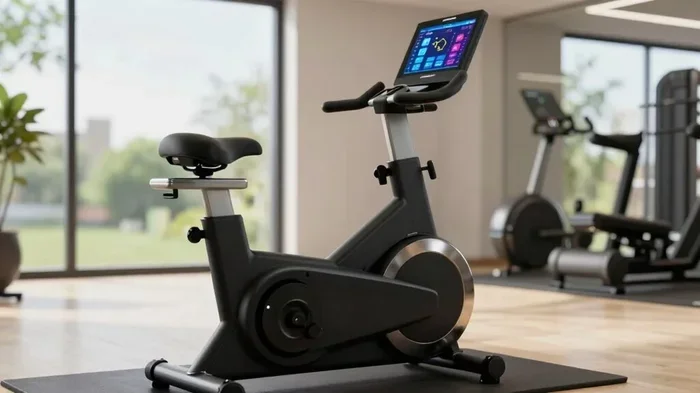
How Much Energy Can a Stationary Bike Produce

A stationary bike can produce between 50 and 400 watts of power depending on your effort level, fitness, and bike type. Most casual riders generate around 100 to 200 watts, while elite cyclists can push past 300 watts. The energy your bike produces can power small devices, offset electricity costs, and even contribute to a greener home.
Have you ever wondered how much energy a stationary bike can actually produce? It is a question that surprises a lot of people. Most of us think of indoor cycling as a way to burn calories and build endurance. But the truth is, your workout on a stationary bike generates real, measurable energy. And that energy can do more than just help you get fit.
The idea of turning your pedal strokes into usable power is fascinating. Whether you are a casual rider or a serious athlete, your stationary bike produces energy every time you push those pedals. In this guide, we will break down exactly how much energy a stationary bike can produce, what factors affect your output, and whether you can actually use that energy to power things in your home.
Let us get into it. By the end of this article, you will understand wattage, calorie conversion, and the real potential of pedal power energy. You might even look at your next workout in a whole new way.
Key Takeaways
- Stationary bikes produce 50 to 400 watts: Your output depends on fitness level, resistance, and workout intensity.
- Average riders generate 100 to 200 watts: This is enough to power a laptop or charge a phone during a workout.
- Professional cyclists hit 300+ watts: Elite athletes can sustain high power output for extended periods.
- You can convert pedal power into electricity: With a generator attachment, your workout can literally power household devices.
- Calories burned and watts produced are linked: The more energy you put in, the more you get out in both fitness and electricity.
- Stationary bike energy has real-world uses: From charging gadgets to running small appliances, pedal power is more practical than most people think.
📑 Table of Contents
- What Is Energy Production on a Stationary Bike?
- Factors That Affect Energy Output on a Stationary Bike
- Can a Stationary Bike Generate Electricity?
- How Does Energy Production Compare to Calorie Burning?
- Real-World Uses for Stationary Bike Energy
- How to Maximize Your Stationary Bike Energy Output
- Common Myths About Stationary Bike Energy Production
- Conclusion
What Is Energy Production on a Stationary Bike?
When you ride a stationary bike, your body converts food energy into mechanical energy. That mechanical energy turns the flywheel and, in some cases, can be captured as electrical energy. The amount of energy you produce is measured in watts. A watt is a unit of power that tells you how much energy you are generating per second.
Here is a simple way to think about it. When you pedal a stationary bike, you are like a human engine. Your legs push down, the cranks turn, and the flywheel spins. All of that motion is energy. The harder you push, the more watts you produce. This is the basic science behind exercise bike energy generation.
How Watts Are Measured on a Stationary Bike
Watts are the standard unit for measuring stationary bike power output. Most modern indoor cycling bikes come with a display that shows your wattage in real time. If your bike does not have this feature, you can use a power meter or a smart trainer to track it.
Here is a quick breakdown of wattage levels for different rider types:
- Beginner riders: 50 to 100 watts
- Recreational riders: 100 to 200 watts
- Intermediate cyclists: 200 to 300 watts
- Professional athletes: 300 to 400+ watts
As you can see, there is a big range. Your cycling power watts depend on several factors, which we will cover next.
Factors That Affect Energy Output on a Stationary Bike
Not everyone produces the same amount of energy on a stationary bike. Your output depends on a mix of physical, technical, and environmental factors. Understanding these can help you maximize your stationary bike energy production.
Fitness Level and Training
Your fitness level is the biggest factor. A trained cyclist can sustain much higher wattage than someone who is just starting out. Regular stationary bike workouts improve your cardiovascular fitness and muscular endurance. Over time, your body becomes more efficient at converting energy into power.
If you are a beginner, do not worry. Your energy output will increase as you build strength and endurance. Consistency is key. Even a few weeks of regular riding can make a noticeable difference in your stationary bike power output.
Resistance and Intensity Settings
The resistance level on your bike directly affects how much energy you produce. Higher resistance means your muscles have to work harder, which increases your wattage. When you crank up the resistance, you are essentially asking your body to generate more pedal power energy.
Here are some tips to boost your resistance training:
- Increase resistance gradually during your ride
- Try interval training with high-resistance bursts
- Use a cadence of 80 to 100 RPM for optimal power
- Combine high resistance with a steady pedal pace
These strategies can help you push your stationary bike closer to its maximum energy potential.
Body Weight and Size
Heavier riders tend to produce more watts because they have more body mass to apply force through the pedals. This is not about being heavier for the sake of it. It is simply physics. More mass means more force, and more force means more stationary bike energy generation.
That said, fitness matters more than weight alone. A fit lighter rider can often outperform an unfit heavier rider. Your technique and conditioning play a huge role in your overall output.
Can a Stationary Bike Generate Electricity?
This is one of the most exciting questions people ask about stationary bike energy. The short answer is yes. With the right equipment, your stationary bike can generate electricity that powers devices in your home.
There are devices called pedal-powered generators that attach to your bike. These generators convert the mechanical energy from your pedaling into electrical energy. The electricity can then be stored in a battery or used directly to power lights, laptops, phones, and small appliances.
However, it is important to manage your expectations. A typical person riding a stationary bike produces enough electricity to power a few small devices. You are not going to run your entire house on pedal power alone. But every bit helps, especially when it comes to reducing your electricity bill and your carbon footprint.
How Much Electricity Can You Actually Produce?
Let us get practical. If you ride a stationary bike at an average output of 150 watts for one hour, you generate about 150 watt-hours of electricity. That is enough to charge a laptop several times or keep a light bulb glowing for hours.
Now imagine doing this every day. Over a month, your daily one-hour rides could generate around 4.5 kilowatt-hours. That might not sound like a lot, but it adds up. Some people use stationary bike electricity generators to power their fans, charge their phones, or run small kitchen appliances during a workout.
The renewable energy from exercise concept is gaining popularity. Gyms around the world are starting to install energy-generating fitness equipment that captures the power of workouts and feeds it back into the grid. Your home stationary bike can be part of this movement too.
How Does Energy Production Compare to Calorie Burning?
One of the most common questions is how stationary bike energy production relates to calories burned. These two measurements are connected but not the same. When you ride a stationary bike, your body burns calories to produce mechanical energy. But not all of that energy is converted efficiently.
Here is the breakdown. The human body is only about 20 to 25 percent efficient at converting food energy into mechanical power. That means for every 100 calories you burn, only about 20 to 25 calories become usable mechanical energy. The rest is lost as heat.
So if you burn 500 calories during a one-hour ride, only about 100 to 125 calories worth of energy becomes actual power output. This is still a significant amount of stationary bike wattage, but it shows why we cannot fully power a house on pedaling alone.
Still, the connection between calories burned and energy produced is a powerful motivator. Every calorie you burn is a small contribution to your overall stationary bike power output. If you want to learn more about the relationship between your workout and weight loss, check out our guide on how a stationary bike helps you lose weight.
Calories to Watts Conversion
Here is a simple comparison to help you visualize the relationship:
- 100 calories burned = approximately 115 to 125 watts for one hour
- 300 calories burned = approximately 345 to 375 watts for one hour
- 500 calories burned = approximately 575 to 625 watts for one hour
These numbers are approximate and vary based on your efficiency and bike setup. But they give you a good sense of how your stationary bike workout translates into real energy.
If you are interested in maximizing your calorie burn during rides, our article on how to burn more calories on a stationary bike has practical tips you can use right away.
Real-World Uses for Stationary Bike Energy
You might be wondering, what can you actually do with the energy your stationary bike produces? The answer might surprise you. There are several practical and even fun applications for pedal power energy.
Powering Personal Devices
The most common use for stationary bike electricity is charging personal devices. A typical ride at 150 watts can easily charge your phone, tablet, or e-reader. Some riders use USB ports built into their bikes or connect a small battery pack to store energy for later use.
This is a great way to stay productive while you exercise. You can catch up on emails, watch a show, or listen to music while your stationary bike powers your devices. It makes your workout time feel even more valuable.
Off-Grid and Emergency Power
For people living off the grid or preparing for emergencies, stationary bike energy production can be a lifesaver. A pedal-powered generator can keep essential devices running when the power goes out. Lights, radios, and medical devices can all benefit from the energy you produce on your bike.
This is also a great option for outdoor enthusiasts. Campers and RV owners can use portable bike generators to charge batteries and run small appliances without relying on noisy fuel generators.
Eco-Friendly Fitness
The green fitness movement is growing, and stationary bike energy plays a role in it. By generating your own electricity, you reduce your reliance on the grid and lower your carbon footprint. It is a small step, but every bit of sustainable fitness energy counts.
Some eco-conscious homeowners have set up home energy systems that use their stationary bike as a supplemental power source. They charge battery banks during workouts and use that stored energy to run lights, fans, or small electronics. It is a smart way to combine fitness with environmental responsibility.
If you are curious about how effective your stationary bike routine is for overall fitness goals, our piece on how effective a stationary bike is for weight loss offers great insights.
How to Maximize Your Stationary Bike Energy Output
Want to get the most energy out of every ride? There are several strategies you can use to boost your stationary bike power output. These tips apply whether you are riding for fitness, fun, or electricity generation.
Optimize Your Riding Technique
Your pedaling technique matters more than you might think. Smooth, consistent circles produce more power than jerky, uneven strokes. Focus on pushing down and pulling up through the entire pedal stroke. This full-circle technique engages more muscles and increases your stationary bike wattage.
Here are some technique tips:
- Keep your cadence steady between 80 and 100 RPM
- Use your whole foot on the pedal, not just your toes
- Engage your core for stability and power transfer
- Adjust your seat height so your legs have a slight bend at the bottom of the stroke
Good technique helps you produce more energy with less effort. It also reduces your risk of injury, which means you can ride more consistently.
Incorporate Interval Training
Interval training is one of the best ways to increase your stationary bike energy production. By alternating between high-intensity bursts and recovery periods, you push your body to generate more power. Over time, this type of training raises your overall wattage capacity.
Try this simple interval workout:
- Warm up for 5 minutes at a comfortable pace
- Ride at high intensity (above 250 watts) for 30 seconds
- Recover at low intensity for 90 seconds
- Repeat 8 to 10 times
- Cool down for 5 minutes
This type of workout not only boosts your stationary bike power output but also improves your cardiovascular fitness. It is one of the most efficient ways to train on a stationary bike.
Track Your Progress
Monitoring your stationary bike energy output over time helps you stay motivated and see real improvements. Most modern bikes and fitness apps let you track your wattage, calories, and ride duration. Use this data to set goals and measure your progress.
If you want to understand how long your rides need to be to see results, check out our guide on how long you should be on a stationary bike for tailored recommendations based on your goals.
Common Myths About Stationary Bike Energy Production
There are several myths floating around about how much energy a stationary bike can produce. Let us clear up some of the most common misconceptions.
Myth 1: You can power your entire house with a stationary bike. The truth is, a single rider produces far too little energy to power a whole home. Even with daily hour-long rides, the electricity generated is only enough for a few small devices. But it is still a meaningful contribution to your energy use.
Myth 2: Only fit people can produce significant energy. While fitness level matters, anyone can produce usable energy on a stationary bike. Even at low wattage, you can charge a phone or power a light. Every bit of pedal power energy counts.
Myth 3: Stationary bikes are not efficient energy producers. Compared to other forms of human-powered energy, stationary bikes are quite efficient. Modern bikes with generator attachments can convert a good portion of your pedaling effort into electricity. The technology is only getting better.
Myth 4: Energy production is the same as calorie burning. These are related but different. Your body burns more calories than the mechanical energy you produce because of inefficiency. Understanding this helps set realistic expectations for stationary bike electricity generation.
Conclusion
The energy your stationary bike can produce is more impressive than most people realize. From generating 50 watts as a beginner to pushing past 400 watts as a trained athlete, your stationary bike energy output is a reflection of your effort and fitness. And with the right equipment, that energy can be converted into electricity that powers your devices and reduces your reliance on the grid.
Whether you ride for fitness, fun, or the environmental benefits, understanding your stationary bike power output adds a new dimension to your workouts. You are not just burning calories. You are producing real energy with every pedal stroke. So the next time you hop on your stationary bike, remember that you are doing more than working out. You are generating renewable energy and making a small but meaningful difference.
Keep riding, keep tracking your progress, and keep exploring the incredible potential of pedal power energy. Your stationary bike is capable of so much more than you might think.
Frequently Asked Questions
How much energy does a stationary bike produce per hour?
A typical rider produces between 100 and 200 watts per hour on a stationary bike. This translates to about 100 to 200 watt-hours of energy per hour of riding. Elite cyclists can produce over 300 watts per hour.
Can a stationary bike power a house?
Not on its own. A single stationary bike produces too little electricity to power an entire house. However, it can power small devices like phones, laptops, and lights. Multiple hours of riding can accumulate enough energy for meaningful use.
How many watts does the average person produce on a stationary bike?
The average person produces about 100 to 150 watts during a moderate stationary bike workout. Trained cyclists can sustain 200 to 300 watts or more depending on their fitness level and resistance settings.
Is pedal power a viable source of renewable energy?
Pedal power is a viable supplemental energy source. While it cannot replace grid electricity, it can reduce your energy consumption and lower your electricity bill. Stationary bike energy generation is a great way to contribute to sustainable living.
What factors increase energy output on a stationary bike?
Higher resistance, increased intensity, better riding technique, and improved fitness all boost your stationary bike power output. Interval training and consistent workouts are the most effective ways to increase your wattage over time.
Can I use a stationary bike generator to charge my phone?
Yes. A stationary bike with a generator attachment or a portable battery pack can easily charge your phone while you ride. Even at moderate wattage, a 30 to 60 minute ride produces enough energy to fully charge most smartphones.