How Much Air Pressure for a Bike Tire
Finding the right bike tire pressure is essential for safety, comfort, and performance. This guide explains the correct PSI for every bike type, helps you avoid common mistakes, and shows you how to check and maintain your tire pressure with ease. Keep reading to get clear, expert-backed recommendations for your next ride.
Riding a bike feels amazing when everything is dialed in. The tires roll smooth. The handlebars feel steady. But none of that works if your how much air pressure for a bike tire is off. Too little air and you drag along the road. Too much and the ride gets harsh and unforgiving. Getting the right pressure is one of the simplest things you can do to improve your cycling experience.
Many riders overlook tire pressure until something goes wrong. A flat tire. A sluggish climb. A scary slide on a wet corner. The truth is, checking your bike tire pressure takes less than a minute and can save you from all of those problems. This guide walks you through everything you need to know. We will cover PSI ranges for different bike types, show you how to check your pressure, and share tips to keep your tires in great shape.
Key Takeaways
- Correct pressure varies by bike type: road bikes need higher PSI, while mountain bikes require lower pressure for better grip.
- Check your tire pressure regularly: tires lose air over time, and riding on low pressure can damage your rims.
- Use a tire gauge for accuracy: guessing leads to overinflation or underinflation, both of which hurt your ride.
- Temperature affects pressure: cold weather drops PSI, so you may need to add air during winter months.
- Follow the sidewall recommendation: every tire has a printed PSI range. Stay within it for the best results.
- Underinflation is the bigger risk: it causes pinch flats, sluggish rolling, and premature tire wear.
📑 Table of Contents
How Much Air Pressure For A Bike Tire: The Complete Guide
Why Tire Pressure Matters for Every Ride
Tire pressure affects more than just preventing flats. It shapes how your bike handles, how fast you roll, and how comfortable the ride feels. When your air pressure bike tire is set correctly, you get better grip, less rolling resistance, and a smoother ride overall.
Think of your tire like a balloon. If it is too soft, it squishes against the ground. That creates drag and makes you work harder. If it is too hard, it bounces off every bump. You lose traction and feel every crack in the road. The sweet spot is where the tire flexes just enough to grip the surface without wasting energy.
Your tire pressure guide should always start with the manufacturer’s recommendation. Every tire comes with a PSI range printed on the sidewall. That range accounts for the tire’s width, construction, and intended use. Staying within that range is the first rule of good tire maintenance.
Understanding PSI Ratings and What the Numbers Mean
PSI stands for pounds per square inch. It measures how much air is inside the tire. Different bikes need different amounts of bike tire air pressure based on their design and purpose.
Here is a quick breakdown of what the numbers mean:
- Low PSI (under 40): Common on wide mountain bike tires. The soft pressure gives extra grip on loose trails and absorbs bumps.
- Medium PSI (40 to 70): Typical for hybrid and commuter bikes. It balances comfort with efficiency on mixed surfaces.
- High PSI (70 to 130+): Standard for narrow road bike tires. The hard pressure reduces rolling resistance and lets you go fast on smooth pavement.
Always start at the lower end of the range if you are a heavier rider or riding on rough terrain. Start at the higher end if you are a lighter rider on smooth roads. These tire pressure recommendations help you fine-tune your setup.
Recommended Tire Pressure by Bike Type
Road Bike Tire Pressure
Road bikes use thin tires designed for speed. Most road tires need between 80 and 130 PSI. The exact number depends on your weight and the tire width. Narrower tires, like 23mm, need more pressure. Wider road tires, like 28mm or 32mm, can run at lower PSI while still rolling fast.
If you want to know how much air should a bike tire have for road riding, start at about 100 PSI and adjust from there. Lighter riders can drop a few PSI for more comfort. Heavier riders should add a few PSI to prevent pinch flats.
Pro tip: road cyclists often check pressure before every ride. Even a small loss of air can make your bike feel sluggish. A quick pump session takes seconds and makes a big difference.
Mountain Bike Tire Pressure
Mountain bike tires are wider and built for rough terrain. Most mountain bike tire pressure ranges from 25 to 50 PSI. Wider tires, like 2.5 inches or more, can run at lower pressures for better traction on trails and rocks.
If you want detailed guidance on this topic, check out our article on how much air should a mountain bike tire have. That resource covers specific PSI ranges for different trail conditions and rider weights.
For a 29-inch mountain bike tire, the pressure needs are slightly different than for other sizes. You can learn more about how much air in a 29 inch bike tire in our dedicated guide. Lower pressures help with grip and comfort, but going too low risks rim damage on hard hits.
Hybrid and Commuter Bike Tire Pressure
Hybrid bikes sit between road and mountain bikes. Their tires are wider than road tires but narrower than mountain tires. Most hybrid tires need between 40 and 70 PSI. This range gives you a comfortable ride while still keeping things efficient on pavement.
Commuter bikes often carry extra weight from bags and cargo. If you ride with a loaded bike, add a few PSI to the top of the range. This helps prevent the tire from squishing too much and causing slow rolls or pinch flats.
Kids Bike Tire Pressure
Kids bikes use smaller wheels, usually 16, 20, or 24 inches. The air pressure for kids bike tires is typically lower, around 30 to 50 PSI. Always check the sidewall markings on the tire. Children’s bikes often use Schrader valves (the same type found on car tires), which makes pressure checks easy with a standard pump.
How to Check and Maintain Tire Pressure
Using a Tire Gauge the Right Way
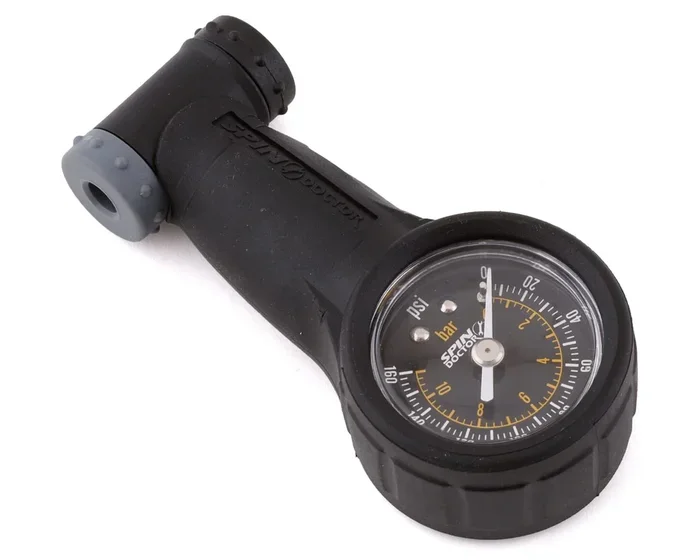
The best way to know your tire pressure is to measure it. A bike tire gauge is a small tool that gives you an exact PSI reading. You can buy one at any bike shop or online for just a few dollars.
Here is how to use a gauge:
- Remove the valve cap from your tire.
- Press the gauge firmly onto the valve stem.
- Read the number on the gauge display.
- Compare the reading to the recommended PSI range on your tire sidewall.
- Add or release air as needed.
Digital gauges are the most accurate. Dial gauges are a good middle ground. Stick gauges that come with some pumps are okay for quick checks but may not be as precise.
If you are unsure about the process, our article on how do you put air in a bike tire covers the full step-by-step process with helpful visuals and tips.
How Often Should You Check Tire Pressure?
Bike tires lose air slowly over time. Even a brand new tube can lose 1 to 2 PSI per day. That means your correct tire pressure can drop significantly within a week if you do not check it.
Here is a simple schedule to follow:
- Road bikes: Check before every ride.
- Mountain bikes: Check once a week or before big rides.
- Hybrid and commuter bikes: Check every 3 to 4 rides.
- Kids bikes: Check once a week.
If you want to learn more about recognizing when your tire is low, our article on how to tell if a bike tire needs air covers the visual and physical signs to watch for.
Signs Your Tire Pressure Is Too Low or Too High
Symptoms of an Underinflated Tire
Riding on a tire with too little air is one of the most common mistakes cyclists make. Here are the signs to watch for:
- The tire feels squishy or spongy when you squeeze it.
- Your bike feels sluggish and slow, even on flat ground.
- You get more pinch flats (also called snakebite flats).
- The tire rolls off the rim during sharp turns.
- You feel every bump and crack in the road.
Underinflation causes the tire to flex too much. That flex creates extra rolling resistance and wears the tire out faster on the outer edges of the tread. Over time, low pressure can also damage the rim by allowing the tire to bottom out on impacts.
Symptoms of an Overinflated Tire
Too much air is not better. In fact, overinflation creates its own set of problems:
- The ride feels harsh and bouncy.
- You have less traction, especially on wet or rough surfaces.
- The tire wears out faster in the center of the tread.
- You are more likely to get a blowout from a sharp impact.
- The bike feels skittish and hard to control on descents.
If you ever wonder can a bike tire pop from too much air, the answer is yes. Overinflated tires are at a much higher risk of bursting, especially on hot days when the air inside expands further.
Step-by-Step: How to Add or Release Air
Adding Air with a Floor Pump
A floor pump is the best tool for regular tire inflation. It is fast, accurate, and easy to use at home. Most floor pumps come with a dual-head design that fits both Presta valves and Schrader valves.
To add air:
- Remove the valve cap and press it to release a tiny bit of air if the tire feels very firm.
- Attach the pump head firmly to the valve.
- For Presta valves, unscrew the small nut at the top before attaching the pump.
- Pump in steady strokes until you reach your target PSI.
- Check the pressure with a gauge, then reattach the valve cap.
If you need help with a specific valve type, check out our guide on how to air up bike tire with Presta valve for detailed step-by-step instructions.
Releasing Air When Needed
If you overinflated your tire, you need to let some air out. Here is how:
- For Schrader valves: Press the small pin in the center of the valve with a pen cap or the back of a tire lever. Air will escape until you let go.
- For Presta valves: Unscrew the small nut at the top and press the valve stem. Air will release slowly.
Check the pressure after releasing a little air. Add or release more as needed until you hit the target PSI.
Common Mistakes That Hurt Your Tires
Ignoring Temperature and Altitude Changes
Air pressure changes with temperature. Cold weather causes the air inside your tires to contract, which drops the PSI. Hot weather does the opposite and causes pressure to rise. If you live in a place with big temperature swings, you may need to adjust your bike tire inflation with the seasons.
Altitude also plays a role. At higher elevations, the air is thinner, which can slightly affect how your tires feel. If you ride at the beach and in the mountains, you might notice a difference in how your bike handles at the same PSI reading.
Guessing Pressure Instead of Measuring
Many riders just squeeze the tire and guess whether it has enough air. That method is not reliable. A tire can feel firm even when it is 10 PSI low. The only way to know for sure is to use a gauge.
Another mistake is using a gas station air pump without a gauge. These pumps are not designed for bike tires and can easily overinflate them. Always use a pump with a built-in gauge or a separate tire gauge for accurate readings.
Final Thoughts on Bike Tire Pressure
Getting the how much air pressure for a bike tire right is one of the easiest ways to improve your ride. It keeps you safe, makes your bike faster, and helps your tires last longer. The key is to know your recommended PSI range, check your pressure regularly, and make small adjustments based on conditions and how the bike feels.
Do not let low or high pressure ruin your next ride. Grab a gauge, check your tires, and enjoy the difference. Once you make tire pressure checks a habit, you will wonder how you ever rode without them. Happy cycling!
Frequently Asked Questions
What is the ideal PSI for a road bike tire?
Most road bike tires need between 80 and 130 PSI. The exact number depends on your weight, the tire width, and the road conditions. Lighter riders can use the lower end of the range, while heavier riders should stay closer to the higher end. Always check the sidewall markings on your tire for the manufacturer’s recommended range.
Can I use the same pressure for all bike tires?
No, different bike types need different pressure levels. Road bikes require high PSI for speed, mountain bikes need low PSI for grip, and hybrid bikes fall somewhere in between. Using the wrong pressure can hurt your ride, reduce traction, and cause premature tire wear. Always follow the PSI range printed on the tire sidewall.
How do I know if my bike tire pressure is too low?
Common signs of low tire pressure include a squishy feel when you squeeze the tire, sluggish rolling, and feeling every bump on the road. You may also notice the tire wearing out faster on the outer edges of the tread. If you ride often, check your pressure with a gauge at least once a week to catch low pressure early.
Does temperature affect bike tire pressure?
Yes, temperature has a direct effect on tire pressure. Cold weather causes air to contract, which lowers PSI. Hot weather causes air to expand, which raises PSI. A drop of 10 degrees Fahrenheit can change your pressure by about 1 PSI. Check your pressure more often during seasonal temperature changes to stay within the safe range.
How often should I pump my bike tires?
Road bike tires should be checked before every ride because they lose air quickly. Mountain bike tires can be checked once a week. Hybrid and commuter bikes need attention every 3 to 4 rides. Kids bike tires should be checked weekly. Making pressure checks a regular habit keeps your rides safe and efficient.
What happens if I overinflate my bike tire?
Overinflating your tire makes the ride harsh and bouncy. You lose traction, especially on wet or rough surfaces, and the tire wears out faster in the center of the tread. In extreme cases, overinflated tires can burst or blow out from a sharp impact. Always stay within the recommended PSI range printed on the tire sidewall.
=== CONCLUSION ===
Getting your how much air pressure for a bike tire right is one of the simplest yet most impactful things you can do as a cyclist. It keeps you safe, makes your bike faster, and extends the life of your tires. The key is to know your recommended PSI range, check your pressure regularly, and make small adjustments based on conditions and how the bike feels.
Do not let low or high pressure ruin your next ride. Grab a gauge, check your tires, and enjoy the difference. Once you make tire pressure checks a habit, you will wonder how you ever rode without them. Happy cycling!