How Many Ounces in a Quart Liquid
A US liquid quart equals 32 fluid ounces, while an imperial quart holds about 40 fluid ounces. Knowing this quart conversion helps you measure liquids accurately for cooking, baking, and daily hydration. Whether you are following a recipe or tracking your water intake, this guide covers everything you need about liquid measurement in ounces and quarts.
Have you ever stood in the kitchen, staring at a recipe that calls for a quart of liquid, and wondered how many ounces that actually is? You are not alone. Liquid measurement can feel confusing, especially when recipes use different units. But here is the good news: converting ounces to quarts is simpler than you think. This guide breaks it all down so you never have to guess again.
Whether you are cooking dinner, meal prepping, or just trying to drink enough water, knowing the quart conversion saves time and reduces stress. In this article, we will walk you through everything you need to know about how many ounces are in a quart liquid. We will cover US and imperial measurements, practical tips, and common mistakes to avoid.
Key Takeaways
- A US liquid quart contains 32 fluid ounces — this is the standard measurement used in American kitchens.
- An imperial quart equals 40 fluid ounces, which is used in the UK and some other countries.
- Measuring cups and liquid measuring jugs make it easy to pour and track the right amount.
- Understanding fluid oz vs. dry oz prevents common cooking mistakes and ensures accurate results.
- Daily hydration goals often reference ounces, so knowing quart-to-ounce conversions helps you stay on track.
- Quick mental math (quart = 32 fl oz) makes conversions effortless in everyday life.
📑 Table of Contents
What Is a Quart?
A quart is a unit of liquid volume used in both the US customary and imperial measurement systems. The word “quart” comes from the Latin word “quartus,” meaning one-quarter. This makes sense because a quart equals one-quarter of a gallon. Think of it this way: two pints make a quart, and four quarts make a gallon.
In everyday life, you will encounter quarts when buying milk, juice, or broth at the grocery store. A standard milk carton is often one quart. Understanding this volume conversion helps you shop smarter and cook with confidence.
US Liquid Quart vs. Imperial Quart
Not all quarts are the same. There are two main types: the US liquid quart and the imperial quart. The US liquid quart is the one you will see most often in American recipes. It equals 32 fluid ounces. The imperial quart, used in the United Kingdom and some Commonwealth countries, is slightly larger at 40 fluid ounces.
This difference matters if you are following a recipe from another country or using a conversion chart from a foreign source. Always check which system the recipe uses before you start measuring.
How Many Ounces Are in a Quart Liquid?
The short answer: 32 fluid ounces in a US liquid quart. That is the number you need to remember. But let us dig deeper into why this matters and how to use it in real life.
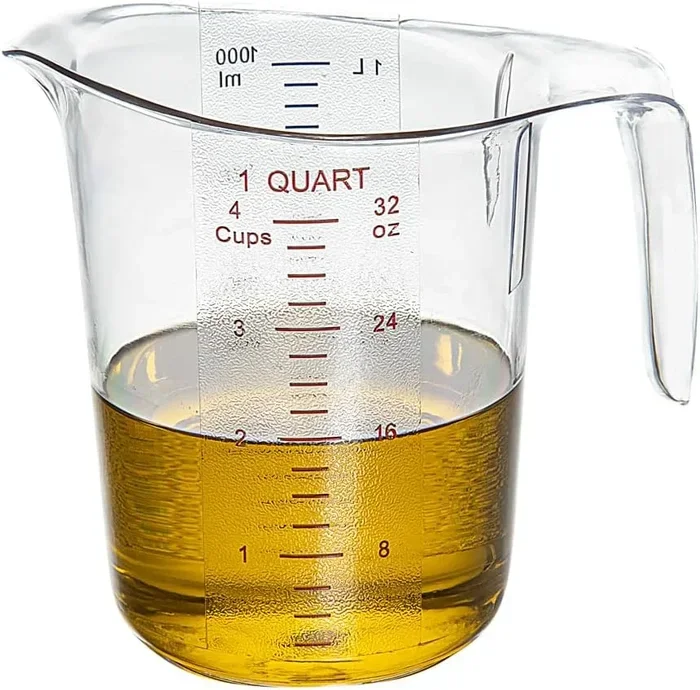
When a recipe says “one quart of water,” it means 32 fluid ounces. If you are using a measuring cup that shows fluid ounces, you would need to fill it to the 32-ounce mark. This fluid measurement is essential for baking, where precision can make or break a dish.
Quick Conversion Chart
Here is a simple breakdown to keep in your kitchen:
- 1 quart = 32 fluid ounces
- 2 quarts = 64 fluid ounces
- 0.5 quart (half quart) = 16 fluid ounces
- 1 quart = 4 cups
- 1 quart = 2 pints
These numbers make kitchen conversions a breeze. Print this out and tape it inside your cabinet for quick reference.
Fluid Ounces vs. Dry Ounces
This is where many people get confused. A fluid ounce measures volume, which is how much space a liquid takes up. A dry ounce measures weight, which is how heavy something is. They are not the same thing, and mixing them up can lead to disappointing results in the kitchen.
For example, a quart of flour weighs more than a quart of water because flour is denser. When a recipe calls for a quart liquid, it is referring to volume, not weight. Always use liquid measuring cups for fluids and dry measuring cups for ingredients like flour or sugar.
Why This Distinction Matters
Using the wrong type of measurement can throw off your recipe. If you weigh a liquid instead of measuring its volume, you might end up with too much or too little. This is especially important in baking, where the ratio of wet to dry ingredients needs to be precise. Stick to liquid measuring cups for any recipe that calls for a quart liquid or other fluid amounts.
Practical Uses for Quart-to-Ounce Conversions
Knowing how many ounces are in a quart is not just for cooking. You will use this knowledge in many areas of daily life. Let us explore some practical situations where liquid measurement skills come in handy.
Cooking and Baking
Many recipes, especially for soups, stews, and sauces, call for quarts of liquid. If you only have a measuring cup marked in ounces, you need to know the quart conversion to get the right amount. A quart of chicken broth for a soup recipe means 32 fluid ounces. Without this knowledge, you might eyeball it and end up with a too-thick or too-thin result.
Bakers especially benefit from understanding fluid measurements. Bread dough, for instance, often requires precise amounts of water or milk. A quart of liquid in a bread recipe equals 32 fluid ounces, which is four cups.
Daily Hydration and Health
Health experts often recommend drinking a certain number of hydration ounces each day. Many fitness trackers and water bottles use ounces as their unit. If your goal is to drink 64 ounces of water a day, that is exactly two quarts. This makes it easy to track your intake using a simple quart container.
Some people prefer to fill a one-quart bottle twice a day to hit their hydration targets. This simple habit works because of the straightforward ounce to quart relationship. For those who track beverage measurements for fitness or health reasons, knowing this conversion is a game-changer.
Shopping and Meal Prep
When you are at the grocery store, understanding quart sizes helps you buy the right amount. A quart of orange juice, for example, is 32 fluid ounces. If a recipe needs two quarts, you know you need a half-gallon or 64 fluid ounces. This knowledge also helps with meal prep, where you might batch-cook liquids in quart-sized containers.
Some people also use quart containers for storing homemade broths, smoothies, or overnight oats. Being comfortable with liquid volume measurements means you can scale recipes up or down without any guesswork.
Tools for Accurate Liquid Measurement
Having the right tools makes all the difference when working with fluid oz and quart measurements. Here are some of the best options for accurate liquid measurement in your kitchen.
Liquid Measuring Cups
A good measuring cup set is essential for any kitchen. Look for cups that have clear markings in both cups and fluid ounces. Glass measuring cups with spouts are great for pouring without spilling. Place the cup on a flat surface and bend down to read the measurement at eye level for the most accurate reading.
Measuring Jugs and Pitchers
For larger amounts like a full quart, a measuring jug or pitcher with ounce markings works perfectly. These are especially useful when you need to measure 32 fluid ounces or more. Some pitchers even show both US and metric measurements, which is helpful if you follow international recipes.
Kitchen Scales for Precision
While scales measure weight, not volume, they can still be useful. If you know the weight of a liquid per quart, you can use a scale as a secondary check. However, for most cooking and baking tasks, a proper liquid measuring cup is the best tool for the job.
Common Mistakes to Avoid
Even experienced cooks make mistakes with liquid measurement. Here are some common errors and how to avoid them.
- Confusing fluid ounces with weight ounces. Always check whether your recipe calls for volume or weight. A quart liquid is 32 fluid ounces, not 32 weight ounces.
- Using a dry measuring cup for liquids. Dry cups are designed to be filled and leveled off. Liquid cups have a spout and clear markings for pouring. Using the wrong type leads to inaccurate amounts.
- Not checking the measurement system. US and imperial quarts differ. A recipe from the UK uses imperial quarts (40 fl oz), while a US recipe uses US quarts (32 fl oz). Always verify the source.
- Eyeballing instead of measuring. It is tempting to guess, but precision matters, especially in baking. Take the extra few seconds to measure correctly.
- Ignoring temperature effects. Some liquids expand or contract with temperature. For the most accurate fluid measurements, measure at room temperature when possible.
Expert Tips for Mastering Liquid Conversions
Want to level up your liquid measurement skills? Here are some tips from experienced cooks and bakers that will help you nail every conversion.
Memorize the key number: 32. Once you know a US quart equals 32 fluid ounces, you can handle most conversions in your head. Half a quart is 16 ounces. A quarter quart is 8 ounces. This mental math works for quick adjustments while cooking.
Keep a conversion chart on your fridge. Taping up a simple chart saves you from Googling every time you cook. Include common conversions like cups, pints, quarts, and gallons alongside their fluid ounce equivalents.
Use the same measurement system throughout a recipe. Do not mix US and imperial units in the same dish. Pick one system and stick with it for consistent results.
Understand that the quart size matters for hydration tracking. If you carry a one-quart water bottle, you know that each refill equals 32 fluid ounces. Two refills give you 64 ounces, which is a common daily hydration goal. This simple connection between measurement units and your health routine makes tracking effortless.
Relate it to other units you already know. A gallon is 128 fluid ounces, a half gallon is 64 ounces, and a quart is one-quarter of that at 32 ounces. This relationship helps you scale up or down with ease. Whether you are doubling a soup recipe or halving a beverage batch, the math stays simple.
Stay consistent with your tools. Use the same brand and style of measuring cup for all your liquid volume needs. Different brands can have slightly different markings, and consistency reduces errors over time.
Frequently Asked Questions
How many ounces are in a quart liquid?
A US liquid quart contains exactly 32 fluid ounces. This is the standard measurement used in American recipes and cooking. If you are using an imperial quart, which is common in the UK, the answer is 40 fluid ounces. Always check which measurement system your recipe uses before you start measuring.
Is a quart the same as 32 ounces?
Yes, for US liquid measurements, a quart equals 32 fluid ounces. However, this applies to volume, not weight. A quart of a heavy liquid like syrup may weigh more than 32 ounces. Always distinguish between fluid ounces (volume) and weight ounces when working with recipes or hydration tracking.
How many cups are in a quart?
There are 4 cups in a US liquid quart. Since one cup equals 8 fluid ounces, four cups multiply to 32 fluid ounces. This makes it easy to convert between cups and quarts when following a recipe or preparing beverages for a group.
Why is it important to know how many ounces are in a quart?
Understanding this quart conversion helps you cook and bake with accuracy. It also supports hydration tracking, meal prep, and grocery shopping. When you know that one quart equals 32 fluid ounces, you can easily scale recipes up or down and monitor your daily water intake without any guesswork.
Can I use a regular measuring cup for a quart?
Yes, a standard US measuring cup holds 8 fluid ounces. You would need to fill it four times to reach one quart of 32 fluid ounces. For best results, use a liquid measuring cup with clear markings and a pour spout. This ensures accuracy and prevents spills while you measure.
How does a quart compare to a liter?
A US liquid quart is slightly less than a liter. One quart equals about 0.95 liters, while a liter equals roughly 33.8 fluid ounces. If you are converting between metric and US customary units, keep this small difference in mind for the most accurate liquid measurement results.
Conclusion
Knowing how many ounces are in a quart liquid is one of those simple skills that makes a big difference in the kitchen and beyond. A US liquid quart equals 32 fluid ounces, and an imperial quart equals 40 fluid ounces. Remembering this one number — 32 — gives you the power to convert quickly and cook with confidence.
From following recipes and baking bread to tracking your daily hydration goals, liquid measurement skills are essential. Use the tips and conversion chart in this guide to make your cooking smoother and your hydration tracking more accurate. The next time a recipe calls for a quart liquid, you will know exactly what to do.
Keep this guide handy, share it with friends who love to cook, and make fluid measurements second nature in your kitchen. Happy cooking and stay hydrated!