How Many Miles on the Treadmill to Lose Weight

There’s no universal “magic number” of treadmill miles for weight loss—it depends entirely on your individual factors like weight, fitness level, and diet. The key is creating a consistent calorie deficit through a mix of cardio, strength training, and mindful eating. Focus on sustainable effort, not just distance, and track progress with metrics beyond the scale for long-term success.
You step onto the treadmill, lacing up your shoes with a determined sigh. The question echoes in your mind: “How many miles on the treadmill to lose weight?” It’s a simple question, but the answer is anything but. If you’re searching for a single, universal number—like “run 5 miles every day”—I’m here to tell you that magic number doesn’t exist. But that’s actually great news! It means you can craft a plan that fits your unique body, schedule, and preferences. This guide will dismantle the myth of the one-size-fits-all mileage and give you the real tools to calculate your personal target, design effective workouts, and finally achieve the weight loss results you deserve. Forget generic advice; we’re getting specific.
Key Takeaways
- Weight loss hinges on a calorie deficit, not a specific mileage. You must burn more calories than you consume, and treadmill running is just one tool to achieve that.
- Your personal “miles” target varies based on weight, speed, and metabolism. A 150-pound person burns fewer calories per mile than a 200-pound person at the same pace.
- Consistency and duration often matter more than daily distance. Regular 30-45 minute sessions can be more effective than sporadic long runs.
- Diet is non-negotiable. You cannot outrun a poor diet; weight loss is roughly 80% nutrition and 20% exercise.
- Combine treadmill work with strength training. Building muscle boosts your resting metabolism, helping you burn more calories 24/7.
- Listen to your body to avoid injury and burnout. Rest days and varying your routine are essential for sustainable progress.
- Measure success with multiple metrics. Use body measurements, how clothes fit, and energy levels alongside the scale.
📑 Table of Contents
- The Science Behind Weight Loss: It’s All About the Deficit
- Calculating Your Personal Treadmill Mileage Goal
- Designing Your Effective Treadmill Workout Plans
- The Other Half of the Equation: Diet and Strength Training
- Common Mistakes That Sabotage Treadmill Weight Loss
- Putting It All Together: Your Actionable Blueprint
- Conclusion: Your Journey, Your Rules
The Science Behind Weight Loss: It’s All About the Deficit
Before we talk miles, we must talk science. Weight loss boils down to one immutable law: a calorie deficit. This means you consume fewer calories than your body burns in a day. Your total daily energy expenditure (TDEE) is the sum of your basal metabolic rate (BMR—calories burned at rest), the thermic effect of food (calories used to digest food), and your activity calories.
The treadmill helps tip the scales by increasing your “activity calories.” Each mile you run burns a certain number of calories, which contributes to your daily deficit. However, the deficit is the star of the show. You could run 3 miles and burn 300 calories, but if you reward yourself with a 500-calorie coffee and pastry, you’ve actually created a surplus. This is why focusing solely on miles is a flawed strategy. The treadmill is a powerful tool, but it must be used in conjunction with nutritional awareness.
Why “Miles” Can Be a Misleading Metric
We fixate on miles because they’re tangible. But two people running the same 2-mile distance can have vastly different calorie burns. Factors include:
- Body Weight: A 200-pound person expends more energy moving their mass than a 120-pound person over the same distance.
- Running Economy: Your form, efficiency, and fitness level affect calorie cost. A seasoned runner uses less energy than a beginner for the same pace.
- Speed & Incline: Running uphill or at a faster speed dramatically increases calorie burn per mile.
Because of this, fitness professionals often recommend focusing on time and intensity rather than just distance. A 30-minute brisk walk might burn fewer calories than a 20-minute high-intensity interval session. We’ll circle back to how to use this knowledge.
Calculating Your Personal Treadmill Mileage Goal
Now for the practical math. There is a way to estimate how many treadmill miles you might need, but it starts with your deficit goal. A safe, sustainable weight loss rate is 0.5 to 1 pound per week. Since 1 pound of fat equals roughly 3,500 calories, you need a weekly deficit of 1,750 to 3,500 calories.
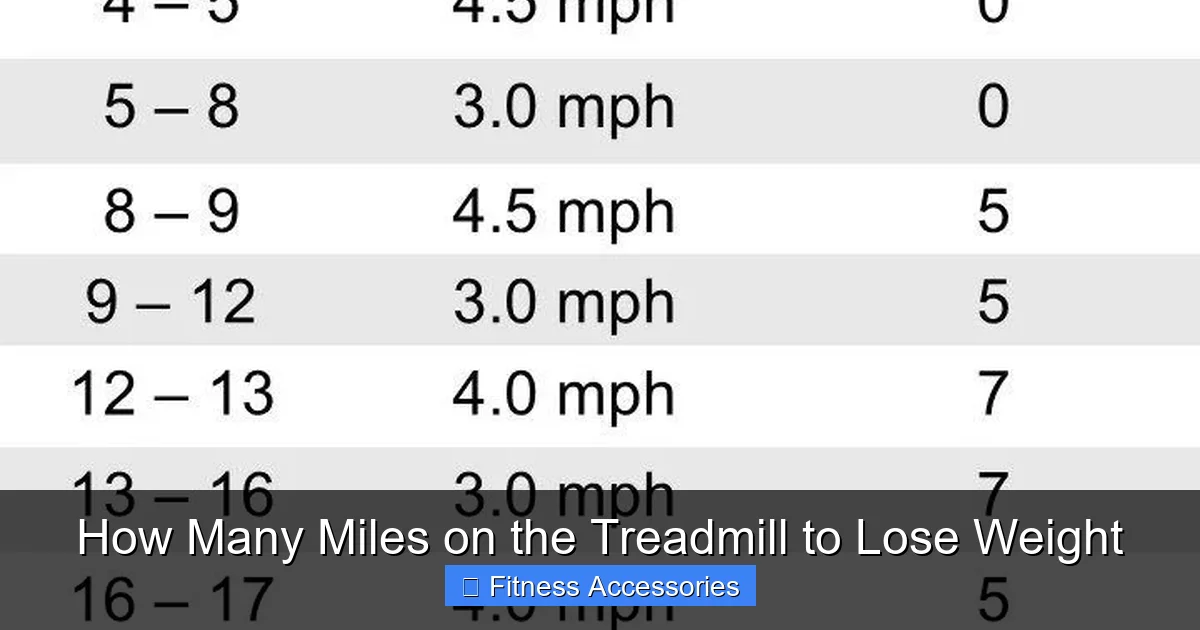
Visual guide about How Many Miles on the Treadmill to Lose Weight
Image source: s-media-cache-ak0.pinimg.com
Let’s build an example. Say your TDEE is 2,200 calories, and you aim to eat 1,700 calories/day, creating a 500-calorie daily deficit. That’s 3,500 calories/week, or 1 pound. Your goal is to use treadmill running to contribute to, or even create, part of that deficit.
Estimating Calories Burned Per Mile
A general estimate is that a person burns about 80-100 calories per mile run, but this is highly individual. A more precise method uses Metabolic Equivalent of Task (MET) values. Running at 5 mph (12-min/mile pace) has a MET of 8.3. The formula is:
Calories Burned = MET × Weight in kg × Time in hours
Let’s calculate for a 150-pound (68 kg) person running 1 mile at 5 mph (which takes 0.2 hours):
8.3 METs × 68 kg × 0.2 hours = ~113 calories burned.
Now, for a 200-pound (91 kg) person at the same pace/distance:
8.3 METs × 91 kg × 0.2 hours = ~151 calories burned.
See the difference? Your weight is the biggest variable. Online calculators and treadmill consoles use similar formulas. Use these as guides, not gospel.
Translating Deficit to Miles
If your goal is to burn 300 calories via running (to add to your dietary deficit), and you estimate burning 100 calories/mile, you’d need to run 3 miles. But here’s the critical pivot: Don’t get obsessed with hitting an exact mile count every day. Some days you’ll run 2 miles, other days 4. What matters is your weekly average and total deficit. If you create a 300-calorie deficit through running 4 days a week (averaging 75 calories/mile), that’s 1,200 weekly calories from exercise, contributing significantly to your goal.
Practical Tip: Start by tracking your food intake honestly for a week to understand your maintenance calories. Then, decide on a moderate deficit (e.g., 300-500 calories/day). Use the MET formula or a reliable calculator to see how many miles/time it takes you to burn 200-400 calories. That becomes your *starting point*, not your prison sentence.
Designing Your Effective Treadmill Workout Plans
How you run those miles is just as important as how many. Mindlessly plodding along at a slow pace for miles is inefficient and boring. We’ll design three sample frameworks based on different goals and schedules. Remember, the best workout is the one you’ll actually do consistently.

Visual guide about How Many Miles on the Treadmill to Lose Weight
Image source: i.pinimg.com
Plan 1: The Time-Crunched Walker/Runner (30-45 Minutes)
For those with limited time, intensity is key. This plan uses interval training to maximize calorie burn in a shorter window.
- Day 1: 5-min warm-up walk. Alternate 2 minutes at a brisk walk/jog (challenging but sustainable) with 1 minute of a very fast walk or light jog. Repeat 6-8 times. 5-min cool-down.
- Day 2: 30-45 minutes of steady-state at a pace where you can talk in short phrases. This builds aerobic endurance.
- Day 3: Repeat Day 1, trying to increase the speed or incline on the “hard” intervals slightly.
Why it works: Interval training creates an “afterburn effect” (Excess Post-Exercise Oxygen Consumption), where your body continues to burn extra calories for hours after you finish.
Plan 2: The Steady-State Stamina Builder (45-60 Minutes)
Ideal for those who enjoy longer sessions and want to build a strong aerobic base. The focus is on duration and consistent effort.
- Day 1: 45-60 minutes at a pace that is a 5-6 on a 1-10 perceived exertion scale (you can speak in full sentences). Include a 5-min warm-up and cool-down.
- Day 2: Rest or light cross-training (yoga, swimming).
- Day 3: Repeat the steady-state session, perhaps adding a 1-2% incline for the last 10 minutes to increase challenge without impacting joints.
Why it works: Longer, moderate sessions improve your body’s ability to use fat as fuel and build mental toughness. They burn a high total number of calories during the session itself.
Plan 3: The Incline Enthusiast (Variable)
Using incline is a fantastic way to boost calorie burn and build leg strength without the impact of running.
- Workout A: “Hill Repeats.” 5-min warm-up. Run 2 minutes at a 4-6% incline at a pace that feels hard (7-8/10 effort). Then, 2 minutes at 0% incline to recover. Repeat 5-7 times. Cool-down.
- Workout B: “Pyramid Incline.” 5-min warm-up. Every 3 minutes, increase incline by 1% (start at 1%) while maintaining the same speed. Peak at 5-7%, then decrease by 1% every 3 minutes back to 0%.
Why it works: Walking or running uphill can increase calorie burn by 50% or more compared to flat ground at the same speed. It also builds glute and hamstring power.
The Other Half of the Equation: Diet and Strength Training
Here’s the truth bomb: you could run 10 miles a day and still not lose weight if your diet is off. The treadmill is your exercise tool; your fork is your primary weight-loss tool. They must work together.

Visual guide about How Many Miles on the Treadmill to Lose Weight
Image source: wikihow.com
Nutrition: The Engine of Your Deficit
You don’t need a complicated diet. You need awareness. Start with these steps:
- Track Intake: Use an app like MyFitnessPal or Cronometer for 1-2 weeks. Don’t judge, just observe. You’ll see where hidden calories lurk.
- Prioritize Protein: Aim for 0.7-1 gram of protein per pound of target body weight. Protein keeps you full, preserves muscle mass during weight loss, and has a higher thermic effect (your body burns more calories digesting it).
- Fill Up on Volume: Load up on non-starchy vegetables (spinach, broccoli, peppers). They are low in calories but high in fiber and water, promoting fullness.
- Mind Your Beverages: Liquid calories from soda, juice, and specialty coffees are diet-killers. Stick primarily to water, unsweetened tea, or black coffee.
Remember: A 300-calorie deficit from running can be erased by one sugary latte. Coordination is key.
Why You Must Lift Weights (Even as a Runner)
Cardio-only weight loss often leads to muscle loss. When you lose muscle, your metabolism slows down, making weight loss harder and regain easier. Strength training 2-3 times per week is non-negotiable for lasting results.
- It builds/maintains muscle. More muscle = higher resting metabolic rate (you burn more calories just existing).
- It reshapes your body. You’ll look leaner and more toned, not just “smaller.”
- It strengthens bones and connective tissue. This reduces injury risk from all that treadmill running.
- It breaks the monotony. A balanced routine keeps you engaged.
You don’t need a gym. Start with bodyweight exercises (squats, lunges, push-ups, planks) at home. Invest in a set of dumbbells or resistance bands. Even 20 minutes, twice a week, makes a monumental difference.
Common Mistakes That Sabotage Treadmill Weight Loss
Many people hit the treadmill with the best intentions but derail their progress with avoidable errors. Here are the top culprits and how to fix them.
Mistake 1: The “I Ran, So I Can Eat” Mindset
This is the most common and damaging error. People overestimate calories burned and underestimate calories consumed. That 300-calorie burn feels like a license for a 500-calorie treat, resulting in a net *gain*. Solution: Never use exercise as a direct calorie-for-food exchange. View your treadmill sessions as a health and fitness booster, not a meal ticket. Stick to your planned meals.
Mistake 2: Doing the Same Workout Every Single Day
Your body adapts. The 3-mile run that burned 300 calories last month might only burn 250 now because you’ve become more efficient. Solution: Apply the principle of progressive overload. Each week, slightly increase one variable: add 5 minutes to your time, increase the incline by 0.5%, or increase your speed by 0.1 mph. Also, incorporate different workout types (intervals, hills, steady-state) as shown in the plans above.
Mistake 3: Ignoring Rest and Recovery
Hitting the treadmill hard every single day leads to overuse injuries (shin splints, knee pain) and burnout. Your body gets stronger during rest, not during the workout itself. Solution: Schedule at least 1-2 full rest days per week. On other days, consider active recovery (a leisurely walk). Get enough sleep (7-9 hours) and manage stress—cortisol can promote fat storage.
Mistake 4: Only Judging Success by the Scale
The scale is a fickle tool. It doesn’t distinguish between fat, muscle, water, or waste. When you start exercising, especially with strength training, you might gain muscle while losing fat. The scale can stall or even go up, causing despair and abandonment of the plan. Solution: Use multiple metrics. Take body measurements (waist, hips, thighs) every 2 weeks. Notice how your clothes fit. Take monthly progress photos. Use a mirror and how you feel. The scale is one data point, not the final verdict.
Putting It All Together: Your Actionable Blueprint
Enough theory. Here is your step-by-step starting plan for the next 4 weeks.
- Week 1: Assessment & Foundation. Track your food intake without changing anything. Calculate your approximate TDEE using an online calculator. Get your baseline. Do 3 treadmill sessions of 20-30 minutes at a comfortable pace, just to build the habit.
- Week 2: Create the Deficit. Based on your tracking, identify 200-300 calories you can cut from your daily diet (e.g., swap a sugary drink for water, reduce portion sizes, skip the afternoon candy bar). Aim for a modest deficit. Increase one treadmill session to 35-40 minutes.
- Week 3: Introduce Intensity. On one of your treadmill days, try the interval workout from Plan 1. On another, add a 1-2% incline for 5 minutes of your steady walk. Start a simple 15-minute bodyweight strength routine twice a week (e.g., Monday and Thursday).
- Week 4: Evaluate and Adjust. Re-take your measurements and photos. How do you feel? If you’re consistently exhausted, dial back intensity. If it’s too easy, add a little more time or incline. Refine your food tracking. Your goal is progress, not perfection.
Remember: The question isn’t “How many miles on the treadmill to lose weight?” The real question is, “How can I sustainably move more, eat nourishing foods, and build strength so my body thrives?” The miles will follow, and the results will come.
Conclusion: Your Journey, Your Rules
The search for a simple mileage answer is understandable—we want a clear, easy formula. But weight loss is a complex, personal journey. There is no generic “X miles per day” answer because your body, your life, and your goals are uniquely yours. The power lies in understanding the underlying principles: the absolute necessity of a calorie deficit, the importance of consistency over heroic single efforts, and the synergy between cardio, strength, and nutrition.
Stop worrying about hitting a magical number on the treadmill odometer. Start focusing on showing up, pushing your limits safely, fueling your body well, and building muscle. Use the treadmill as your laboratory—experiment with speed, incline, and intervals to find what you enjoy and what challenges you. Celebrate the non-scale victories: more energy, better sleep, clothes fitting looser, and the pride of completing a tough workout.
Your path to weight loss isn’t measured in miles alone; it’s measured in sustainable habits, informed choices, and a growing respect for what your body can do. Now, go write your own story—one step, one smart meal, one rep at a time.
Frequently Asked Questions
How many miles per day on the treadmill should I run to lose weight?
There’s no set daily mileage. For most people, aiming for 3-5 miles of combined walking/running per session, 3-5 times a week, is a great start. Focus on creating a weekly calorie deficit of 1,750-3,500 calories through a mix of exercise and diet, rather than a rigid daily mile count.
Is walking on the treadmill effective for weight loss compared to running?
Yes, absolutely. Walking burns fewer calories per minute than running, but it’s sustainable for longer durations and is lower impact, reducing injury risk. A 60-minute brisk walk can burn a significant number of calories and is excellent for building consistency, especially for beginners.
How long will it take to see weight loss results from the treadmill?
With a consistent calorie deficit (diet + exercise), you can expect to see initial changes in 2-4 weeks, often first in how clothes fit. Visible scale loss of 1-2 pounds per week is a safe and realistic expectation. Patience and consistency are critical.
What treadmill speed is best for burning fat?
The “fat-burning zone” (lower intensity, longer duration) burns a higher *percentage* of calories from fat, but higher-intensity sessions burn more *total* calories. A mix is ideal. For steady-state, a pace where you can talk in short phrases (about 3-4 mph for walking, 5-6 mph for running) is effective. Incorporate intervals at faster speeds for a metabolic boost.
Can I use the treadmill every day for weight loss?
Daily high-intensity running is not recommended due to injury risk and lack of recovery. Aim for 3-5 treadmill sessions per week, incorporating rest days or active recovery (like gentle walking). On rest days, focus on nutrition and light mobility work.
How do I stay motivated to run on the treadmill when it feels boring?
Never run without a plan or distraction. Use structured interval workouts to break up the monotony. Listen to audiobooks, podcasts, or upbeat music playlists. Set small weekly goals (e.g., increase incline by 1%). Consider “treadmill trails” or virtual running apps that simulate scenic routes. Most importantly, remind yourself of your “why” and the non-scale victories you’re chasing.