How Many Calories Do You Burn on a Treadmill

The number of calories you burn on a treadmill is a personalized estimate, not a fixed number. It’s primarily influenced by your body weight, the speed and incline you set, and your workout duration. While treadmill counters provide a ballpark figure, they often overestimate. For greater accuracy, use heart rate-based calculations. Ultimately, consistency and progressive effort matter far more than chasing a precise daily calorie count.
Key Takeaways
- Your weight is the #1 factor: A heavier person burns more calories performing the same activity at the same speed as a lighter person because moving more mass requires more energy.
- Speed and incline work together: Increasing either dramatically boosts calorie burn. Incline (walking uphill) is especially potent as it engages more muscle groups and increases effort exponentially.
- MET values are the industry standard: Treadmills use Metabolic Equivalent of Task (MET) charts to estimate burn. One MET equals resting metabolism; higher METs mean higher energy expenditure.
- Heart rate is a more accurate personal gauge: Since it reflects your body’s real-time effort, formulas using heart rate (along with age, weight) provide a significantly better estimate than speed/incline alone.
- Treadmill counters typically overestimate: They often assume ideal conditions and don’t account for individual fitness level, running economy, or handrail use, leading to numbers 10-20% higher than actual burn.
- The “afterburn” effect (EPOC) is real but modest: High-intensity workouts increase post-exercise oxygen consumption, meaning you burn extra calories for hours afterward, but it’s usually a small percentage of the total workout burn.
- Focus on the trend, not the single number: Obsessing over one workout’s calorie count is counterproductive. Track weekly averages, progressive overload (increasing speed/incline/time), and how you feel for long-term success.
📑 Table of Contents
- The Eternal Question: What’s My Real Treadmill Calorie Burn?
- The Science Behind the Sweat: What Is a Calorie, Anyway?
- Key Factors That Influence Your Treadmill Calorie Burn
- Understanding METs: The Treadmill’s Secret Language
- Heart Rate: Your Personal Calorie Burn Indicator
- Treadmill vs. Outdoor Running: Is There a Difference?
- Maximizing Your Calorie Burn on the Treadmill: Practical Strategies
- How Accurate Are Treadmill Calorie Counters, Really?
- Conclusion: It’s About the Journey, Not Just the Number
The Eternal Question: What’s My Real Treadmill Calorie Burn?
You hop on the treadmill, finish your walk or run, and that little screen flashes a number: “Calories Burned: 350.” You feel great! But then the doubt creeps in. Is that real? Did I really burn 350 calories, or is the machine just telling me what I want to hear? If you’ve ever wondered, “How many calories do you burn on a treadmill?” you’re not alone. This is one of the most common questions in fitness, and the answer is both beautifully simple and frustratingly complex.
Let’s cut to the chase: that number is an estimate. It’s a calculated guess based on generalized formulas. Your true, precise calorie expenditure is a unique physiological fingerprint influenced by a dozen variables. The goal of this article isn’t to give you a magic formula that spits out your exact number (because science can’t do that outside a lab), but to give you the knowledge to understand what that number means, how to make it more accurate for you, and, most importantly, how to use this information wisely to actually reach your fitness goals.
The Science Behind the Sweat: What Is a Calorie, Anyway?
Before we dive into treadmills, let’s get our terms straight. A calorie is a unit of energy. When we talk about food, we’re talking about kilocalories (kcal), the energy your body derives from carbs, fats, and proteins. When we talk about exercise, we’re talking about the energy your body expends to power your muscles, heart, lungs, and every other system.

Visual guide about How Many Calories Do You Burn on a Treadmill
Image source: talkforfitness.com
Basal Metabolic Rate (BMR) vs. Active Burn
Your body burns calories 24/7, just to keep you alive. This is your Basal Metabolic Rate (BMR)—the energy needed for breathing, circulation, cell production, and thermoregulation while at complete rest. Exercise burns are on top of your BMR. So if a treadmill says you burned 300 calories in a 30-minute run, that’s the *additional* energy expenditure from that activity, not your total daily burn.
The Role of Metabolism and Muscle
Your metabolism is the sum of all chemical reactions that convert food into energy. A key driver of your metabolism is lean muscle mass. Muscle tissue is metabolically active, meaning it burns calories even at rest to maintain itself. This is why two people of the same weight can have different calorie burns: the person with more muscle will generally burn more calories during the same treadmill session and throughout the day. Building muscle, therefore, is a long-term strategy to increase your overall calorie-burning engine.
Key Factors That Influence Your Treadmill Calorie Burn
Now, to the meat of the matter. Why does your treadmill number differ from your friend’s, even if you both run at 6 mph for 20 minutes? Here are the primary variables, in order of impact.

Visual guide about How Many Calories Do You Burn on a Treadmill
Image source: runningshorts.com
1. Body Weight and Composition
This is the single biggest factor. Moving a heavier body requires more energy. The standard formulas treadmills use account for this, which is why you must input your weight. A 200-pound person running at 6 mph will burn significantly more calories than a 130-pound person running at the same speed for the same time. Body composition (muscle vs. fat) plays a secondary role here, as explained above.
2. Speed and Incline: The Dynamic Duo
These are the two settings you control. Their impact is non-linear.
- Speed: Doubling your speed (from 3.5 mph to 7 mph) doesn’t double your calorie burn per minute; it more than doubles it because the energy cost of running increases dramatically with speed due to the greater force and air resistance (even indoors).
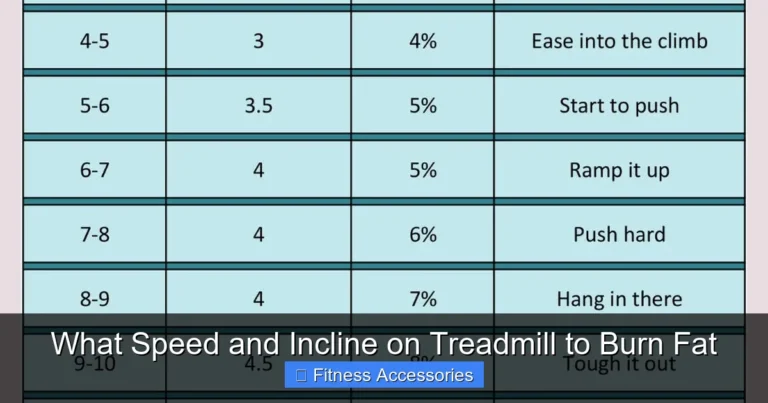
- Incline: This is the secret weapon. Walking or running uphill forces your body to work against gravity. A 1% incline increases calorie burn by about 10% compared to a flat surface at the same speed. A 5% incline can more than double it. Incline is a highly efficient way to boost burn without the joint impact of high speed.
3. Workout Duration and Consistency
Time is the other half of the equation. Burn more minutes, burn more calories—generally in a linear relationship. However, your body adapts. The same 30-minute run will burn slightly fewer calories after 6 weeks of consistent training because your body becomes more efficient. This is why progressive overload—gradually increasing speed, incline, or duration—is crucial for continued results.
4. Your Fitness Level and Running Economy
A seasoned runner and a beginner will burn different calories at the same speed. The experienced runner has better “running economy”—they use less energy to maintain the same pace due to improved form, neuromuscular efficiency, and a higher proportion of fat as fuel at moderate intensities. The beginner’s body is less efficient, so they’ll burn more calories for the same output. Treadmill counters can’t account for this.
Understanding METs: The Treadmill’s Secret Language
To make its estimate, your treadmill uses something called a MET chart. MET stands for Metabolic Equivalent of Task. It’s a simple ratio: 1 MET is the energy you use at rest. An activity with a MET value of 4 means you’re expending 4 times your resting energy.

Visual guide about How Many Calories Do You Burn on a Treadmill
Image source: runnersgoal.com
How Treadmills Use METs to Calculate Calories
The formula is: Calories Burned per minute = (METs x 3.5 x your weight in kg) / 200. The treadmill knows your inputted weight, looks up the MET value for your selected speed and incline from a standardized table (like the Compendium of Physical Activities), and crunches the numbers. For example, running at 6 mph (a 10-minute mile) has a MET value of about 9.8. A 150-pound (68 kg) person would calculate: (9.8 x 3.5 x 68) / 200 = ~11.6 calories per minute, or ~696 for an hour.
MET Values for Common Treadmill Workouts
Here’s a practical reference (for a ~155 lb person):
- Walking 3.5 mph (flat): ~3.5 METs = ~280 cal/hour
- Walking 4.0 mph with 5% incline: ~6.0 METs = ~480 cal/hour
- Jogging 5 mph (12-min mile): ~8.0 METs = ~640 cal/hour
- Running 7.5 mph (8-min mile): ~11.0 METs = ~880 cal/hour
- Running 10 mph (6-min mile): ~14.5 METs = ~1,160 cal/hour
Remember: These are averages. Your actual number will vary.
Heart Rate: Your Personal Calorie Burn Indicator
If METs are the treadmill’s generic guess, your heart rate is your body’s real-time report card on effort. It’s the single best individual metric for estimating calorie burn during cardio.
The Fat-Burning Zone Myth
You’ve heard of it: the magical 60-70% of your max heart rate where you “burn more fat.” This is a persistent myth. While you use a higher percentage of fat as fuel at lower intensities, you burn far fewer total calories. High-intensity exercise burns more total calories and more total fat calories in the same time period. The goal for weight loss is creating a calorie deficit, not just “fat burning.”
Using Heart Rate for More Accurate Estimates
Formulas that incorporate heart rate are more accurate because they directly measure your body’s response. A common formula is: Calories = ((Age x 0.2017) + (Weight x 0.09036) + (Heart Rate x 0.6309) – 55.0969) x Time (hours) x 1.05 (for men; there’s a slightly different one for women). Chest strap heart rate monitors paired with fitness apps or watches will use similar, more sophisticated algorithms. If your treadmill has a chest strap compatibility, use it! The number it generates will be much closer to your true burn than the default handrail sensor or no-sensor estimate.
Treadmill vs. Outdoor Running: Is There a Difference?
Many runners swear by the “realness” of outdoor running. Is calorie burn different? Yes, but not always in the way you think.
The Wind Resistance and Terrain Factor
Outdoors, you battle air resistance and uneven terrain, which increases energy cost. A study in the Journal of Sports Sciences found that running outdoors at the same speed burns about 5-10% more calories than on a treadmill due to these factors. However, most people naturally run slightly faster outdoors to cover the same perceived effort, which can offset this difference.
When a Treadmill Might Actually Burn More
The treadmill’s moving belt does some work for you—it pulls your leg back, potentially reducing the muscular effort compared to propelling yourself forward on solid ground. But here’s the kicker: incline. If you’re using a significant incline (e.g., 4-6%), you’re creating a much greater energy demand than a flat outdoor run. A steep treadmill walk can easily out-burn a flat outdoor jog. So, a treadmill with high incline settings can provide a *more intense* workout than a flat outdoor route.
Maximizing Your Calorie Burn on the Treadmill: Practical Strategies
Knowing the theory is one thing; applying it is another. Here’s how to make every minute on the belt count.
HIIT vs. Steady-State: Which Burns More?
High-Intensity Interval Training (HIIT)—alternating all-out sprints with recovery periods—is the champion of calories burned per minute. A 20-minute HIIT session can burn as many or more calories than a 40-minute steady-state jog, and it triggers a larger EPOC (Excess Post-exercise Oxygen Consumption), or “afterburn,” where your metabolism stays elevated for hours. Example: 5-min warm-up, then 8 rounds of 30-second sprint (8-10 mph) / 90-second walk, 5-min cool-down.
Incorporating Incline Intervals
Don’t just set it and forget it. Use the incline button! A powerful and joint-friendly workout is the “Incline Pyramid.” Start at 1% incline, walk/run for 2 minutes. Increase to 2% for 2 minutes, then 3%, and so on up to 5-6% (or your max), then pyramid back down. This constantly challenges different muscle fibers and spikes your heart rate.
Don’t Forget About Non-Exercise Activity
The calories you burn on the treadmill are just one piece of your Total Daily Energy Expenditure (TDEE). NEAT (Non-Exercise Activity Thermogenesis)—fidgeting, walking to your car, housework—can vary by hundreds of calories between individuals. Maximize your overall burn by staying active throughout the day, not just during your 30-minute session. Park farther away, take the stairs, stand while on phone calls.
How Accurate Are Treadmill Calorie Counters, Really?
Let’s address the elephant in the room. That number on the screen… should you trust it? The short answer is: take it with a very large grain of salt.
Why They’re Often Overestimates
Treadmill algorithms are based on studies of trained runners in lab conditions. They assume:
- Perfect, efficient running form.
- No handrail support (holding on reduces effort by up to 20-30%, but many people do it, especially on inclines).
- Ideal environmental conditions (they don’t account for temperature or humidity in the gym).
- A “average” person. They don’t know your unique muscle mass or running economy.
Research consistently shows treadmill counters can overestimate calorie burn by 10-30%. They are best used for relative tracking—comparing your own workout today to your workout last week—not for an absolute, scientific measurement.
Better Ways to Track Your True Burn
For a more personalized picture:
- Use a heart rate monitor with a chest strap. This is the gold standard for consumer-grade accuracy.
- Focus on Rate of Perceived Exertion (RPE). On a scale of 1-10, how hard do you feel you’re working? If your treadmill says you burned 500 calories but you felt a solid 7/10 effort, that’s a good workout regardless of the number.
- Track your trends. Weigh yourself weekly (same conditions) and track your treadmill stats (distance, time, average heart rate). If your weight is moving in the right direction and you’re progressively improving your treadmill metrics (running faster, longer, or higher incline), your plan is working—the exact calorie count is secondary.
Conclusion: It’s About the Journey, Not Just the Number
So, how many calories do you burn on a treadmill? The most honest answer is: “It depends.” It depends on you—your weight, your effort, your heart rate, your muscle mass. The treadmill gives you a number, but it’s a rough sketch, not a detailed portrait. Don’t let that number become your source of validation or frustration.
The true value of the treadmill lies in its consistency and control. It’s a reliable tool to build cardiovascular fitness, strengthen your legs and glutes (especially on an incline), and establish a regular movement habit. Use the calorie readout as a general guide, a way to compare similar workouts. But put your faith in the sweat on your shirt, the strength in your legs the next day, the improvement in your resting heart rate, and the gradual change in how your clothes fit. Those are the real, measurable outcomes of your effort. Get on the belt, focus on your form, challenge yourself with speed and incline, listen to your body, and let the results—whatever their caloric equivalent—speak for themselves over time.
Frequently Asked Questions
Do treadmill calorie counters overestimate or underestimate?
They almost always overestimate, typically by 10-20%. This is because they use generalized MET formulas that don’t account for individual fitness level, running efficiency, or handrail use. For a more accurate number, use a chest strap heart rate monitor.
What speed and incline burns the most calories?
Higher speeds and steeper inclines burn more calories per minute. For maximum efficiency, combine them in interval workouts. A steep walk (e.g., 4-6% incline at 3.5-4.0 mph) can burn as many or more calories than a flat run at a moderate pace, with less joint impact.
Why does a heavier person burn more calories on the same treadmill workout?
Because moving a greater body mass requires more energy. The basic physics of work (force x distance) apply. If two people walk at 3.5 mph for 30 minutes, the 200 lb person is doing more “work” against gravity and inertia than the 130 lb person, thus expending more calories.
Does walking on an incline burn more calories than running?
Yes, a brisk walk at a significant incline (5-10%) can burn more calories than a slow jog on a flat surface. The incline dramatically increases the muscular demand, particularly on the glutes and hamstrings, elevating heart rate and energy expenditure without the high impact of running.
Do you keep burning calories after you get off the treadmill?
Yes, due to a phenomenon called EPOC (Excess Post-exercise Oxygen Consumption). Your body works to repay its “oxygen debt” and restore homeostasis, burning extra calories for a period afterward. This effect is significantly larger after high-intensity interval training (HIIT) than after steady-state cardio, but the total post-exercise burn is still a relatively small percentage of the calories burned during the workout itself.
Are wrist-based heart rate monitors accurate for counting treadmill calories?
They are more accurate than treadmill counters alone but less reliable than chest straps. Wrist monitors can be affected by arm swing motion and fit. They provide a better estimate than speed/incline formulas, but for the most precise heart rate-based calorie calculation during treadmill workouts, a chest strap monitor is still the consumer-grade gold standard.