How Many Calories Do I Burn on the Elliptical

The number of calories you burn on the elliptical isn’t a one-size-fits-all number. It’s primarily determined by your body weight, workout intensity, and duration. While machine displays offer estimates, they often overestimate calorie burn. To maximize your results, focus on increasing resistance, maintaining good posture, and incorporating high-intensity intervals rather than relying solely on the machine’s calorie counter.
You hop on the elliptical, start moving, and after 30 minutes, the little screen proudly announces you’ve burned 450 calories. But did you really? That number, glowing so confidently, is one of the most common—and most misunderstood—metrics in the gym. The truth about how many calories you burn on the elliptical is more nuanced, more personal, and frankly, more interesting than any single machine readout can convey. This isn’t about shattering your motivation; it’s about arming you with real knowledge. Let’s break down the science, the variables, and the strategies so you can truly understand your elliptical calorie burn and use that machine to its absolute fullest potential.
Key Takeaways
- Your weight is the #1 factor: A heavier person burns more calories performing the same workout than a lighter person because moving more mass requires more energy.
- Intensity trumps time: A 30-minute high-intensity interval session will typically burn more calories (and boost metabolism) than a 45-minute leisurely stroll at low resistance.
- Elliptical calorie counters are estimates: They use generalized formulas and often overcount by 10-30%. Don’t take the number as absolute truth; use it as a relative gauge of your effort.
- Form is non-negotiable: Leaning on the handles, “bouncing,” or using momentum reduces muscle engagement and lowers your caloric expenditure. Stand tall and drive through your heels.
- Resistance is your best friend: Increasing the resistance level builds muscle, which raises your resting metabolic rate. More muscle = more calories burned 24/7.
- It’s a full-body, low-impact tool: The elliptical is excellent for burning calories while being gentle on joints, making it sustainable for long-term fitness and weight management.
- Consistency and progression are key: Your body adapts. To keep burning more calories, you must progressively increase challenge—via resistance, speed, or duration.
📑 Table of Contents
- The Fundamental Truth: There Is No Single Answer
- The Hidden Variables: What Your Elliptical Machine Doesn’t Know
- Calculating a More Accurate Estimate: Beyond the Machine
- Elliptical vs. Other Cardio Machines: How Does It Stack Up?
- How to Actually MAXIMIZE Your Calorie Burn on the Elliptical
- Common Mistakes That Sabotage Your Calorie Burn
- The Bottom Line: It’s About Health, Not Just a Number
The Fundamental Truth: There Is No Single Answer
Let’s rip the bandage off first. There is no universal “calories burned on elliptical” chart that applies to everyone. That number you see is a personalized equation, and you are the most important variable. The machine doesn’t know your muscle mass, your metabolic health, or how efficiently your body recruits fuel. It simply runs a basic algorithm based on the inputs it has—usually just the weight you manually entered (if you even bothered) and the speed or resistance level you set. This is why two people side-by-side for 30 minutes can see drastically different numbers.
The Primary Equation: Weight x Time x Intensity
At its core, calorie burn (technically, energy expenditure) during exercise follows a simple principle: the more work you do, the more energy you expend. On the elliptical, “work” is determined by three main factors:
- Body Weight: This is the largest factor. It takes more energy to move 200 pounds than it does to move 120 pounds. A 125-pound person will burn significantly fewer calories in the same 30-minute workout than a 185-pound person, even if they set the exact same resistance and speed.
- Workout Duration: More time in motion generally means more calories burned, but with diminishing returns as fatigue sets in and intensity drops.
- Workout Intensity: This is the most powerful lever you can pull. Intensity is a combination of your speed (RPMs or strides per minute) and the resistance level. High resistance at a moderate speed often burns more than low resistance at a very high speed because you’re working against greater force, engaging more muscle mass.
So, what do real-world estimates look like? Using metabolic equivalent of task (MET) values—a common scientific measure of energy cost for activities—we can create a general guide. The elliptical typically ranges from 3.5 to 8.0 METs depending on effort.
Example Estimates (for 30 minutes):
- Light Effort (low resistance, casual pace): A 155-pound person burns approximately ~180 calories.
- Moderate Effort (medium resistance, steady pace): A 155-pound person burns approximately ~335 calories.
- Vigorous Effort (high resistance/high RPMs, interval-style): A 155-pound person burns approximately ~450+ calories.
Remember: These are averages. Your personal burn could be 20% higher or lower.
The Hidden Variables: What Your Elliptical Machine Doesn’t Know
That console is a simple machine. It doesn’t account for the complex, individual engine that is your body. Several critical factors dramatically influence your true calorie burn, which are nearly impossible for a gym machine to calculate accurately.
1. Your Muscle Mass and Composition
Muscle tissue is metabolically active. It burns calories at rest and demands more fuel during exercise. Two people of the same weight and age can have vastly different body compositions—one may have a higher percentage of lean muscle mass. The person with more muscle will burn more calories during the same elliptical workout because their body requires more energy to perform the work. Building muscle through resistance training (on and off the elliptical) is a long-term strategy to increase your basal metabolic rate (BMR), meaning you burn more calories all day, every day.
2. Your Fitness Level and Efficiency
Are you a seasoned athlete or just starting out? A beginner’s body is inefficient. It recruits more muscle fibers, uses more energy (often from less-efficient glycogen stores), and produces more heat for the same absolute workload. As you become fitter, your body becomes an energy-efficient machine. The same 30-minute workout that burned 350 calories a month ago might now only burn 300 because your muscles, heart, and lungs have adapted to do the same work with less perceived effort and less energy waste. This is the principle of diminishing returns and why progressive overload—constantly challenging yourself—is so crucial.
3. Your Age and Hormonal Profile
Metabolism naturally slows with age, largely due to loss of muscle mass (sarcopenia). Hormones like thyroid hormones, testosterone, and estrogen play significant roles in regulating metabolic rate. These are highly individual and not factored into any elliptical calculator.
4. Your Daily Activity Level (NEAT)
Non-exercise activity thermogenesis (NEAT) is the calories you burn through all the movement you do that isn’t formal exercise—fidgeting, walking to your car, gardening, taking the stairs. Someone with a high NEAT job (e.g., a construction worker) will have a different overall daily energy expenditure than someone with a sedentary desk job, even if they do the exact same elliptical workout. Your elliptical burn is just one piece of your total daily calorie picture.
Calculating a More Accurate Estimate: Beyond the Machine
So, how can you get a ballpark figure that’s more reliable? You need to use a formula that incorporates your weight and a MET value that matches your perceived effort.
Using the MET Formula
The formula is: Calories Burned = METs x Weight in kg x Time in hours.
First, convert your weight: Pounds / 2.2 = Kilograms.
Then, choose an appropriate MET value:
- 3.5 METs: Very light effort, minimal resistance, strolling.
- 5.0 METs: Light to moderate effort, typical steady-state cardio.
- 6.8 METs: Moderate to vigorous effort, solid resistance, good pace.
- 8.0+ METs: Vigorous, high-intensity effort with intervals or very high resistance.
Real Example: A 170-pound person (77.3 kg) does a vigorous 45-minute elliptical session (MET 7.5).
Calculation: 7.5 METs x 77.3 kg x 0.75 hours = ~435 calories.
This is a more educated estimate than the machine might give, but it’s still an estimate. The only way to get a truly precise measurement is through laboratory testing with indirect calorimetry, which measures your oxygen consumption and carbon dioxide production.
The Heart Rate Truth
The single best in-workout metric for gauging intensity—and thus, relative calorie burn—is your heart rate. A chest strap heart rate monitor paired with a fitness app or watch that uses your personal data (age, weight, sometimes even resting heart rate) will provide a much more personalized calorie estimate than the elliptical’s handgrip sensors. Why? Because heart rate directly correlates with cardiovascular effort and oxygen utilization, which are the drivers of calorie expenditure. If your heart rate is in the target zone (e.g., 70-85% of your max heart rate), you know you’re in a high-burn zone, regardless of what the machine says.
Elliptical vs. Other Cardio Machines: How Does It Stack Up?
Is the elliptical a good calorie burner compared to the treadmill, bike, or stair climber? The answer depends entirely on how you use it.
Elliptical vs. Treadmill
A treadmill, especially with an incline, generally has a higher MET value at the same perceived effort because you’re supporting your full body weight against gravity. Running on a 5% incline can easily hit 8-10 METs. However, the elliptical’s major advantage is impact. You can often sustain a higher-intensity elliptical workout for longer than a running workout because it’s non-impact. For someone with knee, hip, or back issues, the ability to go longer and more frequently on the elliptical can result in a higher total weekly calorie burn despite a slightly lower per-minute rate. It’s a trade-off between peak intensity and sustainable volume.
Elliptical vs. Stationary Bike
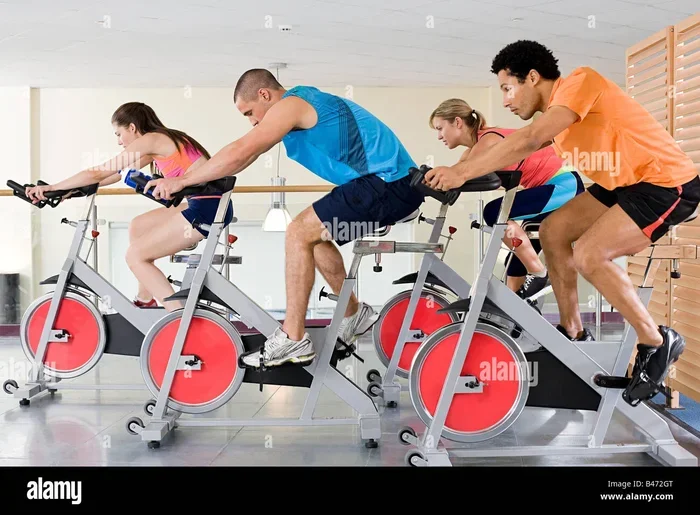
Both are low-impact. A vigorous spin class on a bike (high resistance, high RPM) can rival or exceed an elliptical’s calorie burn. However, the elliptical engages the upper body (arms, chest, back) in addition to the legs, potentially leading to a higher total muscle recruitment and thus a higher calorie burn at the same heart rate. The bike is more focused on the lower body. The elliptical offers a more full-body workout in a single session.
Elliptical vs. Stair Climber
The stair climber is arguably the king of lower-body calorie burn per minute due to the sheer force required to lift your body weight against gravity step after step. It’s brutally effective but also high-impact on the knees and highly fatiguing, which limits duration for most people. The elliptical provides a similar glute and hamstring engagement at a fraction of the joint stress, allowing for longer, more frequent sessions. For pure, short-burst calorie incineration, the stair climber wins. For sustainable, full-body calorie burn, the elliptical is a champion.
How to Actually MAXIMIZE Your Calorie Burn on the Elliptical
Okay, you understand the variables. Now, let’s talk strategy. How do you make every minute on that machine count?
Strategy 1: Ditch the “Speed-Only” Mentality
Many people set the elliptical to a high speed (RPM) with little to no resistance. This creates a “bouncy,” momentum-driven workout where you’re not actually pushing against anything. You’re just moving your legs in a circle with little force. This is low-intensity, low-calorie-burn activity. Resistance is the key to building muscular effort. Start by finding a resistance level where you feel a genuine push with each stride, especially through your heels. Your speed will likely drop, but your effort—and calorie burn—will skyrocket.
Strategy 2: Embrace High-Intensity Interval Training (HIIT)
This is the most effective protocol for burning more calories in less time and triggering the “afterburn effect” (excess post-exercise oxygen consumption, or EPOC).
- Sample Elliptical HIIT Workout (20-25 mins):
- 5 min warm-up (light resistance, steady pace)
- Interval Block (Repeat 8-10x):
- 1 minute: MAX EFFORT. Crank the resistance to a very challenging level (8-10/10) and push your RPMs as hard as you can.
- 1.5-2 minutes: Active recovery. Drop resistance to 2-3 and pedal slowly to recover.
- 3-5 min cool-down (very light resistance)
This pattern spikes your heart rate, maximizes energy system demand, and keeps your metabolism elevated for hours after you step off.
Strategy 3: Use the Arms and Engage Your Core
Don’t just hold the handles passively. If your elliptical has moving arms, push and pull with purpose. Imagine you’re cross-country skiing. This recruits your back, chest, shoulders, and core. More muscle mass working = more calories burned. Even with stationary handles, focus on keeping your torso stable and engaged. A slouched, relaxed core wastes energy and reduces efficiency.
Strategy 4: Go Backwards
Many ellipticals allow you to pedal in reverse. This is a fantastic way to target different muscle groups (hamstrings, glutes, quads in a new way) and shock your system. It often feels harder at first, meaning a higher calorie burn for the same time. Spend 5-10 minutes of your workout going backwards, either continuously or in intervals.
Strategy 5: Track Progress with More Than Calories
Since calorie counts are flawed, use other metrics to gauge improvement:
- Heart Rate: Can you maintain a higher % of your max HR for longer?
- Resistance Level: Can you now complete a 30-minute session at resistance 6 when last month you could only do 4?
- Perceived Exertion: The same workout feels easier over time.
- Distance/Output: Are you covering more “miles” or watts in the same time?
These are signs of true fitness gains that will inevitably lead to higher calorie burn over time.
Common Mistakes That Sabotage Your Calorie Burn
You might be working hard, but if you’re making these errors, you’re leaving calories on the table.
Mistake 1: Leaning on the Handles
This is the #1 calorie-killer. If you’re supporting your upper body weight with your arms, you’re taking load off your legs and core. Your hands should guide the movement, not bear your weight. Keep your weight in your heels and your chest up. Lightly touch the handles for balance only.
Mistake 2: Using Too Little Resistance
As discussed, “flailing” at high speed with no resistance is a waste of time. It’s easy to do but burns minimal calories. You should feel like you’re actively pushing against something with every stride.
Mistake 3: Not Fueling Properly
Working out in a severely fasted state can lead to low energy, poor performance, and muscle breakdown. Conversely, eating a huge meal right before can make you sluggish. Aim for a small, balanced snack (carbs + protein) 60-90 minutes before your session to ensure you have the glycogen to push hard.
Mistake 4: Doing the Same Workout Every Day
Your body adapts within 2-3 weeks. If you always do 30 minutes at resistance 5, your calorie burn will plateau. You must progressively increase the stress: add 1-2 minutes, increase resistance by one level, add an extra interval, or try a new program on the machine.
Mistake 5: Ignoring Nutrition
You cannot out-elliptical a bad diet. It’s easy to overestimate calorie burn and then “reward” yourself with a 500-calorie coffee drink, instantly wiping out your hard work. Track your food intake (even roughly) to understand the true energy balance. The elliptical is a tool for creating a deficit and building fitness, but nutrition is the foundation.
The Bottom Line: It’s About Health, Not Just a Number
So, how many calories do you burn on the elliptical? A 150-pound person might burn anywhere from 150 to 500+ calories in 30 minutes, depending entirely on the factors we’ve discussed. Chasing a specific, precise number on the screen is a fool’s errand. Instead, chase these things:
Chase effort. Chase a heart rate in your target zone. Chase the feeling of strong muscles working. Chase the completion of a challenging interval. Chase consistency—showing up 4-5 times a week.
The elliptical is a phenomenal tool. It’s low-impact, full-body, and incredibly versatile. By understanding how to manipulate its variables—primarily resistance and interval structure—you can make it one of the most effective calorie-burning and cardiovascular-improving machines in the gym. Stop obsessing over the readout. Start focusing on the quality of your movement, the depth of your breath, and the progressive challenge you set for yourself. The calories will follow, and so will the results.
Frequently Asked Questions
Are elliptical calorie counters accurate?
No, they are not highly accurate. They use generalized formulas based on weight and speed/resistance and typically overestimate calorie burn by 10-30%. Use them only as a rough, relative gauge of your effort between workouts, not as an absolute measure.
What is a good resistance level on the elliptical to burn calories?
A “good” resistance is subjective but should feel challenging. You should be able to speak in short phrases (the “talk test”) but not sing. If you can pedal easily at high RPMs with no push, the resistance is too low. Aim for a level where you feel a significant push through your heels on each stride, usually between 5-8 on a 10-level scale for most people during steady-state work.
Should I hold the handles or let go to burn more calories?
You should lightly hold the handles for balance and to engage your upper body. Letting go entirely can compromise stability and posture, potentially reducing efficiency and increasing injury risk. The key is to not lean your weight on them. Your core and legs should support your body; your hands are just guides.
Is the elliptical good for weight loss?
Yes, the elliptical can be an excellent tool for weight loss because it allows for high-calorie-burn sessions with low joint stress, making it sustainable for frequent use. However, weight loss ultimately depends on maintaining a consistent calorie deficit, which requires combining your elliptical workouts with a balanced, controlled diet.
How long should I stay on the elliptical to burn 500 calories?
For a 155-pound person, burning 500 calories would likely require 45-60 minutes of vigorous, consistent effort (high resistance, intervals). For a lighter person, it would take longer; for a heavier person, slightly less. Instead of targeting a time for a calorie goal, focus on workout quality. A 30-minute HIIT session can be more effective for fat loss and metabolic health than a 60-minute slow slog.
Why do I burn fewer calories on the elliptical than the treadmill for the same time?
This is common because the elliptical is non-impact and often uses momentum. On a treadmill, you are constantly propelling your entire body weight upward against gravity with each step, which is more metabolically costly. To equalize the burn on the elliptical, you must increase the resistance to a level where you feel similar muscular effort and cardiovascular strain as running.