How Long Is Jump Rope Supposed to Be
The correct how long is jump rope supposed to be depends on your height, skill level, and workout type. A properly sized rope ensures smooth rotations, reduces tripping, and maximizes your workout efficiency. Use our simple height-based chart and step-by-step measurement guide to find your ideal rope length today.
Getting the right how long is jump rope supposed to be is one of the most important things you can do for your workout. A properly sized rope makes every jump feel smooth and effortless. A rope that is the wrong length can turn a great session into a frustrating mess of tripping and tangled cables.
Whether you are a complete beginner or a seasoned athlete, rope length matters a lot. It affects your speed, your endurance, and even how many calories you burn. In this guide, we will walk you through everything you need to know about finding the perfect fit. You will learn simple measurement methods, sizing charts, and expert tips that make the process easy.
Key Takeaways
- Rope length matches your height: The general rule is to stand on the center of the rope and pull the handles up to your armpits for the correct fit.
- Different styles need different lengths: Speed ropes, weighted ropes, and double dutch ropes all have slightly different ideal lengths for optimal performance.
- Measuring is easy and fast: You can measure your jump rope at home using simple methods like the chest measurement or the standing method in just a few minutes.
- An incorrectly sized rope causes problems: A rope that is too long slows you down and causes tripping, while one that is too short hits your feet and tires you out faster.
- Adjustments are simple: Most jump ropes can be shortened by adjusting the cable length or changing the handle position with basic tools.
- Beginners should start longer: A slightly longer rope gives you more forgiveness while you learn the timing and coordination needed for consistent jumps.
📑 Table of Contents
Why Rope Length Matters for Your Workout
The correct jump rope length is not just a nice-to-have detail. It is the foundation of a good workout. When your rope is the right size, the cable spins smoothly through the air without dragging or catching. This means fewer interruptions and more consistent reps.
Here is why getting the length right makes a big difference:
- Fewer tripping errors: A rope that fits your height clears the ground with just enough room. You will spend less time fixing mistakes and more time jumping.
- Better workout intensity: A properly sized rope keeps your pace steady. This helps you maintain the right heart rate zone for fat burning and cardio fitness.
- Less fatigue: When the rope is too long, you have to work harder to swing it. A correctly sized rope uses less energy, so you can jump longer.
- Reduced risk of injury: A rope that is too short can hit your shins or feet. A rope that is too long can wrap around your body. Both scenarios can cause bruises or trips.
- Improved coordination: The right length lets you focus on your technique instead of constantly adjusting the rope mid-jump.
The Science Behind Rope Sizing
Jump rope sizing follows a simple biomechanical principle. The rope needs to clear the ground by about one to two inches while still reaching your hands comfortably when you step on the center. This balance creates the sweet spot where the rope rotates with minimal effort and maximum control.
Your height determines the arc the rope needs to travel. Taller people need longer ropes because the cable must travel a wider circle to clear the ground. Shorter people need shorter ropes for the same reason. This is why a one-size-fits-all approach never works well with jump ropes.
How Long Is Jump Rope Supposed to Be by Height
The most reliable way to determine your ideal rope length is by using your height as a starting point. Below is a simple chart that gives you a great baseline. Keep in mind that personal preference and the type of rope you use can shift this slightly.
| Your Height | Rope Length (Stand on Center, Pull to Armpits) | Approximate Cable Length |
|---|---|---|
| 4’10” – 5’0″ | 7 feet 6 inches | 8 feet 6 inches |
| 5’1″ – 5’5″ | 8 feet 0 inches | 9 feet 0 inches |
| 5’6″ – 5’10” | 8 feet 6 inches | 9 feet 6 inches |
| 5’11” – 6’2″ | 9 feet 0 inches | 10 feet 0 inches |
| 6’3″ and above | 9 feet 6 inches | 10 feet 6 inches |
These numbers give you the proper jump rope length for general use. If you are into speed jumping or double unders, you may want to go slightly shorter for faster rotation. If you are a beginner, staying at the longer end of the range gives you more room to learn.
How to Measure Your Jump Rope at Home
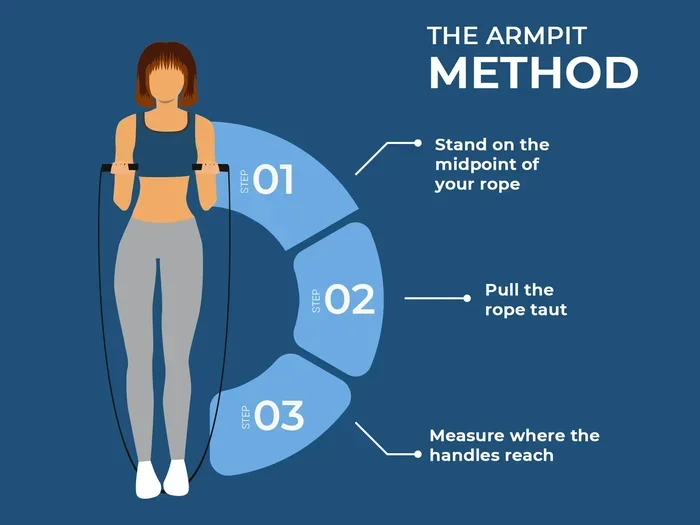
Measuring your rope is quick and easy. You do not need any special tools. Follow these simple steps to check if your current rope is the right size:
- Step 1: Stand in the middle of the rope with one foot. Make sure the cable is flat on the ground.
- Step 2: Pull both handles straight up alongside your body.
- Step 3: Check where the handles reach. For most people, the handles should reach your armpits or just below your chest.
- Step 4: If the handles reach your shoulders, the rope is too long. If they do not reach your chest, it is too short.
This standing measurement method is the most popular way to size a jump rope. It works for almost every rope type, from basic beaded ropes to speed cables. If you want a more detailed approach, check out our guide on how long a jump rope should be for you for advanced sizing techniques.
Rope Length for Different Jump Rope Styles
Not all jump ropes are the same, and different styles call for slightly different lengths. The type of rope you use affects how the cable moves through the air and how it feels during your workout. Let us break down the ideal lengths for the most popular rope types.
Speed Jump Ropes
Speed ropes are lightweight and designed for fast rotations. They are the go-to choice for boxers, CrossFit athletes, and anyone focused on high-intensity interval training. Because they spin so fast, speed ropes work best when they are slightly shorter than a standard length rope.
For speed jumping, subtract about two to three inches from the standard length for your height. This shorter length lets the rope rotate quickly without dragging air resistance. The handles should still reach your armpits when you stand on the center, but the cable itself will be a bit tighter.
Weighted Jump Ropes
Weighted ropes add resistance to build strength in your shoulders, arms, and core. Because the added weight makes the rope slower to rotate, you need a bit more length to keep the cable clearing the ground smoothly.
Add one to two inches to the standard length for weighted ropes. This extra length compensates for the slower swing speed and ensures the rope does not drag on the floor during jumps. If you are new to weighted ropes, start at the standard length and adjust from there based on how the rope feels during your first few sessions.
Beaded and Cable Jump Ropes
Beaded ropes and basic cable ropes are great for beginners and general fitness. These ropes are more forgiving when it comes to length. The standard measurement method works perfectly for them. Stand on the center, pull the handles up, and check for the armpit-to-chest range.
If you are using a beaded rope, keep in mind that the beads add a little extra weight near the bottom of the cable. This can cause the rope to sag slightly, so you might want to go a tiny bit shorter than the standard chart suggests.
Double Dutch Ropes
Double Dutch ropes are significantly longer because two ropes rotate at the same time. If you are setting up for Double Dutch, the rope needs to be long enough for the jumpers while also accommodating the turners on each side. The ideal double dutch length is typically much longer than standard single ropes, often around 12 to 16 feet depending on the height of the jumpers.
For more details on double dutch sizing, you can read our guide on how long a jump rope should be for double dutch.
Common Mistakes When Sizing a Jump Rope
Even experienced fitness enthusiasts make mistakes when sizing their jump ropes. These errors lead to frustration, poor workout performance, and sometimes even injury. Let us look at the most common mistakes and how to avoid them.
Buying a Rope Based on Guesswork
The biggest mistake is buying a rope without measuring first. Many people pick a rope based on how it looks or what is on sale. This approach almost always leads to the wrong size. Always measure your rope before you start jumping seriously. If you already have a rope, use the standing method to check if it fits.
If you are unsure about your current rope, you can learn more about identifying an incorrectly sized rope in our article on how to know if your jump rope is too long.
Ignoring Your Skill Level
Your experience level should factor into your rope length decision. Beginners benefit from a slightly longer rope because it gives them more time to react and adjust their timing. Advanced jumpers often prefer a shorter rope for faster rotations and more complex tricks.
Do not make the mistake of using the same rope length for every purpose. Your workout rope length for steady cardio is different from the length you want for double unders or speed drills.
Forgetting to Account for Handle Type
Different handle designs affect the overall rope length. Ball-bearing handles spin freely and add a bit of length to the effective rope. Plastic handles with basic bearings are shorter in effective length. When you are measuring, always account for the handle type you are using.
Also, consider whether you have adjustable handles or fixed-length cables. Adjustable ropes give you the flexibility to fine-tune your length after you have tested the rope in action.
Not Re-Measuring After Adjustments
If you shorten or lengthen your rope, always re-measure to confirm the new length is correct. A small adjustment can make a big difference in how the rope feels during a jump. Many people adjust their rope once and never check again, even after switching rope types or adding new techniques to their routine.
How to Adjust Your Jump Rope Length
Once you know your correct length, adjusting most jump ropes is straightforward. The method depends on the type of rope you have. Here is a quick breakdown of the most common adjustment techniques.
Adjustable Cable Ropes
Most modern jump ropes come with adjustable cables. These ropes have a small locking mechanism near the handle that lets you slide the cable in or out. To shorten the rope:
- Unscrew or unclip the handle cap.
- Slide the cable through until it reaches the correct length.
- Tighten the locking mechanism to secure the cable in place.
- Replace the handle cap and test the rope.
Fixed-Length Ropes
Some ropes, especially budget-friendly options, come in fixed lengths with no adjustment option. If your fixed-length rope is too long, you have a few options:
- Tie a knot: This shortens the effective cable length but can create drag points that slow the rope down.
- Replace the cable: Many rope brands sell replacement cables separately. This is the cleanest solution for fixed-length ropes.
- Use it as-is: If the rope is only slightly too long, you may be able to work with it while you build your coordination skills.
If you find yourself with a rope that is too long and want practical solutions, check out our guide on what to do if your jump rope is too long for more creative fixes.
Quick Tips for Perfect Rope Length Every Time
Here are some expert-backed tips that will help you get the perfect rope length consistently:
- Measure with clean shoes: The type of shoe you wear affects your height slightly. Measure with the shoes you normally jump in for the most accurate result.
- Test after adjusting: Always jump for at least one minute after adjusting your rope length. This gives you real-world feedback on whether the size feels right.
- Consider your workout goal: Speed training calls for a shorter rope. Endurance training works well with the standard length. Strength and weighted rope training needs a slightly longer rope.
- Check your rope seasonally: Cables can stretch slightly over time, especially with frequent use. Re-check your rope length every few months to make sure it still fits correctly.
- Ask for help when measuring: Having a friend hold the rope at the center while you pull the handles up makes the process faster and more accurate.
Expert Insights on Jump Rope Sizing
We spoke with certified fitness trainers and jump rope coaches to get their take on rope sizing. Here is what the experts had to say:
“The most common mistake I see is people using a rope that is too long because they think longer gives them more time,” says Coach Mike Torres, a CrossFit jump rope specialist. “In reality, a longer rope slows you down and makes it harder to maintain a consistent rhythm. Always size to your height and adjust based on your skill level.”
“For beginners, I recommend starting with the longer end of the sizing chart,” adds personal trainer Sarah Lin. “Once you feel comfortable with basic jumps and can maintain a steady rhythm for two minutes straight, you can try shortening the rope slightly for faster rotations.”
These expert insights reinforce the importance of proper sizing. The right how long is jump rope supposed to be answer is not a single number. It is a range that shifts based on your individual needs, goals, and rope type.
Conclusion
Finding the right how long is jump rope supposed to be does not have to be complicated. With the height chart, measurement methods, and style-specific guidance in this article, you have everything you need to get it right. The key is to measure accurately, consider your skill level and rope type, and adjust whenever needed.
A properly sized rope transforms your workout. You jump smoother, trip less, and push harder without thinking about the rope getting in your way. Take a few minutes today to check your rope length. Your future self will thank you with better workouts and faster progress.
Start with the standing measurement method, compare your result to the chart, and make any adjustments that are needed. Once your rope fits perfectly, you will wonder how you ever trained without it. Happy jumping!
Frequently Asked Questions
How do I know if my jump rope is the right length?
Stand on the center of the rope with one foot and pull the handles straight up. The handles should reach your armpits or just below your chest. If they reach your shoulders, the rope is too long. If they do not reach your chest, it is too short. This simple test works for almost every rope type.
Can I use the same jump rope for different types of workouts?
Yes, but you may need to adjust the length depending on the workout. Speed training works best with a slightly shorter rope, while endurance and general fitness use the standard length. Weighted rope training typically needs a bit more length to compensate for the added weight of the rope.
What happens if my jump rope is too long?
A rope that is too long drags on the ground more easily, slows down your rotations, and increases your chances of tripping. You will also tire out faster because you have to put more effort into swinging the rope. If your rope is too long, try shortening it using the adjustment method that matches your rope type.
Should children use a different rope length than adults?
Yes, children need shorter ropes that match their smaller height. Use the same standing measurement method for kids. The rope should reach their armpits or upper chest when they stand on the center. Many kids’ ropes come pre-sized, but it is always a good idea to double-check the fit.
How often should I re-check my jump rope length?
Re-check your rope length every few months, especially if you jump frequently. Cables can stretch over time, and handle connections can loosen. Also re-measure if you switch to a different type of rope or if you notice changes in your jumping performance like more tripping or slower rotations.
Is there a difference in rope length for men and women?
The rope length is based on height, not gender. However, since average heights differ between men and women, the ideal rope length will often differ as well. Always use your individual height and the sizing chart to find the correct length, regardless of gender.