How Long Does My Yoga Mat Need to Be
Choosing the right yoga mat length is crucial for safety, comfort, and alignment. The standard 68-inch mat fits most, but your height, yoga style, and portability needs dictate the ideal size. Tall practitioners (over 6’0″) often need 72-84 inches, while travel or restorative yoga may favor shorter mats. Ultimately, your mat should allow full extension without hanging off the end.
Key Takeaways
- Standard vs. Tall: A standard 68″ (173cm) mat suits most up to 5’10”. If you’re over 6’0″, consider 72″ (183cm) or longer for full extension.
- Style Matters: Dynamic styles like Vinyasa or Ashtanga benefit from extra length for lunges and jumps. Restorative or Yin yoga can use shorter mats as poses are static.
- Portability Trade-Off: Longer mats are heavier and bulkier. For travel or commuting, a 68″ or even a 62″ travel mat may be more practical.
- Test Your Space: Always measure your home practice area. Ensure your mat fits comfortably with room to move, especially in smaller spaces.
- Alignment is Key: Your mat’s length should allow you to place hands and feet squarely on the surface in poses like Downward Dog without toes or heels hanging off.
- Don’t Forget Width: While length is the focus, a wider mat (26″ vs. 24″) offers more side-to-side stability for wide-legged poses and sweaty practices.
📑 Table of Contents
- Why Yoga Mat Length Isn’t a One-Size-Fits-All Question
- The Standard Baseline: What “Normal” Really Means
- Decoding Your Personal Needs: Height, Style, and Space
- The Tall Practitioner’s Dilemma: Finding Length Without the Bulk
- The Portability Paradox: When Shorter is Actually Better
- Beyond Length: The Holistic Mat Selection Checklist
- Making the Final Decision: A Practical Action Plan
- Conclusion: Your Mat, Your Sanctuary
Why Yoga Mat Length Isn’t a One-Size-Fits-All Question
You unroll your mat, step onto it, and reach for your toes in a forward fold. Suddenly, your feet are dangling off the end. Or maybe you’re in a lunge, and your front heel is teetering on the edge. If this sounds familiar, you’ve asked the silent, frustrating question: “Is my yoga mat too short?” The answer isn’t as simple as buying the longest mat you can find. The ideal yoga mat length is a personal equation balancing your unique body, your preferred style of movement, and your lifestyle. It’s the foundation of your practice—literally. A mat that’s too short can throw off your alignment, create safety hazards, and break your focus. One that’s unnecessarily long becomes a cumbersome, heavy burden to carry to class. Let’s unravel this question completely, so you can find your Goldilocks zone: a mat that’s just right.
The Standard Baseline: What “Normal” Really Means
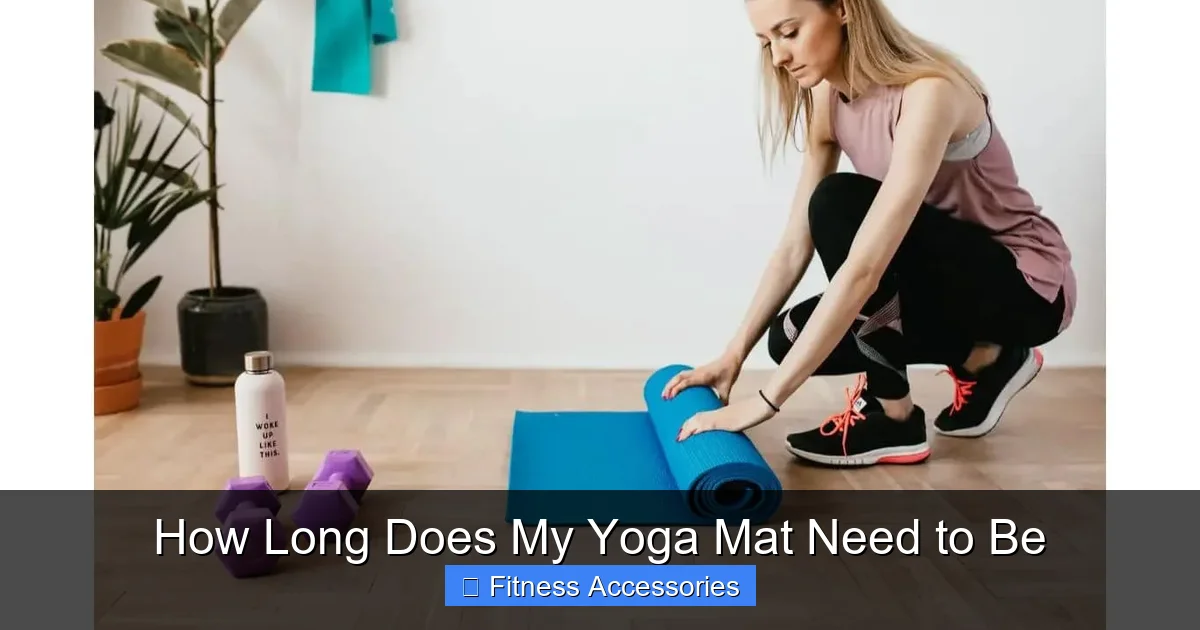
Walk into any yoga studio or big-box store, and you’ll be greeted by a sea of mats that are predominantly one length: 68 inches (about 173 centimeters). This has become the industry standard for a reason—it’s a practical compromise designed to accommodate the majority of adult practitioners. But who is the “majority”?
Visual guide about How Long Does My Yoga Mat Need to Be
Image source: a4fitness.com
Who a 68″ Mat Fits Comfortably
A 68-inch mat generally provides adequate length for individuals up to approximately 5’10” (178 cm) tall. This allows for full extension in poses like Supta Padangusthasana (Reclining Hand-to-Big-Toe Pose) or Virabhadrasana I (Warrior I) without the head or feet extending beyond the mat’s edge. For the average-height person, this length offers a stable, grounded platform for the entire practice without excess material to manage.
The Origin of the Standard
Historically, yoga was practiced on bare ground or simple cloths. The modern PVC mat was popularized in the late 20th century, and its dimensions were largely influenced by Western manufacturing standards and the average height of the population at the time. It’s a utilitarian length that fits well in most cars, on most studio racks, and in most apartment living rooms.
Practical Example: If you are 5’8″, when you lie flat on your back in Savasana, you’ll likely have 6-8 inches of mat space beyond your head and feet—a comfortable buffer. In a full Downward-Facing Dog, your hands and feet will be securely planted with room to adjust.
Decoding Your Personal Needs: Height, Style, and Space
Now we get to the heart of the matter. Your perfect mat length is a direct reflection of three core factors: your body, your practice, and your environment. Ignoring any of these can lead to a poor fit.
Visual guide about How Long Does My Yoga Mat Need to Be
Image source: koselihandmade.co.uk
Factor 1: Your Height (The Most Obvious Metric)
Height is the primary starting point. A simple rule of thumb is to add 3-4 inches to your height to determine the minimum mat length you should consider. This accounts for the full extension of your limbs in reclining or standing poses where the body is elongated.
- Under 5’4″ (162 cm): A standard 68″ mat will feel generously long. You might even find a 62″ travel mat sufficient for home use, especially if your practice is restorative.
- 5’4″ to 5’10” (162-178 cm): The 68″ standard is likely your sweet spot. It’s the most available, affordable, and portable option.
- 5’10” to 6’2″ (178-188 cm): You are at the upper edge of the standard. A 72″ mat will provide noticeable comfort, especially in forward folds and lunges. Your feet may graze the end of a 68″ mat in full extension.
- Over 6’2″ (188 cm): A longer mat is highly recommended. Look for 74″, 76″, or even 84″ options. This extra length prevents your head or feet from resting on the hard floor during supine poses and gives you room to adjust without readjusting the mat itself.
Pro Tip: Do a “mat test” at home. Lie flat on your back on a 68″ mat. Can you extend your arms and legs fully without any body part hanging off? If not, measure the overhang and add that to your required length.
Factor 2: Your Yoga Style (Movement Dictates Space)
Not all yoga is created equal when it comes to spatial demands. The dynamic, sweaty, and jumping nature of some styles requires more longitudinal real estate than slow, static holds.
- Vinyasa, Ashtanga, Power Yoga: These flowing, vigorous styles involve large movements: jumping from Utkatasana (Chair Pose) to Utthita Hasta Padangusthasana (Extended Hand-to-Big-Toe Pose), deep lunges, and full-body stretches. Extra length (72″+) is a significant advantage, providing a safe buffer for transitions and preventing your back foot from slipping off the mat in a high lunge.
- Hatha, Iyengar: While often slower, these precision-based styles use full extension in standing poses and props. A standard 68″ is usually adequate, but taller practitioners will still benefit from the extra room for alignment.
- Restorative, Yin, Gentle Yoga: These practices use supported, passive poses held for several minutes. Movement is minimal. A 68″ mat is almost always sufficient, and a shorter 62″ travel mat can work well, especially for seated or reclined postures where the body isn’t fully elongated lengthwise.
- Hot Yoga / Bikram: The intense heat induces sweat and slippage. A longer mat gives you more surface area to place towels and ensures your entire foot, even in wide stances, stays on a grippy surface.
Real-World Scenario: Sarah (5’11”) practices Vinyasa. On a 68″ mat, her back heel consistently lifts and slides during her Anjaneyasana (Low Lunge). Switching to a 74″ mat gave her that crucial 3-4 inches of stability, transforming her balance and focus in the pose.
Factor 3: Your Practice Space (The Final Constraint)
Your mat doesn’t exist in a vacuum. It lives in your home, your car, and your studio. The available space is a non-negotiable factor.
- Small Apartments / Limited Storage: A 72″ or 74″ mat rolled up can be a beast to store in a closet or corner. Consider a standard 68″ for easier management, or a high-quality foldable travel mat that stows flat.
- Car Commute / Public Transport: Length adds bulk and weight. A 72″ mat can be 1-2 pounds heavier and significantly longer to strap to a backpack. If you carry your mat daily, the 68″ standard’s portability is a major perk.
- Studio Practice: Most studio floors have marked spaces, often around 68″ wide. A longer mat may impinge on your neighbor’s space. Be mindful of studio etiquette—your extra length shouldn’t become someone else’s frustration.
- Outdoor Practice: Grass, sand, or pavement may have uneven surfaces. A longer mat gives you more options to position yourself on a flat spot, but it also means more surface area to clean afterward.
Key Insight: Measure the longest unbroken wall or floor space you have at home. If it’s only 70 inches of clear length, a 74″ mat won’t fit optimally. Your mat must fit your space as much as your body.
The Tall Practitioner’s Dilemma: Finding Length Without the Bulk
For anyone over 6’0″, the search for a longer mat can feel like a quest. The good news is options exist. The challenge is navigating the trade-offs of weight, cost, and portability.
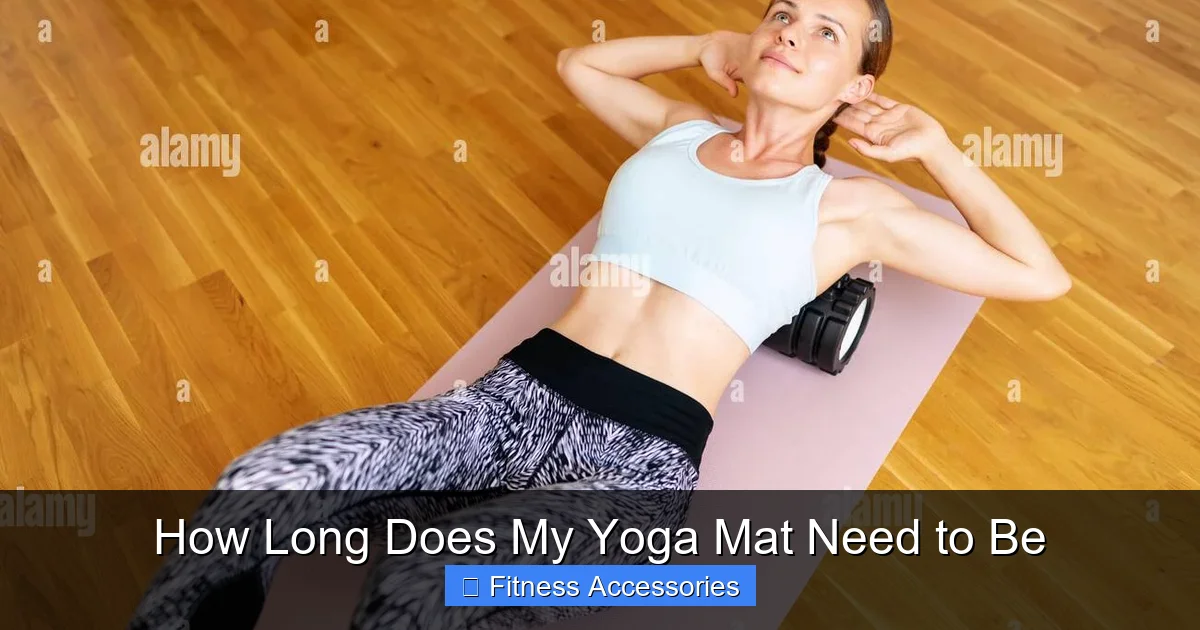
Visual guide about How Long Does My Yoga Mat Need to Be
Image source: c8.alamy.com
Available Lengths Beyond Standard
Many major brands now offer extended lengths. You’ll commonly find:
- 72 inches (183 cm): The most common “tall” option. Adds 4 inches to the standard. Often only a slight increase in weight and price.
- 74-76 inches (188-193 cm): A solid choice for those 6’2″ and above. Provides that extra margin of safety.
- 84 inches (213 cm) and up: Truly extra-long. These are specialty items, often heavier, more expensive, and can be difficult to find in stores. Best for dedicated home practice where portability is not a concern.
Material Matters for Long Mats
The material of a long mat influences its usability. A 74″ natural rubber mat can be surprisingly heavy (5-7 lbs). For tall yogis who commute, consider:
- TPE (Thermoplastic Elastomer): Lightweight and often more affordable. A 72″ TPE mat might weigh 3-4 lbs, making it much more portable than a rubber counterpart of the same length.
- Hybrid Mats: Some brands offer a standard rubber top with a lighter TPE or foam base to reduce overall weight for longer models.
- Travel-Focused Long Mats: Brands like Manduka and Jade Yoga offer their premium models in longer lengths, but be prepared for the weight. A Manduka PROlite 74″ is around 5.5 lbs.
Expert Advice: If you’re tall and travel with your mat, prioritize weight. A lighter 72″ TPE mat you actually bring to class is better than a heavier 74″ rubber mat you leave at home. Test the rolled diameter in your car trunk or on your bike rack before buying.
The Portability Paradox: When Shorter is Actually Better
Here’s the counterintuitive truth: the “best” mat length is the one you will use consistently. For many, the perfect 74″ mat sits in the closet because it’s too heavy to carry to the studio. This is where the “shorter is better” argument gains ground.
The Rise of the Travel Mat (and Its Limits)
Travel mats, typically 62-66 inches long and ultra-lightweight (1.5-3 lbs), have exploded in popularity. They solve the carrying problem but introduce a new one: insufficient length for many.
- Best For: Travel (airplanes, hotels), small-space living, gentle/restorative home practice, and as a topper over a studio’s communal mat for hygiene.
- Not Ideal For: Anyone over 5’8″ doing dynamic styles, hot yoga (many are less absorbent), or practices requiring full extension. Your Downward Dog will feel cramped, and your feet may hang off in Savasana.
The Compromise Solution: The “Standard” Traveler
A smart middle ground is a high-quality 68″ travel mat. Brands like Liforme (in their travel version) or Gaiam offer 68″ mats that are lighter than their standard counterparts (around 3-4 lbs). This gives you the standard length in a more portable package. Sacrifices may include less cushioning or a less durable surface, but for the mobile practitioner, it’s a worthy trade.
Scenario: David is 6’1″ and bikes to a 5:30 am Vinyasa class. A 74″ rubber mat is too heavy and long for his bike rack. His solution? A durable 68″ TPE mat with excellent grip. It’s not perfect, but it’s the mat he uses 5 days a week. The 74″ mat at home collects dust.
Beyond Length: The Holistic Mat Selection Checklist
Length is critical, but it’s not the only dimension that matters. A holistic view ensures your mat supports every aspect of your practice.
Width: The Often-Neglected Dimension
The standard width is 24 inches. But 26-inch “wide” mats are increasingly common. Who needs one?
- Broad-Shouldered Practitioners: For Chaturanga and Plank, a wider mat prevents your shoulders from hanging off the sides.
- Those Who Sweat Profusely: Extra width contains sweat and towel slippage better in hot yoga.
- Practices with Wide Stances: In wide-legged standing poses (Prasarita Padottanasana), a 24″ mat can feel narrow. A 26″ mat offers stability.
Caution: A wide mat takes up more studio space and may not fit on standard racks. Ensure your studio has enough room before investing.
Thickness: Cushion vs. Stability
This is separate from length but interacts with it. A thick mat (5-6mm) offers joint cushioning, crucial for knee poses and sensitive bodies. However, a very thick, long mat can feel unstable for balance poses. A thinner mat (3-4mm) provides better “ground feel” and connection but less padding. For long mats, consider your primary practice surface:
- Hardwood / Cement Studio Floors: Favor 4-5mm thickness for joint protection, especially on a long mat where you’re farther from the ground.
- Carpeted Home Practice: A thinner 3mm mat may suffice, as the carpet provides cushioning.
The ideal combo for a tall,膝盖-sensitive Vinyasa practitioner? A 72″ x 26″ x 5mm mat. For a tall, mobile traveler? A 68″ x 24″ x 3mm TPE mat.
Texture and Grip: Non-Negotiables for Safety
A long mat that slips is a hazard. Grip is paramount, especially in longer styles where you generate more momentum. Consider:
- Surface Texture: Raised patterns (like Liforme’s aligning lines) can enhance grip but may also collect dust. Smooth natural rubber offers excellent dry grip.
- Material: Natural rubber has superior inherent grip. TPE and PVC can be slippery when wet or dusty. If you sweat a lot, a cotton or cork topper on your long mat might be necessary.
- Break-In Period: Some mats (especially natural rubber) need a few washes to reach peak grip. Factor this in.
Final Integration: Your final choice is a matrix: Height (Length) + Yoga Style (Width/Thickness) + Lifestyle (Material/Weight) = Your Perfect Mat.
Making the Final Decision: A Practical Action Plan
You’re armed with knowledge. Now, how do you translate it into a purchase?
Step 1: The At-Home Simulation Test
Don’t rely on brand charts alone. Use painter’s tape on your floor to mark out potential mat lengths (68″, 72″, 74″). Lie down, move through your key poses (Down Dog, Warrior II, Forward Fold, Savasana). Do you feel constrained? Do your feet touch the “edge”? This visceral test is more accurate than any height chart.
Step 2: Prioritize Your Non-Negotiables
Rank these in order of importance to you:
- Length for full extension (safety/comfort)
- Portability/Weight (will I carry it?)
- Cushioning (joint protection)
- Grip (sweat management)
- Eco-Materials (sustainability)
- Price
Your ranking will point you to a mat category. If #1 is “length for full extension” and you’re 6’4″, you will sacrifice some portability for a 74″+ mat. If #2 is “portability” and you’re 5’6″, a 68″ travel mat wins.
Step 3: Read Reviews with Your Context in Mind
A 5-star review from a 5’2″ yogini about a 68″ mat is less relevant to you as a 6’1″ power yogi. Filter reviews by reviewer height and practice style when possible. Look for comments like: “I’m 6’2″ and my feet don’t touch the end in Down Dog” or “This 72″ mat is too heavy to carry on the subway.”
Step 4: Consider the “Layering” Option
You don’t need one mat to rule them all. Many practitioners own:
- A primary long mat (72″+) for home/long sessions.
- A standard 68″ mat for studio visits.
- A tiny travel mat for trips.
This is a cost-effective way to optimize for every scenario without over-burdening yourself with a single, all-purpose behemoth.
Conclusion: Your Mat, Your Sanctuary
The question “How long does my yoga mat need to be?” ultimately has a single, personal answer: long enough that you never have to think about its length. It should recede into the background, becoming an invisible platform that supports your every movement without distraction. Whether that’s a svelte 62-inch travel mat or a generous 84-inch sanctuary, the right length allows you to focus on the breath, the alignment, and the sensation—not on whether your heel is about to slide off the edge. Invest the time to measure, simulate, and prioritize. Your practice, your joints, and your peace of mind will thank you every time you unroll your mat and step onto a foundation that is perfectly, undeniably yours.
Frequently Asked Questions
Is a 72-inch yoga mat too long for a standard yoga studio?
Not necessarily, but it depends on the studio’s layout. Most studios have designated spaces roughly 68 inches wide. A 72-inch mat may extend into your neighbor’s space, which is considered poor etiquette. Always check the studio’s mat spacing or opt for a 68-inch mat if the class is crowded.
Can I cut my yoga mat to make it shorter?
Technically yes, but it’s not recommended. Cutting can create a frayed, unstable edge that compromises safety and durability. It also voids most warranties. Instead, buy the correct length from the start. If you need a shorter mat for travel, invest in a dedicated travel mat.
Does mat thickness affect the ideal length I should choose?
Indirectly, yes. A very thick mat (6mm+) adds vertical height, which can feel less stable for balance poses. If you choose a long and thick mat, ensure it’s dense and supportive to prevent wobbling. For dynamic practices, a long mat with moderate thickness (4-5mm) often provides the best balance of cushioning and stability.
What’s the shortest practical yoga mat length for an adult?
For most adults, 62 inches is the practical minimum for a dedicated yoga mat. This allows for full extension in poses like Supta Padangusthasana for someone around 5’4″. Mats shorter than 62″ (like 48″ “kids” mats) are generally unsuitable for adult practice as they don’t accommodate the full body length in supine poses.
Are alignment lines or markings affected by mat length?
Yes. Alignment lines (like those on Liforme or Alo Yoga mats) are designed for the standard 68-inch proportion. On a longer mat, the lines will be further apart, which can actually be beneficial for tall practitioners as it matches their longer limbs. Always check if a brand’s alignment system is scaled for their longer models.
How often should I replace my yoga mat based on length wear?
Replace your mat when you notice thinning, loss of grip, or permanent indentations, especially along the central longitudinal strip where your hands and feet travel most. For taller practitioners using a longer mat, the ends may show less wear, but the central 4-5 feet is the critical durability zone. A worn spot in this area compromises safety and should prompt replacement, regardless of the mat’s overall length.