Is a Walking Pad as Good as a Treadmill
The short answer is: it depends entirely on your needs. A walking pad excels in convenience, space-saving design, and quiet operation for light activity or under-desk use. A traditional treadmill offers superior stability, higher speed/incline capabilities, and a more robust workout experience for serious running or intense walking. Neither is universally “better”—they are tools designed for different lifestyles and fitness objectives. Your available space, budget, primary use case, and fitness goals are the ultimate deciding factors.
Key Takeaways
- Space & Portability: Walking pads are the undisputed champions for small spaces, apartments, and offices. They are thin, foldable, and lightweight. Treadmills require a dedicated, permanent area due to their large size and weight.
- Noise & Vibration: Walking pads are significantly quieter with minimal vibration, making them ideal for downstairs neighbors or shared living spaces. Treadmills generate more mechanical noise and floor vibration, especially at higher speeds.
- Performance & Features: Treadmills provide a more stable, robust platform with higher speed limits (often 10-12+ mph), powerful motors, and adjustable inclines (typically 10-15%). Walking pads are designed for low-speed walking (usually under 4 mph) and rarely offer incline functionality.
- Cost & Value: Walking pads are generally more affordable upfront. Treadmills represent a larger investment but offer more durable construction and advanced features for serious cardio training. Value depends on how intensely you will use the machine.
- User Suitability: Walking pads are perfect for seniors, office workers, those with limited mobility, or anyone wanting to add gentle movement to a sedentary routine. Treadmills are built for runners, power walkers, and those training for events who need a high-impact, high-intensity workout.
- Safety & Stability: Treadmills have wider belts and longer decks, offering a more secure feeling, especially for those with balance concerns. Walking pads have narrower, shorter belts and are best used at walking paces on a flat, stable surface.
- Durability & Lifespan: Treadmills are built with heavier-duty components (motors, belts, decks) to withstand daily, high-intensity use for years. Walking pads have less robust motors and are engineered for intermittent, low-impact use, which may affect long-term durability under heavy loads.
📑 Table of Contents
- Introduction: The Great Indoor Walking/Running Debate
- What Exactly Is a Walking Pad? Deconstructing the Newcomer
- What Exactly Is a Treadmill? The Established Powerhouse
- Head-to-Head: The Critical Comparison Points
- Who Should Choose a Walking Pad? The Modern Mover
- Who Should Choose a Treadmill? The Dedicated Athlete
- Making the Right Choice: A Practical Decision Framework
- Conclusion: It’s About Alignment, Not Superiority
Introduction: The Great Indoor Walking/Running Debate
Let’s be honest: the idea of having a personal, weather-proof track inside your home is incredibly appealing. For years, the treadmill was the only game in town—a bulky, motorized belt that promised a cardio workout rain or shine. But recently, a sleek, minimalist challenger has stormed the fitness scene: the walking pad. These slim, often foldable platforms promise to bring movement into the smallest of spaces, even under a standing desk.
This explosion of choice has left many of us scratching our heads. Is a walking pad as good as a treadmill? Can this thin, seemingly simple mat truly replace the powerhouse machine that has dominated home gyms for decades? The answer isn’t a simple yes or no. It’s a nuanced comparison of lifestyle, space, budget, and, most importantly, your personal fitness intent. We’re going to tear down the walls of this debate, examining every nook and cranny—from the hum of the motor to the fold of the frame—to help you decide which machine truly deserves a spot in your home.
What Exactly Is a Walking Pad? Deconstructing the Newcomer
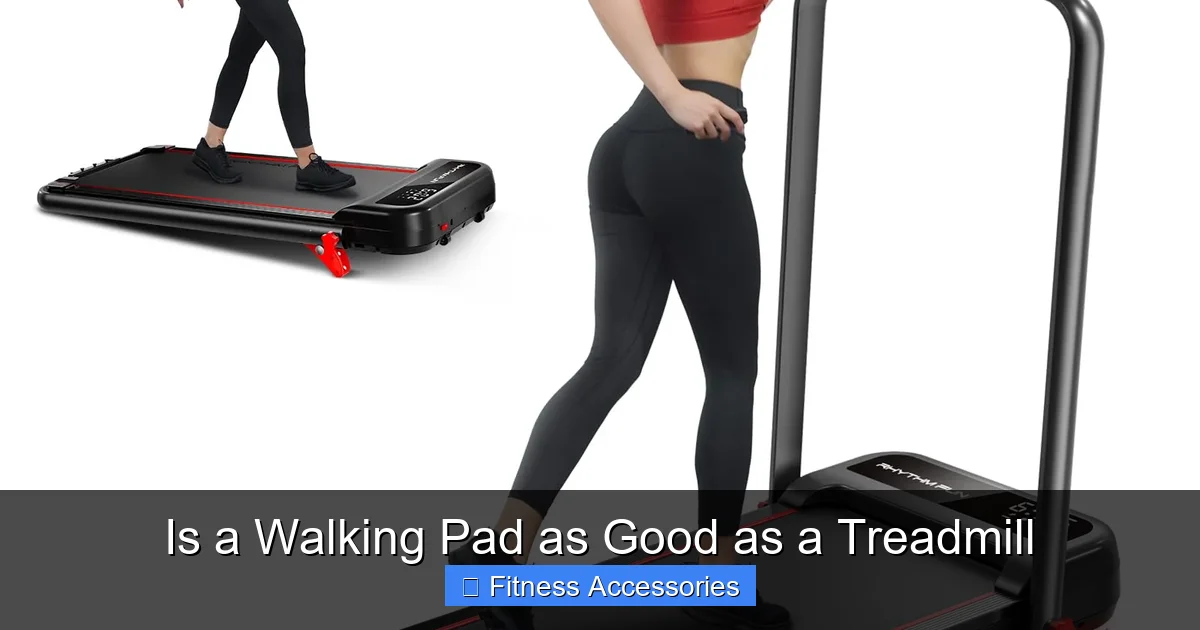
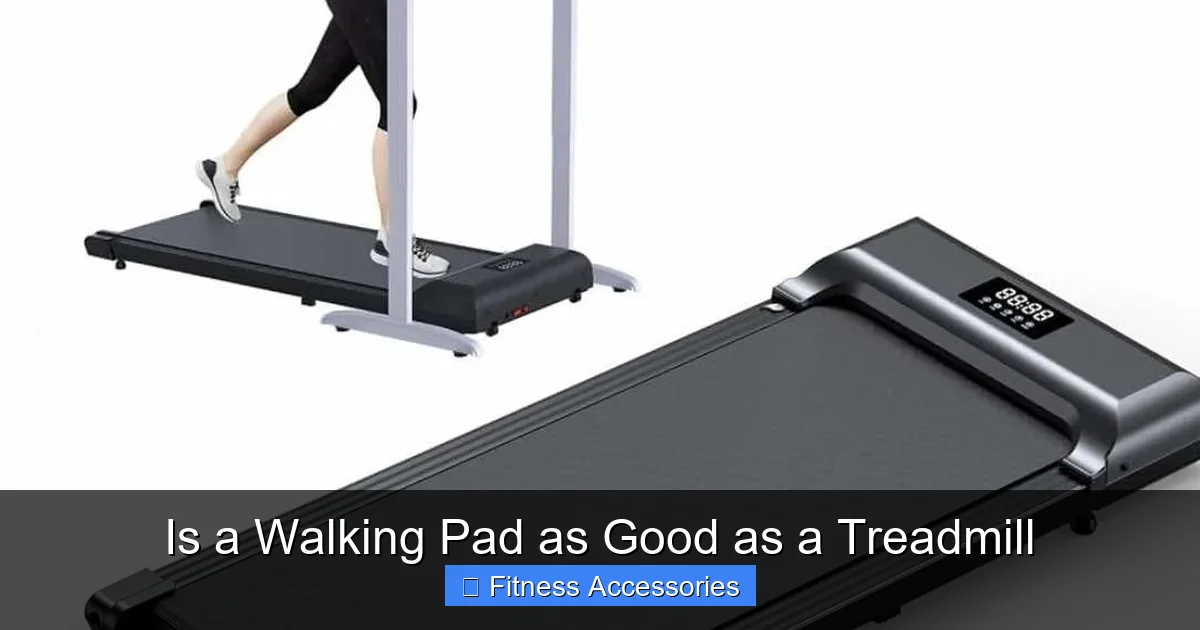
Before we compare, we must define. A walking pad, sometimes called an under-desk treadmill or a slim treadmill, is a distinct category of equipment. Its primary design philosophy is convenience and integration, not performance.
Visual guide about Is a Walking Pad as Good as a Treadmill
Image source: marxxfitness.com
The Core Design: Less Machine, More Mat
Walking pads prioritize a minimalist profile. They are typically 2-4 inches thick when folded and have a much narrower and shorter running belt compared to a standard treadmill. The belt is often a simple, textured surface without the deep, cushioned “deck” of a traditional treadmill. The motor is smaller and quieter, engineered specifically for walking speeds, usually capping out between 3.7 and 4.5 mph. Many models forgo a built-in console entirely, relying on a remote control or a smartphone app for speed adjustments and metrics. The entire unit is designed to be lightweight, portable, and stowable—some even roll away like a yoga mat.
The Target User: Movement as a Background Activity
The walking pad’s ideal user isn’t someone training for a 5K. It’s the person who sits at a desk for 8 hours a day and wants to convert passive sitting time into gentle, calorie-burning movement. It’s for the apartment dweller with 20 square feet of free floor space. It’s for the senior looking for a safe, low-impact way to stay active without the intimidation or physical demand of a full-sized treadmill. The goal is NEAT (Non-Exercise Activity Thermogenesis)—burning calories through constant, low-intensity motion woven into daily life.
What Exactly Is a Treadmill? The Established Powerhouse
The treadmill is a known quantity. It’s a dedicated piece of cardio equipment designed to simulate running and walking with precision and power.
Visual guide about Is a Walking Pad as Good as a Treadmill
Image source: images-na.ssl-images-amazon.com
The Core Design: Built for Impact and Intensity
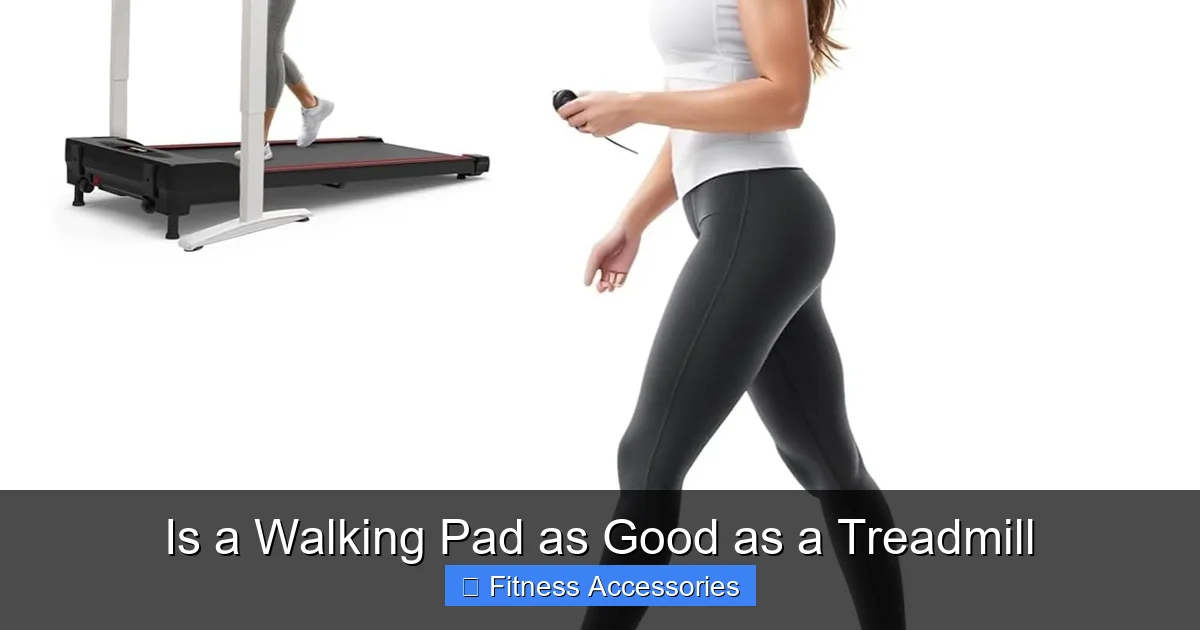
A traditional treadmill is a substantial piece of machinery. It features a wide, long running belt (usually 20”+ wide and 55”+ long) atop a cushioned deck that absorbs shock. Its motor is powerful (2.5 to 4.0+ continuous horsepower) and designed to maintain speed and incline under a user’s full body weight and momentum. It comes with a large console displaying speed, incline, time, distance, heart rate, and often includes programmed workouts, fans, and tablet holders. It is heavy (200-300 lbs is common) and generally not meant to be moved frequently. Its construction is about durability and handling sustained, high-intensity effort.
The Target User: Dedicated Cardio Athletes
The treadmill user is someone with a specific cardio goal: weight loss, endurance training, speed work, or race preparation. They want to control every variable—incline to mimic hills, speed for intervals, and duration for mileage. They need a stable, robust platform that can handle a running gait, which involves more force and a longer stride than walking. The treadmill is for the person who schedules their “run” and expects a serious, measurable workout.
Head-to-Head: The Critical Comparison Points
Now, let’s get into the ring and see how these two contenders match up across the categories that matter most.
Visual guide about Is a Walking Pad as Good as a Treadmill
Image source: images-na.ssl-images-amazon.com
1. Space Efficiency and Setup: The Foldability Factor
This is the walking pad’s knockout punch. If your living situation involves a studio apartment, a small home office, or simply no dedicated “gym room,” the walking pad is the only viable option. Models like the Lifespan TR1200 or the GoPlus 2-in-1 can fold vertically or horizontally, tucking neatly into a closet or against a wall. Some are so slim they slide under a bed. Setup is often a simple unboxing and plug-in.
A treadmill, in contrast, requires a permanent, dedicated footprint. You need to measure not just the machine’s dimensions (often 30” wide x 70” long), but also the clearance space behind and on the sides for safety and ventilation. Delivery is a major event (often white-glove service), and once it’s assembled in your basement or garage, it’s not moving. For anyone with spatial constraints, the treadmill is simply not on the menu.
2. Performance and Workout Quality: Speed, Incline, and Feel
Here, the treadmill reclaims its title. Performance is where the gap is widest.
- Speed: Walking pads max out at a brisk walk (3.5-4.5 mph). Trying to jog or run on one is unstable, awkward, and often triggers a safety shut-off. Treadmills start at 0.5 mph and go up to 10-12 mph or more, allowing for everything from a slow walk to a full sprint.
- Incline: With very few exceptions, walking pads have zero incline capability. The belt is always flat. Treadmills offer motorized incline, typically up to 10-15%, which is crucial for building leg strength, burning more calories, and simulating hill training. This is a non-negotiable feature for serious cardio athletes.
- Stability and Belt Feel: The treadmill’s wider, longer deck and robust frame provide a stable, predictable surface. The belt has a consistent, firm tension. On a walking pad, the shorter belt can feel “tippy” if you step too far back, and the belt may shift or require frequent manual tensioning. The running experience on a treadmill is simply more natural and secure for anything beyond a casual walk.
3. Noise and Vibration: The Apartment Dweller’s Dilemma
If you live in an apartment or a house with downstairs neighbors, this is your top consideration. Walking pads are dramatically quieter. Their small DC motors produce a faint whirring sound, often drowned out by a TV. There is minimal vibration transmitted through the floor. You can use it at 7 AM without a complaint.
Treadmills, with their larger AC motors and heavier moving parts, generate a constant low rumble and a distinct “thump-thump-thump” with each footfall. This vibration travels through floors and walls. Even with a high-quality mat underneath, you will likely hear and feel it. This can be a deal-breaker in multi-unit dwellings, making the walking pad the only polite choice.
4. Features and Technology: Console vs. App
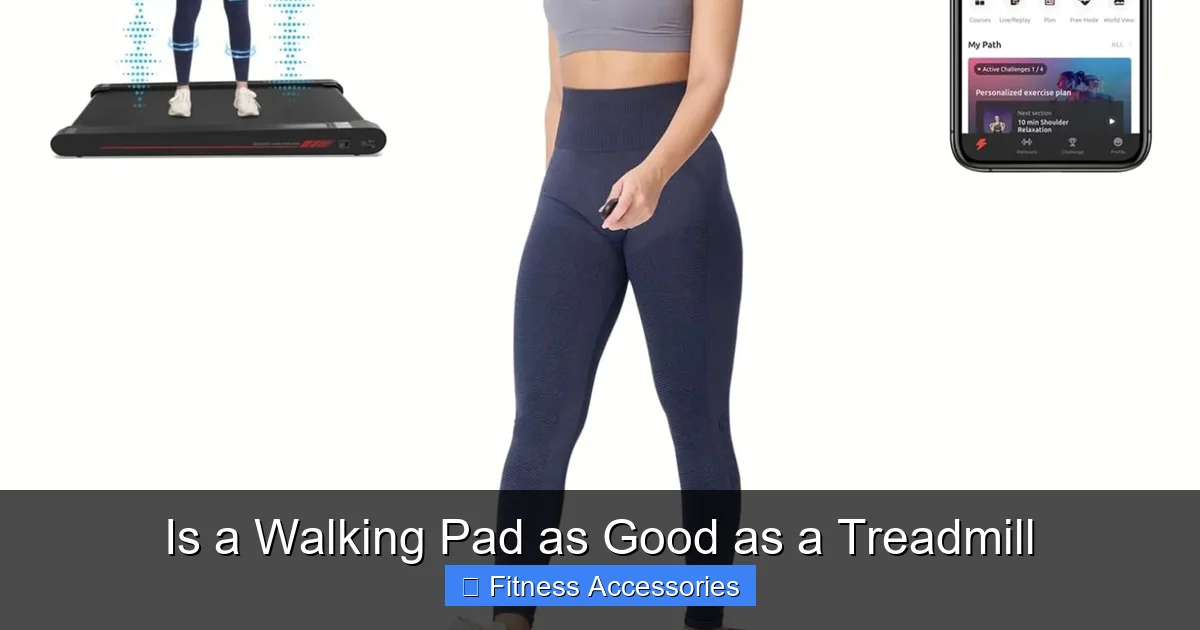
Treadmills traditionally come with an all-in-one console: speed/incline buttons, a display, programmability, and sometimes Bluetooth speakers. It’s a self-contained unit. Walking pads often embrace a minimalist, app-connected approach. You control speed via a small remote or your phone, and metrics (steps, time, calories) are tracked in an app like “WalkingPad” or “Fitx”.
Which is better? It depends on your tech preference. The treadmill console is immediate and doesn’t require a phone. The app-based system can offer more detailed historical tracking, social challenges, and integration with fitness ecosystems like Apple Health or Strava. However, the walking pad’s reliance on Bluetooth can be a point of failure if connectivity is spotty.
5. Cost and Value Proposition: Investment vs. Impulse Buy
There is a clear price divide. A reputable walking pad ranges from $300 to $800. A quality treadmill starts around $800-$1,000 for a basic model and can soar to $3,000+ for commercial-grade machines.
The value equation is different. For the walking pad buyer, the value is in solving a specific problem: adding movement to a sedentary lifestyle in a tiny space. For the treadmill buyer, the value is in the machine’s longevity and its ability to support a dedicated, high-intensity training regimen for years. A $1,200 treadmill used daily for running will provide a better long-term return on investment for a serious athlete than a $500 walking pad used for the same purpose (which it isn’t built for).
Who Should Choose a Walking Pad? The Modern Mover
The walking pad is not a “lesser treadmill.” It is a different tool for a different job. You should absolutely choose a walking pad if:
- Your primary goal is “movement snacking.” You want to be on your feet while you work, read, watch TV, or play with your kids. You’re chasing cumulative daily steps, not a specific pace or heart rate zone.
- Space is your #1 constraint. You live in an apartment, a tiny home, or a shared room. You need something that disappears.
- Noise is a critical factor. You have light-sensitive neighbors, a baby sleeping, or work night shifts and need to exercise when others are asleep.
- Budget is moderate. You want the walking solution without the major financial commitment of a treadmill.
- You have mobility limitations. The low height, handrail-free design (on many models), and slow, controlled speed can be less intimidating and easier to step onto for those with minor balance issues or recovering from injury (always consult a doctor).
- You want a “desk treadmill” specifically. The under-desk use case is almost exclusively the domain of walking pads due to their low profile and lack of a rising console.
Who Should Choose a Treadmill? The Dedicated Athlete
Reach for the traditional treadmill if:
- Running is your cardio of choice. You need to train for a race, work on speed intervals, or simply love the feeling of a run. A walking pad cannot accommodate this.
- Incline training is part of your routine. You want to build glute and leg strength, burn more calories, and prepare for hilly terrain. Zero incline is a non-starter.
- You are a power walker. If your walking pace consistently exceeds 4 mph (a 15-minute mile), you will feel unstable and unsafe on a walking pad. Treadmills handle fast-paced walking with ease.
- Stability is paramount. You have balance concerns, are taller with a longer stride, or simply prefer the secure, wide platform of a traditional machine.
- You want a “set it and forget it” structured workout. Pre-programmed hill repeats, fat-burning zones, and heart rate-controlled sessions are standard on mid-to-high-end treadmills.
- Durability for daily heavy use is key. If multiple people in your household will use it daily for 45-60 minute sessions, a treadmill’s heavier-duty motor and construction are a smarter long-term bet.
Making the Right Choice: A Practical Decision Framework
Forget the marketing hype. Answer these questions honestly:
Question 1: What is the SINGLE most important factor?
If you answered “space” or “noise,” your path is clear: buy a walking pad. If you answered “running,” “incline,” or “high-intensity workouts,” your path is clear: buy a treadmill. This one question eliminates 80% of the options.
Question 2: What is my realistic, weekly usage pattern?
Be brutally honest. “I will use it every day for an hour!” is a common fantasy. If your realistic use is 20-30 minutes here and there while you work, a walking pad is perfect. If you are committed to 4-5 dedicated, sweat-intensive cardio sessions per week, the treadmill is the workhorse you need.
Question 3: What is my height and stride?
If you are over 5’10”, test a walking pad’s belt length (usually 40-50”) with your normal stride. You may find yourself constantly at the very edge or needing to shorten your gait unnaturally. A treadmill’s longer deck (55”+) accommodates a full, natural stride for taller individuals.
Question 4: Am I buying for now or for the next 5 years?
Walking pads are fantastic for a current lifestyle phase (e.g., a 2-year apartment lease, a new remote work job). If you are buying for a permanent home and anticipate your fitness needs growing (e.g., wanting to start running), investing in a treadmill now may save you from buying two machines in the future.
Conclusion: It’s About Alignment, Not Superiority
So, is a walking pad as good as a treadmill? No, and it was never meant to be. Asking if a walking pad is as good as a treadmill is like asking if a bicycle is as good as a pickup truck. They are both vehicles, but they are engineered for entirely different purposes and excel in their respective lanes.
The walking pad is a masterpiece of convenience engineering. It solves the problem of sedentary living in space-starved, noise-sensitive environments. It makes gentle movement accessible to millions who would never otherwise have the space or inclination for a traditional treadmill. Its value is in its unobtrusiveness.
The treadmill is a masterpiece of performance engineering. It is a robust, feature-rich tool built to withstand the rigors of running and intense walking. It provides the stability, power, and programmability needed for serious cardio training, weight loss, and athletic preparation. Its value is in its capability and durability.
Your job is not to find the “best” machine, but to find the right tool for your unique life. Look at your available square footage. Listen to your floor and your neighbors. Define your real, not idealistic, fitness goal. Be honest about the type of workout you will actually do. When you align the machine’s strengths with your personal reality, you won’t have a comparison—you’ll have a perfect match.
Frequently Asked Questions
Can a walking pad support my weight?
Most walking pads have a weight capacity between 220 lbs and 300 lbs. It is critical to check the specific model’s specifications before purchasing, as exceeding this limit can damage the motor and frame. Treadmills typically have higher weight capacities, often 300-350 lbs or more, due to their sturdier construction.
Can I use a walking pad under a standard desk?
Yes, that is the primary design intent for many models. However, you must measure your desk’s height clearance. A walking pad is typically 4-6 inches tall. Your desk needs enough underside clearance (usually at least 27-30 inches from floor to desk bottom) to allow for comfortable leg movement without hitting the belt or frame.
How durable are walking pads for heavy, daily use?
Walking pads are engineered for light-to-moderate use—think 1-2 hours of gentle walking per day. Their motors and belts are not designed for the sustained stress of running or heavy power walking by multiple users. For a single user walking 30-60 minutes daily at a slow pace, durability is generally good. For heavy, daily, multi-user use, a treadmill will offer a longer lifespan.
Do walking pads have an incline feature?
Almost universally, no. Walking pads have a completely flat belt. The design prioritizes a low profile and simplicity, and adding a motorized incline mechanism would increase thickness, weight, cost, and noise, negating its core benefits. If incline is a requirement, you must look at a treadmill.
Are walking pads safe for older adults or beginners?
They can be, with precautions. The low height makes them easy to step on and off. The slow, controlled speed reduces the risk of falls from loss of control. However, the narrow and short belt offers less margin for error. It is safest to use a walking pad in an open area away from walls and furniture, and always hold onto a stable surface (like a desk) if balance is a concern. A treadmill’s wider belt and handrails can provide more security for some users.
Can I get a real cardio workout on a walking pad?
You can achieve a light to moderate cardio effect and burn calories through prolonged, consistent walking (NEAT). However, because you cannot increase speed to a run or add incline to increase intensity, your heart rate will have a lower ceiling. For improving cardiovascular endurance, VO2 max, or high-intensity calorie burn, a treadmill is far more effective. The walking pad’s cardio benefit is from duration, not intensity.