Wondering how far 500 strokes on a rowing machine will take you? On average, 500 strokes cover roughly 2,000‑2,500 meters (1.2‑1.6 miles), but the exact distance varies with your technique, resistance level, and fitness level. Use the guide below to gauge your progress, set realistic goals, and get the most out of every stroke.
Key Takeaways
- Average distance: 500 strokes equal about 2,000‑2,500 m (1.2‑1.6 mi) for most users.
- Factors that change distance: stroke length, resistance, cadence, and fitness level all play a role.
- Calorie burn: Roughly 150‑250 kcal are burned during a 500‑stroke session, depending on intensity.
- Training tips: Focus on consistent power, proper form, and interval training to stretch each stroke further.
- Progress tracking: Use the machine’s monitor, a smartwatch, or a rowing app to log strokes, distance, and split times.
- Goal setting: Start with 500 strokes, then add 100‑200 strokes each week to build endurance safely.
- Safety first: Warm‑up, maintain good posture, and listen to your body to avoid strain.
📑 Table of Contents
- Introduction: Why 500 Strokes Matter
- 1. The Basic Math: Converting Strokes to Distance
- 2. What Changes the Distance per Stroke?
- 3. Real‑World Examples: How Far 500 Strokes Can Be
- 4. How to Maximize Distance per Stroke
- 5. Tracking Progress: Tools and Metrics
- 6. Setting Goals with 500‑Stroke Benchmarks
- Conclusion: Your 500‑Stroke Journey Starts Now
Introduction: Why 500 Strokes Matter
If you’ve ever stepped onto a rowing machine, you probably noticed the “strokes” counter flashing on the display. It’s an easy way to gauge effort, but many beginners ask, “How far is 500 strokes on a rowing machine?” The answer isn’t a single number – it depends on a handful of variables that we’ll unpack together.
Understanding the distance covered by 500 strokes helps you set realistic goals, track progress, and compare rowing to other cardio activities like running or cycling. In this article, we’ll break down the math, explore the factors that shift the numbers, and give you practical tips to make every stroke count.
1. The Basic Math: Converting Strokes to Distance
What the Rowing Machine’s Display Shows
Most modern rowing machines (Concept2, WaterRower, etc.) calculate distance by measuring the flywheel’s rotations or the water tank’s displacement. The device then translates those rotations into meters or feet based on a pre‑set conversion factor.
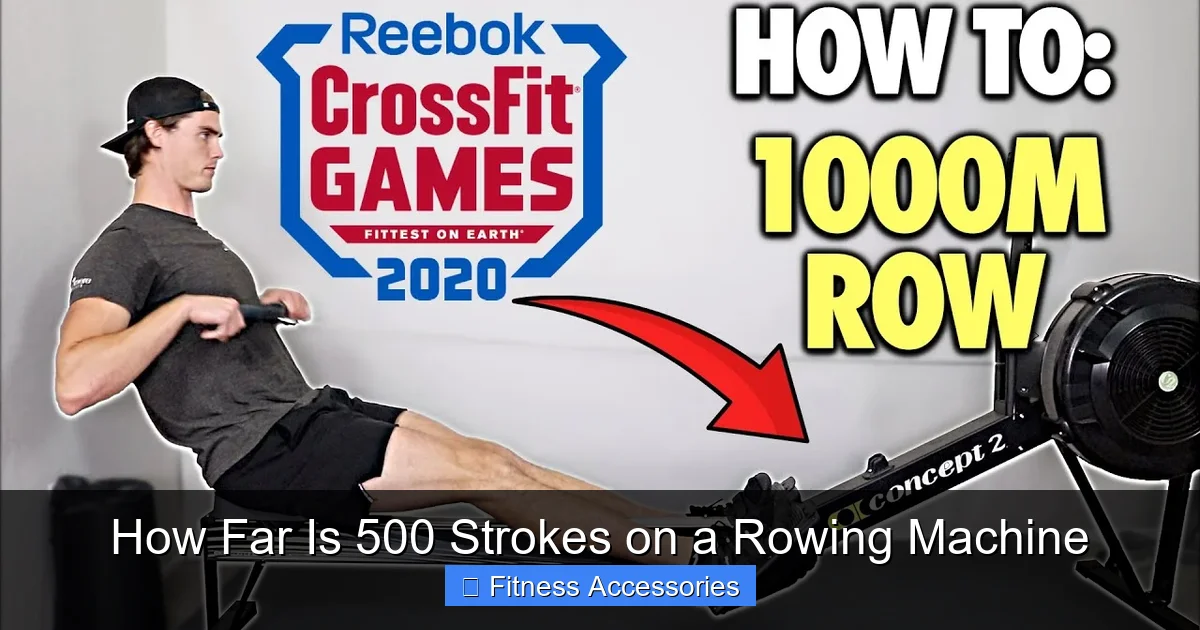
Visual guide about How Far Is 500 Strokes on a Rowing Machine
Image source: i.ytimg.com
Typical Distance per Stroke
For an average adult rowing at a moderate pace, one full stroke (the drive plus the recovery) moves the flywheel enough to equal roughly 4‑5 meters (13‑16 feet). Multiply that by 500 strokes, and you land in the 2,000‑2,500 meter range, which is about 1.2‑1.6 miles.
Quick Calculation Tool
Use this simple formula to estimate your own distance:
- Distance (m) = Number of Strokes × Average meters per stroke
If you know you average 4.3 m per stroke, then 500 × 4.3 = 2,150 m.
2. What Changes the Distance per Stroke?
Stroke Length and Technique
Long, powerful drives push the flywheel farther than short, choppy strokes. Think of rowing like a rowing boat: the longer you pull, the further you glide.

Visual guide about How Far Is 500 Strokes on a Rowing Machine
Image source: i.ytimg.com
Resistance Setting
Higher resistance (more “drag”) means the flywheel spins slower, but you generate more force per stroke. Many machines let you adjust resistance; a higher setting can slightly reduce meters per stroke if you can’t maintain power.
Cadence (Strokes per Minute)
Rowers who sprint at 30‑35 spm often cover less distance per stroke than those who stay at a steady 22‑24 spm. The slower pace allows a fuller extension and a cleaner finish.
Fitness Level and Power Output
Stronger athletes produce more watts per stroke, translating to longer distances. Beginners may start at 3‑4 m per stroke and work up to 5‑6 m as they improve.
Machine Type
Air rowers (Concept2) and water rowers (WaterRider) have slightly different conversion curves. While the difference is modest, a high‑end air rower might give you 0.2‑0.3 m more per stroke at the same effort.
3. Real‑World Examples: How Far 500 Strokes Can Be
Example 1: The Casual Gym‑Goer
Jane, a 35‑year‑old office worker, rows at a moderate 22 spm with a resistance level of 4. Her average meters per stroke is 4.1 m. 500 × 4.1 = 2,050 m (1.27 mi). She burns about 170 kcal in 20 minutes.
Example 2: The Competitive Rowing Enthusiast
Mike, a college rower, uses a high‑drag setting and rows at 28 spm. His power output pushes his average to 5.2 m per stroke. 500 × 5.2 = 2,600 m (1.62 mi). He torches roughly 240 kcal in 15 minutes.
Example 3: The Beginner on a Home Rowing Machine
Lisa, new to rowing, starts with a low resistance and a slower 18 spm. Her average distance per stroke is 3.8 m, giving her 1,900 m (1.18 mi) for 500 strokes. She burns around 140 kcal.
What These Numbers Tell Us
Even with the same stroke count, distance can swing by 300‑400 m (0.2‑0.3 mi) depending on technique and effort. That’s why tracking your own meters per stroke is more useful than relying on a generic figure.
4. How to Maximize Distance per Stroke
Focus on the Drive Phase
Push with your legs first, then lean back slightly, and finally pull the handle to your chest. A strong leg drive adds the most power.
Maintain a Full Recovery
Slide forward completely before the next drive. Skipping the recovery shortens the stroke and reduces distance.
Control the Catch
At the start of each stroke, keep your arms straight, shoulders relaxed, and torso slightly forward. A clean “catch” sets up a longer drive.
Adjust Resistance Wisely
Start with a moderate setting that lets you keep a steady cadence. As you get stronger, increase resistance in small increments to keep power up without sacrificing stroke length.
Incorporate Interval Training
Try 4 × 500‑stroke intervals with 2‑minute rests. During the work sets, aim for a slightly longer stroke; during rest, focus on recovery and form.
5. Tracking Progress: Tools and Metrics
Built‑In Machine Monitors
Most rowers display total strokes, distance, average split (time per 500 m), and watts. Keep an eye on “m per stroke” if the monitor offers it.
Smartphone Apps
Apps like Kinomap, RowPro, or the Concept2 Logbook sync via Bluetooth and give you detailed analytics, including stroke length trends.
Wearable Devices
Heart‑rate monitors and smartwatches can track calories, HR zones, and even estimate distance based on your rowing data.
Manual Logbooks
If you love pen‑and‑paper, jot down strokes, distance, and perceived effort after each session. Over weeks, you’ll see clear improvements.
6. Setting Goals with 500‑Stroke Benchmarks
Beginner Goal: Consistency
Start by completing 500 strokes three times a week. Aim for a steady cadence of 20‑22 spm and watch your meters per stroke rise from 3.5 m to 4.2 m in four weeks.
Intermediate Goal: Distance Increase
Add 100 strokes each week until you comfortably hit 800‑1,000 strokes per session. Keep your split time under 2:00 per 500 m to improve speed.
Advanced Goal: Power Output
Target a wattage of 150‑180 W for a 500‑stroke set. Use the machine’s power meter to gauge improvements, and integrate strength training to boost leg power.
Recovery and Deload Weeks
Every 4‑6 weeks, drop the stroke count by 20‑30% and focus on technique. This prevents burnout and lets your muscles rebuild.
Conclusion: Your 500‑Stroke Journey Starts Now
Knowing how far 500 strokes can take you turns a simple number into a powerful metric for progress. Whether you’re rowing 1,900 m or 2,600 m, the key is consistency, proper form, and tracking the right data. Use the tips above to stretch each stroke, burn more calories, and watch your distance climb week after week.
So grab your rowing machine, set a goal, and start counting—because every stroke brings you closer to stronger, fitter, and more confident you.
Frequently Asked Questions
How many meters does an average person cover in 500 strokes?
Most people average 4‑5 m per stroke, so 500 strokes typically equal about 2,000‑2,500 m (1.2‑1.6 mi).
Does increasing resistance reduce the distance per stroke?
Higher resistance can slightly lower meters per stroke if you can’t maintain power, but it also builds strength. Find a balance that lets you keep a full, powerful drive.
Can I use the 500‑stroke metric to compare rowing with running?
Yes. Roughly 2,200 m of rowing (about 500 strokes for many) burns a similar number of calories as a 2‑mile jog, but the impact on joints is lower.
How many calories are burned during 500 strokes?
At a moderate intensity, you’ll burn roughly 150‑250 kcal, depending on weight, age, and effort level.
What’s the best cadence for maximizing distance per stroke?
Staying around 22‑24 spm lets most rowers achieve a longer, cleaner stroke while keeping heart rate in a moderate zone.
Should I track meters per stroke or just total distance?
Both are useful, but meters per stroke shows how efficiently you’re rowing. Improving that number often leads to better overall performance.