How Do You Clean a Yoga Mat 2
Knowing how do you clean a yoga mat 2 is essential for staying healthy and getting the most out of your practice. This guide covers everything from daily wipe-downs to deep cleaning methods using household items like baking soda and vinegar. You will learn the best cleaning frequency, what supplies to use, and how to avoid common mistakes that damage your mat.
Your yoga mat touches your skin every time you practice. It absorbs sweat, collects dust, and builds up bacteria if you do not take care of it. So how do you clean a yoga mat 2 the right way? The good news is that it is simpler than most people think. With a few basic supplies and a little routine, you can keep your mat fresh, safe, and ready for every session.
Whether you practice at home or at a studio, your mat goes through a lot. Dirt, oils from your skin, and moisture all create the perfect environment for germs to grow. That is why learning how to clean a yoga mat properly matters so much. A clean mat smells better, feels better under your hands and feet, and lasts a lot longer too.
In this guide, we walk you through every step of yoga mat cleaning. You will find simple methods for daily care, weekly maintenance, and deep cleaning. We also share what products to use and what to avoid. By the end, you will feel confident keeping your mat in great shape all year long.
Key Takeaways
- Clean your yoga mat regularly: A quick wipe after every use prevents bacteria and odor buildup.
- Use gentle, effective cleaners: Household items like vinegar, baking soda, and mild soap work great.
- Avoid harsh chemicals: Bleach and strong solvents can break down your mat material over time.
- Dry your mat properly: Air drying is the best method to prevent mold and mildew.
- Know when to deep clean: Monthly deep cleans keep your mat in top shape for years.
- Store your mat correctly: Proper storage prevents dirt buildup and extends mat life.
📑 Table of Contents
Why Cleaning Your Yoga Mat Matters
It is easy to roll up your mat and forget about it after practice. But taking a few minutes to clean it makes a huge difference. Here is why yoga mat cleaning should be a regular part of your routine.
Bacteria and Germs Build Up Fast
Every time you do yoga, your body transfers sweat, dead skin cells, and natural oils onto the mat surface. In warm and humid conditions, bacteria multiply quickly. A study published in the journal Fitness Magazine found that yoga mats can harbor more bacteria than a toilet seat if left uncleaned for weeks. That might sound surprising, but it makes sense when you think about where your mat sits and how often it gets used.
Regular yoga mat sanitizing helps reduce the risk of skin infections, acne, and unpleasant odors. If you share a mat at a studio or gym, the importance of cleaning becomes even more clear. Nobody wants to practice on a mat that someone else has been sweating on all week.
Odors Get Worse Over Time
That funky smell some mats develop is not just unpleasant. It is a sign of bacteria and sweat buildup. The longer you ignore it, the harder it becomes to remove. A quick yoga mat wipe down after each session prevents odors from settling in. Think of it like brushing your teeth. A little effort every day saves you from big problems later.
Your Mat Lasts Longer
A well-maintained mat can last for years. Dirt and grime break down the material over time, causing it to crack, peel, or become slippery. By keeping your mat clean, you protect your investment and get more value from every dollar you spent. If you are wondering how often should you get a new yoga mat, the answer depends a lot on how well you care for the one you have now.
What You Need to Clean a Yoga Mat
Before you start, gather your supplies. The good news is that you do not need expensive products. Most of what you need is already in your kitchen or bathroom. Here is a simple list of what works best for cleaning yoga mat surfaces at home.
Basic Cleaning Supplies
- Warm water: The foundation of any cleaning solution. It helps dissolve sweat and dirt.
- Mild dish soap: A few drops of gentle soap work wonders without damaging your mat.
- White vinegar: A natural disinfectant that kills bacteria and eliminates odors.
- Baking soda: Great for scrubbing away stubborn stains and absorbing smells.
- Spray bottle: Makes it easy to apply your cleaning solution evenly.
- Soft cloth or sponge: Use a gentle material that will not scratch the mat surface.
- Microfiber towel: Perfect for wiping down and drying your mat after cleaning.
What About Store-Bought Cleaners?
You can also buy yoga mat cleaner products from most sporting goods stores. These are convenient and often come in spray bottles designed for mat surfaces. However, you should always check the ingredients. Avoid cleaners with alcohol, bleach, or strong synthetic fragrances. These can break down the material and cause your mat to deteriorate faster. If you want a natural alternative, check out what you can use to clean a yoga mat for more ideas.
Can You Use Clorox or Lysol Wipes?
This is a common question among yoga practitioners. The short answer is that it depends on the mat material and the frequency of use. You can clean a yoga mat with Clorox wipes occasionally, but they are not ideal for regular use. The chemicals can be too harsh for some mat surfaces. Similarly, Lysol wipes can work in a pinch, but they may leave a residue that makes your mat slippery during practice.
Step-by-Step: How to Clean Your Yoga Mat
Now that you have your supplies ready, let us walk through the actual cleaning process. Whether you are doing a quick post-practice wipe or a thorough deep clean, these steps will guide you.
Method 1: Quick Daily Wipe Down
This method takes less than two minutes and should be done after every practice session.
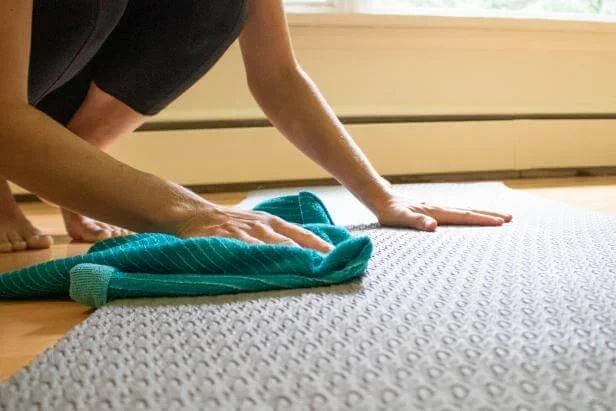
- Mix a spray solution of one part water and one part white vinegar in a spray bottle.
- Spray the solution lightly across the surface of your mat. Do not soak it.
- Wipe the entire mat with a soft cloth or sponge using gentle circular motions.
- Hang the mat over a shower rod or clothesline to air dry completely.
- Roll it up only when it is fully dry to prevent moisture from getting trapped.
This simple routine keeps your mat fresh and ready for your next session. It also prevents the buildup of bacteria and odor from day one.
Method 2: Weekly Soap and Water Clean
Once a week, give your mat a more thorough cleaning with mild soap and water.
- Fill a basin or bathtub with lukewarm water and add a few drops of mild dish soap.
- Submerge your mat or lay it flat and pour the soapy water over the surface.
- Gently scrub the entire mat with a soft sponge, paying extra attention to stained or sweaty areas.
- Rinse thoroughly with clean water to remove all soap residue.
- Shake off excess water and hang the mat to dry in a well-ventilated area.
Never use hot water, as it can warp or damage the material. Also, do not wring or twist your mat, as this can cause it to lose its shape and cushioning.
Method 3: Deep Clean with Baking Soda
For mats that have stubborn stains or persistent odors, a baking soda paste works like magic.
- Mix three tablespoons of baking soda with one tablespoon of water to form a paste.
- Apply the paste to stained areas and let it sit for 10 to 15 minutes.
- Gently scrub the paste into the mat with a soft brush or cloth.
- Rinse the mat thoroughly with clean water until all paste residue is gone.
- Pat dry with a towel and hang the mat to air dry completely.
If you want more detailed instructions for this method, you can read our guide on how to clean a yoga mat with baking soda.
Method 4: Cleaning in the Bathtub
For a more hands-off approach, many people prefer to clean their mat in the bathtub. Fill the tub with lukewarm water and add a cup of vinegar and a few drops of mild soap. Submerge the mat and let it soak for 10 to 15 minutes. Gently agitate the water to help loosen dirt. Drain the tub, rinse the mat with clean water, and hang it to dry. You can learn more about this method in our article on how to clean a yoga mat in the bathtub.
How Often Should You Clean Your Yoga Mat?
The frequency of cleaning depends on how often you use your mat and the conditions you practice in. Here is a simple schedule to follow for yoga mat maintenance:
- After every session: Quick wipe down with a vinegar solution. This takes less than two minutes and keeps bacteria from building up.
- Once a week: Full soap and water wash or a thorough wipe down with a yoga mat cleaner spray.
- Once a month: Deep clean using baking soda or a bathtub soak to remove built-up grime and odors.
- After heavy sweating sessions: If you do hot yoga or intense power yoga, wipe down your mat immediately after class. The sooner you clean, the easier it is to remove sweat and bacteria.
If you practice in a hot and humid environment, you may need to clean your mat more frequently. Moisture and heat accelerate bacterial growth, so staying on top of your cleaning routine is especially important in these conditions.
Common Mistakes to Avoid When Cleaning Your Yoga Mat
Even with the best intentions, some cleaning habits can actually damage your mat. Here are the most common mistakes people make when caring for their mats.
Using Too Much Water
Over-soaking your mat can weaken the adhesive and cause layers to separate. Your mat should be damp, not soaking wet. Use a spray bottle or a wrung-out cloth instead of pouring water directly onto the mat.
Using Harsh Chemicals
Bleach, ammonia, and strong household cleaners can break down the material of your mat. They may also leave a chemical residue that irritates your skin during practice. Stick to gentle, natural cleaners whenever possible.
Skipping the Drying Step
Storing your mat while it is still damp is one of the worst things you can do. Moisture trapped inside the roll creates the perfect environment for mold and mildew to grow. Always make sure your mat is completely dry before rolling it up.
Using a Washing Machine
You might be tempted to toss your mat in the washing machine for convenience, but this can cause serious damage. The agitation and heat can warp, tear, or dissolve the mat material. If you need to wash a mat accessory like a yoga towel, check whether you can wash a yoga mat in the washer first.
Ignoring Odors
Some people get used to the smell of their mat and stop noticing it. But if your mat has a persistent odor even after cleaning, it might be time to replace it. A mat that cannot be restored to a fresh state may no longer be safe or comfortable to use.
Expert Tips for Keeping Your Yoga Mat Fresh
Beyond regular cleaning, a few extra habits can keep your mat in excellent condition for years. These mat care tips come from experienced yoga instructors and fitness professionals.
Wash Your Hands Before Practicing
It sounds simple, but clean hands make a big difference. Less dirt and oil transferred to the mat means less buildup to clean later. Make handwashing part of your pre-practice routine.
Use a Yoga Towel
A yoga towel placed over your mat can absorb most of your sweat during practice. This keeps the mat itself cleaner and reduces how often you need to deep clean it. If you are curious about using towels without a mat, check out can you use a yoga towel without a mat.
Store Your Mat in a Cool, Dry Place
Heat and humidity are the enemies of a clean yoga mat. Store your mat rolled up in a well-ventilated area away from direct sunlight. Avoid leaving it in a hot car or damp closet, as these conditions can promote bacterial growth and material breakdown.
Rotate Your Mats if You Have More Than One
If you practice yoga frequently, having two or more mats and rotating them gives each mat time to dry fully between uses. This simple habit extends the life of every mat and keeps your practice fresh.
When Should You Replace Your Yoga Mat?
Even with the best care, every yoga mat has a lifespan. Knowing when to replace it is just as important as knowing how to clean it. Here are the signs that your mat has reached the end of its useful life.
- The surface is worn thin and no longer provides adequate grip or cushioning.
- Deep cracks, tears, or peeling are present despite regular cleaning.
- Persistent odors remain even after deep cleaning attempts.
- The mat has become consistently slippery, even when dry.
- You notice visible mold or mildew that does not come off with cleaning.
If you are unsure about the condition of your mat, you can read about how often should you get a new yoga mat to help you make an informed decision. Replacing your mat at the right time ensures your practice stays safe, comfortable, and enjoyable.
Conclusion
Learning how do you clean a yoga mat 2 does not have to be complicated or time-consuming. With a few simple supplies and a consistent routine, you can keep your mat hygienic, fresh, and in great shape for months or even years. Remember to wipe it down after every session, give it a weekly wash, and do a deep clean once a month. Avoid common mistakes like using harsh chemicals or storing a damp mat. Your yoga mat is one of the most important tools in your practice, and taking care of it shows respect for your body and your practice. Start your new cleaning routine today and feel the difference it makes in every session.
Frequently Asked Questions
Can I use bleach to clean my yoga mat?
It is best to avoid bleach when cleaning a yoga mat. Bleach is too harsh and can break down the material, cause discoloration, and leave chemical residues that irritate your skin. Stick to mild soap, vinegar, or baking soda for safe and effective cleaning.
How long does it take for a yoga mat to dry after cleaning?
Drying time depends on the thickness and material of your mat. Most mats dry within 2 to 4 hours when hung in a well-ventilated area. Always make sure the mat is completely dry before rolling it up to prevent mold and mildew growth.
Can I clean my yoga mat with just water?
Water alone can remove surface dirt and light sweat, but it does not kill bacteria or eliminate odors effectively. For best results, use a solution of water and white vinegar or add a few drops of mild dish soap for a deeper clean.
Is it safe to put a yoga mat in the washing machine?
Most yoga mats should not be put in a washing machine. The agitation and heat can warp, tear, or dissolve the mat material. If you need to wash a mat accessory like a yoga towel, check whether it is machine washable first.
What is the best natural cleaner for a yoga mat?
A mixture of water and white vinegar is the best natural cleaner for most yoga mats. You can also add a few drops of mild dish soap for extra cleaning power. Baking soda paste works well for removing stubborn stains and odors.
How do I get sweat stains out of my yoga mat?
Sweat stains respond well to a baking soda paste. Apply the paste to the stained areas, let it sit for 10 to 15 minutes, then gently scrub with a soft cloth and rinse thoroughly. For regular maintenance, wiping your mat down with a vinegar solution after each session helps prevent stains from setting in.