
Ham Cooking Times Chart For Perfect Results Every Time
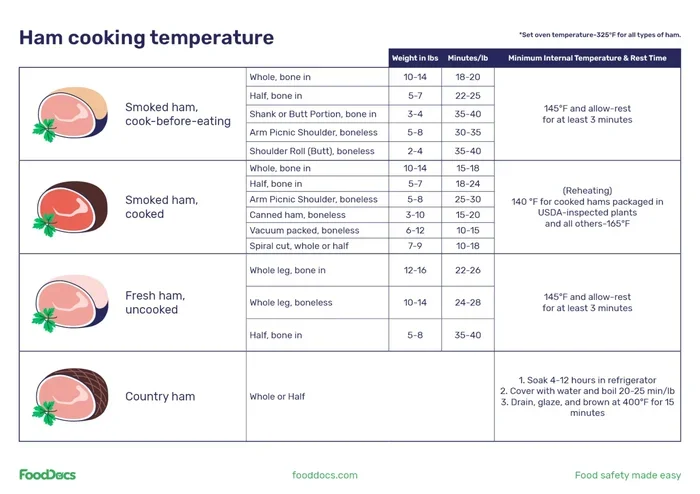
A ham cooking times chart is the easiest way to ensure your ham turns out moist, flavorful, and perfectly cooked every single time. Whether you are baking a bone-in ham or a boneless spiral ham, knowing the right time and temperature makes all the difference. This guide covers every method, ham type, and skill level so you can plan your meal with confidence and impress your guests without any stress.
Cooking ham at home can feel a little intimidating. There are so many sizes, types, and methods to choose from. But here is the good news. With a simple ham cooking times chart, you can take all the guesswork out of the process. Whether you are preparing a holiday centerpiece or a weeknight dinner, this guide will walk you through everything you need to know.
A ham cooking times chart gives you the exact time and temperature you need for every cut of ham. No more overcooked edges or raw centers. You will learn how long to bake a ham, what temperature to use, and how to tell when it is ready. Let us dive in and make your next ham dinner a total success.
Key Takeaways
- Use a meat thermometer: The safest way to know your ham is done is to check the internal temperature.
- Bone-in vs boneless matters: Bone-in ham takes longer to cook but stays juicier and more flavorful.
- Glazing adds great flavor: Apply your glaze in the last 15 to 20 minutes of cooking for a perfect caramelized finish.
- Rest your ham: Letting the ham rest for 10 to 15 minutes after cooking keeps the juices locked in.
- Reheat leftovers gently: Low and slow reheating prevents dried-out ham slices.
- Plan ahead: A whole ham needs 4 to 6 hours of cook time, so always start early.
📑 Table of Contents
Why You Need A Ham Cooking Times Chart
Every ham is different. The size, the cut, and whether it is bone-in or boneless all change the cook time. A ham cooking times chart helps you plan your meal down to the minute. It takes the stress out of hosting and gives you a clear roadmap from start to finish.
Without a chart, it is easy to rely on vague advice like “cook it for a few hours.” That kind of guesswork often leads to dry ham or undercooked meat. A chart removes that risk. It gives you specific numbers based on the weight and type of ham you are working with. Think of it as your personal cooking assistant.
If you also enjoy staying active and balanced in your lifestyle, you might want to check out how many times a week you should lift dumbbells to pair a healthy diet with a good fitness routine. Similarly, if you want to keep your heart healthy, try how many times a week you should jump rope for a great cardio workout.
What A Ham Cooking Times Chart Covers
A good chart includes several key pieces of information. First, it lists the ham type and weight. Then it gives you the recommended oven temperature and total cook time. The best charts also include the target internal temperature. This is the number that tells you your ham is safe and delicious to eat.
Here is what you will typically find in a ham cooking times chart:
- Ham type: bone-in, boneless, spiral, smoked, or fresh
- Weight range: usually in pounds
- Oven temperature: typically 325°F for most methods
- Cook time per pound: this is the key number you need
- Internal temperature: the safe finish point for ham
- Glazing time: when to add the glaze for the best flavor
Ham Cooking Times Chart By Cooking Method
The way you cook your ham changes everything. Baking is the most popular method, but you can also slow cook or even pressure cook a ham. Each method has its own timing and temperature guidelines. Let us break them down so you can pick the one that fits your needs.
Baking Ham In The Oven
Baking is the classic way to cook ham. It works for almost every type of ham and gives you a beautiful, even cook. The standard oven temperature for baking ham is 325°F. This low and steady heat keeps the meat moist and tender.
Here is a simple ham cooking times chart for baking:
- Bone-in ham (5 to 8 lbs): 20 to 25 minutes per pound
- Boneless ham (4 to 6 lbs): 25 to 30 minutes per pound
- Spiral ham (10 to 12 lbs): 12 to 15 minutes per pound
- Half ham (3 to 4 lbs): 25 to 30 minutes per pound
The target internal temperature for baked ham is 145°F. Use a meat thermometer inserted into the thickest part of the meat. Make sure the probe does not touch the bone, as that can give you a false reading.
For a fully cooked ham, you are mainly reheating it. This means you have more flexibility with the timing. For a fresh or uncooked ham, you need to cook it to 160°F to ensure it is safe to eat. Always double-check your specific ham package instructions as well.
Slow Cooking Ham
A slow cooker is a fantastic tool for ham. It is perfect for busy days when you want to come home to a fully cooked, tender ham. Slow cooking works best with bone-in ham because the bone adds flavor and keeps the meat juicy.
Here is what your ham cooking times chart looks like for a slow cooker:
- Low setting: 4 to 5 hours for a 5 to 7 lb ham
- High setting: 2.5 to 3.5 hours for a 5 to 7 lb ham
- Internal temperature: 140°F on low, 145°F on high
Slow cooked ham is incredibly tender. The long, gentle heat breaks down the connective tissue and infuses the meat with moisture. You can add your glaze in the last 30 minutes of cooking. This gives the ham time to caramelize without burning.
For those who also love a good cardio session, you might enjoy how many times a week you should do elliptical to balance out all those delicious holiday meals.
Pressure Cooking Ham
A pressure cooker or Instant Pot is the fastest way to cook ham. It cuts the cook time dramatically while still producing moist and flavorful results. This method is great for smaller cuts or when you are short on time.
Here is a quick pressure cook ham cooking times chart:
- Small ham (2 to 3 lbs): 35 to 40 minutes on high pressure
- Medium ham (4 to 5 lbs): 50 to 60 minutes on high pressure
- Large ham (6 to 8 lbs): 70 to 80 minutes on high pressure
Always let the pressure release naturally for about 15 minutes after cooking. Then you can finish with a glaze under the broiler for a nice caramelized top. Pressure cooking is a game changer for weeknight ham meals.
How To Read And Use Your Ham Cooking Times Chart
Now that you have seen different charts for different methods, let us talk about how to actually use one. Reading a chart correctly is the first step to perfect ham. It is not just about finding the number and setting a timer.
Step One: Know Your Ham Weight
Weigh your ham before you start cooking. The cook time is based on pounds, so an accurate weight is essential. If your ham comes in a packaging with a net weight listed, use that number. If you are unsure, use a kitchen scale for the most accurate reading.
Step Two: Choose The Right Temperature
Most ham recipes call for 325°F. This is the sweet spot for even cooking without drying out the meat. Some recipes use higher temperatures for the last 15 minutes to crisp up the glaze. But the bulk of the cook should always be at 325°F.
Step Three: Set Your Timer
Multiply the weight by the minutes per pound from your ham cooking times chart. Set a timer and check the internal temperature about 15 minutes before the timer goes off. This prevents overcooking and gives you a buffer to add more time if needed.
Step Four: Use A Meat Thermometer
This is the single most important tool for cooking ham. A meat thermometer takes all the guesswork out. Insert it into the thickest part of the meat, away from the bone. When the thermometer reads 145°F, your ham is done. Let it rest for 10 to 15 minutes before slicing.
Tips For Perfect Ham Every Time
Even with a perfect ham cooking times chart, small details can make or break your result. Here are some pro tips that will take your ham from good to amazing.
Score The Ham Before Baking
Scoring means cutting shallow diamond shapes into the surface of the ham. This does two things. First, it lets the glaze soak into the meat for deeper flavor. Second, it gives you beautiful presentation slices that look professional. Use a sharp knife and cut about a quarter inch deep.
Apply The Glaze At The Right Time
Adding the glaze too early can cause it to burn. The best practice is to apply the glaze during the last 15 to 20 minutes of cooking. This gives the sugar time to caramelize without turning bitter. You can apply the glaze in two rounds for an extra thick and shiny coating.
Let The Ham Rest
Resting is just as important as cooking. When you take the ham out of the oven, the juices inside are hot and moving. If you cut right away, they will run out and leave the meat dry. Let the ham rest for at least 10 minutes. This lets the juices redistribute and gives you a much more tender bite.
Save The Ham Bone
Do not throw away the ham bone. It is packed with flavor. You can use it to make soup stock, split pea soup, or black-eyed peas. Just freeze the bone until you are ready to use it. It is one of the best kitchen tricks for adding depth to your cooking.
Common Ham Cooking Mistakes To Avoid
Even experienced cooks make mistakes with ham. Knowing what to avoid will save you time, money, and a lot of frustration.
Overcooking The Ham
This is the number one mistake. Ham is already cooked in most cases, so you are really just reheating it. Overcooking dries out the meat and makes it tough. Always set a timer and use a meat thermometer. If you are unsure, it is better to pull the ham out a little early.
Skipping The Thermometer
Relying on time alone is risky. Ovens vary, ham sizes vary, and starting temperatures vary. A meat thermometer takes all of that into account. It is a small investment that pays off every single time you cook ham.
Not Letting The Ham Rest
We mentioned this above, but it is worth repeating. Cutting into a hot ham immediately causes the juices to escape. You lose flavor and moisture. Give your ham the rest it deserves for the best results.
Using The Wrong Glaze Ratio
Too much sugar in the glaze can burn quickly. Too little and you lose the sweet caramel flavor that makes ham so special. A good rule of thumb is equal parts honey or brown sugar to mustard, with a splash of pineapple juice or cider vinegar for balance.
Staying active and eating well go hand in hand. Check out how many times you should jump rope a day for a quick and effective way to stay fit while enjoying your favorite foods in moderation.
Ham Cooking Times Chart Quick Reference
Here is a quick summary you can print out or save to your phone. This ham cooking times chart covers the most common scenarios for baking ham in the oven at 325°F.
Bone-In Ham: 20 to 25 minutes per pound. Target internal temp 145°F. For a 7 lb ham, plan for about 2.5 to 3 hours.
Boneless Ham: 25 to 30 minutes per pound. Target internal temp 145°F. For a 5 lb ham, plan for about 2 to 2.5 hours.
Spiral Ham: 12 to 15 minutes per pound. Target internal temp 145°F. For a 10 lb ham, plan for about 2 to 2.5 hours.
Fresh (Uncooked) Ham: 20 to 25 minutes per pound at 325°F. Target internal temp 160°F. Always follow the package directions as well.
Keep this ham cooking times chart handy for your next grocery run or holiday prep. It will become your go-to reference for every ham you cook.
Final Thoughts On Using A Ham Cooking Times Chart
Cooking ham does not have to be complicated. With a reliable ham cooking times chart, the right tools, and a little patience, you can serve a delicious ham every single time. The key is to know your ham type, use the correct temperature, and always rely on a meat thermometer for the final check.
Whether you prefer a classic baked ham, a slow cooker ham, or a quick pressure cooked ham, the principles remain the same. Low and steady heat, proper timing, and a great glaze. Follow these tips and your ham will be the star of the table. Your family and guests will keep coming back for more.
Start with this guide on your next cook. Print out the ham cooking times chart, gather your ingredients, and enjoy the process. Cooking ham is one of the most rewarding things you can do in the kitchen. And now you have all the knowledge to do it perfectly.
Frequently Asked Questions
How long does it take to cook a ham?
It depends on the size and type of ham. A bone-in ham usually takes 20 to 25 minutes per pound at 325°F. A boneless ham takes about 25 to 30 minutes per pound. Use a meat thermometer to check for the right internal temperature.
What temperature should ham be cooked to?
The target internal temperature for most ham is 145°F. Fresh or uncooked ham needs to reach 160°F to be safe. Always use a meat thermometer for the most accurate reading.
Can I cook ham the night before?
Yes, you can cook ham a day ahead. Let it cool completely, wrap it tightly, and refrigerate. Reheat it gently in the oven at 325°F before serving. This actually makes the flavors better.
How do I keep my ham moist?
The best way to keep ham moist is to cook it at a low temperature, use a meat thermometer so you do not overcook it, and let it rest for 10 to 15 minutes before slicing. Adding a glaze in the last 15 minutes also helps lock in moisture.
Should I cover my ham while baking?
Yes, covering your ham with foil for the first part of cooking helps keep it moist. Remove the foil during the last 15 to 20 minutes to let the glaze caramelize and the surface get slightly crispy.
How do I reheat leftover ham without drying it out?
Reheat leftover ham at 275°F in a covered dish with a little bit of water or broth. This gentle heat prevents drying. Slice the ham first for faster and more even reheating.


