Does Walking on a Treadmill Help You Lose Weight
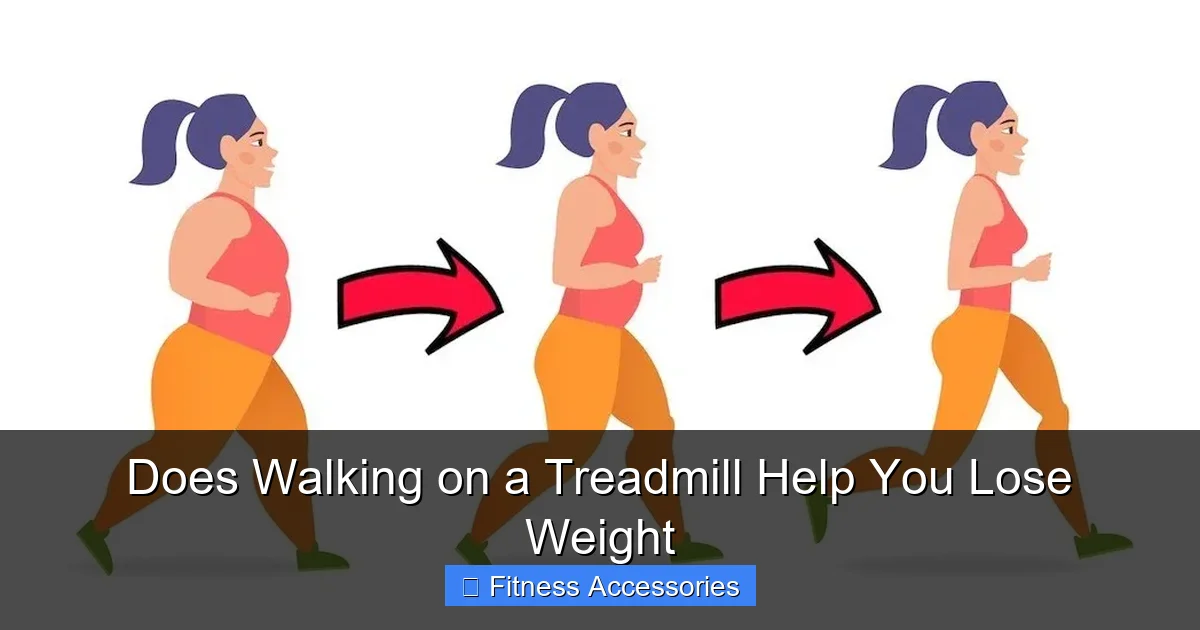
Yes, walking on a treadmill can absolutely help you lose weight when combined with a consistent calorie deficit. It’s a low-impact, accessible way to burn calories, improve heart health, and build sustainable habits. The key is regularity, proper intensity (like using incline), and pairing it with a balanced diet for lasting fat loss.
Key Takeaways
- Calorie Deficit is King: Treadmill walking creates a calorie burn, but weight loss only occurs when you consume fewer calories than you expend, making diet just as crucial as exercise.
- Consistency Trumps Intensity: Regular, moderate treadmill sessions (e.g., 30-60 minutes most days) are more effective for sustainable weight loss than occasional, extreme workouts.
- Incline is a Game-Changer: Adding incline significantly boosts calorie burn, engages more muscle groups (glutes, hamstrings, calves), and improves cardiovascular fitness compared to flat walking.
- It’s Sustainable and Low-Impact: Treadmill walking is gentle on joints, making it easier to stick with long-term compared to high-impact activities, which is critical for maintaining weight loss.
- Metabolism and Non-Exercise Activity: While not as high as running, walking increases daily energy expenditure and can contribute to a higher metabolic rate over time, especially when building muscle through incline.
- Mindset and Habit Formation: The treadmill provides a controlled, convenient environment that helps build the routine and discipline necessary for a successful weight loss journey.
- It’s a Tool, Not a Magic Bullet: Treadmill walking is highly effective as part of a holistic plan including strength training, proper nutrition, sleep, and stress management for optimal health and weight loss.
📑 Table of Contents
- Does Walking on a Treadmill Help You Lose Weight? The Straight Answer
- The Science of Sweat: How Treadmill Walking Burns Calories
- The Pillar of Success: Consistency Over Heroics
- Supercharging Your Walk: The Incline Advantage
- Common Pitfalls and How to Avoid Them
- Crafting Your Winning Treadmill Weight Loss Plan
- The Final Step: Making It a Lifestyle
Does Walking on a Treadmill Help You Lose Weight? The Straight Answer
Let’s cut to the chase: yes, walking on a treadmill can be a fantastic, effective tool for weight loss. But—and this is a big but—it’s not a standalone magic solution. The fitness world is full of trends and quick fixes, but the timeless, scientifically-backed principle of weight loss remains: you must burn more calories than you consume. A treadmill is a powerful, accessible machine that helps you create that crucial calorie deficit. It’s convenient, controlled, and gentle on your body, making it one of the most sustainable forms of exercise for shedding pounds and, more importantly, keeping them off.
Think of your body like a bank account. Calories in (from food and drink) are deposits. Calories out (through your basal metabolic rate and physical activity) are withdrawals. To lose weight, you need a consistent withdrawal surplus. Treadmill walking is a reliable, predictable way to make those withdrawals. It doesn’t require perfect weather, a gym membership (if you own one), or special skills. You can do it while listening to a podcast, watching your favorite show, or simply zoning out. This ease of integration into daily life is what makes it so potent for long-term success.
Why the Treadmill is a Weight-Loss Warrior
Before we dive into the “how,” let’s talk about why the treadmill often outperforms outdoor walking for weight loss goals. First, it’s controlled and consistent. Outside, you deal with hills, wind, traffic stops, and uneven surfaces that can disrupt your pace and effort. On a treadmill, you set the exact speed and incline, ensuring a steady, measurable workout every single time. Second, it’s weatherproof. No more skipping sessions because of rain, snow, or extreme heat. This reliability builds unstoppable momentum. Third, the impact is minimal. The belt’s slight cushioning is far kinder to your ankles, knees, and hips than concrete or asphalt, reducing injury risk and allowing for more frequent sessions. Finally, the data is your friend. Modern treadmills track distance, time, calories burned (estimated), and heart rate, giving you immediate feedback to push yourself and monitor progress.
The Science of Sweat: How Treadmill Walking Burns Calories
At its core, weight loss from treadmill walking comes down to energy expenditure. Your body burns calories to move. The faster and more intensely you move, the more calories you burn per minute. A 155-pound person burns approximately ~150 calories walking at a moderate 3.5 mph pace for 30 minutes. Bump that speed to a brisk 4.5 mph, and that jumps to ~190 calories. Now, add a 5% incline at that same 4.5 mph, and you’re looking at over ~270 calories in 30 minutes. That’s a significant difference from a simple flat stroll.

Visual guide about Does Walking on a Treadmill Help You Lose Weight
Image source: trimhabit.com
But the calorie burn doesn’t stop when you step off the machine. This is where the magic of Excess Post-Exercise Oxygen Consumption (EPOC), or the “afterburn effect,” comes in. After exercise, your body needs extra oxygen to restore itself to its resting state—repairing muscles, replenishing energy stores, and normalizing hormone levels. This process requires additional calories. While the afterburn from moderate walking is less pronounced than from high-intensity interval training (HIIT), it still exists, especially after longer sessions or walks that incorporate hills and intervals. You’re essentially extending your calorie-burning window beyond the workout itself.
Factors That Influence Your Calorie Burn
Not all treadmill walks are created equal. Your personal calorie expenditure depends on several key variables:
- Body Weight: The more you weigh, the more energy required to move your body, so you’ll burn more calories than a lighter person doing the same workout.
- Speed: Moving faster increases intensity and calorie burn per minute.
- Incline: This is the most powerful variable on a treadmill. Walking uphill forces your muscles, especially your glutes and hamstrings, to work much harder, dramatically increasing energy demand.
- Duration: Longer sessions naturally accumulate more calories burned. Consistency in duration is key.
- Individual Metabolism: Age, gender, muscle mass, and genetics play a role in your baseline metabolic rate.
The Pillar of Success: Consistency Over Heroics
Here’s the truth that separates permanent weight loss from fleeting fads: you cannot out-exercise a bad diet, but you absolutely can undermine a good diet with no exercise. However, the most powerful predictor of long-term weight loss success is consistency. A person who walks for 30 minutes at a moderate pace, 5 days a week, will almost always see better, more sustainable results than someone who does one brutal, 2-hour treadmill session once a month and then burns out.

Visual guide about Does Walking on a Treadmill Help You Lose Weight
Image source: media1.popsugar-assets.com
Treadmill walking is the perfect exercise for building consistency because it has a low barrier to entry. It’s not intimidating. It doesn’t leave you gasping for air or sore for days (if done correctly). You can fit it into a lunch break, first thing in the morning, or while the kids nap. This mental and physical accessibility means you’re far more likely to do it regularly. And regular physical activity, even at a moderate intensity, does three critical things for weight loss: it increases your total daily calorie expenditure, helps preserve lean muscle mass (which is metabolically active), and improves insulin sensitivity, making your body better at using nutrients for fuel rather than storing them as fat.
Building the Unbreakable Habit
To harness consistency, treat your treadmill sessions like non-negotiable appointments. Start with a realistic goal—maybe 20 minutes, 3 times a week. Use a habit-stacking technique: “After I have my morning coffee, I will walk on the treadmill for 20 minutes.” Track your workouts in a simple journal or app. Seeing your streak build is incredibly motivating. Remember, the goal isn’t perfection; it’s showing up. A 10-minute walk is infinitely better than a zero-minute walk. Over time, as your fitness improves, you can naturally increase the duration, speed, or incline without it feeling like a monumental chore.
Supercharging Your Walk: The Incline Advantage
If you want to maximize the weight-loss potential of your treadmill, learn to love the incline. Walking on a flat surface is great, but adding incline transforms it from a gentle cardio session into a powerful strength and endurance builder. Think about walking outdoors: you naturally encounter hills. The treadmill lets you simulate that challenge on demand, without the downhill impact.

Visual guide about Does Walking on a Treadmill Help You Lose Weight
Image source: i0.wp.com
Incline walking activates your posterior chain—your glutes, hamstrings, and calves—much more than flat walking. These are large, powerful muscle groups. Building and maintaining muscle is critical for weight loss because muscle tissue is metabolically active, meaning it burns calories even at rest. More muscle equals a higher resting metabolic rate. Furthermore, incline walking places greater demand on your cardiovascular system, improving your heart and lung health more efficiently than flat walking at the same speed. It’s a double win: you burn more calories during the workout and build a body that burns more calories all day.
How to Incorporate Incline Wisely
Don’t go from 0% to 10% in one session and risk injury. Follow a progressive approach:
- Start with a Warm-Up: Walk at a comfortable, flat pace (0-1%) for 5-10 minutes to get blood flowing.
- Gradual Build: Increase the incline by 1-2% every 2-3 minutes while maintaining a steady, controlled pace. You should feel challenged but still able to hold a conversation (the “talk test”).
- Peak and Recover: Reach your target incline (e.g., 4-6% for beginners, 8-10% for more advanced) for 5-10 minutes. Then, gradually decrease the incline back to flat for a 2-3 minute active recovery.
- Repeat: If time and fitness allow, repeat the climb/recovery cycle 1-2 more times.
- Cool Down: Finish with 5 minutes of flat, slow walking to bring your heart rate down.
Listen to your body. A slight burn in your glutes and hamstrings is good; sharp pain in your shins or knees is a sign to adjust form or reduce incline.
Common Pitfalls and How to Avoid Them
Even with the best intentions, it’s easy to stall your weight loss progress on the treadmill. Being aware of these common mistakes is half the battle:
Mistake 1: The “Zombie Walk”
You hop on, set it to 2.0 mph, and stare blankly at the TV for 30 minutes. While any movement is better than none, this approach yields minimal calorie burn and minimal physiological adaptation. Your body quickly adapts to the same easy pace, and progress plateaus.
The Fix: Incorporate variety. Use intervals—alternating 2 minutes at a brisk pace with 1 minute at a recovery pace. Add incline. Change your pace every 5 minutes. Keep your body guessing to continue challenging your cardiovascular system and muscles.
Mistake 2: Ignoring Nutrition
This is the granddaddy of all mistakes. You might burn 300 calories on the treadmill, but then reward yourself with a “post-workout” smoothie that contains 500 calories. The math is simple: you’ve created a calorie surplus. Exercise is a fantastic health behavior, but for weight loss, it must be paired with mindful eating.
The Fix: Don’t “eat back” the calories you burned, at least not fully, especially in the beginning. Focus on whole foods, protein, fiber, and healthy fats to stay satiated. Use a food tracking app for a week to become aware of your true intake. The treadmill creates the opportunity for a deficit; your food choices determine if that opportunity becomes a reality.
Mistake 3: Poor Form and Safety
Holding onto the handrails for dear life, leaning forward, or taking overly long, choppy strides can reduce the effectiveness of your walk and increase injury risk. Holding on excessively also burns fewer calories because you’re supporting some of your body weight.
TheThe Fix: Let your arms swing naturally at your sides. Maintain an upright posture with a slight forward lean from the ankles, not the waist. Take comfortable, natural strides. Use the handrails only for balance when getting on/off or if you genuinely need stability. If you need to hold on to keep up, lower the speed or incline until you can walk hands-free.
Crafting Your Winning Treadmill Weight Loss Plan
Ready to put it all together? Here is a sample, progressive weekly plan for a beginner to intermediate walker aiming for weight loss. The key is to start where you are and gradually increase the challenge.
Sample Weekly Treadmill Schedule
- Monday: 30-Minute Incline Walk. Warm-up 5 min flat. 20 minutes: Increase incline by 1% every 3 minutes until you reach 5%, hold for the final 5 minutes. Cool-down 5 min flat.
- Tuesday: Rest or Active Recovery. Gentle stretching, a leisurely walk outside.
- Wednesday: 30-Minute Interval Walk. Warm-up 5 min. Alternate 3 minutes at a brisk pace (where you’re breathing heavily but can talk in short sentences) with 2 minutes at an easy recovery pace. Repeat 5 times. Cool-down 5 min.
- Thursday: Rest or Active Recovery.
- Friday: 35-Minute Steady State & Incline. Warm-up 5 min. Walk at a consistent, challenging pace (4.0-4.5 mph) at a 3% incline for 25 minutes. Cool-down 5 min.
- Saturday: 40-45 Minute Fun Walk. Put on a favorite show or podcast and walk at a comfortable pace. This builds duration and habit.
- Sunday: Rest.
Progression: Each week, try to add 2-5 minutes to one of your longer walks, or increase your peak incline by 0.5-1%, or slightly increase your brisk pace. The goal is gradual overload.
The Final Step: Making It a Lifestyle
Treadmill walking for weight loss works because it’s sustainable. It’s not a punishment; it’s a practice. The ultimate goal isn’t just to reach a number on the scale, but to build a stronger, more resilient, and healthier version of yourself. The habits you form—showing up for yourself regularly, moving your body with purpose, pairing activity with mindful nutrition—are the real prize. These habits are what keep the weight off for good.
So, step onto that belt with confidence. Start slow, focus on form, embrace the incline, and be patient with yourself. Weight loss is a marathon, not a sprint, and the treadmill is one of the most reliable companions you can have on that long, rewarding journey. Lace up, press start, and take the first step.
Frequently Asked Questions
How long should I walk on a treadmill each day to lose weight?
Aim for 30-60 minutes most days of the week. For significant weight loss, the CDC recommends at least 150 minutes of moderate-intensity aerobic activity per week, which breaks down to 30 minutes, 5 days a week. Start with what you can manage and build up gradually.
Is walking on a treadmill with incline better for weight loss than without?
Yes, absolutely. Incline walking burns significantly more calories by engaging larger muscle groups and increasing cardiovascular demand. It also builds muscle in your lower body, which can boost your resting metabolism over time, making it a more efficient workout for fat loss.
Can I lose weight by just walking on a treadmill without changing my diet?
You may see some initial change, but significant, sustainable weight loss requires a combination of exercise and dietary adjustments. It’s very easy to consume more calories than you burn. For best results, focus on whole foods, portion control, and protein intake alongside your treadmill routine.
Is treadmill walking as effective as outdoor walking for weight loss?
They are very similar, but the treadmill has specific advantages for weight loss: it offers precise control over speed and incline for consistent, measurable workouts, and it eliminates weather and safety barriers, leading to greater consistency—which is the most important factor for success.
How often should I use the treadmill to see weight loss results?
For noticeable results, aim for at least 4-5 days per week. Consistency is more important than occasional long sessions. Pair this with a slight calorie deficit, and you can expect to see changes on the scale and in your measurements within 3-4 weeks.
Is treadmill walking safe for beginners or people with joint issues?
Yes, it’s one of the safest forms of exercise for beginners and those with joint concerns. The belt’s cushioning reduces impact compared to outdoor surfaces. Start with slow speeds and minimal incline, focus on proper form, and always consult with a doctor before starting any new exercise program if you have pre-existing conditions.