Does Jump Rope Burn More Calories Than Running

Jump rope and running are both powerful cardio exercises, but jump rope often burns more calories per minute. Studies show that jump rope calorie burn can outpace running at similar intensities, making it a time-efficient full-body workout. Whether you want to lose weight or boost endurance, this guide reveals which exercise delivers better results.
You have probably heard people say that jump rope burns more calories than running. But is that actually true? Maybe you are trying to decide which cardio exercise to add to your fitness routine. Or perhaps you want to maximize your calorie burn in less time. Either way, you are in the right place.
In this article, we will compare jump rope vs running side by side. We will look at the science behind calorie burn, explore exercise intensity differences, and help you figure out which workout fits your goals. Let us dive in.
Key Takeaways
- Jump rope burns more calories per minute: On average, jump rope can burn 10-16 calories per minute, while running burns about 8-12 calories per minute depending on pace.
- Both exercises are excellent for weight loss: The best choice depends on your fitness level, preferences, and goals.
- Jump rope engages more muscle groups: It works your legs, core, arms, and shoulders simultaneously, boosting overall caloric expenditure.
- Running is easier on the joints for some: Impact levels differ, and choosing the right one depends on your body and injury history.
- HIIT with jump rope amplifies calorie burn: Combining interval training with jump rope creates an afterburn effect that keeps your metabolism elevated.
- Consistency matters most: The best exercise is the one you will do regularly and enjoy.
📑 Table of Contents
- How Many Calories Does Jump Rope Burn?
- How Many Calories Does Running Burn?
- Jump Rope vs Running: Head-to-Head Calorie Comparison
- Which Exercise Is Better for Weight Loss?
- How to Maximize Calorie Burn with Jump Rope
- Expert Insights on Jump Rope and Running
- Common Mistakes to Avoid
- Quick Tips for Getting Started
- Conclusion
How Many Calories Does Jump Rope Burn?
Jump rope is one of the most efficient cardio exercises you can do. It works your entire body and ramps up your heart rate fast. But exactly how many calories does it burn?
The answer depends on several factors. Your body weight matters a lot. A person who weighs 155 pounds can burn roughly 300 calories in just 30 minutes of jump rope. That is a serious caloric expenditure for a relatively short workout.
According to research on jump rope calorie burn, the average person burns between 10 and 16 calories per minute. That is higher than most steady state cardio activities. If you want to see how this compares to specific time frames, check out our detailed breakdowns below.
For a quick reference, here is what jump rope looks like across different durations:
- 5 minutes: approximately 50-80 calories burned
- 10 minutes: approximately 100-160 calories burned
- 20 minutes: approximately 200-320 calories burned
- 30 minutes: approximately 300-480 calories burned
- 1 hour: approximately 600-960 calories burned
Want to see exactly how many calories you can expect from a specific session? We have detailed guides on how many calories jump rope burns per minute, plus breakdowns for 10, 20, and 30-minute sessions.
Why Does Jump Rope Burn So Many Calories?
Jump rope is a full body workout. Your legs power the jumps. Your core stabilizes your torso. Your arms and shoulders turn the rope. This means more muscles are working at the same time.
When more muscles activate, your body needs more energy. That energy comes from calories burned. Plus, jump rope keeps your heart rate elevated throughout the session. This sustained effort is what drives high calorie burn numbers.
Another factor is exercise intensity. Jump rope is a high intensity activity. It pushes your cardiovascular system hard. The harder you work, the more calories you burn. This is also why interval training with a jump rope is so effective.
How Many Calories Does Running Burn?
Running is one of the most popular forms of cardio exercise in the world. Millions of people lace up their shoes every day to go for a run. But how does its calorie burn compare to jump rope?
Like jump rope, the calories you burn running depend on your weight, pace, and terrain. A 155-pound person running at a moderate pace of 6 miles per hour burns roughly 300 calories in 30 minutes. That is comparable to jump rope at a similar duration.
However, the comparison shifts when you look at intensity. A faster running pace increases caloric expenditure. Sprint intervals can push your calorie burn higher. But at a steady, easy jog, running may not match the calorie output of jump rope.
Here is a general breakdown of running calorie burn by pace for a 155-pound person:
- 5 mph (12 min mile): approximately 240-300 calories per 30 minutes
- 6 mph (10 min mile): approximately 300-370 calories per 30 minutes
- 7.5 mph (8 min mile): approximately 370-450 calories per 30 minutes
- 10 mph (6 min mile): approximately 450-600 calories per 30 minutes
As you can see, running faster increases your calorie burn significantly. But most people do not run at elite speeds. For the average runner, jump rope often comes out ahead in the calorie burn comparison.
Jump Rope vs Running: Head-to-Head Calorie Comparison
Let us put this calorie burn comparison into perspective. We want to know which exercise wins when we look at the numbers side by side. Here is a detailed breakdown.
| Factor | Jump Rope | Running |
|---|---|---|
| Calories per minute (avg) | 10-16 cal | 8-12 cal |
| Calories in 30 min (155 lb person) | 300-480 cal | 240-370 cal |
| Muscles engaged | Full body | Lower body mostly |
| Impact on joints | Moderate to high | Moderate to high |
| Equipment needed | Jump rope only | Running shoes |
| VO2 max improvement | High | High |
| Afterburn effect (EPOC) | Strong | Moderate |
| Accessibility | Indoor or outdoor | Mostly outdoor |
Looking at this jump rope vs running comparison, jump rope has a clear edge in calories burned per minute. It also engages more muscles, which is a big advantage for overall fitness.
But running has its own strengths. Many people find it easier to sustain a long run than a long jump rope session. Running outdoors also provides mental health benefits. Fresh air, scenery, and change of environment can make a big difference in your fitness routine.
What Is EPOC and Why Does It Matter?
EPOC stands for Excess Post-Exercise Oxygen Consumption. It is the extra calorie burn your body experiences after a workout. When you do intense exercise, your metabolism stays elevated for hours afterward.
Jump rope, especially when done as HIIT, creates a strong afterburn effect. Your body continues burning calories burned long after you put the rope down. Running also produces EPOC, but generally less than high-intensity jump rope sessions.
This is a crucial point in the jump rope calorie burn debate. It is not just about what happens during the workout. The afterburn effect can add significant caloric expenditure over time.
Which Exercise Is Better for Weight Loss?
If your main goal is weight loss, you want to maximize calorie burn while staying consistent. Both jump rope and running can help. But which one is better?
Here is the honest answer: it depends on you. Let us break it down.
Choose Jump Rope If…
- You want to burn the most calories in the least time
- You prefer a full body workout that builds coordination
- You want to do your workout indoors or in small spaces
- You enjoy high intensity interval training
- You want a portable exercise tool you can take anywhere
Choose Running If…
- You prefer longer, steady sessions at a moderate pace
- You enjoy being outdoors and exploring new routes
- You want a low-cost exercise that requires minimal equipment
- You have good joint health and no injury history
- You want to build endurance for longer distances
The best weight loss exercise is the one you will actually do consistently. Consistency beats intensity every time. If you love running, stick with it. If jump rope excites you more, go for it. Both will help you reach your goals.
How to Maximize Calorie Burn with Jump Rope
Want to get the most out of your jump rope workouts? Here are some proven strategies to boost your calorie burn and see better results.
1. Use High Intensity Interval Training
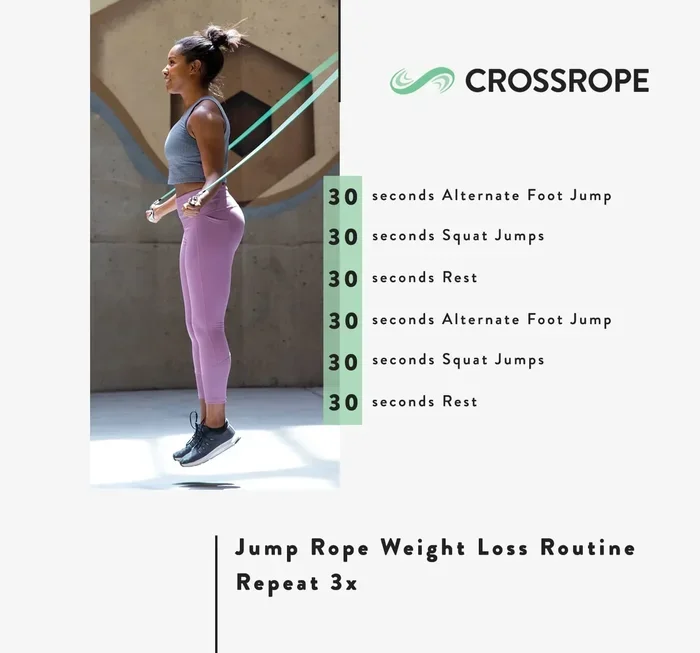
Instead of jumping at a steady pace, alternate between fast and slow intervals. For example, jump as fast as you can for 30 seconds. Then slow down for 30 seconds. Repeat for 10-20 minutes. This interval training approach maximizes caloric expenditure and boosts the afterburn effect.
2. Increase Your Speed Gradually
Start with a comfortable pace. As your fitness improves, pick up the speed. Faster jumping means more calories burned per minute. Just make sure you maintain good form to avoid injury.
3. Try Different Jump Rope Techniques
Mix up your routine with different styles. Try double unders, criss-cross jumps, or high knees. These variations challenge your body in new ways and keep your heart rate elevated. They also make the workout more fun.
4. Combine Jump Rope with Strength Training
For the best results, pair your jump rope sessions with bodyweight exercises like squats, push-ups, and lunges. This combination workout builds muscle and burns fat. More muscle means a higher resting metabolic rate, which leads to more calories burned throughout the day.
5. Track Your Progress
Use a fitness tracker or app to monitor your heart rate and estimated calories burned. Seeing your progress keeps you motivated. It also helps you adjust your intensity to keep challenging your body.
Expert Insights on Jump Rope and Running
We asked fitness professionals for their take on the jump rope vs running debate. Here is what they had to say.
Dr. Sarah Chen, Exercise Physiologist: “Jump rope is one of the most efficient forms of cardio exercise. It combines high intensity with full body engagement. For people short on time, it delivers incredible results.”
Mark Torres, Certified Running Coach: “Running is accessible and sustainable. Many of my clients find it easier to stick with a running routine long term. The best exercise is always the one you enjoy and can do consistently.”
Lisa Monroe, Personal Trainer: “I recommend jump rope for clients who want maximum calorie burn in minimal time. But I also suggest mixing it with running for a well-rounded fitness routine. Variety keeps workouts interesting and prevents plateaus.”
These expert opinions reinforce a key takeaway: both exercises have real value. Your best choice depends on your personal goals, preferences, and circumstances.
Common Mistakes to Avoid
Whether you choose jump rope or running, avoid these common mistakes that can limit your calorie burn or lead to injury.
- Skipping warm-ups: Always warm up for 3-5 minutes before intense exercise. Cold muscles are more prone to injury.
- Using the wrong rope length: A jump rope that is too long or too short affects your rhythm and efficiency. Make sure the handles reach your armpits when you stand on the middle of the rope.
- Landing too hard: Land softly on the balls of your feet. Heavy landings stress your joints and reduce exercise efficiency.
- Doing the same workout every day: Your body adapts quickly. Mix up your intensity and techniques to keep challenging yourself.
- Ignoring rest days: Recovery is when your body actually gets stronger. Overtraining leads to burnout and injuries.
- Relying only on the calorie counter: Fitness trackers estimate calories burned. They are not always perfectly accurate. Focus on how you feel and your long-term progress.
Quick Tips for Getting Started
Ready to try jump rope or take your running to the next level? Here are some quick tips to get started safely and effectively.
- Start slow. Begin with just 5 minutes of jump rope or a short jog. Build up gradually over several weeks.
- Invest in a good rope. A properly weighted jump rope makes a huge difference in your workout quality.
- Focus on form. Keep your core tight, wrists relaxed, and jumps low. Good form prevents injuries and improves efficiency.
- Set realistic goals. Whether it is burning 500 calories or completing 20 minutes, set goals that challenge you without overwhelming you.
- Stay hydrated. Drink water before, during, and after your workout. Proper hydration supports performance and recovery.
- Track your workouts. Keep a simple log of your sessions, durations, and how you felt. This helps you see progress over time.
For more details on specific calorie burn targets, check out our guide on how long to jump rope to burn 1000 calories or our breakdown of 30 minutes of jump rope calorie burn.
Conclusion
So, does jump rope burn more calories than running? The answer is yes, in most cases. Jump rope typically delivers higher calorie burn per minute than running at a moderate pace. It engages more muscles, creates a stronger afterburn effect, and is incredibly time-efficient.
However, running is not without its merits. It is accessible, sustainable, and beloved by millions. The best cardio exercise is the one you enjoy enough to do regularly. Consistency is the real key to weight loss and overall fitness.
If you are short on time and want maximum results, jump rope is hard to beat. If you love the simplicity of a morning jog, keep lacing up those shoes. And if you want the best of both worlds, combine them. A fitness routine that includes both jump rope and running will give you a well-rounded, effective workout.
Start today. Pick up a rope or tie your shoes. Your future self will thank you.
For more information on jump rope calorie burn, explore our full collection of guides on how many calories you burn from jump rope and related topics.
Frequently Asked Questions
Does jump rope burn more calories than running?
Yes, on average, jump rope burns more calories per minute than running at a moderate pace. A 155-pound person can burn 10-16 calories per minute with jump rope, compared to 8-12 calories per minute while running. However, the exact number depends on your weight, intensity, and fitness level.
How long should I jump rope to burn 500 calories?
For a 155-pound person, jumping rope at a moderate to high intensity for about 30-40 minutes can burn approximately 500 calories. The exact time varies based on your weight, rope speed, and rest intervals. Using interval training can help you reach this goal faster.
Is jump rope better than running for weight loss?
Jump rope can be more efficient for weight loss because it burns more calories per minute and engages your entire body. But the best exercise for weight loss is the one you will do consistently. If you prefer running, stick with it. If you enjoy jump rope, it is a fantastic choice.
Can I replace running with jump rope in my workout routine?
Absolutely. Jump rope is an excellent substitute for running and provides similar cardiovascular benefits. It also offers the added benefit of improving coordination, agility, and upper body strength. Many athletes use jump rope as a cross-training tool alongside or instead of running.
What is the afterburn effect of jump rope compared to running?
Jump rope, especially when performed at high intensity or as part of a HIIT workout, produces a stronger afterburn effect than running. This means your body continues burning extra calories for hours after the workout ends. This is due to the elevated oxygen consumption your body needs to recover.
Is jump rope safe for beginners?
Yes, jump rope is safe for beginners as long as you start slowly and use proper form. Begin with short sessions of 3-5 minutes and gradually increase duration. Wear supportive shoes, use a properly sized rope, and land softly on the balls of your feet to protect your joints.