Do You Burn More Calories on Treadmill Incline
Yes, you do burn more calories on treadmill incline. Walking or running on an elevated surface forces your body to work harder against gravity, which significantly increases your calorie burn rate. This guide covers the science, benefits, and practical tips to help you get the most out of your treadmill incline workout.
Walking on a treadmill with an incline setting changes everything. When you raise the deck, your body has to push harder against gravity. This simple adjustment turns a casual stroll into a powerful treadmill incline workout that torches calories and builds strength.
Many people stick to flat walking because it feels easier. But if you want to maximize your results, adding elevation is one of the smartest moves you can make. Whether you are training for treadmill fat burning or just looking to switch up your routine, incline walking delivers real benefits.
The question most fitness enthusiasts ask is simple: do you burn more calories on treadmill incline? The short answer is yes. But the full picture is more interesting. Let us break down exactly how incline walking affects your body, how many extra calories you can expect to burn, and how to design a routine that works for you.
Key Takeaways
- Incline walking burns more calories: Elevating the treadmill increases energy expenditure compared to flat walking.
- You can mimic outdoor terrain: Treadmill elevation training closely replicates hill walking and outdoor conditions.
- Lower impact on joints: Walking on incline is gentler on knees and hips than running on flat surfaces.
- Targets more muscle groups: Incline work engages glutes, hamstrings, and calves more effectively than flat walking.
- Start slow and progress: Gradually increasing incline prevents injury and builds endurance over time.
- Consistency matters most: Regular incline sessions deliver the best long-term results for fat loss and fitness.
📑 Table of Contents
What Is Treadmill Incline and Why Does It Matter?
The incline setting on a treadmill raises the front of the belt to simulate walking uphill. Most modern machines let you adjust the grade from zero percent (flat) all the way up to 15 percent or more. Even a small change in elevation makes a big difference in how hard your body works.
When you walk on a flat surface, your muscles do not have to fight against gravity as much. But the moment you add incline, your legs push upward with every step. This extra effort increases your calorie burn rate and raises your heart rate without making you feel like you are working out any harder.
How Incline Compares to Flat Walking
Think of it this way. Walking on a flat treadmill is like strolling on a paved road. Walking at a 5 percent grade is like climbing a gentle hill. At 10 percent, you are tackling a steep ascent. Your body responds to each level differently, and the calorie burn grows with every increase in elevation.
Studies show that walking on incline can increase energy expenditure by 30 to 40 percent compared to flat walking at the same speed. That means you can get a much better workout in the same amount of time. For busy people who want efficient treadmill cardio, this is a game changer.
How Many Extra Calories Does Incline Walking Burn?
The exact number of extra calories depends on several factors. Your body weight, walking speed, incline percentage, and workout duration all play a role. But here is what we know from research and real-world testing.
For a 155-pound person walking at 3.5 mph on a flat treadmill, the typical burn is around 200 to 250 calories per hour. Now add a 5 percent incline, and that number jumps to roughly 300 to 350 calories per hour. At a 10 percent incline, you could burn 400 or more calories in the same time frame.
If you want a more precise number for your specific situation, you can use a treadmill calorie calculator or check the readout on your machine. Just remember that those readouts are estimates. Your actual burn depends on your unique metabolism and fitness level.
Compared to calories burned walking on treadmill at a flat grade, incline walking clearly wins for calorie torching. And the best part is that you do not need to run to see these results. A brisk walk at an incline can match or even exceed the calorie burn of a light jog on flat ground.
Calorie Burn Comparison by Incline Level
Here is a general breakdown of what you can expect at different incline settings for a 155-pound person walking at 3.5 mph:
- 0% (flat): 200 to 250 calories per hour
- 5% incline: 300 to 350 calories per hour
- 10% incline: 400 to 450 calories per hour
- 15% incline: 500+ calories per hour
As you can see, the numbers add up fast. Even a modest 5 percent grade makes a noticeable difference. And if you combine incline with a slightly faster pace, the calorie burn climbs even higher.
The Science Behind Burning Calories on an Incline
Understanding why incline walking burns more calories helps you appreciate what is happening inside your body. It is not magic. It is physics and physiology working together.
When you walk uphill, you are essentially lifting your entire body weight against gravity with every step. Your legs, core, and arms all pitch in to keep you moving forward and upward. This full-body engagement demands more energy, which means your body taps into stored fuel at a faster rate.
Muscle Activation on Incline
Walking on a flat treadmill mostly works your quads and calves. But when you raise the incline, you activate your leg muscles incline training hits the glutes, hamstrings, and hip flexors much more aggressively. These are some of the largest muscle groups in your body.
The more muscle you engage, the more calories you burn. This is why incline treadmill training is so effective for treadmill fat burning. You are not just working your lower body. Your core stabilizes your trunk on the grade, and your arms swing naturally to maintain balance. It becomes a true full-body cardio incline workout.
Heart Rate and Oxygen Consumption
Your heart rate rises when you walk on an incline, even at the same speed you would use on flat ground. This is because your cardiovascular system has to pump blood to more working muscles and fight against gravity.
A higher heart rate means your body is burning more oxygen, which directly correlates to higher calorie burn rate. Many fitness trackers and heart rate monitors confirm this. If you have ever wondered why your heart races faster on an incline walk, now you know the answer.
For those tracking their progress, checking your how many calories you burn on a treadmill after an incline session will almost always show a higher number than a flat session of the same duration and speed. The data backs up the experience.
Best Treadmill Incline Workout Routines
Now that you understand the science, let us talk about how to actually put incline walking into your routine. You do not need to jump straight to a 15 percent grade. Building up gradually is the smartest approach.
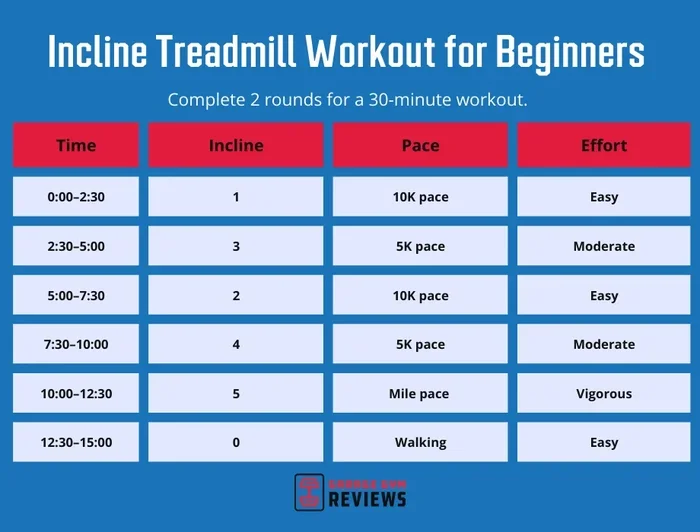
Beginner Incline Workout
If you are new to treadmill elevation training, start here:
- Warm up at 0% incline for 5 minutes at a comfortable walking pace.
- Set the incline to 3% and walk for 5 minutes.
- Increase to 5% and walk for 5 minutes.
- Drop back to 3% for 3 minutes of recovery.
- Repeat the 3% to 5% cycle two more times.
- Cool down at 0% for 5 minutes.
This beginner routine takes about 30 minutes and introduces your body to the demands of incline walking without overwhelming your joints or muscles.
Intermediate Incline Workout
Once you feel comfortable, try this treadmill workout routine:
- Warm up at 0% for 5 minutes.
- Walk at 5% incline for 5 minutes.
- Increase to 8% for 4 minutes.
- Push to 10% for 3 minutes.
- Return to 5% for 3 minutes of recovery.
- Repeat the full cycle once more.
- Cool down at 0% for 5 minutes.
At this level, you are really starting to feel the burn calories walking uphill effect. Your breathing will deepen, and your legs will work harder. This is where the real treadmill fat burning happens.
Advanced Hill Simulation
For experienced walkers and runners, try simulating outdoor hills:
- Warm up flat for 5 minutes.
- Climb to 10% for 4 minutes.
- Reduce to 2% for 2 minutes (simulating a valley).
- Climb to 12% for 4 minutes.
- Recover at 3% for 2 minutes.
- Finish with a 15% push for 3 minutes.
- Cool down flat for 5 minutes.
This incline treadmill training routine mimics the experience of hiking hilly trails. It challenges your body in new ways and keeps your workouts from feeling repetitive.
Benefits Beyond Calorie Burning
While torching extra calories is the main draw, incline walking offers a lot more. These benefits go beyond the number on your treadmill calorie calculator.
Builds Stronger Legs and Glutes
Walking on an incline shapes and strengthens your lower body like few other exercises can. The glutes and hamstrings do the heavy lifting on any grade above 5 percent. Over time, you will notice more definition and strength in your legs and backside.
Compare this to flat walking, which primarily targets the calves and quads. Incline walking benefits extend to muscles that flat walking barely touches. This balanced development helps prevent muscle imbalances and reduces injury risk.
Low Impact, Joint Friendly
If you have ever had knee or hip pain from running, incline walking is a welcome alternative. The walking on incline motion is much gentler on your joints than running on a hard surface. You get an intense cardiovascular workout without the pounding.
Many physical therapists recommend incline walking for patients recovering from injuries. It builds fitness and strength while keeping stress on the joints to a minimum. This makes it one of the most accessible forms of treadmill cardio for people of all fitness levels.
Mimics Outdoor Walking Conditions
One of the underrated benefits of treadmill incline is that it prepares your body for real-world terrain. Walking on a flat belt indoors does not fully prepare you for a hilly outdoor trail or a steep sidewalk.
Training on incline helps your body adapt to the demands of outdoor walking equivalent scenarios. When you hit the actual hills, your body will feel ready. Your muscles, joints, and cardiovascular system will all be better prepared for the challenge.
Common Mistakes to Avoid With Incline Training
Incline walking is highly effective, but it is easy to make mistakes that reduce your results or lead to injury. Here are the most common errors and how to fix them.
Holding onto the Handrails
This is the number one mistake people make on an inclined treadmill. Leaning on the handrails reduces your calorie burn and throws off your natural walking posture. It also takes the work away from your core and lower body.
Instead, let go of the rails and swing your arms naturally. If you feel unsteady at first, lower the incline slightly until you build confidence. Proper form is essential for getting the full incline walking benefits.
Starting Too Steep, Too Fast
Jumping to a 12 or 15 percent grade on your first try is a recipe for sore muscles and poor form. Your body needs time to adjust to the demands of incline work. Starting too steep can also strain your Achilles tendon and calves.
Follow the progression plans above and give your body time to adapt. Gradual increases in treadmill speed and incline are the safest and most effective approach. Patience pays off with better results and fewer injuries.
Neglecting Posture
On an incline, it is tempting to lean forward or hunch your shoulders. This puts unnecessary strain on your lower back and neck. Keep your head up, shoulders back, and core engaged throughout your walk.
Good posture ensures that your muscles work efficiently and that you get the full benefit of each step. If you feel yourself slouching, take a break and reset your form before continuing.
Conclusion
The answer to whether you burn more calories on treadmill incline is a clear and resounding yes. Adding elevation to your walking or running routine transforms a standard workout into a powerful calorie-torching session. From the science of muscle activation to the practical benefits of treadmill fat burning, incline training offers something for everyone.
Whether you are a beginner starting with a 3 percent grade or an advanced walker tackling 15 percent hills, the key is consistency. Make incline walking a regular part of your treadmill workout routine, and you will see results in both your calorie burn and your overall fitness.
So next time you step onto the treadmill, do not just set it to flat. Raise that incline, push yourself a little, and feel the difference. Your body will thank you for it.
If you want to learn more about tracking your progress, check out how many calories you should burn on a treadmill to get a better sense of your daily goals. And for tips on balancing speed and elevation, explore what speed and incline on treadmill to burn fat for a well-rounded approach to your training.
Finally, if you are curious how walking on your machine compares to other cardio options, read about calories burned walking on treadmill versus other exercises to put your routine in full context.
Frequently Asked Questions
Does walking on treadmill incline burn belly fat?
Incline walking helps you burn calories overall, which contributes to reducing body fat including belly fat. However, spot reduction is a myth. You need a consistent routine combined with a healthy diet to see fat loss in any specific area.
What incline on treadmill is best for burning calories?
A 5 to 10 percent incline is the sweet spot for most people. It significantly boosts calorie burn without being too difficult to maintain. You can start at 3 percent and gradually work your way up as your fitness improves.
Can I lose weight just by walking on treadmill incline?
Walking on treadmill incline is an excellent tool for weight loss. It burns a high number of calories, engages major muscle groups, and is easy on your joints. Pair it with a balanced diet for the best results.
How often should I do incline treadmill workouts?
Three to four times per week is a great starting point. This gives your body enough stimulus to improve while allowing adequate recovery time. Listen to your body and adjust frequency as needed.
Is incline walking better than running on a flat treadmill?For calorie burn, running on flat generally burns more per minute. But incline walking at a steep grade can match or exceed the burn of a light jog. Incline walking is also much easier on your joints, making it a sustainable long-term option.
What speed should I walk on treadmill incline?
A brisk walking pace of 3 to 4 mph works well for most incline workouts. Focus on maintaining good posture and a comfortable rhythm rather than chasing speed. The incline does the heavy lifting for calorie burn.