Can You Plug a Treadmill into a Power Strip

Plugging your treadmill into a standard power strip is a major safety risk and typically voids your warranty. Treadmills are high-power motorized devices that require a stable, high-amperage dedicated circuit, which a power strip cannot provide. The strip’s circuitry and wiring are not designed to handle the treadmill’s startup surge and continuous load, creating fire hazards and equipment damage. The only safe solution is a direct connection to a properly grounded wall outlet on a dedicated circuit, often with a dedicated surge protector. Always follow the manufacturer’s manual for specific electrical requirements.
Key Takeaways
- High Fire Risk: Power strips are not built for the high, sudden amperage draw of a treadmill motor starting up, leading to overheating and potential fire.
- Warranty Voidance: Almost all treadmill manufacturers explicitly state that using a power strip or extension cord will void the equipment’s warranty.
- Circuit Overload: A typical home circuit (15-20 amps) may be shared with other outlets; a treadmill can easily use 15-20 amps alone, tripping breakers and damaging other devices.
- Voltage Drop & Damage: Undersized wiring in a power strip causes voltage drop, stressing the treadmill’s motor and electronics, leading to premature failure.
- Dedicated Circuit is Mandatory: The safest and correct setup is a dedicated 20-amp circuit with a single, properly grounded outlet used only for the treadmill.
- Surge Protector ≠ Power Strip: A heavy-duty, commercial-grade surge protector with a direct plug can be used, but it must be rated for the treadmill’s amperage and plugged into a dedicated circuit.
- Manual is Law: Your treadmill’s user manual is the final authority; if it prohibits power strips, that instruction must be followed without exception.
📑 Table of Contents
- The Short, Critical Answer: Why You Should Never Plug a Treadmill into a Standard Power Strip
- Understanding the Beast: How Much Power Does a Treadmill Really Need?
- Why a Standard Power Strip is a Treadmill’s Worst Enemy
- The Manufacturer’s Verdict: What Your Treadmill Manual Actually Says
- The Only Safe Solutions: Dedicated Circuits and Proper Surge Protection
- Practical Installation Tips and The “What If” Scenarios
- Final Verdict and Clear Action Steps
The Short, Critical Answer: Why You Should Never Plug a Treadmill into a Standard Power Strip
Let’s cut to the absolute chase: You should not plug a treadmill into a standard consumer-grade power strip. Doing so is a serious fire hazard, a fast track to destroying your expensive fitness equipment, and will almost certainly void your manufacturer’s warranty. I know it’s tempting—your gym is in the basement, the outlet is across the room, and that long power strip seems like an easy fix. But this is one shortcut you cannot take.
Treadmills are not like charging your phone or plugging in a lamp. They are powerful motorized machines with significant electrical demands. A standard power strip, the kind you use for your computer and TV, is simply not engineered to handle that kind of load safely or reliably. The consequences of ignoring this range from a tripped breaker that ruins your workout to a catastrophic electrical fire. In this guide, we’ll break down exactly why, explore what your treadmill actually needs from your home’s electrical system, and detail the only safe, code-compliant ways to power your machine.
Understanding the Beast: How Much Power Does a Treadmill Really Need?
To understand why a power strip is inadequate, you first need to grasp what your treadmill demands from your home’s electricity. It’s not just about the number on the label; it’s about the nature of that demand.

Visual guide about Can You Plug a Treadmill into a Power Strip
Image source: galvinpower.org
Continuous vs. Peak (Surge) Power
Treadmill motors have two key power ratings. The first is Continuous Horsepower (CHP), the power needed to keep a 150-pound person walking at a steady pace on a flat surface. This is the sustained draw. The second, and more critical for our discussion, is the peak or startup surge power. When you press start, the motor must overcome the initial inertia of the belt and your body weight. This requires a massive, instantaneous burst of power—often 2-3 times the continuous rating. A treadmill with a 2.5 CHP motor might have a startup surge requiring 5-7 horsepower equivalent in electrical current (amps). That surge happens in a split second, but it’s the most stressful moment for your home’s wiring.
Amperage (Amps) is the Real Culprit
While horsepower gets the marketing glory, electricians and safety codes think in amperes (amps). A typical residential circuit is either 15 or 20 amps. A modern home treadmill, especially one for running, will frequently draw 12 to 18 amps during normal operation at higher speeds and inclines. That leaves almost no margin for anything else on the same circuit. Plugging it into a power strip that’s also feeding a fan, TV, or charger is a recipe for overload.
Voltage Stability is Key
Motors need a steady, clean voltage supply (usually 120V in North America). Any significant drop or fluctuation—caused by long, thin extension cords or the undersized wiring inside a power strip—forces the motor to work harder, generates excess heat, and can damage sensitive electronic control boards. Think of it like trying to run a marathon while someone is occasionally squeezing your air hose; you’ll fatigue and break down much faster.
Why a Standard Power Strip is a Treadmill’s Worst Enemy
Now let’s dissect the power strip itself. That cheap, multi-outlet strip under your desk is designed for low-power electronics. It is fundamentally incompatible with a treadmill’s needs.
Visual guide about Can You Plug a Treadmill into a Power Strip
Image source: galvinpower.org
1. Inadequate Wire Gauge and Build Quality
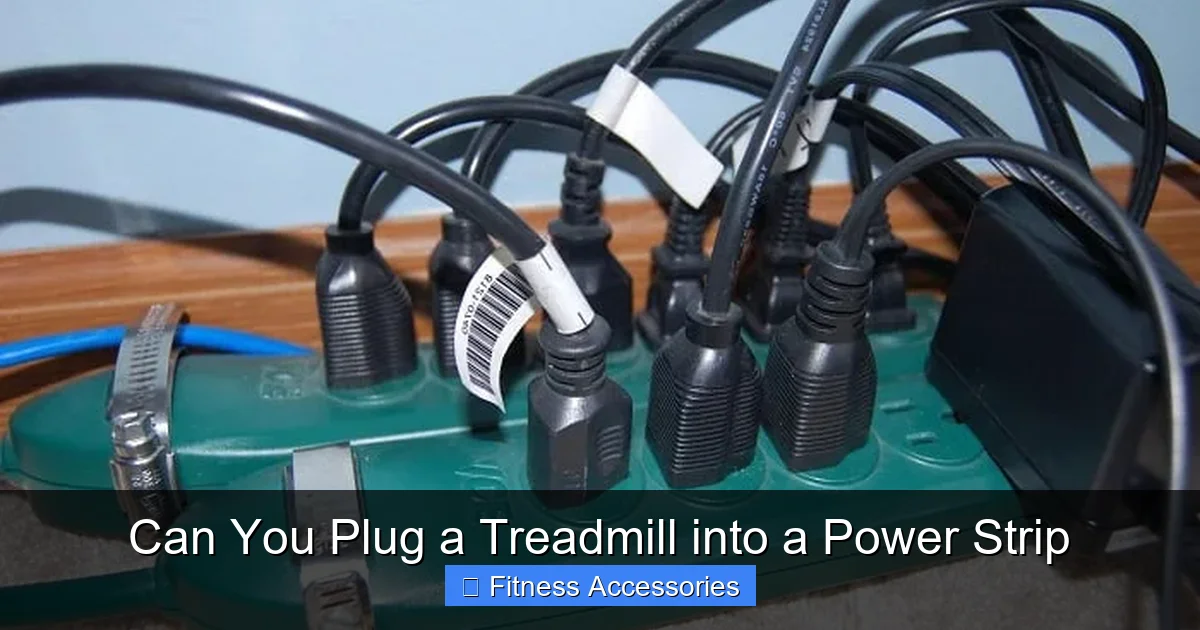
The internal wiring in a $10 power strip is very thin (high gauge number, like 18 AWG). Thin wire has higher electrical resistance. When you push 15+ amps through it, it heats up—significantly. This heat can melt the plastic housing, damage the strip’s internal connections, and ignite surrounding materials like carpet or wood. Power strips are rated for a specific total amp load (often just 10-15 amps for a basic model), which a treadmill can exceed instantly.
2. No Overcurrent Protection for the Treadmill’s Surge
Power strips have a circuit breaker or fuse, but it’s there to protect the strip itself from the total load of all devices plugged into it. It’s not designed to react instantly to the microsecond surge of a treadmill motor start. By the time it trips, the damaging surge has already passed through the strip’s fragile wiring, potentially causing internal damage you can’t see.
3. Shared Circuit Chaos
The whole point of a power strip is to add more outlets. But if that strip is plugged into an outlet that’s on a general-purpose circuit (e.g., your living room circuit), you’re now competing with lights, outlets, and other appliances. Your treadmill’s startup surge can cause a voltage drop that makes your TV flicker or your router reboot, and it dramatically increases the chance of tripping the breaker mid-workout—a frustrating and potentially dangerous event if you’re at speed.
4. Violation of Safety Standards and Codes
Underwriters Laboratories (UL) and other safety organizations list power strips for specific uses: “receptacles for cord-and-plug-connected equipment.” They are not listed or tested for continuous, high-amperage motor loads like treadmills, air conditioners, or refrigerators. Using them this way violates the intended use and bypasses the safety margins built into your home’s permanent wiring.
The Manufacturer’s Verdict: What Your Treadmill Manual Actually Says
If you still have your treadmill’s user manual, find it. Open it. I guarantee you will find a section titled “Electrical Requirements,” “Installation,” or “Safety Instructions.” Here’s what you’ll almost certainly read:

Visual guide about Can You Plug a Treadmill into a Power Strip
Image source: galvinpower.org
“Plug the treadmill directly into a properly grounded wall outlet. Do not use an adapter, extension cord, or power strip. Use of an extension cord or power strip will void the warranty.”
Or something very similar. This is not a suggestion; it is a non-negotiable requirement. The manufacturer engineers the treadmill’s power system, motor controller, and safety certifications (like UL or ETL) based on the assumption of a direct, stable connection to a dedicated source. By violating this, you assume all risk. If a fire starts or the motor burns out, the manufacturer will point to this instruction and deny any liability or warranty claim. They know the dangers better than anyone.
The Only Safe Solutions: Dedicated Circuits and Proper Surge Protection
So, what’s a fitness enthusiast with an inconvenient outlet placement to do? You have two safe, professional-grade options. Forget “extension cords” and “power strips.” Think in terms of permanent electrical work.
Solution 1: The Gold Standard – A Dedicated Circuit
This is the ideal, code-recommended, and safest method. A licensed electrician installs a new circuit from your electrical panel directly to the wall location where your treadmill will live. This circuit has its own breaker (usually a 20-amp, 12-gauge wire circuit) and serves one single outlet. Nothing else plugs into it. No lights, no other outlets. It is a private electrical highway for your treadmill. This guarantees no overload, no competition for amperage, and a stable voltage supply. It’s a permanent, worry-free solution that increases your home’s value and safety. The cost is primarily for the electrician’s time and materials, but it’s a one-time investment in safety.
Solution 2: The Acceptable Middle Ground – A Heavy-Duty, Direct-Plug Surge Protector
If a dedicated circuit is impossible, the next best thing is a commercial-grade surge protector that meets very specific criteria. This is NOT a typical office power strip. Look for these features:
- Direct, Short Cord: It must have a short, heavy-gauge cord (12 AWG is ideal) with a direct plug that goes into the wall. No daisy-chaining.
- High Amperage Rating: The device must be rated for at least 20 amps (or 1875 watts at 120V). This rating should be clearly printed on the unit.
- Joule Rating: A high joule rating (1000+ joules) indicates robust surge protection for the electronics.
- UL Listed for Motor Loads: Ideally, it should be UL listed for “motor loads” or “appliance protection.” Brands like Tripp Lite, APC, and Eaton make models suitable for this.
- Single Outlet or Few Outlets: Prefer models with only 1-4 outlets. You are not plugging other devices into it. It is solely for the treadmill.
Critical Rule: Even this surge protector must be plugged into an outlet that is on a dedicated circuit or, at an absolute minimum, a circuit with a very light load (like only a single light). If the outlet shares a breaker with your living room sockets, you haven’t solved the core problem.
Practical Installation Tips and The “What If” Scenarios
Let’s get practical. You’ve decided to do the right thing. Here’s how to navigate the real world.
Assessing Your Current Outlet
First, identify the circuit your intended outlet is on. Go to your breaker panel. Turn off breakers one by one until the outlet loses power. Note what else goes off (kitchen counters? bathroom? living room?). If it’s a general-purpose circuit, you cannot safely use it for a treadmill without an electrician’s help. Look for a dedicated outlet already, often found in garages or unfinished basements, that is on its own breaker. That’s your jackpot.
What About a “Heavy-Duty” Extension Cord?
No. The same rules apply. An extension cord, even a 12-gauge one, is a temporary solution for construction or temporary use. It is not a permanent wiring method. It adds a connection point that can loosen, corrode, or overheat. The National Electrical Code (NEC) prohibits the use of extension cords as a substitute for permanent wiring for stationary equipment. For a treadmill, which is essentially a permanent fixture in your home gym, an extension cord is just as dangerous and warranty-voiding as a power strip.
The Myth of the “Smart” or “Heavy-Duty” Power Strip
You might see power strips advertised with “industrial strength” or “heavy-duty” claims. Be skeptical. Unless it explicitly states a 20-amp continuous rating and has the correspondingly thick cord and internal components, it’s still a power strip designed for electronics. The fundamental design—multiple outlets, a plastic housing, a small breaker—is not for motor loads. Don’t be fooled by marketing.
Final Verdict and Clear Action Steps
So, can you plug a treadmill into a power strip? The definitive, safety-first answer is no. The risks—fire, equipment destruction, warranty voidance—far outweigh any convenience. Your treadmill is a significant investment in your health, and protecting that investment starts with proper electrical setup.
Here is your action plan:
- READ THE MANUAL. Find the electrical section. Follow it explicitly.
- INSPECT YOUR OUTLET. Determine if it’s on a dedicated circuit. If unsure, hire an electrician to assess it.
- IF NOT DEDICATED, HIRE AN ELECTRICIAN. Installing a dedicated 20-amp circuit is the only correct permanent fix. Get a quote.
- IF YOU MUST USE SURGE PROTECTION, BUY THE RIGHT ONE. Only use a short-cord, 20-amp rated, commercial-grade surge protector, and only if plugged into a dedicated or very lightly loaded circuit.
- NEVER, EVER USE A STANDARD POWER STRIP OR EXTENSION CORD. Put this rule in permanent marker in your brain.
Your home’s electrical system is not an unlimited resource. It’s a carefully balanced network designed for specific loads. Your treadmill is a heavyweight in that network. Give it the dedicated, stable power source it requires. Your workouts, your wallet, and your family’s safety depend on it.
Frequently Asked Questions
Can I use a heavy-duty extension cord instead of a power strip?
No. An extension cord, even with thick 12-gauge wiring, is considered a temporary solution and is prohibited by electrical codes for permanent equipment like treadmills. It creates a potential fire hazard at the connection points and does not solve the dedicated circuit requirement. It will also void your warranty.
What’s the difference between a power strip and a surge protector?
A basic power strip only adds more outlets. A surge protector includes components (like MOVs) that divert voltage spikes. However, most consumer surge protectors are still built on the same inadequate power strip platform with thin wiring and low amp ratings. For a treadmill, you need a heavy-duty, 20-amp rated surge protector with a short, thick cord, not a typical office or home theater model.
My treadmill is on a 20-amp breaker. Is that enough?
Not necessarily. The breaker protects the house wiring, not your treadmill. If that 20-amp breaker also powers other outlets or lights (a shared circuit), you still risk overloading it when the treadmill starts. The goal is a dedicated 20-amp circuit with one outlet used for nothing else.
How many amps does a typical treadmill draw?
It varies by motor size and user weight/incline. A 2.5 CHP treadmill for a 180-pound person running at 6 mph might draw 12-15 amps continuously. The startup surge can briefly hit 18-25 amps. This is why a dedicated 20-amp circuit is the minimum standard.
Can I plug my treadmill into a UPS (Uninterruptible Power Supply)?
Generally, no. Most consumer-grade UPS units are designed for computers and have a low wattage/amp capacity (often 600-1000VA). A treadmill’s startup surge would instantly overload and damage the UPS. Only a massive, industrial-grade UPS rated for motor loads would work, and it would be prohibitively expensive. Focus on clean, stable input power instead.
What should I do if I already plugged my treadmill into a power strip for years and it’s fine?
Consider yourself lucky, but do not interpret this as safe. The hidden damage may be occurring—wires inside the strip are overheating, connections are loosening, and your treadmill’s motor is stressed. You are playing Russian roulette with your home’s wiring. Disconnect it immediately and implement a safe solution. The fact it hasn’t failed yet is not a guarantee of safety.