Can You Lose Weight from Walking on a Treadmill

Yes, you can absolutely lose weight by walking on a treadmill. It’s a highly effective, low-impact method to create a calorie deficit, the fundamental requirement for fat loss. Success hinges on consistency, appropriate intensity (using incline and speed), and pairing your walks with a balanced diet. By structuring your treadmill workouts strategically and progressively challenging yourself, you can burn significant calories, improve metabolism, and achieve lasting weight loss results.
Key Takeaways
- Calorie Deficit is King: Weight loss occurs when you burn more calories than you consume. Treadmill walking is a reliable tool to increase your daily calorie expenditure.
- Intensity Matters: Simply strolling burns minimal calories. Incorporating incline, speed intervals, and maintaining a brisk pace (where you can talk but not sing) dramatically boosts effort and results.
- Consistency Over Intensity: Regular, moderate walks (e.g., 30-60 minutes most days) are more sustainable and effective for long-term weight loss than occasional, extreme sessions you might dread.
- Diet is Non-Negotiable: You cannot out-walk a poor diet. Treadmill exercise must be combined with mindful eating and nutritional awareness to create a meaningful calorie deficit.
- Build Lean Muscle: Walking, especially on an incline, strengthens leg and core muscles. More muscle mass increases your resting metabolic rate, helping you burn more calories even at rest.
- Progress is Essential: Your body adapts. To continue losing weight, you must progressively increase the challenge—by adding time, speed, incline, or incorporating new workout styles like HIIT.
- It’s Sustainable and Low-Impact: Treadmill walking is accessible to nearly all fitness levels and ages, puts minimal stress on joints, and can be done regardless of weather, making it easier to stick with long-term.
📑 Table of Contents
- Can You Lose Weight from Walking on a Treadmill? The Straight Answer
- How Treadmill Walking Actually Burns Fat and Calories
- Crafting the Perfect Weight-Loss Treadmill Workout
- The Non-Negotiable Partner: Your Diet
- Common Mistakes That Sabotage Your Treadmill Weight Loss
- Realistic Expectations and Long-Term Success
Can You Lose Weight from Walking on a Treadmill? The Straight Answer
Let’s cut to the chase: Yes, you can lose a significant amount of weight by walking on a treadmill. It’s not a magic pill, but it is one of the most powerful, practical, and sustainable tools in your fitness arsenal. The principle is simple physics—energy out must exceed energy in. Walking on a treadmill is a highly controllable and efficient way to increase that “energy out.” Unlike high-impact activities that can be intimidating or hard on the body, treadmill walking offers a low-impact, joint-friendly gateway to consistent cardio. It’s the exercise equivalent of a steady, reliable savings plan. You put in consistent effort, and over weeks and months, the results compound. The key is understanding how to maximize that effort and integrate it intelligently into your lifestyle.
How Treadmill Walking Actually Burns Fat and Calories
To lose weight, your body needs to tap into its fat stores for energy. When you walk, especially at a moderate to brisk pace, your muscles require fuel. Your body first uses readily available glucose (from recent meals) and then increasingly turns to stored body fat to keep you moving. The number of calories you burn during a treadmill session depends on three primary factors: your weight, the speed you’re walking, and the incline you’re using.

Visual guide about Can You Lose Weight from Walking on a Treadmill
Image source: t7fit.com
The Calorie Burn Equation
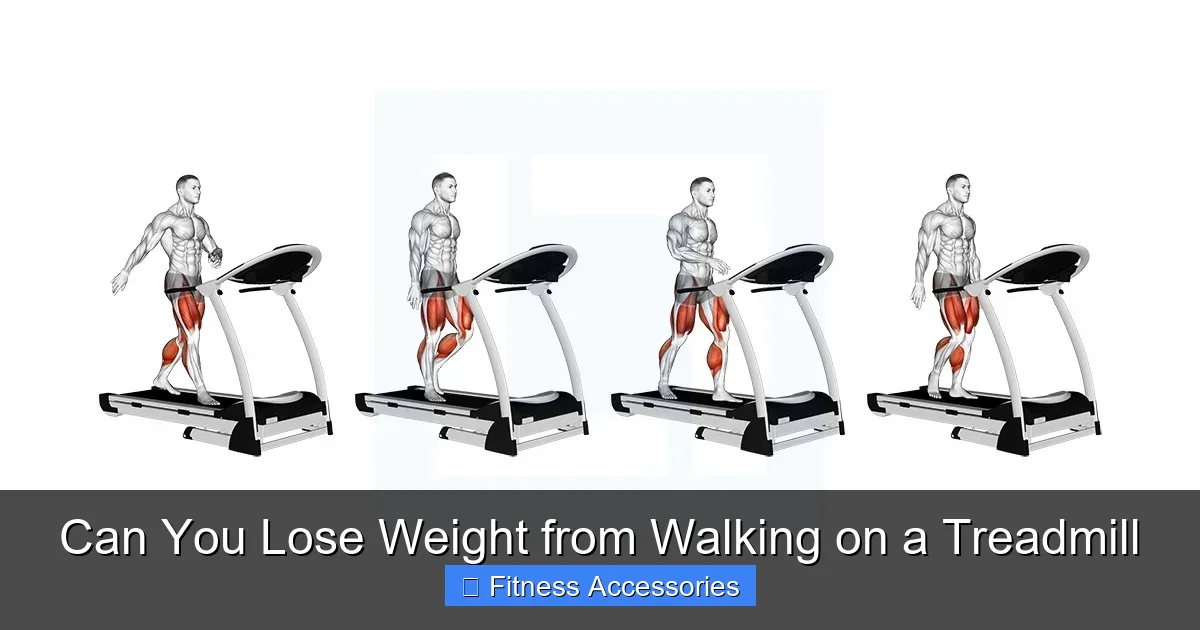
A general rule of thumb: a person weighing 155 pounds burns approximately 150 calories per 30 minutes of walking at a 3.5 mph pace on a flat surface. Increase the speed to 4 mph, and that jumps to about 170 calories. Now, add a 5% incline at the same 3.5 mph, and you’re burning closer to 220 calories in that half-hour. The incline is your secret weapon—it engages more muscle groups (glutes, hamstrings, calves) and dramatically increases the energy demand. Over time, as you build muscle from this inclined walking, your Resting Metabolic Rate (RMR) increases. This means you burn more calories 24/7, even while sleeping, simply because you have more metabolically active muscle tissue.
Crafting the Perfect Weight-Loss Treadmill Workout
Staring at a treadmill console and walking at a steady, leisurely pace for 20 minutes will have minimal impact on the scale. To drive weight loss, you need a strategic plan. Think of your treadmill time as a workout, not just a stroll. Here’s how to structure it for maximum fat-burning efficiency.

Visual guide about Can You Lose Weight from Walking on a Treadmill
Image source: fitnesslume.com
1. The Power of Incline: Your Best Friend
Never underestimate incline. It transforms a simple walk into a full-body strength and cardio session. Start with a 1-2% incline to simulate outdoor walking (which always has tiny variations). As you get comfortable, work up to 3-5% for significant calorie burn. A great beginner workout is the “Pyramid Incline”: Walk for 5 minutes at 0% to warm up. Then, increase incline by 1% every 2 minutes until you reach 4-5%, hold for 2 minutes, then work your way back down. This keeps your body guessing and prevents plateaus.
2. Speed and Interval Training for Metabolic Boost
Steady-state cardio (same pace the whole time) is good, but High-Intensity Interval Training (HIIT) on a treadmill is a game-changer for weight loss. It creates an “afterburn effect” (Excess Post-Exercise Oxygen Consumption or EPOC), where your body continues to burn calories at an elevated rate for hours after your workout. A simple HIIT template: Warm up for 5 minutes at a comfortable pace. Then alternate: 1 minute of very fast walking or light jogging (push yourself to an 8/10 effort) followed by 2 minutes of recovery walking. Repeat this 4-8 times, then cool down. This 20-25 minute session can be more effective for fat loss than a 45-minute steady walk.
3. Time and Frequency: The Golden Rules
For noticeable weight loss, aim for 300 minutes of moderate-intensity cardio per week, as recommended by health authorities. That’s about 60 minutes, 5 days a week. If you’re just starting, begin with 20-30 minutes per session, 3-4 times a week, and build up gradually. Consistency is the single biggest predictor of success. It’s far better to walk 30 minutes, 5 days a week, than to attempt a grueling 90-minute session once and then be too sore to move for a week.
The Non-Negotiable Partner: Your Diet
Here is the cold, hard truth you must accept: You cannot out-exercise a bad diet. Treadmill walking creates the opportunity for weight loss by burning calories, but if you immediately replenish those calories with a large latte and a pastry, you’ve erased your effort. The most successful weight loss comes from the combination of increased activity and improved nutrition. You don’t need to starve yourself. Focus on:
Visual guide about Can You Lose Weight from Walking on a Treadmill
Image source: liftmanual.com
- Protein at Every Meal: Keeps you full, preserves muscle mass during weight loss, and has a higher thermic effect (your body burns more calories digesting it).
- Fiber-Rich Foods: Vegetables, fruits, and whole grains bulk up meals without excessive calories, promoting satiety.
- Mindful Portions: Use smaller plates, be aware of liquid calories (sodas, juices, alcohol), and stop eating when you’re 80% full.
- Hydration: Often, thirst is mistaken for hunger. Drink water throughout the day.
The treadmill is your engine; diet is your steering wheel. You need both to reach your destination.
Common Mistakes That Sabotage Your Treadmill Weight Loss
Many people start strong on the treadmill but see little progress because they fall into these traps:
Relying Solely on the Machine’s Calorie Count
Treadmill calorie estimators are notoriously inaccurate. They use generic formulas based on weight and speed, ignoring individual factors like age, gender, muscle mass, and fitness level. Take those numbers with a huge grain of salt. They’re useful for comparing one workout to another (e.g., “I burned 20% more today than last week”), but not as an absolute truth. Focus on perceived exertion and progressive overload instead.
Doing the Same Workout Every Single Day
Your body is an adaptation machine. If you walk at 3 mph at 2% incline for 30 minutes, three times a week, your body will quickly become efficient at it. It will burn fewer calories for the same effort. This is a plateau. You must progressively overload—add 5 minutes to your walk, increase the incline by 0.5%, add a short burst of faster walking, or try a new workout format like a hill repeat session. Change is the stimulus for continued change.
Neglecting Strength Training
Walking is fantastic cardio, but it’s not a comprehensive strength program. Without resistance training, a portion of the weight you lose will be precious muscle mass, not just fat. Losing muscle slows your metabolism, making future weight loss harder and weight regain easier. Incorporate 2-3 days of full-body strength training (bodyweight squats, lunges, push-ups, dumbbell rows) into your weekly routine. This builds and protects muscle, ensuring the weight you lose is primarily fat.
Realistic Expectations and Long-Term Success
Set your expectations correctly. Safe, sustainable weight loss is typically 0.5 to 2 pounds per week. If you’re consistently creating a 500-calorie daily deficit (through a combination of diet and exercise), you can expect to lose about 1 pound per week. The scale will not move in a straight line. Water retention, hormones, and digestion cause normal fluctuations. Weigh yourself once a week under consistent conditions (same day, same time, same clothes) to track the true trend. Beyond the scale, celebrate non-scale victories: your clothes fitting better, having more energy for your kids, climbing stairs without getting winded, or seeing improved muscle tone in your legs. These are the real markers of success that keep you motivated when the scale stubbornly holds steady for a bit.
The ultimate goal is to build a lifestyle habit. Find ways to make your treadmill time enjoyable: listen to audiobooks, podcasts, or upbeat playlists. Watch your favorite show only while on the treadmill. The easier you make it to show up, the more likely you are to do it for years, not just weeks. Weight loss is the initial prize; lifelong health and vitality are the ultimate reward.
Frequently Asked Questions
How long should I walk on a treadmill each day to lose weight?
For effective weight loss, aim for 45-60 minutes per session, most days of the week. If you’re new, start with 20-30 minutes and gradually increase duration. The total weekly goal is around 300 minutes of moderate activity. Consistency and progressive intensity are more important than a single long, brutal session.
Is walking on a treadmill as effective as walking outdoors for weight loss?
For pure calorie burn at a given speed and incline, they are very similar. The treadmill’s advantage is control and consistency—you can precisely set and maintain your pace and incline regardless of weather. Outdoor walking often involves varied terrain and wind resistance, which can slightly increase effort. The best choice is the one you will do consistently.
Can I lose belly fat specifically by using a treadmill?
You cannot “spot-reduce” fat from your belly by using a treadmill. Weight loss occurs systemically, meaning you lose fat from all over your body in a pattern determined by genetics. However, by creating a calorie deficit through treadmill walking and diet, you will eventually lose belly fat as part of overall fat loss. Incline walking is excellent for strengthening and toning the core and abdominal muscles, which can improve appearance as fat decreases.
How soon will I see weight loss results from treadmill walking?
If you combine regular treadmill walking with a slight calorie deficit, you may notice changes on the scale within 1-2 weeks. However, the most visible changes in body composition (like clothes fitting looser) often become apparent after 3-4 weeks of consistent effort. Patience and consistency are critical; focus on the process, not just the daily number on the scale.
What is the best speed and incline setting for weight loss on a treadmill?
The “best” setting is one that elevates your heart rate into the moderate-intensity zone (roughly 60-70% of your max heart rate). For most people, this is a brisk walk where talking is possible in short sentences but singing is difficult. Start with a 3-4% incline and a speed of 3.0-3.5 mph. Adjust based on your perceived exertion. The key is to challenge yourself beyond a casual stroll.
Is treadmill walking safe for beginners or people with joint issues?
Yes, it is one of the safest and most recommended forms of exercise for beginners and those with joint concerns (like knee or hip arthritis). The treadmill’s cushioned surface and smooth motion drastically reduce impact compared to running or trails. Always start slowly, use the safety clip, and if you have a specific medical condition, consult your doctor before beginning any new exercise program.