Can You Do Barbell Exercises with Dumbbells 2

Yes, you can do many barbell exercises with dumbbells. Swapping a barbell for dumbbells opens up new movement patterns, fixes muscle imbalances, and works well for home gym setups. You can target the same major muscle groups using dumbbell barbell alternatives that deliver serious results. Let us walk you through exactly how to make the switch safely and effectively.
Let us get one thing straight right away. You absolutely can do barbell exercises with dumbbells. Whether you are training at home or just do not have access to a full barbell setup, dumbbells can fill the gap surprisingly well.
The idea might sound too simple to be true. After all, a barbell lets you load hundreds of pounds onto your back. Dumbbells feel light by comparison. But here is the secret most people miss. Barbell exercises with dumbbells work because the movement patterns are the same. Your muscles do not care whether the weight is on a bar or in each hand. They only know tension, range of motion, and effort.
If you have been wondering whether your dumbbell rack can replace a barbell rack, this guide is for you. We will cover every major barbell movement and show you the dumbbell version. You will learn the benefits, the limitations, and the best ways to program these dumbbell barbell alternatives into your routine.
Key Takeaways
- Barbell exercises can be replaced with dumbbells: Most compound and isolation movements have a dumbbell equivalent that trains the same muscles.
- Dumbbells offer more freedom of movement: They allow natural joint paths and help correct left-to-right strength imbalances.
- You do not need a barbell to build strength: A pair of dumbbells can deliver a challenging full body dumbbell workout at home.
- Proper form matters more with dumbbells: Since each arm works independently, stability and control become essential.
- Progressive overload still applies: You can increase reps, sets, or weight to keep making gains with dumbbells alone.
- Some exercises are harder to replicate: Heavy squats and deadlifts may need a barbell for maximum loading, but dumbbell variations still work well for most people.
📑 Table of Contents
- Why Replace Barbell Exercises with Dumbbells
- Upper Body Barbell Alternatives with Dumbbells
- Lower Body Barbell Alternatives with Dumbbells
- Back and Rowing Movements with Dumbbells
- How to Program Dumbbell Replacements Effectively
- Common Mistakes When Doing Barbell Exercises with Dumbbells
- Expert Insights on Dumbbell vs Barbell Training
- Final Thoughts on Doing Barbell Exercises with Dumbbells
Why Replace Barbell Exercises with Dumbbells
There are plenty of good reasons to swap a barbell for dumbbells. Some are practical. Others are purely about training quality. Let us break them down.
Greater Range of Motion
Dumbbells let your joints move naturally. When you do a barbell bench press, the bar forces a fixed path. Your shoulders and elbows must follow the bar. With dumbbells, each arm finds its own groove. This means a deeper stretch at the bottom and a fuller contraction at the top.
Fixing Muscle Imbalances
One huge advantage of barbell exercises with dumbbells is unilateral training. When each arm lifts its own weight, you cannot cheat. Your weaker side gets the same work as your stronger side. Over time, this balances out strength differences that a barbell can hide.
Home Gym Friendly
Not everyone has space for a squat rack and a bench. A pair of adjustable dumbbells takes up a fraction of the room. If you are building a home workout equipment setup, dumbbells give you the most bang for your buck.
For those who want to train with dumbbells exclusively, check out our guide on Can You Do Full Body Workouts With Just Dumbbells. It covers everything you need to know about building a complete routine with dumbbells alone.
Upper Body Barbell Alternatives with Dumbbells
The upper body is where dumbbells really shine. Almost every barbell upper body exercise has a dumbbell counterpart. Let us go through the big ones.
Bench Press to Dumbbell Press
The barbell bench press is a staple. But the dumbbell bench press hits the same chest, shoulders, and triceps. You can set the bench to an incline, decline, or flat position. Each angle changes which part of the chest gets worked the most.
Here is a quick comparison of the two movements:
- Barbell Bench Press: Allows heavier loading, fixed path, easier to spot.
- Dumbbell Bench Press: Greater range of motion, fixes imbalances, more shoulder-friendly.
Overhead Press to Dumbbell Shoulder Press
A barbell overhead press builds serious shoulder mass. But doing it with dumbbells lets each arm work independently. You also get a slight twist at the top that activates the rotator cuff muscles more effectively.
Barbell Rows to Dumbbell Rows
Bent-over rows build a thick back. With a barbell, the movement is straightforward. With dumbbells, you can angle each arm slightly differently to hit the lats from multiple angles. If you want to explore more back exercises, our article on What Are The Best Exercises To Do With Dumbbells has a full breakdown of back-focused movements.
Lower Body Barbell Alternatives with Dumbbells
People often think dumbbells cannot replace a barbell squat or deadlift. That is not true. You can train your legs and hips effectively with dumbbells. You just need to know which variations to use.
Goblet Squats
Hold one dumbbell vertically against your chest and squat. This movement targets your quads, glutes, and core. It is one of the best dumbbell barbell alternatives for leg day. The goblet position keeps your torso upright, which reduces stress on the lower back.
Dumbbell Romanian Deadlifts
Hold a dumbbell in each hand and hinge at the hips. This hits your hamstrings and glutes hard. The movement pattern is almost identical to a barbell Romanian deadlift. The only difference is that each hand holds its own weight.
Bulgarian Split Squats
Hold dumbbells at your sides and place one foot on a bench behind you. This single-leg movement builds strength and balance. It is one of the most underrated exercise substitutions for barbell squats.
For even more lower body ideas, check out our piece on What Exercises Can You Do With A Kettlebell. Many kettlebell movements translate directly to dumbbell training and add variety to your leg workouts.
Back and Rowing Movements with Dumbbells
Your back is one of the largest muscle groups. A barbell row is a great exercise, but dumbbells offer unique benefits for back training.
Single-Arm Dumbbell Rows
Place one knee and hand on a bench. Pull a dumbbell toward your hip with the other arm. This isolates each side of your back and lets you focus on squeezing the shoulder blade. It is one of the best ways to build a wide, thick back without a barbell.
Dumbbell Chest-Supported Rows
Set an incline bench to about 30 to 45 degrees. Lie face down and row the dumbbells. Because your chest is supported, you cannot use momentum. Every rep is pure back work. This is a fantastic substitute for barbell rows, especially if you have lower back issues.
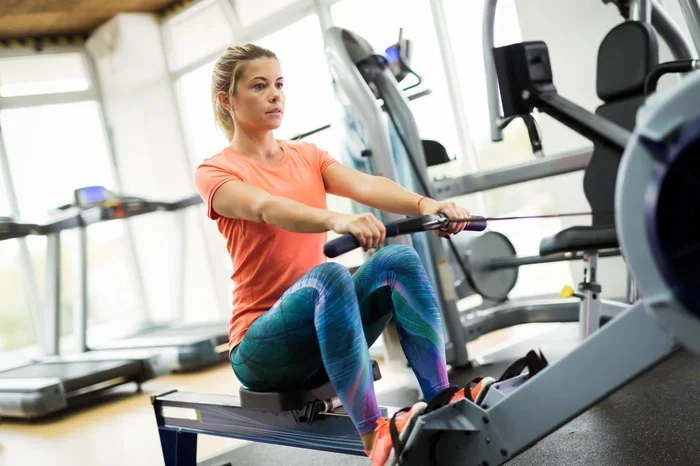
If you enjoy rowing movements, you might also like our article on What Exercises Can You Do On A Rowing Machine for additional back conditioning options.
How to Program Dumbbell Replacements Effectively
Swapping exercises is one thing. Programming them well is another. Here is how to make your dumbbell workout routine actually deliver results.
Match the Rep Range
Barbell exercises often use lower reps because the weight is heavier. Dumbbells are typically lighter, so you may need higher reps to match the stimulus. A good rule of thumb:
- Strength: 3 to 5 sets of 4 to 6 reps with heavy dumbbells
- Hypertrophy: 3 to 4 sets of 8 to 12 reps with moderate dumbbells
- Endurance: 2 to 3 sets of 15 to 20 reps with lighter dumbbells
Progressive Overload Still Matters
Your muscles grow when you challenge them more over time. With dumbbells, you can increase weight, add reps, or add sets. You can also slow down the tempo to make each rep harder. Do not just go through the motions. Every workout should be slightly harder than the last.
Pair Compound and Isolation Movements
Start your session with compound movements like dumbbell presses and rows. Then finish with isolation work like curls and lateral raises. This structure maximizes your effort on the big lifts first.
Common Mistakes When Doing Barbell Exercises with Dumbbells
Making the switch from barbell to dumbbells is not automatic. People make mistakes that reduce the effectiveness or increase injury risk. Here are the ones to watch out for.
Using Too Much Weight
Dumbbells feel lighter, so it is tempting to grab heavy ones. But poor form with heavy dumbbells leads to injury. Start with a weight you can control for every rep. You can always add more next session.
Neglecting Core Stability
When you hold a dumbbell in each hand, your core has to work harder to keep you stable. Many people lean to one side or twist their torso. Keep your core tight and your spine neutral throughout every rep.
Skipping the Mind-Muscle Connection
A barbell can hide lazy muscles. Dumbbells do not. If your mind wanders during a set, you will not get the same muscle activation. Focus on squeezing the target muscle with every single rep.
Expert Insights on Dumbbell vs Barbell Training
We asked experienced trainers about their thoughts on replacing barbell exercises with dumbbells. Here is what they had to say.
Most trainers agree that dumbbells are the better choice for most people. They are safer, more versatile, and easier to use at home. A barbell has its place for lifting very heavy weights, but for general fitness and muscle building, dumbbells get the job done just as well.
One trainer put it simply: “If you can do a barbell exercise, you can almost always do it with dumbbells. The movement might look slightly different, but the muscles being worked are the same.”
The key is to focus on control, full range of motion, and consistent effort. Those principles apply whether you are holding a barbell or a dumbbell.
For more on dumbbell-only training, check out Can You Build A Good Body With Just Dumbbells for a deep dive into building muscle without a barbell.
Final Thoughts on Doing Barbell Exercises with Dumbbells
The bottom line is simple. Can you do barbell exercises with dumbbells? Yes, absolutely. You can train every major muscle group with dumbbells alone. The movements are different, but the results are the same.
Dumbbells give you more freedom, better muscle balance, and a practical way to train at home. They are not perfect for every situation. Sometimes you just need a heavy barbell to push your limits. But for 90 percent of lifters, dumbbells are more than enough.
Start by picking one or two barbell exercises you already do. Find the dumbbell version and try it in your next workout. Pay attention to how the movement feels. Adjust the weight as needed. Within a few weeks, you will wonder why you did not make the switch sooner.
Strength does not come from a specific piece of equipment. It comes from consistent effort, smart programming, and proper form. Whether you use a barbell or dumbbells, the work is what matters. Pick up those dumbbells and get after it.
Frequently Asked Questions
Can I build muscle with dumbbells instead of a barbell?
Yes, you can build muscle with dumbbells alone. The key is progressive overload, which means gradually increasing the weight, reps, or sets over time. Dumbbells can provide enough resistance for muscle growth, especially when you use compound movements like presses, rows, and squats.
Are dumbbell exercises less effective than barbell exercises?
Not at all. Dumbbell exercises can be just as effective. They actually have some advantages, like greater range of motion and better muscle balance. The effectiveness depends on your goals, but for most people, dumbbells deliver excellent results.
Can dumbbells replace a barbell for heavy squats?
Dumbbells can replace a barbell for squats up to a point. Goblet squats and dumbbell front squats work well for moderate weights. However, if your goal is to lift extremely heavy, a barbell squat will allow more load. For most home gym users, dumbbell squats are more than sufficient.
Do I need a spotter when doing dumbbell bench press?
Dumbbell bench pressing is generally safer without a spotter. If the weight gets too heavy, you can simply drop the dumbbells to the sides. This makes it a great option for solo training at home. Just make sure you use a bench that is stable and set at the right height.
How do I know which dumbbell weight to use for barbell alternatives?
Start lighter than you think you need. Dumbbells often feel different from a barbell because each arm carries its own weight. Choose a weight where you can complete all sets with good form. You should be challenged by the last few reps but not struggling to maintain proper technique.
What are the best dumbbell exercises for a full body workout?
The best dumbbell full body exercises include dumbbell squats, dumbbell bench press, dumbbell rows, dumbbell shoulder press, and dumbbell lunges. These movements hit all major muscle groups and can be combined into an efficient full body dumbbell workout. For more ideas, check out our guide on full body workouts with just dumbbells.