Never plug a treadmill into a standard surge protector or power strip, as its high motor current can easily overload and melt these devices, creating a serious fire hazard. Treadmills require a dedicated circuit with a specific outlet, as recommended in your owner’s manual, to ensure safe, stable operation and protect both your equipment and home wiring.
Key Takeaways
- Understanding Can I Plug A Treadmill Into A Surge Protector: Provides essential knowledge for making informed decisions
- Practical applications: Can be applied in various real-world scenarios
- Key benefits: Offers significant advantages when properly implemented
- Important considerations: Requires attention to specific details and best practices
- Future implications: Continues to evolve and impact related fields
📑 Table of Contents
- Can I Plug a Treadmill into a Surge Protector? The Honest Answer You Need
- Why This Question Matters: The Power Behind Your Treadmill
- Decoding the Specs: What Your Treadmill *Actually* Needs
- The Risks of Using the Wrong Protector (And What Can Go Wrong)
- Choosing the Right Surge Protector: A Buyer’s Checklist
- Installation and Safety Tips: Beyond Just Plugging In
- Alternative & Complementary Protection Strategies
- Conclusion: Your Treadmill is an Investment—Protect It Like One
Can I Plug a Treadmill into a Surge Protector? The Honest Answer You Need
Let me tell you about the moment my heart sank. I’d just spent a small fortune on a shiny new treadmill, a glorious piece of machinery that promised to transform my living room into a personal gym. After a weekend of assembly (and a few choice words), it was finally ready. I plugged the massive power cord into the wall outlet, hit the start button, and… nothing. A blank screen. A silent belt. My excitement deflated faster than a whoopee cushion at a library.
After a frantic call to a friend who’s an electrician, the culprit was revealed: my old, flimsy power strip. “You can’t plug something with a motor that big into that,” he said. “You need serious protection. And no, not all surge protectors are created equal for this job.” That stressful Sunday taught me a critical lesson about treadmill power safety that I’m here to share with you. So, can you plug a treadmill into a surge protector? The short answer is: yes, but with absolutely crucial conditions. It’s not a simple yes-or-no question; it’s a “yes, if you do it right” scenario. Getting it wrong can mean fried electronics, a fire hazard, or a very expensive paperweight. Getting it right means peace of mind and a machine that will serve you for years. Let’s dive in.
Why This Question Matters: The Power Behind Your Treadmill
Before we talk about protectors, we need to understand what we’re protecting. Your treadmill isn’t just a fan and a light; it’s a complex electrical appliance with a significant motor, a sophisticated control board, a display computer, and often an incline motor too. This combination draws a lot of power, especially when you’re sprinting uphill. That power draw is measured in amps (amperage), and your treadmill’s manual will list its rated current—often between 15 and 20 amps for home models.

Visual guide about Can I Plug a Treadmill into a Surge Protector
Image source: galvinpower.org
The Two Main Threats to Your Treadmill
Your treadmill’s power supply faces two primary enemies:
- Power Surges and Spikes: These are sudden, brief increases in voltage coming from your home’s electrical grid. They can be caused by lightning (even miles away), utility company grid switching, or the large motors in your own home (like an AC unit or refrigerator) cycling on. A spike of just a few extra volts can literally melt the microscopic circuits on your treadmill’s control board, leading to a costly repair or total loss.
- Overloads and Circuit Strain: This is the more common, everyday threat. It happens when you plug too many things into the same circuit or use a power strip that can’t handle the treadmill’s constant amperage draw. The result? The circuit breaker trips, or worse, the wiring and components in the power strip overheat, becoming a fire risk.
This is where a proper surge protector comes in. It’s not just a fancy extension cord; it’s a defensive shield. But as we’ll see, the shield has to be strong enough for the battle.
Decoding the Specs: What Your Treadmill *Actually* Needs
This is the most important technical section. Skip it, and you risk buying the wrong product. Your treadmill’s power requirements are non-negotiable. You must find this information in your owner’s manual, usually on a sticker on the motor housing, or on the manufacturer’s website. Look for these key specs:

Visual guide about Can I Plug a Treadmill into a Surge Protector
Image source: galvinpower.org
- Voltage (V): Almost all home treadmills in North America run on 120V. (Commercial 220V models are a different beast entirely).
- Amperage (A) or Rated Current: This is the continuous current the treadmill draws during operation. Find a number like 15A, 16A, or 18A. This is your minimum requirement.
- Wattage (W): Sometimes listed as “Power Consumption.” Amps x Volts = Watts. A 15A treadmill at 120V uses 1,800 watts. This gives you another data point.
The Magic Numbers: Joules and Clamping Voltage
When shopping for a surge protector, two specs are king:
- Joule Rating: This is the energy absorption capacity. Think of it as the size of the protector’s “shock absorber.” A higher joule rating means more protection and a longer lifespan for the device. For a treadmill, you should not consider anything under 2,000 joules. Aim for 3,000 joules or more for serious, long-term protection. A cheap 500-joule power strip is for your lamp and phone charger, not your treadmill.
- Clamping Voltage (V): This is the voltage level at which the surge protector actually kicks in and diverts the excess energy. Lower is better. Look for a clamping voltage of 400 volts or less, with 330V being excellent. This means it reacts quickly to even small, damaging surges.
Example: Let’s say your treadmill manual says 15A, 120V, 1,800W. You need a surge protector rated for at least 15A (or 1,800W) on its circuit, with a joule rating of 2,000+. A protector rated for only 13A or 1,500W is a no-go, even if the joules are high. It will overheat and fail.
The Risks of Using the Wrong Protector (And What Can Go Wrong)
Using an inadequate power strip isn’t just inconvenient; it’s dangerous. Here’s what’s at stake:
Visual guide about Can I Plug a Treadmill into a Surge Protector
Image source: handymanhowto.com
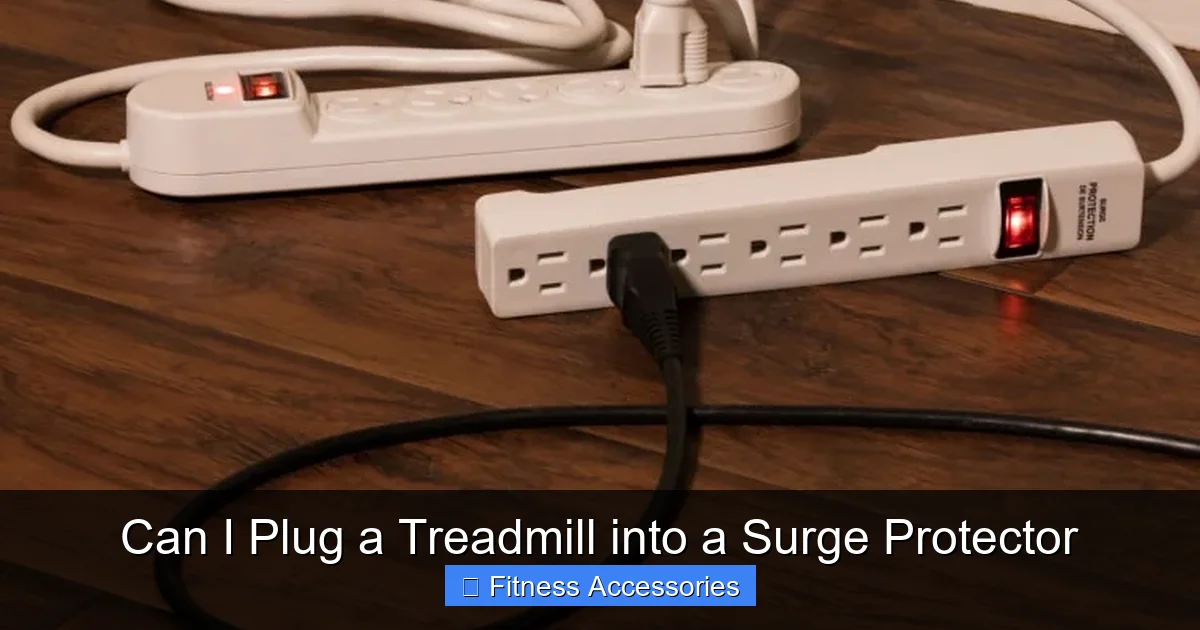
- Fire Hazard: This is the scariest and most real risk. An underrated power strip or extension cord can overheat under the treadmill’s constant load. The plastic housing can melt, and the internal wiring can ignite surrounding materials like carpet or drywall. I’ve read far too many forum posts where users smelled burning plastic and rushed to unplug their machine.
- Voided Warranty: Read your treadmill’s warranty fine print. Almost every manufacturer states that damage caused by improper power supply—including using a standard power strip or extension cord—voids the warranty. You could be on the hook for a $500+ control board replacement because you saved $20 on a proper protector.
- Machine Damage: Even without a catastrophic surge, a poor-quality protector can allow “transient” voltage fluctuations to pass through. This can slowly degrade electronic components, leading to flickering displays, error codes, and premature motor failure.
- Tripped Breakers: Using a standard 15-amp circuit with a 15-amp treadmill leaves no room for anything else on that circuit (a lamp, TV, fan). The moment you add another load, the breaker trips mid-workout. Annoying and disruptive.
The “Extension Cord” Trap
Let’s be clear: a standard, cheap extension cord is the worst possible choice. They are not designed for continuous, high-amperage loads. The voltage drop over distance can strain your treadmill’s motor, causing it to overheat. The cord itself can become dangerously hot. If you must use an extension cord (e.g., the outlet is 15 feet away), it must be a heavy-duty, 14-gauge (or thicker), 15-amp rated cord, and as short as possible. But the best practice is to have a dedicated, properly installed outlet near your treadmill’s location.
Choosing the Right Surge Protector: A Buyer’s Checklist
Armed with your treadmill’s amperage rating, go shopping with this checklist. Look for these features on the packaging or product details:
- Amperage/Wattage Rating: Must meet or exceed your treadmill’s rating (e.g., 15A/1800W or 20A/2400W). This is the single most important spec.
- High Joule Rating: Minimum 2,000 joules. 3,000-4,000+ is the sweet spot for a major appliance.
- Low Clamping Voltage: 400V or less (330V is best).
- UL or ETL Certification: This means it’s been independently tested for safety standards. Don’t buy anything without it.
- Number of Outlets & Spacing: Treadmills have bulky plugs. Ensure the protector has widely spaced outlets so you can plug it in without blocking the next socket.
- Cord Length & Gauge: A 6-foot cord is standard. The cord should be heavy-duty (14-gauge is good for 15A, 12-gauge for 20A). A thin, flimsy cord is a red flag.
- Condition Monitoring: Some higher-end protectors have an LED light that shows protection is active. Some even have a button to test it. This is a useful feature.
- Equipment Warranty: Many reputable brands offer a connected equipment warranty (e.g., “We’ll replace your treadmill up to $X,XXX if it’s damaged while connected”). Read the terms. This is a sign of confidence in the product.
What to Avoid at All Costs
- Basic Power Strips: The $5, 6-outlet, 1875W (but 15A max) strips from the dollar store or office supply aisle. They have negligible joule ratings and are not built for continuous motor loads.
- “Surge Suppressors” with Low Joules: Anything under 1,000 joules is essentially a placebo for a treadmill.
- “Smart” or USB-Infused Strips: While convenient for charging phones, these often have their electronics and USB ports drawing a tiny bit of power, and their surge components are usually an afterthought. Stick to a simple, robust, dedicated surge protector for the treadmill.
- Used or Unknown Brands: You don’t know the age or condition of the components. The MOVs (Metal Oxide Varistors—the parts that absorb surges) degrade over time and with each surge event. Buy new from a reputable brand.
Installation and Safety Tips: Beyond Just Plugging In
You’ve got the right protector. Now, install it correctly.
- Direct Wall Connection: Plug the surge protector directly into a dedicated, properly grounded wall outlet. Do not plug it into another power strip or extension cord. This creates a “daisy chain” that is a major fire code violation and overload risk.
- Dedicated Circuit is Ideal: The ultimate safety setup is a dedicated 20-amp circuit for your treadmill, with nothing else on it. This eliminates overload tripping completely. If you’re installing a dedicated outlet, have a licensed electrician do it.
- Location, Location, Location: Place the surge protector on a non-flammable surface (not on a shaggy rug). Ensure the cord isn’t pinched under the treadmill or legs. Keep it away from the treadmill’s moving belt and ventilation areas.
- Regular Inspection: Every few months, feel the surge protector and its cord during a workout. It should be cool or slightly warm, not hot. Look for any discoloration, cracking, or a burnt smell. If you see or feel anything unusual, unplug it immediately and replace it.
- Replace After a Major Surge: If you know your area experienced a major lightning storm or power event, and your treadmill is fine, the surge protector may have sacrificed itself. The internal components could be damaged and less effective. Replace it.
The “What About My TV and Sound System?” Question
Many people want to plug their entertainment center into the same protector as the treadmill. This is generally a bad idea. The treadmill’s motor startup can cause a brief but significant inrush current that might trip the protector’s internal breaker or cause a nuisance trip on your home circuit. The safest practice is to have the treadmill on its own dedicated surge protector (or circuit) and your AV gear on a separate one, or better yet, on a different circuit altogether.
Alternative & Complementary Protection Strategies
A quality surge protector is your first and most important line of defense, but it’s not the only tool in the shed.
- Whole-House Surge Protector: This is a device installed at your main electrical panel by a licensed electrician. It stops large surges at the source, before they enter your home’s wiring. It protects everything—your fridge, HVAC, and yes, your treadmill. It’s the gold standard for comprehensive protection and complements a point-of-use protector. The point-of-use handles the smaller, residual surges that get through.
- Uninterruptible Power Supply (UPS):strong>: A UPS with a built-in surge protector and battery backup is another option. It can provide clean power and keep your treadmill’s computer running for a few seconds during a brief outage, allowing for a safe shutdown. However, you must get a “double-conversion” or “online” UPS that can handle the treadmill’s high power demand and motor start-up. Most standard office UPS units will be overwhelmed and fail. This is a more expensive, specialized solution.
- Simple Habit: During severe electrical storms, the ultimate protection is to unplug the treadmill’s power cord from the wall. No surge protector is 100% against a direct lightning strike. This is the only 100% effective method during extreme weather.
Data Table: Comparing Surge Protector Types for Treadmill Use
| Feature | Basic Power Strip | Basic “Surge” Strip | Heavy-Duty Appliance Protector | Whole-House Protector |
|---|---|---|---|---|
| Typical Joule Rating | N/A (None) | 300 – 900 joules | 2,000 – 4,400+ joules | N/A (Panel device) |
| Typical Clamping Voltage | N/A | 400V – 600V+ | 330V – 400V | ~600V (First stage) |
| Amperage Rating | 15A (often not listed) | 15A | 15A or 20A | N/A (Panel rated) |
| Best For Treadmill? | NO | NO | YES | YES (as complement) |
| Key Limitation | Zero surge protection, fire risk | Insufficient joules, slow reaction | Must be correctly sized for treadmill amps | Does not stop all surges; needs point-of-use |
Conclusion: Your Treadmill is an Investment—Protect It Like One
So, can you plug a treadmill into a surge protector? After all this, the definitive answer is: Yes, you must, and it must be the right one. Your treadmill is a significant financial investment in your health and home. It’s also a powerful electrical appliance that deserves respect. That cheap, decorative power strip from three years ago? It’s not up to the task. It’s a liability.
The path forward is clear. First, find your treadmill’s amperage rating. Then, purchase a UL-listed surge protector with a joule rating of at least 2,000 (3,000+ preferred), a clamping voltage of 400V or less, and an amperage rating that meets or exceeds your machine’s needs. Plug it into a properly grounded, ideally dedicated outlet. Consider a whole-house protector for layered defense. And during violent storms, the old-fashioned unplug is still the champion.
Don’t wait for a burnt smell or a tripped breaker to learn this lesson. A proper surge protector costs a fraction of a treadmill repair bill and offers immeasurable peace of mind. You’ve worked hard for your fitness goals; don’t let an avoidable electrical issue sideline them. Protect your machine, protect your home, and protect your investment. Now, go log those miles with confidence.
Frequently Asked Questions
Can I plug a treadmill into a surge protector?
Generally, it’s not recommended. Treadmills have powerful motors and draw significant current, which can overload a standard surge protector, potentially causing it to fail or creating a fire hazard. For safety and to protect your equipment, plug your treadmill directly into a dedicated wall outlet on its own circuit.
Is a power strip the same as a surge protector for a treadmill?
No, a basic power strip is just an extension cord with multiple outlets and offers no protection. A true surge protector has components to absorb voltage spikes. However, even a heavy-duty surge protector is usually not suitable for a treadmill’s high, continuous amperage draw; a direct wall connection is safest.
Why shouldn’t I use an extension cord with my treadmill?
Using an extension cord with a treadmill is strongly discouraged by manufacturers. Extension cords can cause a voltage drop, damaging the treadmill’s motor and electronics, and pose a serious tripping and fire risk due to overheating from the high current load. The treadmill’s manual will almost always advise against it.
What electrical requirements does a treadmill have?
Treadmills typically require a dedicated 15- or 20-amp circuit with a standard 3-prong grounded outlet. They are not designed for shared outlets or power strips. Always consult your treadmill’s manual for the specific voltage and amperage requirements to ensure your home’s wiring can support it safely.
What if my treadmill is far from a suitable outlet?
If the treadmill must be placed far from a properly rated, dedicated outlet, the correct solution is to have a licensed electrician install a new outlet at the treadmill’s location. Do not attempt to bridge the gap with a long extension cord or a surge protector, as this is a major safety violation.
Are there any surge protectors rated for treadmills or large appliances?
Some heavy-duty surge protectors are rated for high-amperage appliances like air conditioners or refrigerators, but treadmills are a unique load due to their motor startup surge. It is exceptionally rare to find a portable surge protector explicitly approved for treadmill use. The manufacturer’s warranty is often voided if not plugged directly into a wall outlet.