Can I Lose Weight Walking on a Treadmill Everyday
Walking on a treadmill every day is a highly effective, accessible, and sustainable strategy for weight loss. By creating a consistent calorie deficit through daily movement, you can steadily shed pounds while improving cardiovascular health. Success hinges on combining your walks with a balanced diet, gradually increasing intensity with incline or speed, and prioritizing long-term habit formation over extreme efforts. This simple habit, when done correctly, transforms your body composition and overall fitness.
Key Takeaways
- Calorie Deficit is King: Weight loss fundamentally requires burning more calories than you consume. Daily treadmill walking reliably contributes to this deficit.
- Consistency Trumps Intensity: A moderate 30-60 minute walk every day is far more effective for sustainable weight loss than occasional, grueling sessions you might skip.
- Incline is Your Secret Weapon: Adding incline dramatically increases calorie burn, engages more muscle groups (glutes, hamstrings, calves), and boosts post-workout metabolism.
- Diet is Non-Negotiable: You cannot out-walk a poor diet. Treadmill walking works best when paired with mindful nutrition to control calorie intake.
- Sustainability Beats Speed: The best treadmill routine is one you enjoy and can maintain for months. Focus on habit formation, not just the number on the scale.
- It Preserves Lean Muscle: Unlike aggressive dieting alone, walking helps preserve calorie-burning muscle mass while you lose fat, leading to a healthier body composition.
- Safety and Recovery Matter: Walking daily is low-impact, but listening to your body, wearing proper shoes, and incorporating rest or active recovery prevents injury and burnout.
📑 Table of Contents
- How Treadmill Walking Works for Weight Loss: The Science of Steady Progress
- Crafting Your Daily Treadmill Walking Routine for Maximum Results
- Maximizing Fat Burn: Beyond the Basic Walk
- The Critical Role of Nutrition: You Can’t Out-Walk a Bad Diet
- Overcoming Plateaus and Staying Motivated for the Long Haul
- Safety, Form, and Sustainability: Walking for Life
- The Final Verdict: Your Daily Path to a Healthier Weight
How Treadmill Walking Works for Weight Loss: The Science of Steady Progress
Let’s start with the most important truth: yes, you absolutely can lose weight by walking on a treadmill every day. It might not sound as exciting or intense as high-intensity interval training (HIIT) or heavy weightlifting, but its power lies in its simplicity, accessibility, and incredible sustainability. At its core, weight loss is about energy balance—a calorie deficit. Your body burns a certain number of calories each day just to exist (your Basal Metabolic Rate or BMR). Everything you do, from breathing to thinking to walking, adds to that total (your Total Daily Energy Expenditure or TDEE). When you consume fewer calories than your TDEE, your body taps into stored fat for fuel, and you lose weight.
Walking on a treadmill is a fantastic tool to increase your TDEE. A 155-pound person burns roughly 150 calories walking at a moderate 3.5 mph pace for 30 minutes. That number goes up with speed, weight, and—most importantly—incline. But the real magic isn’t just in the calories burned during the walk. Consistent daily movement improves your cardiovascular health, enhances insulin sensitivity (helping your body manage blood sugar and store less fat), and can even boost your Resting Metabolic Rate (RMR) slightly over time as you build leg muscle. It’s a compound effect: the daily walk, the metabolic improvements, and the habit of prioritizing movement all work together to create a powerful weight-loss engine.
Debunking the “Not Intense Enough” Myth
Many people dismiss walking because it feels “easy.” But “easy” is precisely why it works for so many. A grueling workout you dread is one you’ll eventually skip. A pleasant, doable walk you can fit into your morning or evening routine? That’s a habit you’ll keep. Furthermore, walking is low-impact, placing minimal stress on your joints compared to running or jumping exercises. This makes it ideal for beginners, those with joint issues, or anyone carrying extra weight who needs to start gently. The goal isn’t to punish your body; it’s to persuade it to change by creating a reliable, daily energy drain.
Crafting Your Daily Treadmill Walking Routine for Maximum Results
So, you’ve decided to commit. What does a “daily treadmill walking for weight loss” routine actually look like? It’s not one-size-fits-all, but some universal principles apply. The first rule is to start where you are. If you’re currently inactive, your “day one” might be a 15-minute walk at a slow, comfortable pace. That’s a victory. The goal is consistency, so the routine must be sustainable.

Visual guide about Can I Lose Weight Walking on a Treadmill Everyday
Image source: 3gcardio.com
The Foundation: Time, Frequency, and Pace
For weight loss, aim for 30 to 60 minutes of brisk walking most days of the week. “Brisk” means your heart rate is elevated, you’re breathing deeper but can still hold a conversation (the “talk test”). If you’re new, build up to this duration gradually—add 5 minutes per session each week. The “every day” part is powerful because it builds an unbreakable habit. However, if you feel excessive fatigue or soreness, an “active recovery” day (a very slow 20-minute stroll) is better than complete rest. True rest days are still important 1-2 times a week for muscle repair, especially if you incorporate hills or intervals.
Sample Weekly Schedule for a Beginner
- Monday: 30 min walk, flat, moderate pace (3.0-3.5 mph)
- Tuesday: 35 min walk, add 2% incline for 5 min in the middle
- Wednesday: 30 min walk, flat, focus on arm swing and posture
- Thursday: 40 min walk, steady pace, try a podcast or show
- Friday: 35 min walk, include 4x 2-minute intervals at a slightly faster pace
- Saturday: 45 min “long walk” at a comfortable, conversational pace
- Sunday: 20-25 min very easy “recovery walk” or complete rest
This schedule builds duration and intensity gently while preventing burnout.
Maximizing Fat Burn: Beyond the Basic Walk
Once you’ve established a daily walking habit, you can strategically tweak your treadmill sessions to maximize calorie and fat burn. The two most potent tools in your arsenal are incline and intervals.

Visual guide about Can I Lose Weight Walking on a Treadmill Everyday
Image source: i.ytimg.com
The Incline Advantage: Climbing Without the Impact
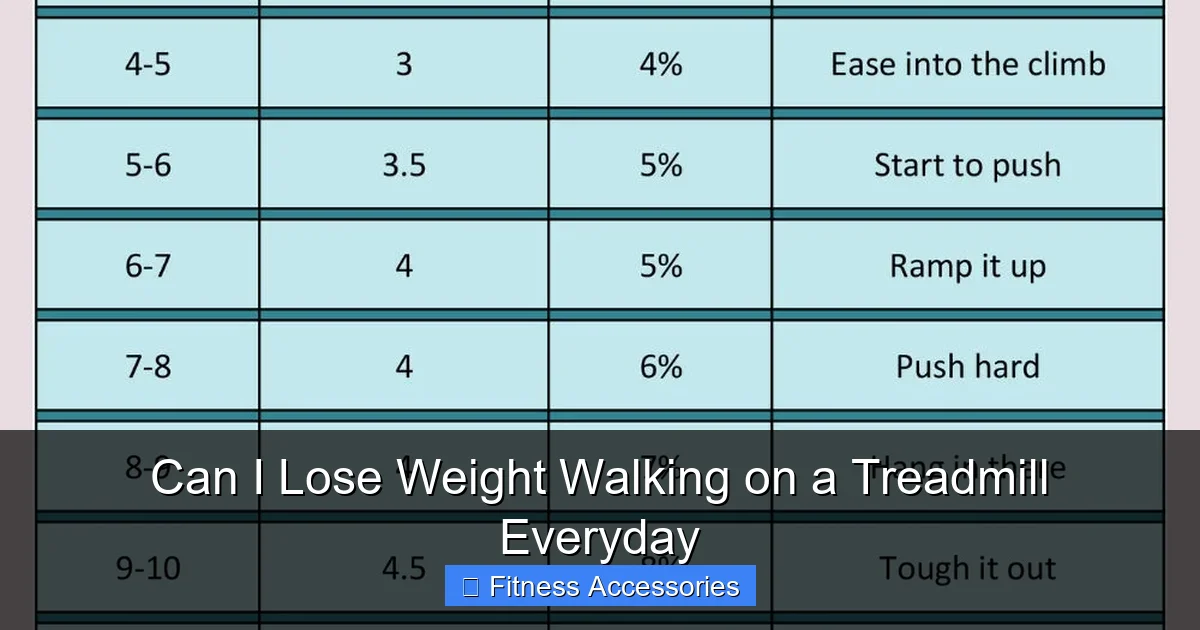
Walking on an incline is a game-changer. It mimics walking uphill, recruiting your glutes, hamstrings, and calves much more than flat walking. This increased muscle engagement burns more calories per minute. A study from the Journal of Applied Physiology found that walking at a 5% incline increased calorie expenditure by about 50% compared to walking on a flat surface at the same speed. Start with just 1-2% incline. As you get stronger, gradually increase it. A powerful workout is “pyramid intervals”: walk for 2 minutes at 3% incline, then 2 minutes at 4%, then 2 minutes at 5%, then work your way back down. Your legs will feel the difference immediately.
Interval Training on the Treadmill: Spike Your Metabolism
Steady-state walking is great, but adding short bursts of higher intensity can amplify your results. This is called High-Intensity Interval Training (HIIT) adapted for walking. After a 5-minute warm-up, try this: 1 minute of fast walking (or a light jog if you’re able) followed by 2 minutes of recovery at your normal pace. Repeat 6-8 times. This pattern burns a significant number of calories during the session and creates an “afterburn effect” (Excess Post-exercise Oxygen Consumption or EPOC), where your body continues to burn extra calories for hours afterward as it recovers. It also improves cardiovascular fitness more quickly than steady walking alone.
The Critical Role of Nutrition: You Can’t Out-Walk a Bad Diet
This is the section no one wants to read but everyone needs to internalize. Treadmill walking creates the opportunity for weight loss, but nutrition determines the outcome. It is shockingly easy to consume back all the calories you burned with a single “reward” snack. A 30-minute brisk walk might burn 200-300 calories. That’s a large coffee with syrup, a granola bar, or a small pastry. To see the scale move, you must maintain a calorie deficit.

Visual guide about Can I Lose Weight Walking on a Treadmill Everyday
Image source: t7fit.com
Practical Nutrition Strategies to Pair with Your Walks
Don’t think of “dieting.” Think of “fueling.” First, prioritize protein. Protein increases satiety (feeling full) and has a high thermic effect, meaning your body burns more calories digesting it. Include a source of lean protein (chicken, fish, tofu, eggs, Greek yogurt) with every meal. Second, focus on fiber from vegetables, fruits, and whole grains. These foods are low in calories but high in volume and nutrients, keeping you satisfied. Third, be mindful of liquid calories. Sugary drinks, specialty coffees, and even large amounts of juice can sabotage your deficit. Finally, practice portion awareness. Using a smaller plate, pre-portioning snacks, and eating slowly can prevent unconscious overeating. Your daily walk is the perfect time to plan your next meal or listen a podcast about healthy eating.
Hydration and Sleep: The Unsung Heroes
Often overlooked, hydration and sleep are pillars of weight loss success. Dehydration can be mistaken for hunger and reduces exercise performance. Drink water throughout the day, and consider a glass before your walk. Similarly, poor sleep disrupts hunger hormones (increasing ghrelin, which stimulates appetite, and decreasing leptin, which signals fullness) and raises cortisol, a stress hormone that can promote fat storage, especially around the belly. Aim for 7-9 hours of quality sleep per night to support your treadmill efforts.
Overcoming Plateaus and Staying Motivated for the Long Haul
If you walk daily and eat well but the scale hasn’t budged for 2-3 weeks, you’ve hit a plateau. This is a normal, expected part of the process. Your body has adapted. The key is to confuse it.
Progressive Overload: The Principle of Continuous Improvement
In fitness, “progressive overload” means gradually increasing the demand on your body. For your treadmill walking, this means you must slowly and systematically make your walks more challenging. You can do this by:
- Increasing Duration: Add 5 minutes to your walk once a week.
- Increasing Speed: Push your “brisk” pace up by 0.1-0.2 mph.
- Increasing Incline: Add 0.5-1% to your incline intervals.
- Adding Frequency: If you were walking 5 days, try 6.
Change only one variable at a time to avoid injury. This continuous challenge forces your body to keep adapting and burning calories.
Combating Boredom and Building an Unbreakable Habit
Motivation fades; habit is everything. To make daily walking non-negotiable:
- Schedule It: Block the time in your calendar like a meeting.
- Entertain Yourself: Create a “walking only” playlist, podcast queue, or audiobook. The show is your reward for walking.
- Change the Scenery: If you have a treadmill at home, place it by a window. Use a virtual walking app (like Zwift, iFit, or even YouTube scenic walks) to simulate hiking in the Swiss Alps or strolling through Paris.
- Track Your Progress: Use a fitness tracker or app to log miles, pace, and calories. Seeing a chain of consecutive days is psychologically powerful. Don’t break the chain.
- Focus on Non-Scale Victories (NSVs): Celebrate the things the scale doesn’t show: better sleep, more energy, clothes fitting looser, walking up stairs without getting winded, a clearer mind.
Safety, Form, and Sustainability: Walking for Life
Walking is one of the safest forms of exercise, but proper form and listening to your body are crucial for long-term success, especially when doing it daily.
Perfect Your Walking Form on the Treadmill
Good form prevents injury and makes walking more efficient. Stand tall with your head up, eyes looking forward (not down at your feet). Engage your core gently—imagine you’re about to be lightly punched in the stomach. Keep your shoulders relaxed and down, and bend your arms at 90 degrees, swinging them naturally from the shoulder (not your elbows). Land on your mid-foot and roll through to your toe. Avoid overstriding (reaching too far with your front foot). Let the treadmill belt come to you. Proper posture reduces strain on your lower back and knees.
Footwear and Treadmill Settings Matter
Worn-out shoes are the #1 cause of walking injuries. Invest in a good pair of walking or running shoes fitted to your gait. Replace them every 300-500 miles. On the treadmill, avoid holding the handrails unless for balance. Holding on reduces the work your legs and core do, cutting calorie burn and altering your natural gait. Use the safety clip—it will stop the belt if you fall. Start and stop the belt slowly. Never jump on or off a moving belt.
When to Take a True Rest Day
While daily walking is ideal, “active recovery” (a very easy walk) is different from “rest.” True rest days are vital for muscle repair and preventing overuse injuries like shin splints or tendinitis. Take a full rest day if you experience sharp, persistent pain (not muscle soreness), extreme fatigue that doesn’t improve with a light walk, or signs of illness. It’s better to miss one day than to be sidelined for weeks with an injury.
The Final Verdict: Your Daily Path to a Healthier Weight
Walking on a treadmill every day is not just a viable weight-loss strategy; for many, it’s the optimal strategy. It removes barriers: no gym membership required if you have a home treadmill (or can use one at a community center), it’s not weather-dependent, it’s low-impact, and it’s scalable to any fitness level. The weight loss will be steady and sustainable, often in the range of 1-2 pounds per week when combined with a moderate calorie deficit. This pace is more likely to be maintained long-term, preventing the dreaded “yo-yo” effect of rapid regain after extreme diets.
Your journey begins with a single step—literally. Start with a manageable 15-minute walk tomorrow. Focus on showing up. Then, gradually build your time, experiment with incline, and pair it with smarter food choices. Track your progress, celebrate the small wins, and remember that this is about transforming your health, not just a number on a scale. The person who walks for 30 minutes a day, 365 days a year, will inevitably see profound changes in their body, mind, and overall well-being. That person can be you. Lace up, press start, and start walking your way to a healthier weight.
Frequently Asked Questions
How long should I walk on a treadmill each day to see weight loss results?
Aim for 30 to 60 minutes of brisk walking most days. Consistency is more important than occasional long sessions. Start with 20-30 minutes if you’re new and gradually increase duration as your fitness improves.
Does walking on an incline make a significant difference for weight loss?
Yes, absolutely. Walking on an incline increases calorie burn by 50% or more compared to flat walking at the same speed. It also builds more leg muscle, which boosts your resting metabolism over time. Even a 1-2% incline makes a meaningful difference.
Is it safe and effective to walk on a treadmill every single day?
For most people, daily walking is safe and highly effective due to its low-impact nature. However, it’s wise to include 1-2 days of “active recovery” (very easy walking) or full rest to allow for muscle repair and prevent overuse injuries. Listen to your body.
What speed should I walk at on the treadmill to lose weight?
Aim for a “brisk” pace where you are breathing deeply but can still talk in full sentences (the talk test). For most, this is between 3.0 and 4.0 mph. The key is sustained effort, not race-walking. Increase speed gradually as your fitness improves.
Can treadmill walking specifically target belly fat?
No exercise can “spot-reduce” fat from a specific area. However, consistent cardio like treadmill walking, combined with a calorie-controlled diet, will reduce overall body fat, including visceral belly fat, which is the most dangerous type. Patience and consistency are key.
Do I still need to change my diet if I walk on a treadmill every day?
Yes, diet is absolutely essential. You cannot create a meaningful calorie deficit through walking alone if your diet is high in calories. Pair your daily walks with a balanced diet rich in protein and fiber to control hunger and ensure the weight you lose is fat, not muscle.