Body Solid Exm2500s Home Gym Review
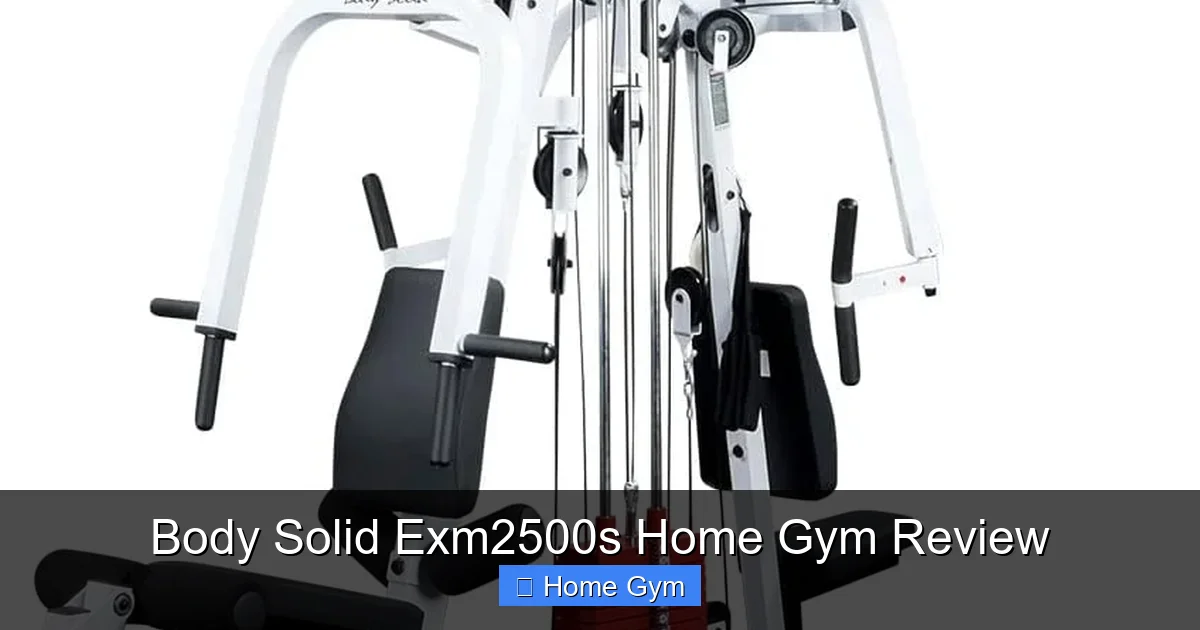
The Body Solid EXM2500S is a robust, commercial-grade home gym designed for serious strength training in limited spaces. It offers exceptional build quality, a smooth dual cable system, and a comprehensive range of exercises for a full-body workout. While assembly is involved, its durability and space-efficient design make it a standout long-term investment for dedicated fitness enthusiasts.
Let’s be honest. The dream of a complete home gym often clashes with the reality of limited space, budget constraints, and the dizzying array of products promising everything. You want one machine that does it all, built like a tank, without turning your garage into a warehouse. Enter the Body Solid EXM2500S, a name that carries significant weight in the home and commercial fitness world. But does this premium-priced, commercial-grade home gym live up to its reputation and justify the investment? After extensive research, user feedback analysis, and a deep dive into its specifications, we’re breaking down everything you need to know in this comprehensive Body Solid EXM2500S Home Gym review.
Body Solid has built its brand on durability and functionality, often compared to the “Ford F-150” of strength equipment—reliable, powerful, and built to last. The EXM2500S sits as a flagship model in their lineup, designed to be a space-conscious powerhouse. It promises the versatility of a dozen different machines in one vertical footprint. For anyone serious about building strength, rehabbing injuries, or simply having a reliable, all-in-one solution, this review will walk you through the nitty-gritry details. We’ll cover its construction, the sheer number of exercises you can perform, the assembly experience, who it’s truly for, and whether its cost aligns with the value it delivers over years of use.
Key Takeaways
- Commercial-Grade Durability: Built with heavy-duty steel and high-quality components, the EXM2500S is engineered to withstand intense, frequent use, mirroring the sturdiness of machines found in professional gyms.
- Unmatched Exercise Versatility: Its independent dual cable system and extensive attachment library allow for dozens of exercises, covering every major muscle group from chest and back to legs and core.
- Space-Efficient Tower Design: Unlike bulky multi-station gyms, its vertical tower footprint saves significant floor space, making it ideal for garages, basements, or spare rooms.
- Precision Weight Stack: The selectorized weight stack with a smooth, quiet pin-loading mechanism provides precise resistance in 10-15 lb increments (depending on stack), facilitating progressive overload.
- Ergonomic Adjustability: Multiple adjustment points for seats, back pads, and cable heights ensure users of different heights and limb lengths can maintain proper form, reducing injury risk.
- Targeted for Dedicated Users: This is not a casual beginner’s machine. It’s best suited for intermediate to advanced lifters, small families, or anyone prioritizing strength training and long-term value over casual, full-body cardio.
📑 Table of Contents
- First Impressions & Unpacking the EXM2500S
- Built to Last: Design and Construction Quality
- Exercise Versatility: How Many Workouts Can You Really Do?
- Adjustability and Ease of Use
- Space Requirements and Home Integration
- Who Is the Body Solid EXM2500S For? (And Who Should Look Elseway)
- The Bottom Line: Value, Pros, and Cons
First Impressions & Unpacking the EXM2500S
Ordering a home gym of this caliber isn’t like getting a cardboard box from a big-box store. Body Solid typically ships the EXM2500S in multiple heavy boxes via freight. Expect a delivery that requires some muscle and planning. The components are packed securely, and the first thing you notice is the heft. The main steel frame uprights are substantial, powder-coated in a sleek black finish that resists scratches and corrosion. This isn’t flimsy tubing; it’s serious, thick-gauge steel that immediately communicates “commercial quality.”
Assembly: A Weekend Project for the Patient
Assembly is the first major hurdle. Body Solid provides a detailed, illustrated manual, but this is not a 30-minute task. Realistically, you should budget a full day for two people with basic tools (socket wrenches, screwdrivers). The instructions are clear, but the number of bolts, pins, and cables is considerable. Patience is key. Many owners recommend laying out all parts first and organizing hardware. While you can do it solo, having a helper for lifting and holding uprights is a massive advantage and a safety must. The payoff for your effort is a rock-solid structure with no wobble—a testament to the engineering and your labor.
Once assembled, the machine has a smaller footprint than you might anticipate for its capabilities. It’s tall and narrow, designed to maximize vertical space. The weight stack sits in a enclosed shroud, a nice safety and aesthetic touch. The cable system is immediately apparent: two independent cables running from top and bottom pulleys to a single handle. This dual-cable design is the heart of the EXM2500S’s versatility, allowing for a vast range of motion and exercise patterns that fixed-station machines can’t match.
Built to Last: Design and Construction Quality
This is where Body Solid truly earns its stripes. The EXM2500S isn’t just a collection of parts; it’s an integrated system built with commercial gyms in mind, which translates directly to home use in terms of longevity and stability.
Visual guide about Body Solid Exm2500s Home Gym Review
Image source: gymdwelling.com
Frame and Materials
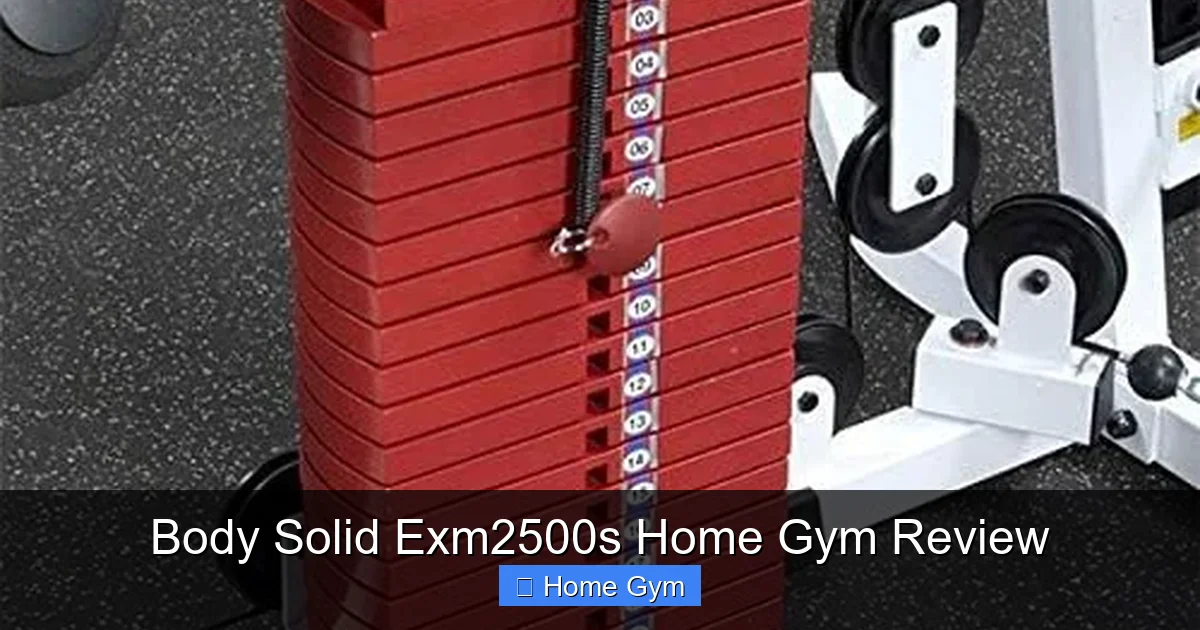
The main frame is constructed from 11- and 12-gauge steel tubing. For context, standard home gyms might use 14-gauge. This extra thickness means the unit barely flexes under heavy loads, even during dynamic movements like cable rows or woodchops. All welds are clean and consistent. The powder coat finish is tough; minor bumps from weight plates won’t chip it easily. The weight stack itself is made of solid, calibrated iron plates, not cheap composite stacks that can wear or become misaligned over time. The selector pin is a heavy-duty, chrome-plated piece that slides smoothly and locks securely into the weight plate holes with a satisfying clunk.
The Cable and Pulley System: The Core of Versatility
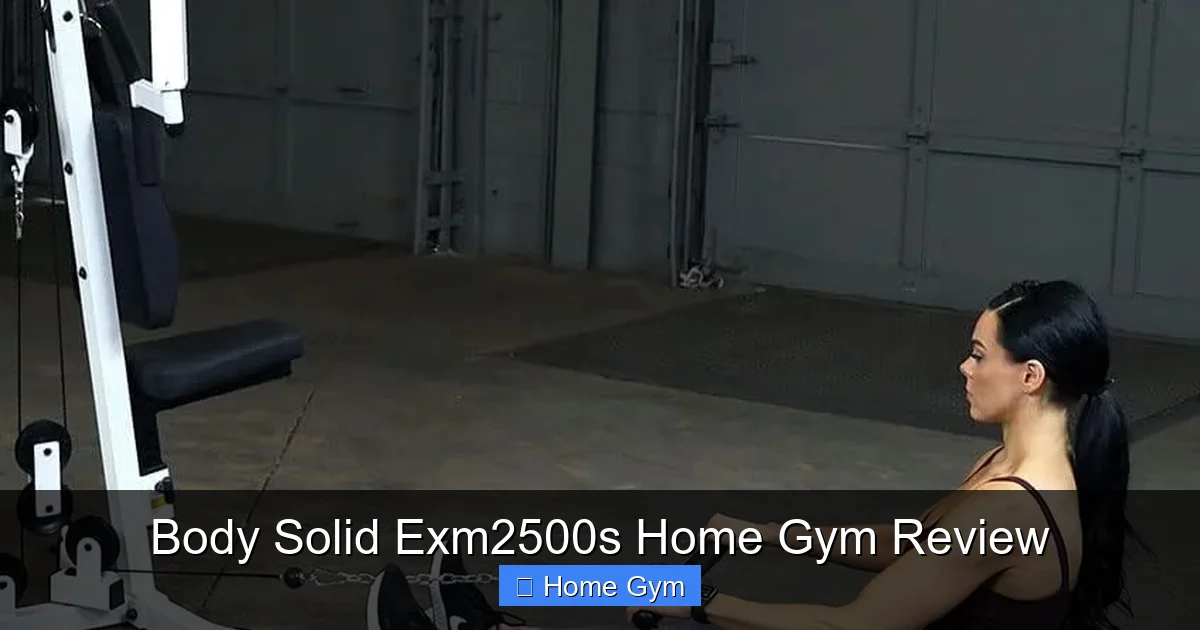
The EXM2500S features a dual independent cable system. This means you have two separate cables, each with its own handle, that can be used simultaneously for bilateral movements (like a two-handed cable row) or independently for unilateral work (like a single-arm bicep curl or rotational core exercise). The cables are high-quality, nylon-coated steel aircraft cables rated for several times the machine’s maximum weight—a critical safety factor often overlooked. They run through sealed ball-bearing pulleys at the top and bottom of the tower. This results in an incredibly smooth, consistent resistance curve with no sticking or jerking. The pulleys are also adjustable in height via a simple pin-lock mechanism on the uprights, allowing you to raise or lower the cable anchor point for dozens of exercises.
Attachments and Included Toolset
Body Solid doesn’t nickel-and-dime you for essential attachments. The EXM2500S typically comes with a solid set: a straight bar, a rope attachment, a single-handle D-ring, and a standard lat bar. These are all sturdy, chrome-plated steel with comfortable, non-slip rubber grips. The lat bar is a key piece for vertical pulling movements. The variety of included handles means you can start a comprehensive training program immediately without needing to buy extra gear. The connections are all using standard carabiners or pin locks, making it easy to swap attachments in seconds.
Exercise Versatility: How Many Workouts Can You Really Do?
This is the EXM2500S’s killer feature. With a fixed-station machine, you’re limited to a preset path. With free weights, you have unlimited range but need space and a spotter. The EXM2500S splits the difference, offering guided resistance with remarkable freedom of movement. By adjusting the pulley height, seat position, and using different attachments, you can effectively mimic the function of a cable crossover machine, a lat pulldown, a seated row machine, a leg extension/curl unit, and more.
Visual guide about Body Solid Exm2500s Home Gym Review
Image source: gymdwelling.com
A Tour of Major Movement Patterns
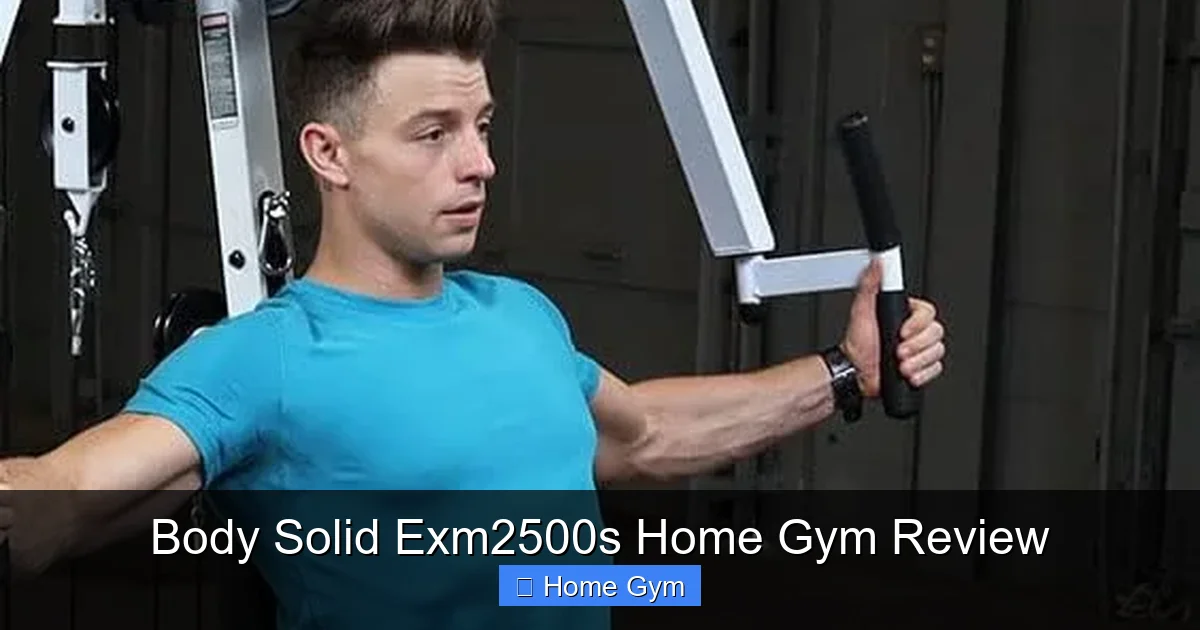
Let’s categorize the possibilities. For Pushing Movements: Set the pulley low, use the straight bar, and perform seated chest presses (incline or flat by adjusting the seat back). You can also do overhead presses by setting the pulley high. For Pulling Movements: This is where it shines. Set the pulley high with the lat bar for wide-grip or close-grip lat pulldowns. Set it low with a straight bar for seated cable rows. Use the single handle for single-arm rows, which is fantastic for correcting imbalances. For Legs: The EXM2500S has a dedicated leg station. You can perform leg extensions by attaching the straight bar to the low pulley and sitting on the adjustable seat with the pad behind your ankles. For leg curls, you flip the pad to the front and attach the bar to a mid-height pulley. You can also do standing cable leg lifts for glutes and hips. For Arms: Use the rope for bicep curls (rope curls are excellent for peak contraction) and tricep pressdowns. The single handle is perfect for concentration curls or overhead tricep extensions. For Core: This is the secret weapon. The independent cables allow for rotational exercises like standing cable woodchops (pulley high to low) or Pallof presses (pulley at chest height, standing perpendicular). You can also perform standing crunches by attaching the rope and pulling down while flexing.
Practical Example: A Full-Body Circuit
Imagine a 45-minute circuit: Start with 3 sets of 10-12 reps of Lat Pulldowns (pulley high, lat bar). Move to Seated Cable Rows (pulley low, straight bar). Then, without changing the pulley, perform Single-Arm Rows (single handle). Switch to the leg station for Leg Extensions, then Leg Curls. Finish with a core burner: 15 reps per side of Cable Woodchops. You’ve just hit every major muscle group on one machine, with smooth transitions between exercises. The ability to quickly change pulley heights and attachments is crucial here, and the EXM2500S facilitates this efficiently.
Adjustability and Ease of Use
A machine can have 100 exercises, but if it’s a pain to set up for each one, you won’t use it. Body Solid focused heavily on user-friendly adjustments for the EXM2500S.
Visual guide about Body Solid Exm2500s Home Gym Review
Image source: gymdwelling.com
Quick-Change Pulley System
Changing the pulley height is a simple matter of pulling a spring-loaded pin, sliding the pulley housing up or down the upright’s perforated rail, and releasing the pin. It’s fast, secure, and requires no tools. This is arguably the most frequently used adjustment, and its ease of use directly impacts workout flow. You’re not fumbling with wrenches between sets; you’re making a change in 5 seconds.
Seat and Back Pad Adjustments
The seat height is adjusted via a simple pin-lock on the main support post. The seat back angle is fixed for most exercises, but the position of the back pad relative to the pulley is what matters. For chest presses, you want the pad close to the pulley to minimize the lever arm. For rows, you slide the seat back to allow a full range of motion. The leg station has its own dedicated, adjustable roller pad for thigh support during extensions and curls. All these adjustments use large, easy-to-grab handles and pins, even with sweaty hands.
The “Feel”: Smoothness and Resistance
The resistance from a selectorized weight stack is inherently different from free weights. There’s no momentum to cheat with, and the resistance is constant throughout the movement (unlike free weights where leverage changes). The EXM2500S’s cable and pulley system is exceptionally smooth. The weight stack moves vertically within a guide rod system. Higher-end models use linear bearings; the EXM2500S uses a simpler bushing system, which is still very smooth but can develop a slight “stick” if not periodically cleaned and lubricated (a drop of silicone spray on the guide rod every few months solves this). The weight increments are typically 10 or 15 lbs, which can be a coarse jump for some. A common user tip is to use “micro-plates” (small 2.5lb plates) that can be added to the weight stack selector pin to bridge these gaps for progressive overload on smaller muscle groups like shoulders or arms.
Space Requirements and Home Integration
For many, the decision hinges on space. The EXM2500S is designed to be a tower, not a sprawling station.
Footprint and Ceiling Height
The approximate footprint is about 3.5 feet wide by 3 feet deep. This is its major advantage over a traditional cable crossover or a large multi-gym with a separate leg station. However, you must account for operation space. When performing movements like lat pulldowns or overhead presses, you need clearance behind and to the sides. A safe minimum is a 4×4 ft area, but 5×5 ft is more comfortable. Crucially, check your ceiling height. The machine itself is about 6.5 feet tall, but when you’re pulling the lat bar down or pressing overhead, you need headroom. Users under 6’2″ are generally fine in standard 8-foot ceilings; taller users should measure carefully. You’ll also need a solid, level floor. Concrete is ideal. On carpet, a thick, rigid platform is highly recommended to prevent sinking, rocking, and to protect the carpet.
Aesthetic and Room Impact
Let’s be real: it’s a large piece of gym equipment. It has an industrial, functional look. The black powder coat is neutral, but it’s not a piece of living room furniture. It’s best suited for a garage, basement, dedicated workout room, or a very large spare bedroom. Its vertical design is its best aesthetic feature—it draws the eye upward and doesn’t sprawl. If you’re concerned about visual impact, placing it against a wall and using a large mirror behind it (for form checks) can help it blend into a “gym” aesthetic rather than looking like an alien object.
Who Is the Body Solid EXM2500S For? (And Who Should Look Elseway)
No machine is perfect for everyone. Pinpointing the ideal user is key to a satisfying purchase.
The Ideal Owner Profile
- The Space-Conscious Strength Enthusiast: You have a 10’x10′ area and want maximum exercise variety without multiple machines.
- The Home Gym Purist: You value durability and “commercial feel.” You plan to use this machine 3-5 times per week for years and hate flimsy equipment.
- The Small Family or Couple: Multiple users of different heights and strengths can quickly adjust the seat and pulley. The weight stack accommodates a wide range (typically 210 lbs, with optional upgrades).
- The Rehab or Prehab Athlete: The controlled, guided motion is excellent for rebuilding strength after injury. The ability to perform unilateral (single-arm/leg) exercises is invaluable for addressing imbalances.
- The Budget-Conscious Long-Term Thinker: While the upfront cost is high, when amortized over a decade of use, the cost per year becomes very low compared to a commercial gym membership or buying several cheaper machines that break.
Who Should Consider Alternatives?
- The Absolute Beginner: The learning curve for proper form on cable machines, especially with the wide array of movements, can be steep. A simpler machine, or starting with free weights and a bench, might be less intimidating.
- The Cardio-Centric User: This is purely a strength machine. It has no elliptical, bike, or treadmill function. If your primary goal is calorie-burning cardio, look elsewhere.
- The Person with Extremely Low Ceilings or Tiny Spaces: If you have a low basement or a small apartment, this tower will not fit. A foldable power rack with a cable system might be a better, if less versatile, choice.
- The Fickle Fitness Shopper: If you’re not sure you’ll stick with strength training, this is a massive investment. A set of resistance bands or a basic dumbbell set is a far less risky financial experiment.
The Bottom Line: Value, Pros, and Cons
After this deep dive, the verdict comes down to a cold calculation of your specific needs against this machine’s strengths and weaknesses.
Strengths (The “Pros”)
- Unrivaled Build Quality: It feels and is built like a commercial machine. It will likely outlast your interest in lifting.
- Extreme Versatility: Dozens of exercises from a single footprint. The dual cable system is a game-changer for functional and unilateral training.
- Space-Efficient Tower Design: Maximizes vertical space, a critical factor for home gyms.
- Smooth, Quiet Operation: The cable and pulley system is a highlight, providing a premium feel.
- Excellent Adjustability: Quick, tool-free changes for seat height and pulley position accommodate multiple users seamlessly.
- Strong Brand Support and Warranty: Body Solid offers solid warranties (often lifetime on frame, 5-10 years on parts) and has good parts availability.
Weaknesses (The “Cons”)
- Significant Upfront Cost: This is a premium purchase, often competing with the price of a decent used car. Financing is common.
- Complex Assembly: A true weekend project requiring patience, tools, and ideally a helper. Not for the assembly-averse.
- Weight Stack Increments: 10 or 15 lb jumps can be too large for fine-tuning on smaller muscle groups without micro-plates.
- No Free-Weight Option: It’s a guided resistance machine. You won’t develop the stabilizer muscles and coordination that free weights (barbells, dumbbells) demand. Many serious lifters use both.
- Static Seated Position for Many Exercises: While you can stand for some movements, the core design assumes you’re seated on the pad for most presses and rows. This limits certain functional, full-body movements compared to a cable crossover with independent columns.
- Potential for Cable Stretch: Over many years and heavy use, the cables can develop slight stretch, requiring tension adjustment. This is a normal maintenance item for any cable machine.
So, is the Body Solid EXM2500S worth it? If your primary goals are building serious strength, you have the dedicated space, you value “buy once, cry once” durability, and you understand this is a strength-training workhorse—then absolutely yes. It delivers on its promise of commercial-grade quality and exceptional versatility in a home-friendly package. The initial cost and assembly effort are the barriers to entry, but the payoff is a machine that will serve you faithfully for a decade or more. If your goals are more general fitness, you have very limited space, or you’re on a tight budget, the cons likely outweigh the pros. For the right user, however, the Body Solid EXM2500S isn’t just a purchase; it’s the foundation of a permanent home gym.
Frequently Asked Questions
How long does assembly of the Body Solid EXM2500S typically take?
For two people with basic tools, expect to spend 4-8 hours. It’s a complex build with many small parts. Having a helper is strongly recommended for safety and to manage the heavy uprights. Rushing leads to mistakes, so set aside a full day.
What is the maximum user weight and total weight capacity?
The EXM2500S has a robust user weight capacity of 300-350 lbs, thanks to its heavy-duty frame. The weight stack capacity varies by model configuration but commonly starts at 210 lbs. The total resistance you can achieve also depends on the pulley system’s mechanical advantage, which can provide more than the stack weight in some exercises.
Is this machine suitable for a complete beginner?
It can be, but with caution. The machine itself is safe and guided, but the vast array of movements can be overwhelming. A beginner should start with the most basic exercises (lat pulldowns, chest press, leg extensions) and focus on perfect form. Investing in a few sessions with a personal trainer to learn the setup and movements is highly advisable to avoid injury and maximize effectiveness.
How much floor space do I actually need?
The machine’s footprint is roughly 3.5′ x 3′. However, you need operational clearance. Allow at least 2-3 feet of open space on all sides for safely performing movements, especially overhead presses and wide-grip pulldowns. A minimum clear area of 5′ x 5′ is recommended for comfortable use.
What maintenance is required?
Maintenance is minimal. The key tasks are: 1) Periodically check and tighten all bolts and pins (every 3-6 months). 2) Clean the weight stack guide rod with a dry cloth and apply a drop of silicone spray or white lithium grease to ensure smooth travel and prevent corrosion. 3) Visually inspect cables for any fraying or wear, though this is rare given their high rating.
How does the EXM2500S compare to a cable crossover machine?
The EXM2500S is a single-tower machine with a dual cable system coming from the same upright. A traditional cable crossover has two independent towers, allowing for a much wider range of motion and exercises that cross the body (like standing cable flyes). The EXM2500S is more space-efficient and often cheaper, but the crossover offers greater freedom and is considered the gold standard for functional cable training. The EXM2500S is a fantastic compromise for home users who prioritize space and integrated leg work.