How Many Calories Burned in 15 Min Jump Rope

Jumping rope for just 15 minutes can torch a surprising number of calories, often ranging between 150‑250 depending on intensity, weight, and skill level. Use our easy calculators, beginner routines, and safety tips to get the most out of every jump and boost your fitness fast.
Key Takeaways
- Calorie range: Most people burn 150‑250 calories in a 15‑minute jump‑rope session.
- Weight matters: Heavier individuals burn more calories; a 200‑lb person can exceed 250 calories.
- Intensity counts: Faster speeds and double‑unders raise the burn dramatically.
- Consistency wins: Short, frequent rope workouts improve cardiovascular health and metabolism.
- Form & safety: Proper posture and shoes reduce injury risk, letting you stay in the zone longer.
- Equipment tips: Choose the right rope length and material for smoother, more efficient jumps.
- Progress tracking: Use heart‑rate zones or simple calculators to know exactly how many calories you’ve burned.
📑 Table of Contents
- Introduction: Why Jump Rope Is a Calorie‑Blasting Powerhouse
- Understanding the Math: How Calories Are Calculated
- Factors That Influence How Many Calories Burned In 15 Min Jump Rope
- Practical Tools: How to Estimate Your Own Calorie Burn
- Designing a 15‑Minute Jump Rope Workout
- Safety and Form: Jump Rope Without the Injuries
- Integrating Jump Rope Into Your Overall Fitness Plan
- Conclusion: Your Answer to How Many Calories Burned In 15 Min Jump Rope
Introduction: Why Jump Rope Is a Calorie‑Blasting Powerhouse
When you think about cardio, you might picture long runs, sweaty spin classes, or endless rows of machines at the gym. Yet, one of the simplest tools— a jump rope— can give you a massive calorie burn in a fraction of the time. In just 15 minutes, a well‑executed rope session can melt away enough energy to rival a half‑hour jog.
But how many calories are actually burned in 15 min jump rope? The answer isn’t a one‑size‑fits‑all number. It depends on your weight, the intensity you bring, the style of jumps, and even the rope you use. In this article we’ll break down the science, give you easy calculators, share beginner‑to‑advanced routines, and sprinkle in practical tips so you can answer the question for yourself— and then use that knowledge to reach your fitness goals faster.
Understanding the Math: How Calories Are Calculated
What Is a Calorie, Anyway?
A calorie is a unit of energy. When you move, your body converts stored fuel (carbohydrates, fat, protein) into kinetic energy. The more vigorous the movement, the more calories you expend.
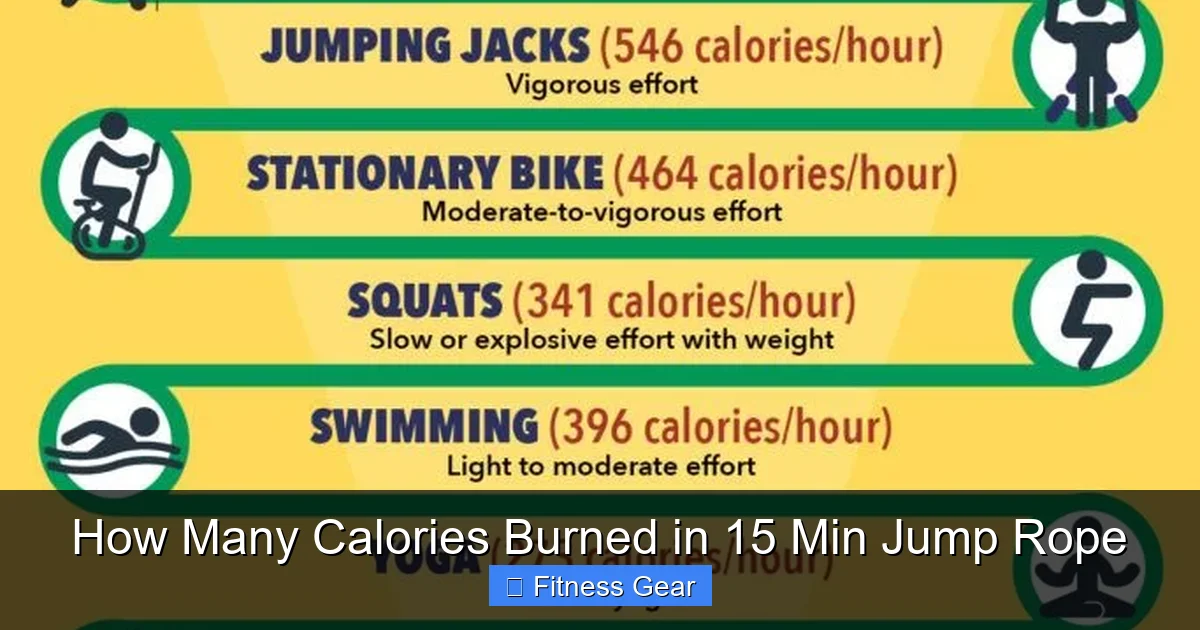
Visual guide about How Many Calories Burned in 15 Min Jump Rope
Image source: i.pinimg.com
The Basic Formula for Jump Rope
Most fitness experts use a simple MET (Metabolic Equivalent of Task) formula:
- Calories burned per minute = MET value × body weight (kg) × 3.5 ÷ 200
Jump rope typically ranges from 10 METs (moderate speed) to 12 METs (high‑intensity double‑unders). Plug those numbers in and you’ll see why the burn can be impressive.
Example Calculation
Let’s say you weigh 150 lb (68 kg) and jump rope at a moderate pace (10 METs):
- Calories/min = 10 × 68 × 3.5 ÷ 200 ≈ 11.9
- For 15 minutes: 11.9 × 15 ≈ 179 calories
Increase the speed to 12 METs and the same person would torch about 215 calories in the same time.
Factors That Influence How Many Calories Burned In 15 Min Jump Rope
Body Weight
Heavier people move more mass, so they burn more calories. A 200‑lb (91 kg) athlete can burn roughly 30‑40% more than a 120‑lb (55 kg) beginner at the same intensity.

Visual guide about How Many Calories Burned in 15 Min Jump Rope
Image source: i.pinimg.com
Intensity & Style
- Basic bounce: 8‑10 METs, good for beginners.
- Fast single‑unders: 10‑12 METs, raises heart rate quickly.
- Double‑unders or criss‑cross: 12‑14 METs, elite level.
The faster you go, the higher the MET, and the more calories you burn.
Skill Level & Efficiency
Newcomers often pause to correct form, which drops the average intensity. As you become smoother, you spend less time “resetting” and more time actively jumping, raising the overall calorie count.
Rope Type & Length
A heavy weighted rope demands more effort per turn, slightly increasing the burn. Conversely, a too‑long rope forces you to waste energy on extra swings. Aim for a rope that reaches your armpits when you stand on the middle.
Environmental Factors
Jumping on a soft surface (carpet) requires more muscular effort than a firm wood floor, adding a few extra calories. Temperature also matters— colder air makes your body work harder to stay warm.
Practical Tools: How to Estimate Your Own Calorie Burn
Quick Online Calculators
Many fitness sites let you plug in weight, minutes, and intensity. Look for calculators that use the MET formula for the most accurate estimate.
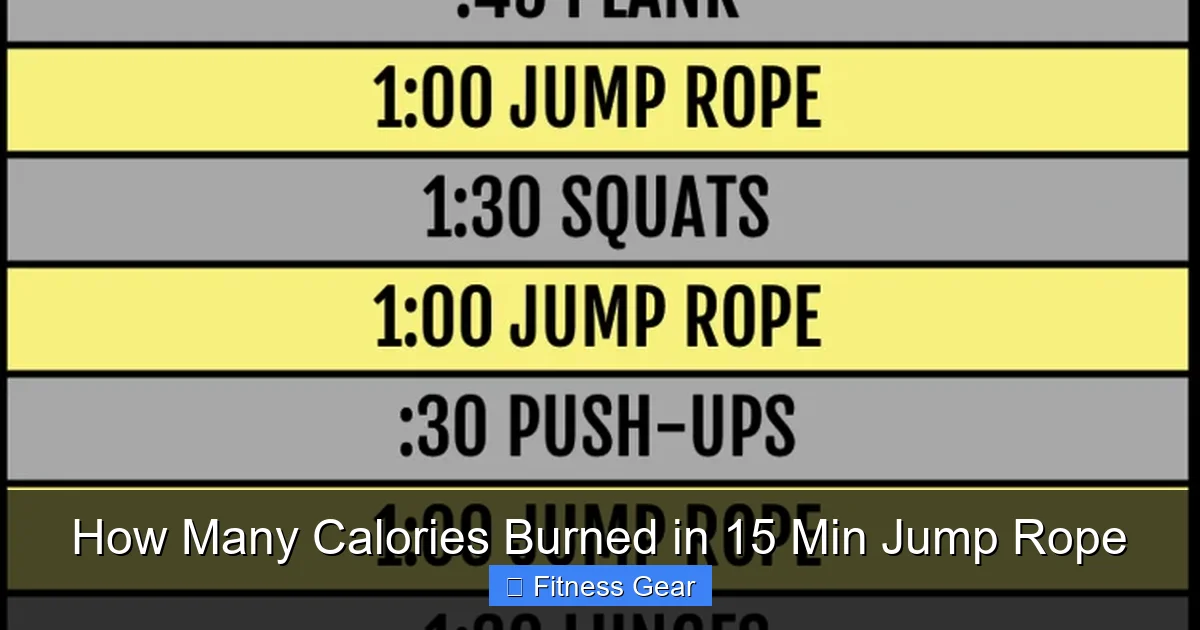
Visual guide about How Many Calories Burned in 15 Min Jump Rope
Image source: i.pinimg.com
DIY Spreadsheet
Set up a simple Excel sheet:
- Column A: Minutes (15)
- Column B: MET value (choose 10‑12 based on effort)
- Column C: Weight in kg
- Column D: =B2*C2*3.5/200 (calories per minute)
- Column E: =D2*A2 (total calories)
This lets you experiment with different speeds and see the impact instantly.
Heart‑Rate Monitors
Wearable devices calculate calorie burn using your heart‑rate zones. For jump rope, stay in Zone 3‑4 (70‑85% of max HR) to maximize the burn. Most modern watches will display a real‑time calorie count.
Designing a 15‑Minute Jump Rope Workout
Beginner Routine (0‑5 min warm‑up, 10 min work)
- 0‑2 min: Light marching in place.
- 2‑4 min: Basic single‑under jumps at a comfortable pace.
- 4‑5 min: Rest – walk around, sip water.
- 5‑7 min: Increase speed slightly, aim for 120 jumps/min.
- 7‑9 min: Add a 10‑second “high‑knees” jump every minute.
- 9‑10 min: Cool down with slow jumps, then stretch.
Estimated burn: 150‑180 calories for a 150‑lb person.
Intermediate Routine (Add Intervals)
- 0‑2 min: Warm‑up (jump rope at 80 jumps/min).
- 2‑4 min: 30‑second sprint (150 jumps/min) + 30‑second easy.
- 4‑6 min: 30‑second sprint + 30‑second easy.
- 6‑8 min: 30‑second sprint + 30‑second easy.
- 8‑10 min: 30‑second sprint + 30‑second easy.
- 10‑12 min: Double‑unders (as many as you can) – 2 min.
- 12‑15 min: Cool down, slow jumps, stretch.
Estimated burn: 200‑240 calories for a 150‑lb person.
Advanced Routine (High‑Intensity Circuit)
- 0‑1 min: Warm‑up, easy bounce.
- 1‑3 min: 45‑second double‑unders, 15‑second rest.
- 3‑5 min: 45‑second criss‑cross, 15‑second rest.
- 5‑7 min: 45‑second high‑knees, 15‑second rest.
- 7‑9 min: 45‑second side‑to‑side swings, 15‑second rest.
- 9‑11 min: 45‑second sprint (fast single‑unders), 15‑second rest.
- 11‑13 min: 45‑second freestyle (mix moves), 15‑second rest.
- 13‑15 min: Cool down, slow jumps, deep breathing.
Estimated burn: 250‑300 calories for a 150‑lb person; up to 350 for a 200‑lb athlete.
Safety and Form: Jump Rope Without the Injuries
Posture Basics
- Keep elbows close to your sides; wrists do the work.
- Stay on the balls of your feet; avoid heavy heel strikes.
- Engage your core to maintain balance.
- Look straight ahead, not at your feet.
Footwear and Surface
Choose low‑profile, cushioned shoes with good arch support. Jump on a wooden floor, rubber mat, or gym surface— avoid concrete.
Common Mistakes
- Over‑rotating the wrists— leads to tangled rope.
- Leaning back— puts stress on lower back.
- Too high a jump— wastes energy, increases fatigue.
Injury Prevention
Start with 5‑minute sessions and gradually add time. Stretch calves, hamstrings, and shoulders before and after. If you feel sharp pain, stop and assess— often a quick tweak to rope length fixes the issue.
Integrating Jump Rope Into Your Overall Fitness Plan
Cardio Mix‑And‑Match
Use 15‑minute rope sessions as a high‑intensity interval training (HIIT) component three times a week. Pair with strength training on alternate days for balanced fitness.
Weight‑Loss Strategy
Combine rope workouts with a modest calorie deficit (200‑300 cal per day). The extra 150‑250 calories burned in 15 min can shave off a pound of fat in roughly 14‑20 days when consistent.
Performance Boost for Athletes
Rope improves foot speed, coordination, and cardiovascular endurance— all valuable for runners, boxers, and basketball players. Short, frequent rope bursts can replace longer, less efficient cardio sessions.
Tracking Progress
Log your minutes, intensity, and estimated calories burned in a training journal or app. Review weekly to see trends; aim to increase either speed or duration by 5‑10% each week.
Conclusion: Your Answer to How Many Calories Burned In 15 Min Jump Rope
The short answer is: **most people burn between 150 and 250 calories** in a 15‑minute jump‑rope session, with the exact number hinging on weight, intensity, and skill. By mastering proper form, selecting the right rope, and using the routines above, you can push that number toward the higher end—or even exceed it if you’re a heavier athlete or a seasoned jumper.
Remember, the real power of jump rope isn’t just the calories burned in a single session; it’s the cumulative effect of short, high‑intensity bursts that boost metabolism, improve coordination, and keep you moving consistently. So grab a rope, set a timer, and start counting—not just calories, but the confidence that comes with every jump.
Frequently Asked Questions
How many calories do I burn if I weigh 180 lb and jump rope for 15 minutes?
At a moderate pace (≈10 METs), a 180‑lb (82 kg) person burns roughly 200‑220 calories in 15 minutes. Faster speeds can push the total above 250 calories.
Is jump rope better than running for calorie burn?
Jump rope can burn similar or more calories per minute than a moderate jog, especially when you increase intensity with double‑unders or high‑knees. It also improves coordination and foot speed.
Can I lose weight only by doing 15‑minute jump rope sessions?
Yes, if you pair the workouts with a sensible diet. Burning 150‑250 calories three times a week adds up, and combined with a modest calorie deficit, it can lead to steady weight loss.
Do I need a special rope for high‑intensity workouts?
Weighted or speed ropes work best for fast, precise movements. Choose a rope that reaches your armpits when you stand on its center; this length suits most people.
How often should I jump rope to see fitness improvements?
Three to four 15‑minute sessions per week are ideal for beginners. More advanced athletes can increase to five sessions, mixing intervals and skill drills.
Is jump rope safe for people with joint problems?
When done on a forgiving surface with proper shoes, jump rope is low‑impact on the knees compared to running. Start with short, low‑intensity bouts and increase gradually.