How Long to Stay on Elliptical to Lose Weight

There’s no single magic number for how long to stay on the elliptical to lose weight. The ideal duration depends entirely on your personal stats, workout intensity, and, most critically, your diet. While general guidelines suggest 30-60 minutes per session, focusing on calorie burn, incorporating high-intensity intervals, and maintaining a consistent calorie deficit through both exercise and nutrition is the true key to shedding pounds effectively and sustainably.
Key Takeaways
- Duration is individual: Your weight, fitness level, and workout intensity drastically change how long you need to exercise for meaningful calorie burn.
- Calorie deficit is king: Weight loss happens from burning more calories than you consume. The elliptical is a tool to create that deficit, not a standalone solution.
- Intensity trumps time: A 30-minute high-intensity interval training (HIIT) session can be more effective for fat loss than a 60-minute casual stroll.
- Diet is non-negotiable: You can out-eat any workout. Combining elliptical sessions with a balanced, protein-rich, calorie-conscious diet is essential.
- Progression is mandatory: Your body adapts. To keep losing weight, you must progressively increase resistance, speed, or duration to challenge your muscles and cardiovascular system.
- Consistency over perfection: Regular, sustainable sessions (e.g., 4-5 days a week) are far more valuable than one heroic but unsustainable marathon effort.
📑 Table of Contents
- Introduction: The Elliptical and the Weight Loss Question
- The Core Truth: It’s Not Just About Time, It’s About Calories and Intensity
- Designing Your Effective Elliptical Routine: Duration, Frequency, and Type
- The Unsexy But Essential Partner: Your Diet
- Beyond the Elliptical: The Synergy of Strength and Lifestyle
- Common Mistakes That Sabotage Your Elliptical Weight Loss
- Crafting Your Personalized Elliptical Plan: A Step-by-Step Guide
- Conclusion: The Real Answer to “How Long?”
Introduction: The Elliptical and the Weight Loss Question
You’ve stepped onto the glossy, silent machine at the gym or in your living room. The console glows with options: time, distance, calories, heart rate. The single biggest question echoing in your mind is likely, “How long do I have to stay on here to actually see the scale move?” It’s a simple question, but the answer is beautifully, frustratingly complex. The quest to lose weight on the elliptical isn’t about finding a universal timer; it’s about understanding the interplay of effort, biology, and nutrition.
The elliptical is a fantastic piece of fitness gear. It’s low-impact, protecting your joints while providing a full-body workout that engages your legs, glutes, chest, back, and arms. It mimics the motion of running or stair climbing without the punishing jarring impact. This makes it accessible for beginners, those with injuries, and anyone looking for a sustainable cardio option. But accessibility doesn’t automatically equal weight loss. That requires strategy.
This guide will dismantle the myth of the “perfect elliptical time.” We’ll move beyond the generic “30 minutes a day” advice and dive into the real metrics that matter: calorie expenditure, metabolic impact, and how to structure your sessions for maximum fat-burning efficiency. Whether you’re a complete novice or a seasoned gym-goer, understanding these principles will transform your elliptical time from a vague clock-watching exercise into a targeted, powerful component of your weight loss journey.
The Core Truth: It’s Not Just About Time, It’s About Calories and Intensity
Let’s start with the fundamental law of weight loss: you must consume fewer calories than you burn, creating a calorie deficit. The elliptical helps you burn calories. How many you burn in a given time depends on three primary factors:

Visual guide about How Long to Stay on Elliptical to Lose Weight
Image source: ellipticalking.com
- Your Body Weight: A person who weighs 250 pounds will burn significantly more calories walking at the same speed for 30 minutes than a person who weighs 150 pounds. It simply takes more energy to move more mass.
- Workout Intensity: This is the most crucial variable you control. Intensity is a combination of your speed (RPMs or resistance level) and the force you apply. A leisurely, low-resistance glide might burn 150 calories in 30 minutes for some. A vigorous, high-resistance, arm-pumping sprint could burn 400+ calories in the same time.
- Your Fitness Level: As you get fitter, your body becomes more efficient. The same 30-minute workout that torched 400 calories when you started might only burn 350 a few months later because your body has adapted. This is why progression is key.
Estimating Your Caloric Burn: A Practical Example
While elliptical calorie counters are notoriously inaccurate (they often overestimate), they provide a baseline for comparison. A general estimate for a moderate-intensity elliptical workout (where you can talk in short phrases but not sing) is burning approximately 4-8 calories per minute for most adults.
Let’s use a 155-pound person as an example:
- 30 minutes at moderate intensity: 30 min x 6 cal/min = ~180 calories
- 45 minutes at moderate intensity: 45 min x 6 cal/min = ~270 calories
- 30 minutes at vigorous intensity: 30 min x 8 cal/min = ~240 calories
Now, consider a 185-pound person at the same vigorous intensity: 30 min x 9 cal/min = ~270 calories. See how weight and intensity combine? A heavier person doing a shorter, more intense session could burn the same as a lighter person doing a longer, easier one. This is why prescribing a single “time” is ineffective.
Designing Your Effective Elliptical Routine: Duration, Frequency, and Type
Now that we understand the “why,” let’s build the “how.” An effective elliptical routine for weight loss balances three pillars: duration per session, frequency per week, and the type of cardio you perform.

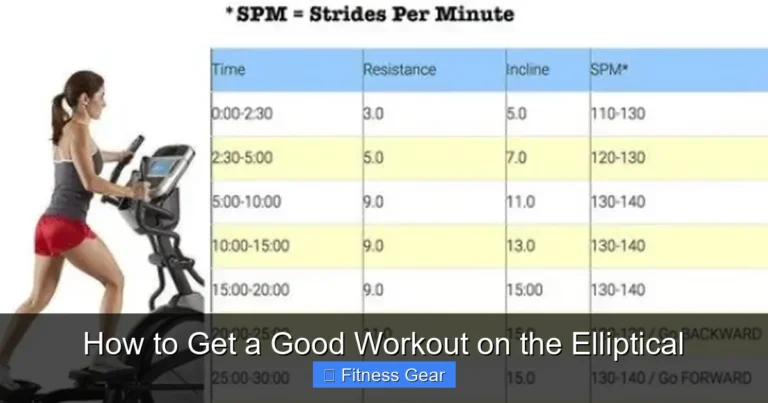
Visual guide about How Long to Stay on Elliptical to Lose Weight
Image source: eatthis.com
Duration Per Session: Finding Your Sweet Spot
For most people aiming for weight loss, a target of 30 to 60 minutes per session is a solid, sustainable range. Here’s how to think about it:
- Beginners (0-3 months consistent): Start with 20-30 minutes. Your primary goal is building the habit and conditioning your cardiovascular system without burning out or getting injured. Consistency is more important than maxing out on day one.
- Intermediate (3-12 months): Aim for 30-45 minutes. You can begin to incorporate structured intervals within this time.
- Advanced (1+ years): 45-60 minutes is common, but much of this time should be spent at higher intensities or incorporating significant hill/resistance work. Long, slow sessions have their place for endurance, but for pure fat loss, quality often trumps quantity.
A critical note: If you can comfortably chat for the entire 60-minute session, you are almost certainly not in the optimal fat-burning zone. You should be breathing heavily, sweating, and feeling challenged, especially during planned intervals.
Frequency: The Consistency Multiplier
How often you show up matters immensely. The American College of Sports Medicine recommends at least 150 minutes of moderate-intensity or 75 minutes of vigorous-intensity cardio per week for general health. For significant weight loss, research often points to 300+ minutes per week.
That breaks down to:
- Moderate-Intensity Focus: 5-6 days a week of 45-60 minute sessions.
- Vigorous/High-Intensity Focus: 3-5 days a week of 30-45 minute sessions (with some being HIIT).
For most people juggling jobs and families, 4-5 sessions of 30-45 minutes each is a realistic and highly effective target. This frequency keeps your metabolism elevated, maintains momentum, and builds a powerful habit.
Type of Cardio: Steady-State vs. HIIT
This is where you can maximize your time. Not all elliptical minutes are created equal.
- Steady-State Cardio (SSC): This is your traditional, consistent-pace workout. You set a resistance and maintain it for your entire session (e.g., 30 minutes at level 5). It’s great for building aerobic endurance, burning a solid number of calories during the session, and is mentally easier for some. It’s a reliable workhorse.
- High-Intensity Interval Training (HIIT): This alternates short bursts of maximum or near-maximum effort with periods of low-intensity recovery or rest. Example: 1 minute at the highest resistance you can sustain (sprinting), followed by 2 minutes at a very easy glide (recovery). Repeat 8-10 times. A 20-30 minute HIIT session can have a greater metabolic impact, burning calories DURING the workout AND creating an “afterburn” effect (Excess Post-exercise Oxygen Consumption, or EPOC) where your body continues to burn extra calories for hours afterward. For time-crunched individuals focused on fat loss, HIIT is incredibly efficient.
Recommendation: Blend both. Do 2-3 days of HIIT-style elliptical workouts and 1-2 days of longer, steady-state sessions. This prevents boredom, challenges your body in different ways, and manages overall fatigue.
The Unsexy But Essential Partner: Your Diet
Let’s be brutally clear: you cannot out-exercise a bad diet. You could grind out a 60-minute elliptical session, burning an estimated 500 calories, and instantly undo it with a large latte and a pastry. That’s demoralizing and a primary reason people think “the elliptical doesn’t work for me.” It does. But it’s only one side of the equation.

Visual guide about How Long to Stay on Elliptical to Lose Weight
Image source: gethealthyu.com
Understanding the Calorie Deficit
One pound of body fat contains roughly 3,500 calories. To lose one pound of fat per week, you need a weekly deficit of 3,500 calories, or a daily deficit of 500 calories. This deficit is created by:
- Eating less (reducing calorie intake)
- Moving more (increasing calorie expenditure through exercise and daily activity)
The elliptical contributes to the “moving more” part. If your elliptical session burns 300 calories, that’s a huge chunk of your daily deficit. But if your diet is already 300 calories OVER your maintenance, you’ve just broken even. No weight loss.
Practical Dietary Strategies to Pair with Your Elliptical
- Prioritize Protein: Protein is satiating (keeps you full) and has a high thermic effect (your body burns more calories digesting it). Aim for a source of lean protein (chicken, fish, tofu, Greek yogurt, eggs) with every meal.
- Fill Up on Fiber: Vegetables, fruits, and whole grains add volume to your meals with fewer calories, helping you feel satisfied on less.
- Hydrate, Hydrate, Hydrate: Often, thirst is mistaken for hunger. Drink water throughout the day. A glass before your elliptical session can also help performance.
- Be Mindful of Liquid Calories: Sodas, juices, specialty coffees, and alcoholic drinks are calorie bombs with little nutritional value. They are the easiest way to sabotage your deficit.
- Don’t Over-Compensate: The biggest mistake post-workout is thinking, “I earned this treat.” A 30-minute elliptical session does NOT earn a 500-calorie burger. If you must refuel, opt for a sensible post-workout snack like a banana with peanut butter or a protein shake within your daily calorie budget.
Think of your elliptical time as a deposit into your weight loss bank account. Your diet is the daily withdrawal. To see your savings (fat loss) grow, your deposits must consistently exceed your withdrawals.
Beyond the Elliptical: The Synergy of Strength and Lifestyle
Relying solely on elliptical cardio for weight loss is a short-sighted strategy. The most successful, sustainable weight loss comes from a holistic approach.
The Muscle Metabolism Advantage
Muscle is metabolically active tissue. It burns calories at rest, 24/7. Cardio, including the elliptical, does little to build significant muscle mass. This is where resistance training (strength training) becomes your best friend. By incorporating 2-3 days of full-body strength training (using weights, resistance bands, or bodyweight exercises like squats, push-ups, rows), you:
- Build and preserve lean muscle mass, especially important as you lose weight to prevent muscle loss.
- Increase your Basal Metabolic Rate (BMR), meaning you burn more calories even when you’re not exercising.
- Create a more toned, shapely physique as fat comes off.
- Provide a different metabolic stimulus that complements your cardio.
A perfect weekly split for weight loss might look like: Monday (Elliptical HIIT), Tuesday (Full-Body Strength), Wednesday (Rest or Light Walk), Thursday (Elliptical Steady-State), Friday (Full-Body Strength), Saturday (Elliptical HIIT or Fun Activity), Sunday (Rest).
NEAT: The Hidden Calorie Burner
Non-Exercise Activity Thermogenesis (NEAT) is the calories you burn through all the daily movements that aren’t formal exercise: walking to your car, taking the stairs, fidgeting, gardening, cleaning. NEAT can vary by up to 2,000 calories per day between individuals! Boosting your NEAT is a powerful way to increase your total daily energy expenditure without adding more structured workout time. Take phone calls standing up, park farther away, use a standing desk, take the stairs. These small choices compound.
Common Mistakes That Sabotage Your Elliptical Weight Loss
Even with the best intentions, people often fall into traps that minimize the elliptical’s effectiveness. Avoid these pitfalls:
Mistake 1: Holding Onthe Handrails For Dear Life
The elliptical’s biggest advantage is its full-body engagement. If you’re gripping the handrails and leaning back, you’re taking your weight off your lower body, reducing calorie burn, and eliminating the core-stabilizing benefit. Use the handles for balance and to actively push and pull, engaging your upper body. If you need to hold on tightly for balance, your resistance is likely too high or your form needs adjustment.
Mistake 2: Ignoring Resistance and Incline
Using the elliptical at level 1 with no incline is essentially a floating motion. It’s easy, but it’s also incredibly easy for your body to adapt to, leading to a metabolic plateau. To build leg and glute strength and significantly increase calorie burn, you MUST increase resistance and use the incline function. A challenging resistance should make you feel like you’re pushing against a force, engaging your hamstrings and glutes on the upswing.
Mistake 3: Not Tracking Progress (Beyond the Scale)
The scale is a fickle tool. It doesn’t distinguish between fat, muscle, or water weight. You could be losing fat and gaining muscle, causing the scale to stay the same (or even go up slightly) while your body composition improves dramatically. Track other metrics: take monthly progress photos, measure your waist/hips/thighs with a tape measure, notice how your clothes fit, and track your elliptical performance (Can you now maintain level 8 for 5 minutes? Did your 5K time improve?). These are often more meaningful indicators of success.
Mistake 4: Doing the Exact Same Workout Every Time
Your body is an adaptation machine. If you do the same 30-minute, level 5 workout three times a week for a month, your body will get incredibly efficient at it. It will burn fewer calories doing it. This is called a plateau. You must progressively overload your system. Each week, try to add one of the following: increase resistance by 1 level, increase speed (RPMs), add 5 minutes to your steady-state day, or add one more interval to your HIIT circuit.
Crafting Your Personalized Elliptical Plan: A Step-by-Step Guide
Enough theory. Let’s build your plan. Remember, this is a template to customize.
Step 1: Assess Your Starting Point
Be honest. Are you completely new to exercise? Do you have any joint issues? How many days a week can you realistically commit? Start with what you can sustain. If that’s 3 days a week for 20 minutes, that’s your victory. Build from there.
Step 2: Choose Your Primary Focus for the Week
Based on your time and goals, decide if this week will be more HIIT-focused or steady-state focused. For a beginner, start with 3 days of steady-state to build a base.
Step 3: Sample Weekly Schedules
Beginner Schedule (4 days/week, building habit):
- Mon: 25 min Steady-State (Level 3-4, focus on form)
- Wed: 25 min Steady-State (Level 4, try to add 2 min)
- Fri: 25 min Steady-State (Level 4, maintain)
- Sat: 20 min Light Steady-State or Walk
Intermediate Schedule (4-5 days/week, fat loss focus):
- Mon: HIIT (5 min warm-up, then 8 rounds of: 1 min @ high resistance/level 7-8, 90 sec recovery @ level 2, 5 min cool-down. Total ~30 min)
- Tue: Steady-State (45 min at a challenging but sustainable level 5-6)
- Thu: Strength Training (Full body)
- Sat: HIIT (Similar to Mon, but try 10 rounds or slightly higher resistance)
Advanced Schedule (5 days/week, performance & fat loss):
- Mon: HIIT (30 min, pyramid intervals: 30s, 45s, 60s, 45s, 30s hard with equal rest)
- Tue: Strength Training (Lower body focus)
- Wed: Steady-State (60 min with 5-min incline intervals every 10 min)
- Thu: Strength Training (Upper body focus)
- Fri: HIIT (Tabata-style: 20s max effort, 10s rest x 8 rounds, 5 min warm/cool)
Step 4: Master Form and Listen to Your Body
Stand tall, core engaged. Press through your heels. Use a full range of motion. If you feel sharp pain (not muscle fatigue), stop. Your joints should feel stable, not stressed. The elliptical is a tool, not a torture device. Respecting your body’s signals prevents injury and keeps you consistent.
Conclusion: The Real Answer to “How Long?”
So, how long should you stay on the elliptical to lose weight? The synthesized answer, after all this detail, is:
Stay on it long enough and intensely enough to consistently burn 200-400+ calories per session, for at least 30 minutes, 4-5 days a week, while maintaining a calorie-controlled diet rich in protein and whole foods, and complement it with 2 days of strength training. Adjust as you get fitter.
There is no clock to watch that guarantees results. The real measurement is your effort, your sweat, and your commitment to the process outside the gym. The elliptical is an excellent, joint-friendly vessel for your weight loss journey. But you are the captain. Your destination—a healthier, stronger, lighter you—is reached not by staring at a timer, but by making a thousand small, consistent choices: choosing the higher resistance, choosing the grilled chicken over the fries, choosing to show up on a tired day. That is the true duration of weight loss success. It’s not a number of minutes on a machine. It’s the lifetime of a new, healthier you.
Frequently Asked Questions
Can I lose weight by using the elliptical every day?
You can use the elliptical daily, but for weight loss, the quality and intensity of your sessions matter more than sheer frequency. Daily low-intensity sessions may not create enough metabolic stress. A better strategy is 4-5 days per week of varied-intensity workouts (mixing HIIT and steady-state) combined with 1-2 days of strength training or active recovery to allow for muscle repair and prevent burnout or overuse injuries.
Is the elliptical as effective for weight loss as running?
For the same time and perceived effort, running typically burns more calories because it’s a higher-impact, weight-bearing activity. However, the elliptical’s major advantage is its low-impact nature, which allows for more frequent, longer sessions with less joint stress—a crucial factor for consistency. An elliptical can be equally or more effective for weight loss if you use it at a higher resistance and maintain a vigorous pace, and if it’s the activity you will actually do consistently without pain.
How long before I see results from elliptical workouts?
This varies greatly based on your starting point, diet, and workout consistency. With a proper calorie deficit and 4-5 weekly elliptical sessions, you may notice changes in how your clothes fit within 2-4 weeks. Scale weight changes can take 3-6 weeks to become noticeable, as initial water weight fluctuations can mask fat loss. Focus on non-scale victories like increased stamina, better sleep, and improved muscle tone to stay motivated during the first month.
Should I use the moving arms on the elliptical?
Absolutely, if your goal is weight loss and a full-body workout. Actively pushing and pulling the handles engages your chest, back, shoulders, and arms, increasing your overall calorie expenditure and heart rate. It turns the elliptical into a true upper/lower body hybrid exercise. Just ensure you’re not leaning back and using the arms to support your weight; maintain an upright, engaged core posture.
Can the elliptical specifically reduce belly fat?
No exercise can spot-reduce fat from a specific area, including the belly. Weight loss occurs systemically, meaning you lose fat from all over your body in a pattern largely determined by genetics. However, the elliptical is excellent for creating the calorie deficit needed for overall fat loss. Combined with a healthy diet that reduces visceral (belly) fat, regular elliptical workouts will contribute to a slimmer waistline as part of your overall fat loss.
What is the best time of day to use the elliptical for weight loss?
The best time is the time you can consistently do it. Morning workouts can boost your metabolism and energy for the day and help establish a routine. Evening workouts can relieve stress and may allow for higher intensity as your body is fully awake. The calorie burn and fat loss effect are fundamentally similar. Choose the time that fits your schedule and energy levels best, as adherence is the ultimate deciding factor for success.