How Long Should You Stay on a Rowing Machine

Wondering how long you should stay on a rowing machine? Whether you’re just starting out or training for a marathon, the right duration depends on fitness level, goals, and recovery. This guide breaks down optimal times, tips, and safety tricks so you can row smarter, not longer.
Key Takeaways
- Start short, build steady: 5‑10 minutes for beginners, adding 2‑5 minutes each week.
- Goal‑driven timing: Fat loss, endurance, and strength each have a sweet‑spot range.
- Intensity matters more than length: High‑intensity intervals often beat long steady rows.
- Listen to your body: Fatigue, form breakdown, or joint pain signal it’s time to stop.
- Recovery is key: Rest days and active recovery keep performance rising.
- Use metrics wisely: Monitor split time, strokes per minute, and heart rate.
- Equipment matters: Proper seat, damper, and foot strap settings extend safe session length.
📑 Table of Contents
- Introduction: Why the Question Matters
- 1. Understanding the Basics of Rowing Workouts
- 2. How Long Should Beginners Row?
- 3. Intermediate Rowers: Finding the Sweet Spot
- 4. Advanced Athletes and Competitive Rowers
- 5. How to Use Technology to Gauge the Right Length
- 6. Practical Tips to Extend Your Rowing Time Safely
- Conclusion: Tailor Length to You, Not the Clock
Introduction: Why the Question Matters
Rowing machines are a powerhouse in home gyms. They give you a full‑body cardio workout while sparing the joints. But like any exercise, the biggest mistake is “more is better.” Too long a session can wreck your form, cause overuse injuries, and actually stall progress.
In this article we’ll walk through the science, the practical guidelines, and the personal tweaks you need to know. By the end, you’ll be able to set a rowing timer that matches your goals, fitness level, and schedule—without guessing.
1. Understanding the Basics of Rowing Workouts
What does a rowing machine actually do?
A rowing machine mimics the pull‑through motion of a boat. Each stroke works the legs, core, back, and arms. The key metrics are:
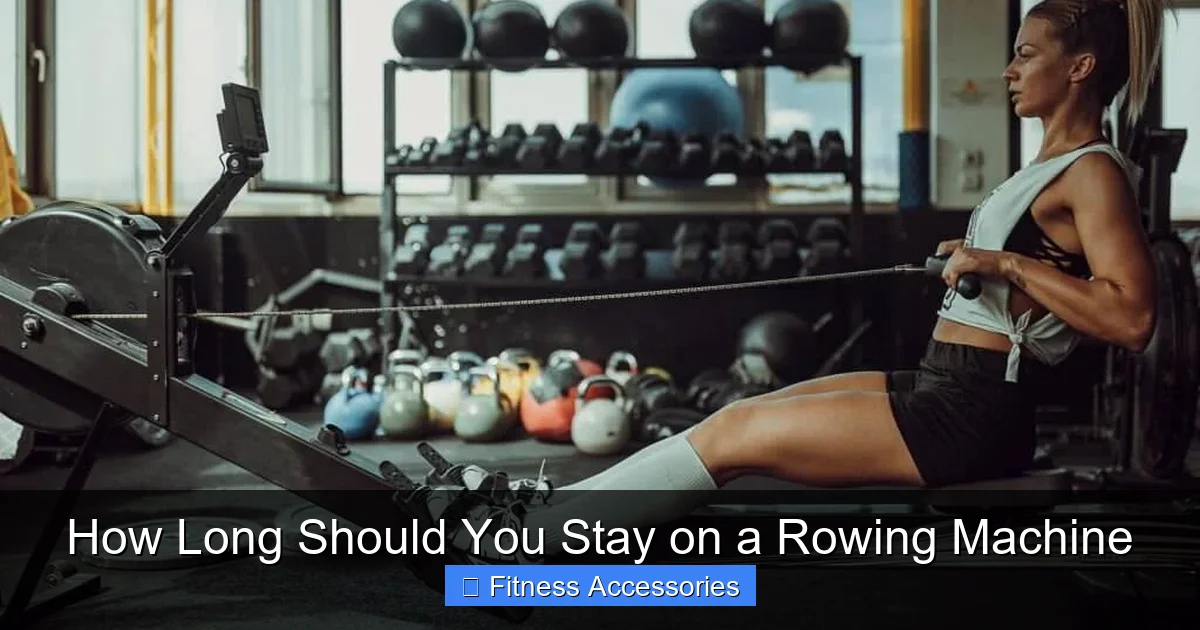
Visual guide about How Long Should You Stay on a Rowing Machine
Image source: boxlifemagazine.com
- Stroke Rate (spm): How many strokes you take per minute.
- Split Time: Time it takes to row 500 m; a lower split means you’re faster.
- Power (watts): The force you generate; higher watts equal more calorie burn.
Why duration matters
Time on the rower influences three main outcomes:
- Calorie burn: Longer sessions burn more calories, but the rate drops after about 30 minutes as fatigue sets in.
- Cardiovascular adaptation: Endurance improves with sustained moderate‑intensity rows (20‑45 min).
- Muscle endurance vs. strength: Short, high‑intensity bursts build power; longer rows develop muscular stamina.
2. How Long Should Beginners Row?
Start with 5‑10 minutes
If you’ve never rowed before, think of it like learning a new language. Your muscles and nervous system need time to coordinate. A 5‑minute session lets you focus on technique—catch, drive, finish, and recovery—without overwhelming fatigue.

Visual guide about How Long Should You Stay on a Rowing Machine
Image source: startrowing.com
Building a weekly plan
Use the “2‑minute rule.” Add 2 minutes to each session every week until you hit 20‑30 minutes. Example:
- Week 1: 5 min × 3 days
- Week 2: 7 min × 3 days
- Week 3: 9 min × 3 days
- Week 4: 12 min × 3 days
By month two most beginners comfortably row 20‑25 minutes.
Safety tips for newcomers
- Check the foot straps each time; loose straps cause foot slip.
- Set the damper (resistance) to 3‑4. Too high feels like rowing a heavy boat and taxes the lower back.
- Keep a slight bend in the knees on the recovery; lock‑out knees can strain the joints.
3. Intermediate Rowers: Finding the Sweet Spot
Goal‑based timing
At this stage you likely have a specific aim—fat loss, race prep, or overall fitness. Here’s a quick guide:
- Fat loss: 30‑45 minutes at a moderate intensity (65‑75 % max HR). Longer sessions boost calorie burn while staying in a fat‑oxidation zone.
- Cardio endurance: 45‑60 minutes steady rowing or 2‑3 × 20‑minute intervals with 2‑minute rest.
- Power & strength: 10‑20 minutes of HIIT (e.g., 500 m sprints with 2‑minute rest). Quality beats quantity.
Sample intermediate workout
Warm‑up (5 min):* 100 m easy row, focus on form.
*Main set (20 min):* 4 × 4‑minute intervals at 80 % HRmax, 1‑minute easy rows between.
*Cool‑down (5 min):* Light rowing, stretch shoulders and hips.
When to stop
Even seasoned rowers hit a “form break” point. If you notice:
- Rounded back or hunching shoulders
- Uneven stroke length
- Sharp knee or lower‑back pain
Wrap it up—no matter the clock.
4. Advanced Athletes and Competitive Rowers
Training for races
Competitive rowers follow periodized plans: base, build, peak, taper. Session length varies:
- Base phase: 60‑90 minutes at low intensity, 2‑3 times/week.
- Build phase: 45‑60 minutes with mixed intervals (e.g., 2 × 2000 m at race pace).
- Peak phase: 30‑45 minutes, focusing on race‑pace pieces and short sprints.
- Taper: 20‑30 minutes, low volume, high quality.
Power‑focused sessions
For strength, use the “pyramid” method:
- 500 m at 90 % effort
- Rest 3 min
- 400 m at 85 % effort
- Rest 2 min
- Continue down to 200 m, then back up.
Total time: ~20 minutes, but intensity is maximal.
Recovery considerations
Advanced rowers need active recovery days—light rowing for 15‑20 minutes or cross‑training (cycling, swimming). Sleep, nutrition, and foam‑rolling become non‑negotiable.
5. How to Use Technology to Gauge the Right Length
Heart rate zones
Wear a chest strap or optical monitor. Aim for:
- Fat loss: Zone 2 (60‑70 % HRmax)
- Endurance: Zone 3 (70‑80 % HRmax)
- HIIT: Zone 4‑5 (80‑95 % HRmax) for short bursts.
Rowing apps and consoles
Most machines (Concept2, WaterRower) display split, watts, and calories. Set a target:
- Calories: 300‑500 per session for moderate workouts.
- Distance: 5‑8 km for a 30‑minute steady row.
- Time: Use the “interval” mode to automatically stop after a set period.
Listening to perceived exertion
The Borg Scale (6‑20) is simple: 12‑13 feels “moderately hard.” If you’re above 16, you’re likely overdoing it for a long session.
6. Practical Tips to Extend Your Rowing Time Safely
Optimize your setup
- Seat position: Slide forward so that when the legs are fully extended, the handle is just above the knees.
- Damper setting: Keep it between 3‑5 for most users; higher numbers feel like rowing a heavy boat and strain the back.
- Foot strap: Secure the strap over the ball of your foot, not the toe.
Form drills
Incorporate “pause drills” – pause at the finish for 2 seconds, then row. This reinforces a strong finish and prevents slouching.
Progressive overload without extra minutes
Increase power by adding 5‑10 watts each week, or raise stroke rate by 2 spm, instead of adding more time.
Hydration and nutrition
Drink 200‑300 ml of water 15 minutes before rowing. For sessions over 45 minutes, sip small amounts every 10 minutes.
Conclusion: Tailor Length to You, Not the Clock
The perfect rowing duration isn’t a one‑size‑fits‑all number. It’s a blend of your current fitness, your goals, and how well you manage intensity and recovery. Start short, focus on flawless form, and let the minutes grow naturally. Use heart‑rate zones, split times, and how you feel to guide you. With these tools, you’ll row longer, stronger, and safer—turning every session into a step toward the results you want.
Frequently Asked Questions
How many minutes should a beginner row per session?
Start with 5‑10 minutes focusing on technique. Add 2 minutes each week until you comfortably reach 20‑30 minutes.
Is it better to row longer at a low intensity or shorter at a high intensity?
Both have benefits. Low‑intensity rows (30‑45 min) are great for fat loss and endurance, while high‑intensity intervals (10‑20 min) boost power and calorie burn in less time.
Can I row every day?
Yes, if you keep the intensity low (easy 15‑20 min rows) and listen to your body. For moderate or high intensity, aim for 3‑5 days with rest or active recovery in between.
What heart‑rate zone should I stay in for a 45‑minute rowing workout?
Stay in Zone 2‑3 (60‑80 % of max HR). This balances calorie burn and cardiovascular improvement without over‑taxing your system.
How do I know if my rowing form is breaking down?
Watch for a rounded back, uneven stroke length, or knee pain. If any of these appear, stop, reset your posture, and shorten the session.
Do I need a fancy rowing machine to get accurate results?
No. A basic rower with a monitor that tracks time, distance, and split is enough for most users. Consistency and proper technique matter more than high‑end features.