How Long Should You Use a Rowing Machine For

Wondering how long you should use a rowing machine? The answer depends on your fitness level, goals, and schedule. This guide breaks down optimal session lengths, frequency, and tips to keep your rowing safe and effective.
Key Takeaways
- Understanding How Long Should You Use A Rowing Machine For: Provides essential knowledge
📑 Table of Contents
- Introduction
- 1. Understanding the Basics of Rowing Workouts
- 2. How Long Should Beginners Row?
- 3. Rowing for General Fitness: The Sweet Spot
- 4. High‑Intensity Interval Training (HIIT) on the Rowing Machine
- 5. Endurance Rowing: Longer Sessions for Athletes
- 6. Frequency, Recovery, and Listening to Your Body
- Conclusion
Introduction
If you’ve ever stared at a rowing machine in a gym or at home and wondered, “How long should I use this thing?” you’re not alone. Rowing is a full‑body, low‑impact workout that can melt calories, build strength, and improve heart health. But unlike a treadmill where you can eyeball distance, rowing asks a different question: how much time should you actually spend on the ergometer?
In this article we’ll walk through the science, the practicalities, and the personal factors that dictate the perfect rowing duration for you. Whether you’re a brand‑new beginner, a busy professional, or an experienced athlete, you’ll find a clear roadmap that helps you row smarter, not longer.
1. Understanding the Basics of Rowing Workouts
What does a rowing machine do?
A rowing machine, or ergometer, mimics the motion of rowing a boat. You push with your legs, lean back with your core, and pull with your arms. This coordinated effort engages the legs (quadriceps, hamstrings), core (abs, lower back), and upper body (lats, biceps, shoulders). Because you’re moving 400‑600 kg of “water” each stroke, you get a high calorie burn without pounding your joints.
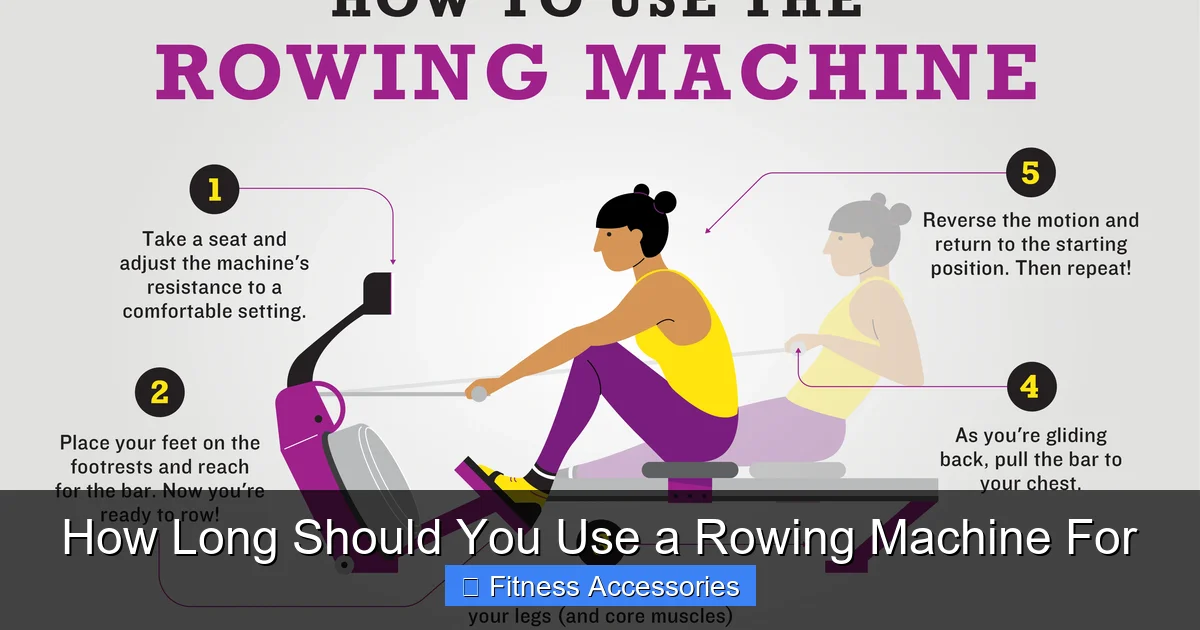
Visual guide about How Long Should You Use a Rowing Machine For
Image source: i.pinimg.com
Why duration matters
Time on the rower influences three main outcomes:
- Energy expenditure: Longer rows burn more calories, but intensity also matters.
- Muscular endurance: Staying on the machine for 30‑60 minutes builds stamina in the legs and core.
- Recovery: Too much time, especially at high intensity, can lead to overuse injuries.
Intensity vs. Time
Think of rowing like a conversation: you can talk softly for a long time (low intensity, long duration) or shout for a short burst (high intensity, short duration). Both achieve different goals. The key is matching the length of your session to the intensity you plan to maintain.
2. How Long Should Beginners Row?
Start with the “5‑Minute Rule”
For absolute beginners, the focus is on technique, not endurance. A 5‑minute row gives you enough time to:
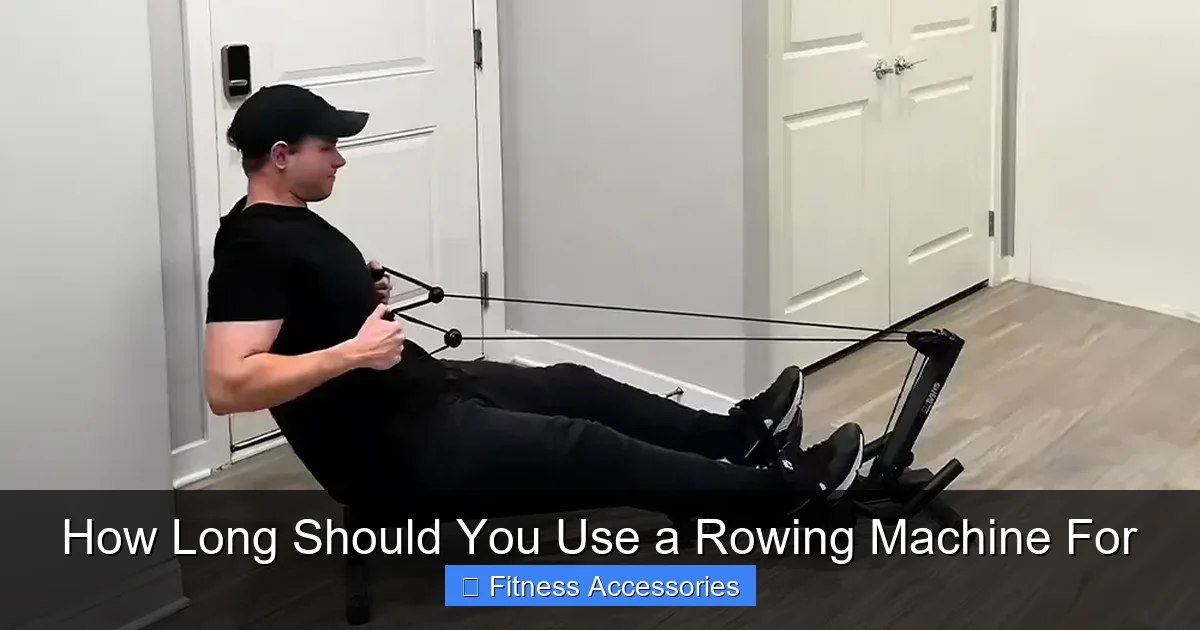
Visual guide about How Long Should You Use a Rowing Machine For
Image source: cdn.shopify.com
- Find a comfortable seat position.
- Practice the catch, drive, finish, and recovery phases.
- Feel the rhythm without exhausting yourself.
Set the resistance low (level 3‑4 on most machines) and aim for a steady 20‑22 strokes per minute (spm). After five minutes, stop, stretch, and assess how you feel.
Gradual Progression: 10‑15 Minutes
Once you’re comfortable with the motion, increase to 10‑15 minutes. Split the time into two sets with a short 30‑second break in between if needed. This “interval” approach helps you build endurance while still focusing on form.
Sample Beginner Workout
- Warm‑up: 2 minutes easy rowing (light resistance).
- Main set: 5 minutes steady rowing, focus on smooth catch and finish.
- Cool‑down: 2 minutes slow rowing, then stretch.
3. Rowing for General Fitness: The Sweet Spot
Why 20‑30 Minutes Works for Most People
For those seeking weight loss, cardiovascular health, or overall fitness, 20‑30 minutes is the “Goldilocks” zone—long enough to burn significant calories, short enough to prevent fatigue‑driven form breakdown.
Structuring a 30‑Minute Session
- Warm‑up (5 min): Light resistance, 18‑20 spm, focus on breathing.
- Steady State (20 min): Moderate resistance, 22‑24 spm. Keep heart rate in 70‑80 % of max.
- Cool‑down (5 min): Drop resistance, slow down to 16‑18 spm, then stretch.
Calorie Burn Estimates
At a moderate pace (≈500 W), a 155‑lb (70 kg) person burns roughly 260 calories in 30 minutes. Increase intensity or add intervals, and you can reach 400 calories in the same time.
4. High‑Intensity Interval Training (HIIT) on the Rowing Machine
What Is Rowing HIIT?
HIIT alternates short, maximal‑effort bursts with brief recovery periods. It maximizes calorie burn, improves VO₂ max, and can be completed in under 20 minutes.
Typical HIIT Protocols
- 30‑20‑10: 30 seconds hard, 20 seconds easy, 10 seconds rest. Repeat 8‑10 times.
- Tabata: 20 seconds all‑out, 10 seconds rest, 8 rounds (total 4 minutes). Add a 5‑minute warm‑up and cool‑down.
- 4‑Minute Pyramid: 1 min hard, 1 min easy, 2 min hard, 2 min easy, 3 min hard, 3 min easy.
How Long Should a HIIT Rowing Session Last?
Including warm‑up and cool‑down, aim for 15‑20 minutes total. The high‑intensity portion itself is usually 4‑8 minutes. This duration is enough to trigger metabolic after‑burn (EPOC) without overtaxing the joints.
5. Endurance Rowing: Longer Sessions for Athletes
Who Needs 45‑60 Minute Rows?
Competitive rowers, triathletes, and endurance athletes often train for 45‑60 minutes to improve aerobic capacity and muscular stamina. These sessions are usually performed at lower intensity (60‑70 % of max heart rate).
Building Up to an Hour
Never start at 60 minutes. Follow a 2‑week progression:
- Week 1: 2 sessions of 30 minutes, 1 session of 45 minutes.
- Week 2: 2 sessions of 35 minutes, 1 session of 50 minutes.
- After week 2, add 5‑10 minutes to the longest session each week.
Sample Endurance Workout
- Warm‑up: 10 minutes easy rowing, gradually increase resistance.
- Main set: 40 minutes steady rowing at 20‑22 spm, focus on a consistent stroke rate.
- Cool‑down: 10 minutes light rowing, followed by full‑body stretch.
6. Frequency, Recovery, and Listening to Your Body
How Many Days Per Week?
Most people see the best results with 3‑5 rowing sessions per week. The exact number depends on intensity:
- Low‑moderate intensity (20‑30 min): 4‑5 days.
- HIIT (15‑20 min): 3‑4 days, with at least 48 hours between sessions.
- Endurance (45‑60 min): 3 days, allowing ample recovery.
Signs You Need More Rest
If you notice persistent soreness, joint pain, decreased performance, or trouble sleeping, it’s time to cut back. Adding a “active recovery” day—light rowing for 10‑15 minutes or a gentle walk—can help.
Cross‑Training Benefits
Mix rowing with strength training, yoga, or cycling to prevent overuse injuries and keep workouts fresh. A balanced routine also supports overall muscular development.
Conclusion
There’s no one‑size‑fits‑all answer to “how long should you use a rowing machine for?” The sweet spot lies in matching duration to your goals, fitness level, and schedule. Beginners start with 5‑10 minutes, most fitness enthusiasts thrive at 20‑30 minutes, HIIT fans get great results in 15‑20 minutes, and endurance athletes may push to an hour.
Remember: quality beats quantity. Prioritize proper form, listen to your body, and progress gradually. With a clear plan, the rowing machine can become a lifelong ally in your health journey.
Frequently Asked Questions
How often should I row if I’m a beginner?
Start with 3 sessions per week, each lasting 5‑10 minutes. Focus on technique and add a few minutes every two weeks as you feel comfortable.
Can I lose weight by rowing 15 minutes a day?
Yes, especially when paired with a balanced diet. A 15‑minute moderate row can burn 150‑200 calories, and consistency over weeks leads to noticeable weight loss.
Is rowing better than running for cardio?
Rowing offers a full‑body workout with less impact on joints, making it a great alternative for those with knee or hip concerns. Both are excellent; choose the one you enjoy more.
What resistance level should I use?
For most home rowers, a resistance setting that lets you maintain 20‑24 spm with steady effort is ideal. Adjust up or down based on your fitness level and workout goal.
How do I prevent lower back pain while rowing?
Keep a neutral spine, engage your core, and avoid over‑reaching at the finish. Warm up thoroughly and limit session length until your back feels strong.
Should I stretch before or after rowing?
Do a light dynamic warm‑up (arm circles, leg swings) before you start. After rowing, perform static stretches for the hamstrings, hips, shoulders, and lower back to aid recovery.