Is a Rowing Machine Better Than a Stationary Bike

Looking for the perfect cardio machine? A rowing machine and a stationary bike each have unique strengths—one offers full‑body power, the other delivers low‑impact leg focus. Read on to see which aligns with your fitness goals, space, and budget.
Key Takeaways
- Full‑body vs. lower‑body focus: Rowers engage arms, core, and legs; bikes isolate the lower body.
- Calorie burn: Rowing typically burns 10‑20% more calories per hour at comparable effort.
- Joint impact: Bikes are gentler on knees and hips, making them ideal for rehab or arthritis.
- Learning curve: Rowing technique takes practice; bikes are intuitive for beginners.
- Space & cost: Bikes are usually smaller and cheaper, but premium rowers can be compact too.
- Versatility: Rowers double as strength trainers; many bikes now include interactive programs.
- Personal preference matters: Enjoyment predicts consistency—choose the machine you’ll actually use.
📑 Table of Contents
Introduction: Why the Debate Matters
When you walk into a gym or browse home‑fitness sites, the first question that pops up is often, “Should I buy a rowing machine or a stationary bike?” Both promise cardio, calorie burn, and a healthier heart, yet they feel worlds apart. One mimics the smooth pull of a boat gliding through water; the other replicates the steady pedaling of a cyclist on a flat road.
Choosing the right equipment isn’t just about brand hype or price tags. It’s about how each machine fits your body, goals, schedule, and even your living room. In the next few sections we’ll break down the science, the numbers, and the everyday experience of using each machine. By the end, you’ll have a clear picture of which cardio companion truly earns the title “better” for you.
1. How Each Machine Works
1.1 The Rowing Machine: A Full‑Body Engine
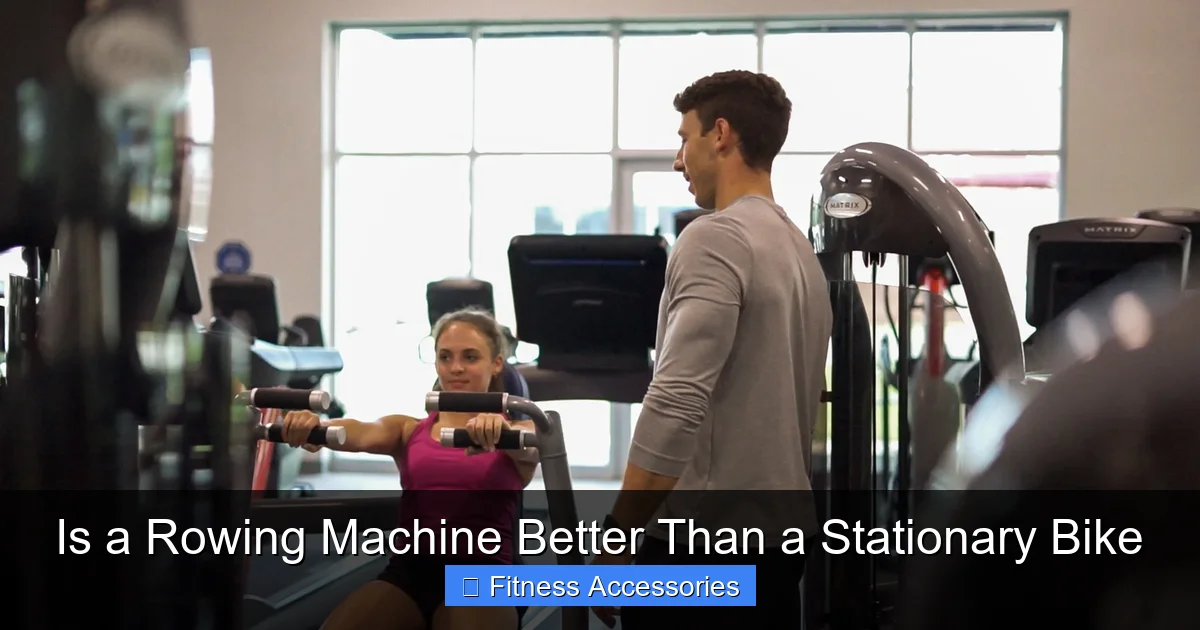
Rowers combine a sliding seat, a foot‑strap, and a handle attached to a chain or air‑resistance system. When you push with your legs, the seat glides backward, then you lean back and pull the handle, finally reversing the motion to return to the start. This “drive‑recovery” cycle repeats, engaging:
Visual guide about Is a Rowing Machine Better Than a Stationary Bike
Image source: hitonefitness.com
- Legs: Quadriceps, hamstrings, glutes.
- Core: Rectus abdominis, obliques, lower back.
- Arms & shoulders: Biceps, triceps, latissimus dorsi.
The result is a true full‑body workout that builds both cardiovascular endurance and muscular strength.
1.2 The Stationary Bike: Focused Pedal Power
Bikes place you on a saddle with pedals that rotate a flywheel (magnetic, friction, or air‑resistance). Your feet stay fixed, and you push the pedals in a circular motion. Most bikes offer two main styles:
- Upright bikes: Similar to a road bike; engages quads, calves, glutes.
- Recumbent bikes: Reclined seat with back support; reduces strain on lower back and knees.
The motion isolates the lower body, making it ideal for leg conditioning, rehab, or low‑impact cardio.
2. Calorie Burn & Cardiovascular Benefits
2.1 Numbers on the Scale
Research from the American Council on Exercise (ACE) shows that a 155‑lb person burns approximately:

Visual guide about Is a Rowing Machine Better Than a Stationary Bike
Image source: tousains.com
- Rowing (moderate, 5.5 METs): 210–240 calories per 30 minutes.
- Stationary bike (moderate, 5.0 METs): 190–220 calories per 30 minutes.
At higher intensities, the gap widens—rowers can top out at 12‑14 METs, while bikes typically max out around 10 METs. In plain language: you’ll usually burn 10‑20% more calories on a rower if you keep the effort level comparable.
2.2 Heart Health & VO₂ Max
Both machines improve VO₂ max (the gold standard for aerobic fitness). However, because rowing recruits a larger muscle mass, it often leads to a slightly quicker rise in VO₂ max during the first few weeks of training. That said, consistency trumps machine choice—if you love the bike and ride it daily, you’ll see similar heart benefits over time.
3. Impact on Joints and Injury Risk
3.1 Rowing: Low‑Impact, Yet Demanding Technique
Rowing is classified as low‑impact because your feet never leave the foot‑straps. The smooth glide is easy on knees and hips, but the technique matters. A poor “catch” position (bending too far forward) can strain the lower back, while over‑pulling can stress the shoulders.

Visual guide about Is a Rowing Machine Better Than a Stationary Bike
Image source: inmotionoc.com
Tip: Start each session with a 5‑minute “technique drill” focusing on a short, controlled drive and a relaxed recovery. This builds muscle memory and protects joints.
3.2 Biking: The Gentle Giant
Stationary bikes are often recommended for people with arthritis, knee problems, or post‑surgery rehab. The circular pedal motion distributes force evenly, and recumbent models add lumbar support. The main risk is over‑use of the quadriceps, which can cause knee tendonitis if resistance is too high.
Tip: Adjust the saddle height so that there is a slight bend in the knee at the bottom of the pedal stroke. This reduces strain and improves power output.
4. Space, Cost, and Practical Considerations
4.1 Footprint and Storage
Typical upright stationary bikes measure about 4–5 feet long, 2 feet wide, and 4 feet tall. They can fit in a small home gym corner or even a closet if you choose a fold‑up model.
Rowers vary more. Compact “fold‑away” rowers (e.g., WaterRower Natural) can be stored vertically in a closet, but a sturdy air‑resistance model (e.g., Concept2) often needs a dedicated floor space of at least 8×2 feet.
4.2 Price Range
- Stationary bikes: $200‑$2,500. Basic magnetic bikes sit around $300, while high‑tech indoor cycling trainers can exceed $2,000.
- Rowing machines: $250‑$3,500. Entry‑level hydraulic rowers start near $250; premium air‑ or water‑resistance models run $1,200‑$3,000.
If budget is tight, both categories have reliable options under $500. The key is to read reviews for durability and warranty length.
5. Training Versatility and Program Options
5.1 Rowing Workouts
Rowers shine in interval training. A classic 500‑meter sprint followed by a 2‑minute rest can be repeated 5–8 times for HIIT. Rowing also supports steady‑state “endurance rows” (20‑30 minutes at a moderate pace) that double as strength work.
Many modern rowers sync with apps like ErgData or Kinomap, offering virtual rivers, leaderboard challenges, and detailed split analysis.
5.2 Bike Workouts
Stationary bikes have evolved with interactive platforms such as Peloton, Zwift, and TrainerRoad. These turn a simple ride into a live class, virtual race, or structured interval plan. Recumbent bikes often include built‑in heart‑rate monitors and pre‑programmed hill climbs.
For those who love group energy, live streaming classes can be a huge motivation booster.
6. Which Machine Is Right for You?
6.1 Goal‑Based Decision Tree
- Goal: Full‑body strength + cardio → Choose a rowing machine.
- Goal: Low‑impact leg conditioning or rehab → Choose a stationary bike (recumbent if back support needed).
- Goal: Weight loss with high calorie burn → Rowing edges out slightly, but pick the machine you’ll use most.
- Goal: Small space & budget → Look for a fold‑away bike or compact rower.
- Goal: Social motivation → A bike with a live‑class subscription may keep you engaged.
6.2 Personal Preference Matters
Science can tell you which machine burns more calories, but enjoyment dictates adherence. If you love the rhythmic pull of rowing, you’ll likely log more minutes per week. If the whir of a bike’s flywheel feels soothing, that’s your winner.
Try both if possible. Many gyms offer a “free‑row” hour or a bike‑only class. Take note of how your body feels after 10 minutes, and which activity leaves you smiling.
Conclusion: No One‑Size‑Fit Answer
So, is a rowing machine better than a stationary bike? The short answer: it depends. Rowers deliver higher calorie burn, full‑body engagement, and a unique sense of power. Bikes provide lower joint stress, easier learning, and a wider range of social, interactive experiences. Your ideal cardio machine is the one that aligns with your fitness goals, respects your body’s limits, fits your living space, and most importantly, makes you want to move day after day.
Take the time to assess your priorities, test each machine, and remember that consistency beats perfection. Whether you end up rowing across a virtual river or pedaling through a digital mountain pass, you’re investing in a healthier heart, stronger muscles, and a more active lifestyle.
Frequently Asked Questions
Is rowing easier on the knees than biking?
Yes. Rowing keeps the feet planted and uses a sliding seat, which reduces direct knee impact. However, improper technique can stress the lower back.
Can I lose weight faster on a rowing machine?
Rowing generally burns 10‑20% more calories per hour at the same intensity, so it can accelerate weight loss if you maintain consistent workouts.
Do stationary bikes help build upper‑body strength?
Traditional bikes focus on the lower body, but some upright models engage the core and arms slightly when you grip the moving handlebars.
Which machine is better for beginners?
A stationary bike is usually more intuitive for beginners because the motion mimics everyday cycling, while rowing requires learning a coordinated drive‑recovery sequence.
How much space does a rowing machine need?
Most rowers need about 8 ft × 2 ft of floor space. Fold‑away models can be stored vertically in a closet, reducing the footprint to roughly 2 ft × 2 ft.
Are there health risks associated with rowing?
Improper form can lead to lower‑back strain or shoulder discomfort. Starting with technique drills and keeping the core engaged minimizes these risks.