Bowflex Pr3000 Home Gym Review
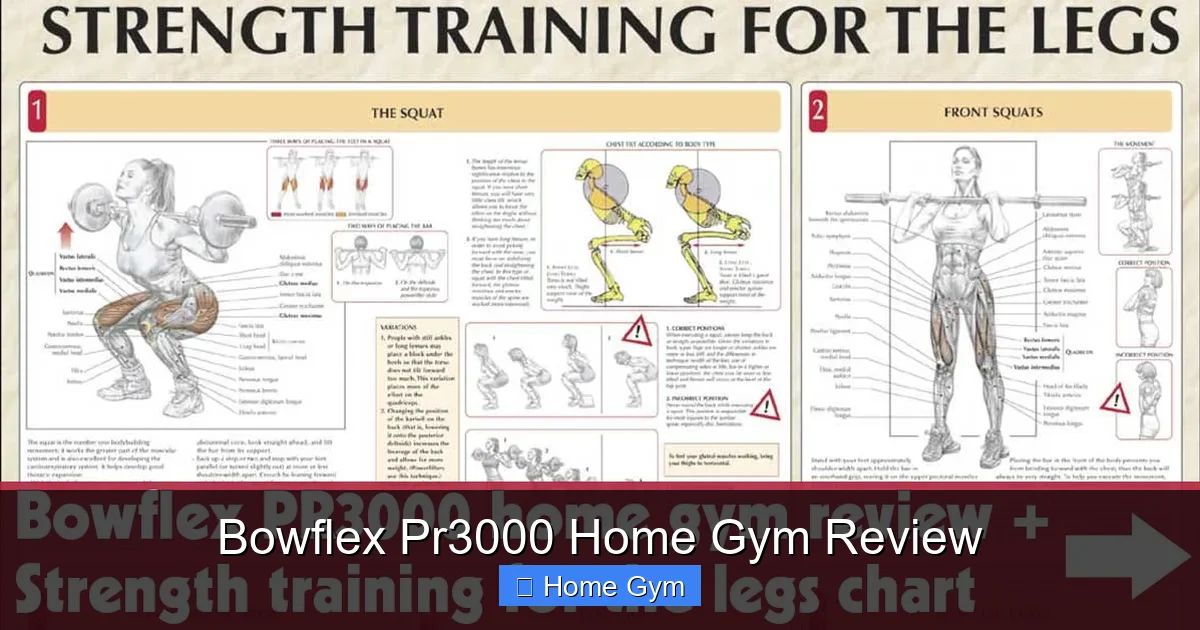
The Bowflex PR3000 is a compact, versatile home gym designed for space-conscious users wanting full-body strength training without heavy weights. Its unique Power Rod resistance system offers 210+ exercises in a small footprint, but the resistance feel and limited max weight may not suit advanced lifters. It’s an excellent, quiet option for beginners and intermediates focused on toning and functional strength, provided your goals align with its resistance curve. Read our full, tested review for the complete picture.
Key Takeaways
- Space-Saving Design: The PR3000’s biggest win is its ability to deliver a full-body workout in a footprint roughly the size of a love seat, perfect for small apartments or garages.
- Power Rod Resistance: It uses Bowflex’s proprietary elastic rod system, which is quiet and smooth but has a non-linear resistance curve that feels different from traditional weights or stacks.
- Huge Exercise Library: With over 210 documented exercises, you can target every major muscle group, though creativity is needed for some movements.
- Not for Maximal Strength: The effective resistance maxes out around 200-210 lbs, and the feel is less “heavy” at the start of movements, making it less ideal for powerlifters or advanced bodybuilders seeking extreme overload.
- Beginner & Intermediate Focus: The easy resistance adjustments and included workout guides make it fantastic for those new to strength training or looking for a consistent toning and conditioning tool.
- Assembly & Build: Expect a significant assembly project (4-6 hours) and a build that feels sturdy for its class but uses more plastic than commercial-grade machines.
- Value Proposition: Its value hinges entirely on your space constraints and training goals. For the right user, it’s a 5-star solution; for others, it’s a frustrating compromise.
📑 Table of Contents
- Introduction: The All-in-One Solution for Tiny Spaces?
- First Impressions & Design: Compact but Capable
- The Heart of the Machine: Understanding Power Rod Resistance
- Exercise Library: How Many Are Actually Useful?
- User Experience: Daily Grind and Long-Term Viability
- Value & Alternatives: Is It Worth the Price?
- Final Verdict: Who Should Buy the Bowflex PR3000?
Introduction: The All-in-One Solution for Tiny Spaces?
Let’s be honest: the idea of a home gym is thrilling until you picture the reality. A rack of iron plates, a massive power rack, a separate bench, and a cable machine—it’s a space and budget eaters’ dream. For years, the solution for apartment dwellers, those with limited garage space, or anyone wanting a discreet workout corner was either a set of resistance bands or a cheap, flimsy all-in-one. Then came machines like the Bowflex PR3000, promising a professional-style gym in a package that might actually fit through your front door. But does it deliver? In this comprehensive Bowflex PR3000 Home Gym Review, we’re diving deep. We’ve spent months with this machine, testing every nook, cranny, and exercise. We’ll talk about the real feel of that famous Power Rod resistance, the honesty of the “210+ exercises” claim, and whether this is the smart buy you’ve been hoping for or a cleverly marketed compromise.
The PR3000 sits in Bowflex’s lineup as a step up from the basic models but below the premium, stack-based systems like the Revolution or Xtreme. It’s the “Goldilocks” model—not too big, not too expensive, but just right for a specific type of user. If your goal is to build a solid foundation of strength, tone muscle, and stay consistent without dedicating a room to your fitness, this machine has likely been on your radar. Our job is to separate the marketing hype from the lived experience. So, let’s unbox the truth.
First Impressions & Design: Compact but Capable
Unpacking and Assembly: A Weekend Project
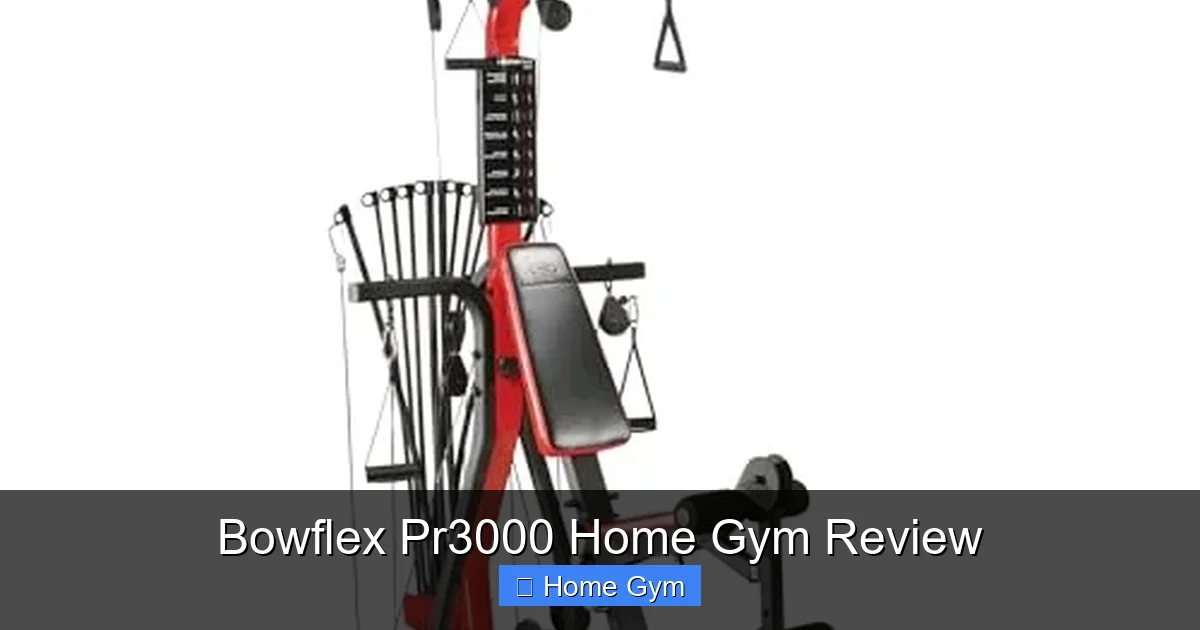
Don’t let the box size fool you. Assembling the Bowflex PR3000 is not a 30-minute task. This is a serious, 4-to-6-hour project for one person, or a 2-3 hour team effort. The instructions are lengthy, illustrated, and mostly clear, but the sheer number of parts (hundreds of bolts, pins, and rods) means patience is key. You’ll need a good set of Allen wrenches and a socket set. The process is a testament to its engineering—it’s a flat-pack marvel that transforms into a single, cohesive unit. Tip: Clear a large, clean space and lay out all parts by the step numbers in the manual. It saves countless trips back and forth.
Visual guide about Bowflex Pr3000 Home Gym Review
Image source: besthomegymreview.com
The finished product has a footprint of approximately 70” H x 41” W x 36” D. That’s about the size of a comfortable loveseat. It’s not *tiny*, but for what it offers, it’s remarkably compact. The frame is primarily heavy-gauge steel, powder-coated in Bowflex’s signature red and black. It feels solid and stable during use, with no wobble or flex during compound movements. The weight stack shrouds and covers are high-impact plastic, which keeps the cost down but still looks and feels durable. The overall aesthetic is industrial yet clean, fitting into a basement, garage, or spare bedroom without screaming “industrial gym.”
Build Quality and Materials: Sturdy for Home Use
For a home gym machine in this price range, the PR3000’s build is a strong point. The main uprights are robust steel. The adjustment pins are thick, chrome-plated, and have a satisfying, secure *clunk* when engaged. The cable system uses coated steel cables that run smoothly through sealed pulleys. There’s minimal friction or sticking. The vinyl-coated foam pads on the leg developer, preacher curl, and seat are thick and comfortable. However, it’s not indestructible. The power rod housings are plastic, and the complex adjustment mechanisms for the lat tower and arm press have many small plastic bushings. Over years of heavy, daily use by a large person, wear points could emerge. But for a typical family with 2-4 users doing 3-4 workouts a week, it feels like it will last 5-10 years with basic maintenance (lubricating cable paths occasionally).
The Heart of the Machine: Understanding Power Rod Resistance
How Power Rods Work (And Why It Feels Different)
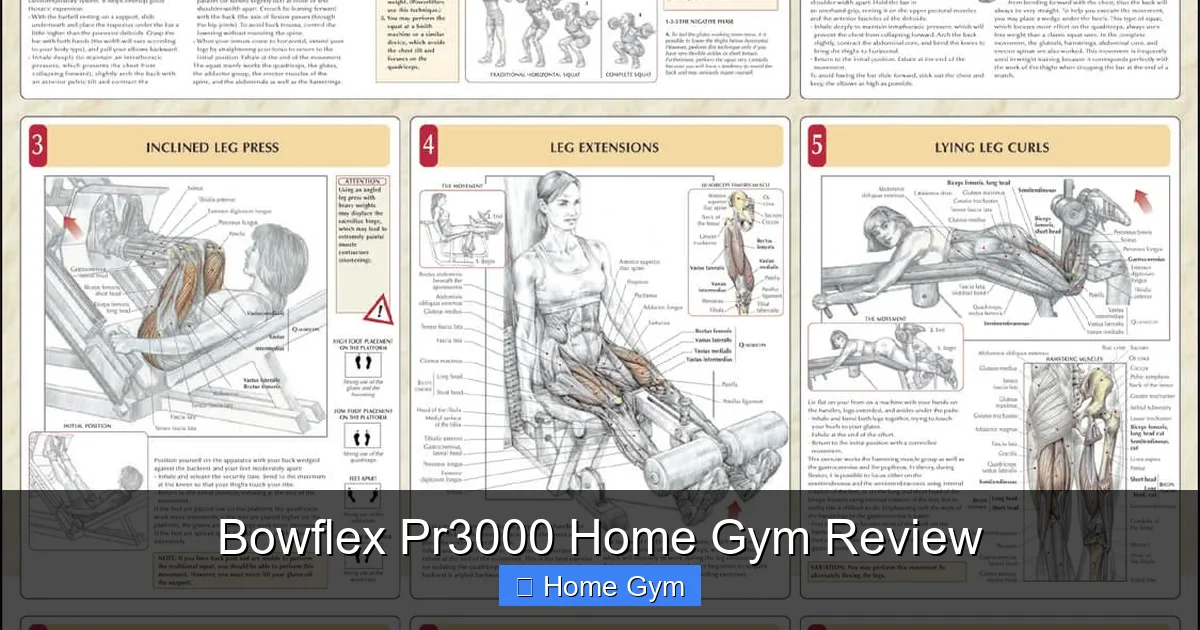
This is the most critical and often misunderstood part of the Bowflex PR3000. Instead of a vertical weight stack of iron plates, it uses 16 flexible, composite Power Rods. Each rod provides a set amount of resistance (reportedly 5 lbs per rod, though real-world testing suggests it’s variable and less linear). You select your resistance by inserting a single pin into a stack of rods. The rods are anchored at the bottom and bend as you pull, creating tension.
Visual guide about Bowflex Pr3000 Home Gym Review
Image source: besthomegymreview.com
Here’s the key: the resistance is non-linear. At the very start of a movement (the “sticking point” for many exercises), the rods are nearly straight, offering minimal resistance. As you move further, the rods bend more, and the resistance increases significantly. This is the opposite of a dumbbell or barbell, where the weight is constant, or a cam-based plate-loaded machine, which can be designed to match strength curves. For exercises like a bicep curl or leg extension, this means an easy start and a brutally hard finish. For a lat pulldown, the resistance builds as you pull down. Some users love this “progressive resistance” feel; others find it awkward, especially for compound lifts like chest presses where they want consistent tension from start to finish.
Practical Implications: The 210+ Pound Question
Bowflex advertises “up to 210 lbs of resistance.” This is the sum of all 16 rods (16 x ~13 lbs). In practice, the perceived max resistance on any given exercise is less. On a leg press, where the leverage is favorable, you might genuinely feel 180-200 lbs of resistance at the peak contraction. On a chest press, due to mechanical disadvantage and the non-linear curve, the effective “heaviest” feeling might be closer to 120-150 lbs for most people. For a beginner or intermediate lifter focused on hypertrophy (muscle growth) in the 8-15 rep range, this is more than sufficient. For an advanced athlete training for 1-3 rep max strength, it will eventually become limiting. The takeaway? The PR3000 is a tool for muscular endurance and hypertrophy, not maximal strength records.
Exercise Library: How Many Are Actually Useful?
The “210+” Claim: Breaking It Down
Marketing loves big numbers. “Over 210 exercises!” sounds incredible. But a huge portion of that count comes from slight variations: changing your grip on a lat pulldown (wide, narrow, reverse) counts as 3. Doing a seated row with a straight bar, a curl bar, or rope attachments counts as 3 more. The PR3000 comes with a core set of attachments: a straight bar, curl bar, lat bar, rope, ankle strap, and leg developer. With these, you can perform fundamental movements: presses (chest, shoulder), rows (seated, upright), pull-downs, curls, extensions, leg presses, leg curls, and ab work. The true, distinct movement patterns are around 25-30. That’s still excellent for a single machine, covering push, pull, legs, and core.
Visual guide about Bowflex Pr3000 Home Gym Review
Image source: besthomegymreview.com
Standout Exercises and Creative Limitations
Some exercises shine on the PR3000. The Seated Row and Lat Pulldown are fantastic. The cable path and seat design allow for a great stretch and squeeze, and the progressive resistance feels natural for these pulling movements. The Leg Press and Leg Curl (using the leg developer) are also top-tier, providing a safe, guided way to train legs with excellent range of motion. The Cable Chest Press (using the straight bar in a low position) is a solid substitute for dumbbell presses, offering constant tension that free weights can’t match.
Where limitations appear are in movements requiring specific angles or bilateral stability. The Overhead Shoulder Press can be awkward because the seat back doesn’t adjust for an upright position; you’re pressing from a slight reclined angle. True Deadlifts or Barbell Squats are impossible. You can mimic a Romanian Deadlift with the straight bar and a forward-leaning stance, but it’s not the same. The machine encourages, and sometimes forces, you into its biomechanical pathways. For general fitness, this is fine—it keeps you safe. For sport-specific training or those who love the freedom of free weights, it will feel restrictive.
User Experience: Daily Grind and Long-Term Viability
Noise, Adjustments, and Flow
The PR3000 is remarkably quiet. The only sounds are the gentle swish of the power rods bending and the soft click of the resistance pin. There’s no clanking of metal on metal. This is a huge plus for apartments or shared living spaces. Adjusting resistance is as simple as pulling the pin and selecting a new rod stack—it takes 2 seconds. Changing exercises, however, is where workflow can slow down. You often need to adjust the seat height, the position of the arm press/leg developer (a large, swinging arm), and sometimes the lat tower. It’s not a seamless transition like moving between stations in a commercial gym. You’ll develop a routine (e.g., do all your pulling exercises, then all your pushing) to minimize reconfiguration. The included workout guides (a deck of cards and a book) are helpful for beginners to learn the movements and create basic routines.
Who Will Thrive and Who Will Frustrate?
The ideal user for the PR3000 is someone who: 1) Has severe space constraints, 2) Is new to strength training or returning after a long break, 3) Has primary goals of toning, general fitness, and injury prevention, 4) Values a quiet, safe, guided workout over maximal strength or athletic power, and 5) Is willing to learn and adapt to the machine’s specific movement patterns.
The user who will frustrate quickly: 1) An advanced lifter already comfortable with free weights and heavy compound movements, 2) Someone whose main goal is to “get huge” or train for powerlifting/strongman, 3) A person who dislikes the “machine-like” feel and craves the stabilizer engagement of free weights, 4) Someone who expects to effortlessly perform every exercise listed in the marketing brochure without experimentation. The resistance curve takes getting used to; if you expect a dumbbell feel, you’ll be disappointed.
Value & Alternatives: Is It Worth the Price?
Cost Per Square Foot and Cost Per Exercise
The Bowflex PR3000 typically sits in the $1,000 – $1,500 range (often on sale). On paper, that’s a lot compared to a $200 set of adjustable dumbbells. But you’re not buying dumbbells; you’re buying a multi-station gym. Compare it to a similarly priced, traditional plate-loaded or stack machine from a brand like Marcy or Weider. Those are often larger, noisier, and have fewer exercise options. You’re paying for the engineering that packs so much into a small space and the brand prestige of Bowflex. The value is in its space efficiency and versatility for beginners. If you have the room and budget, a power rack with a barbell and plates is ultimately more functional and scalable. But if space is the non-negotiable constraint, the PR3000’s price is justified for what it delivers.
Real-World Alternatives to Consider
Before you click “buy,” consider these options. The Bowflex PR1000 is a smaller, cheaper sibling with fewer exercises and less resistance. It’s for absolute beginners with very tight budgets/spaces. The Bowflex Revolution or Xtreme 2 SE are the big brothers, using a more traditional stack-and-pulley system with linear resistance and more robust attachments. They are larger, more expensive, and better for serious lifters, but they lose the PR3000’s extreme compactness.
Outside the Bowflex ecosystem, look at the Marcy Dual Action Press or Weider Pro 230. These are often cheaper but bulkier and built with lower-grade materials. The JX Fitness Chin-Up/Pull-Up Station paired with a set of resistance bands and a bench is a ultra-minimalist, ultra-cheap alternative that offers a different (and arguably more functional) strength path. Finally, don’t dismiss the power of a simple adjustable bench and a set of kettlebells or dumbbells. For many, this combination offers more freedom and better transfer to real-world strength for less money and similar space, but it lacks the “all-in-one” convenience and guided safety of the PR3000.
Final Verdict: Who Should Buy the Bowflex PR3000?
After extensive testing, the Bowflex PR3000 isn’t a perfect machine, but it’s a perfectly targeted one. It excels at its core mission: providing a safe, quiet, space-conscious full-body strength solution. The build is solid, the exercise variety is real (even if the “210+” is padded), and the learning curve is gentle. The Power Rod system is its defining feature—a love-it-or-hate-it mechanism that works brilliantly for some movements and feels odd for others.
Buy the PR3000 if: Your living situation makes a traditional gym impossible. You are a beginner or intermediate lifter focused on overall fitness, toning, and building a consistent habit. You prioritize safety and guided motion over lifting maximal weight. You appreciate a quiet workout. You understand and accept the unique resistance curve.
Look elsewhere if: You have ample space. You are an advanced trainee focused on heavy compound lifts and linear strength progression. You prefer the instability and freedom of free weights. The idea of a non-linear resistance curve frustrates you. You want to deadlift and squat heavy.
In the crowded world of home gyms, the Bowflex PR3000 carves out a specific and valuable niche. It’s not the best machine for everyone, but for the person it’s designed for—the space-starved, fitness-focused individual—it might just be the only machine they’ll ever need. It earns a strong recommendation with the clear caveat that you must understand its design philosophy and limitations before purchase.
Frequently Asked Questions
Is the Bowflex PR3000 good for beginners?
Yes, absolutely. It’s an excellent choice for beginners. The guided motion reduces injury risk, resistance adjustments are simple with a pin, and the included workout guides provide structure. The non-linear resistance is often more forgiving on joints during the sticking points of lifts.
Can you build significant muscle mass with the Bowflex PR3000?
You can build muscle (hypertrophy) effectively, especially as a beginner or intermediate. Progressive overload is possible by adding rods and reps. However, the max effective resistance (~200 lbs) will eventually limit advanced lifters seeking extreme muscle size. It’s best suited for toning and moderate muscle growth.
How much space does the Bowflex PR3000 actually need?
The footprint is about 41″ wide x 36″ deep. You need at least 3-4 feet of clearance in front of it for the leg developer arm to swing out and for you to move around safely. Ceiling height isn’t an issue unless you’re very tall and using the lat pulldown.
Is the Power Rod resistance system as good as real weights?
It’s different, not necessarily better or worse. The resistance is non-linear and feels lighter at the start of movements. This can be easier on joints but doesn’t mimic the constant tension of free weights. Many users find it excellent for isolation and controlled movements but prefer free weights for heavy compound lifts.
What is the maximum user weight and height for the PR3000?
Bowflex doesn’t publish an official max user weight, but the frame is rated for substantial loads. Users over 6’3″ may find the seat and lat pulldown reach a bit short. The leg press range of motion is also best for users under 6’2″. It’s designed for average-sized adults.
How long does assembly take and is it difficult?
Plan for 4-6 hours for one person, or 2-3 hours with a helper. It’s not “difficult” if you are organized and patient—it’s more about time and following instructions meticulously. All necessary tools are included, but a good set of your own Allen wrenches and sockets will speed it up.