How to Train for a 5k on a Treadmill
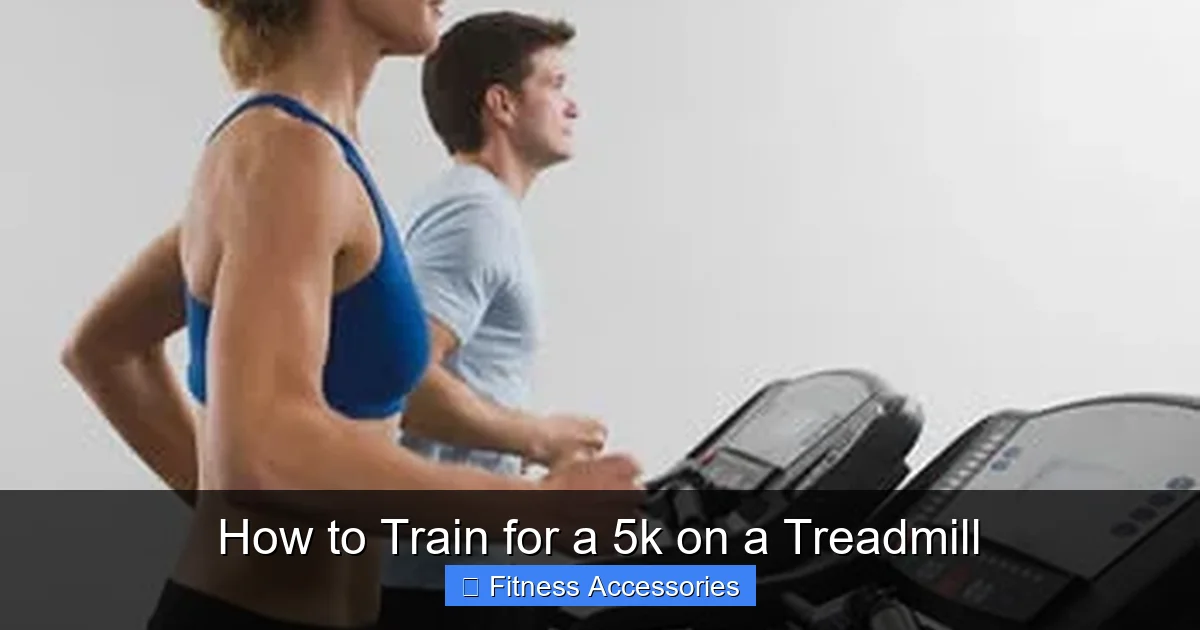
Training for a 5k on a treadmill is a highly effective, convenient, and weather-proof way to reach your goal. By focusing on consistent base building, incorporating varied speed and hill workouts, and simulating race conditions, you can build the endurance and pace needed for a strong 5k performance. This guide provides a structured, step-by-step approach to transform your treadmill sessions into a race-ready training plan.
Key Takeaways
- Consistency Over Intensity: Regular, manageable runs build a stronger aerobic base than sporadic hard efforts. Aim for 3-4 runs per week.
- Variety is Essential: A balanced plan includes easy runs, speed intervals, and hill simulations to build all facets of fitness.
- Mind the Incline: Setting the treadmill to a 1-2% incline better mimics outdoor running conditions and builds strength.
- Fuel and Recover: Proper nutrition, hydration, and rest days are non-negotiable parts of your training, not extras.
- Practice Your Pace: Use treadmill workouts to find and practice your goal 5k race pace consistently.
- Simulate Race Day: Do at least one full or partial “dress rehearsal” run at your goal pace in race-day shoes and attire.
- Listen to Your Body: Treadmill cushioning is different from roads. Adjust if you feel unusual joint pain and prioritize good form.
📑 Table of Contents
- Why the Treadmill is Your Secret Weapon for 5k Success
- Getting Started: Setting Up for Success
- Building Your Aerobic Engine: The Base Phase (Weeks 1-4)
- Adding Speed: Introducing Structured Workouts (Weeks 5-8)
- Conquering the Hills: Strength and Power on the Belt
- Race-Specific Preparation and Taper (Weeks 9-12)
- Conclusion: From Treadmill Belt to Finish Line
Why the Treadmill is Your Secret Weapon for 5k Success
So, you’ve decided to run a 5k. Fantastic goal! It’s a perfect distance—challenging yet achievable for most fitness levels. But then life happens: early sunsets, unpredictable weather, busy schedules, or maybe you simply prefer the controlled environment of your gym or home. Whatever the reason, training for a 5k on a treadmill isn’t a compromise; it’s a strategic advantage. The treadmill offers unparalleled control over pace, incline, and environment, allowing you to execute precise workouts without worrying about traffic, hills, or getting lost. This guide will walk you through every step of how to train for a 5k on a treadmill effectively, turning those belt miles into a powerful, race-ready engine.
Many runners mistakenly believe treadmill running is “easier” than outdoor running. While the moving belt does assist with leg turnover, you can easily make it more challenging with incline. The key is to structure your training intelligently. We’ll move beyond just running at a steady pace. You’ll learn to build an aerobic base, introduce speed to improve your economy, add strength with simulated hills, and practice your goal pace. By the end of this plan, you won’t just be ready to finish a 5k; you’ll be ready to run it with confidence and a strong time.
Getting Started: Setting Up for Success
Before your first stride, proper setup is crucial. A poorly configured treadmill session can lead to boredom, inefficiency, or even injury. Let’s get the foundation right.
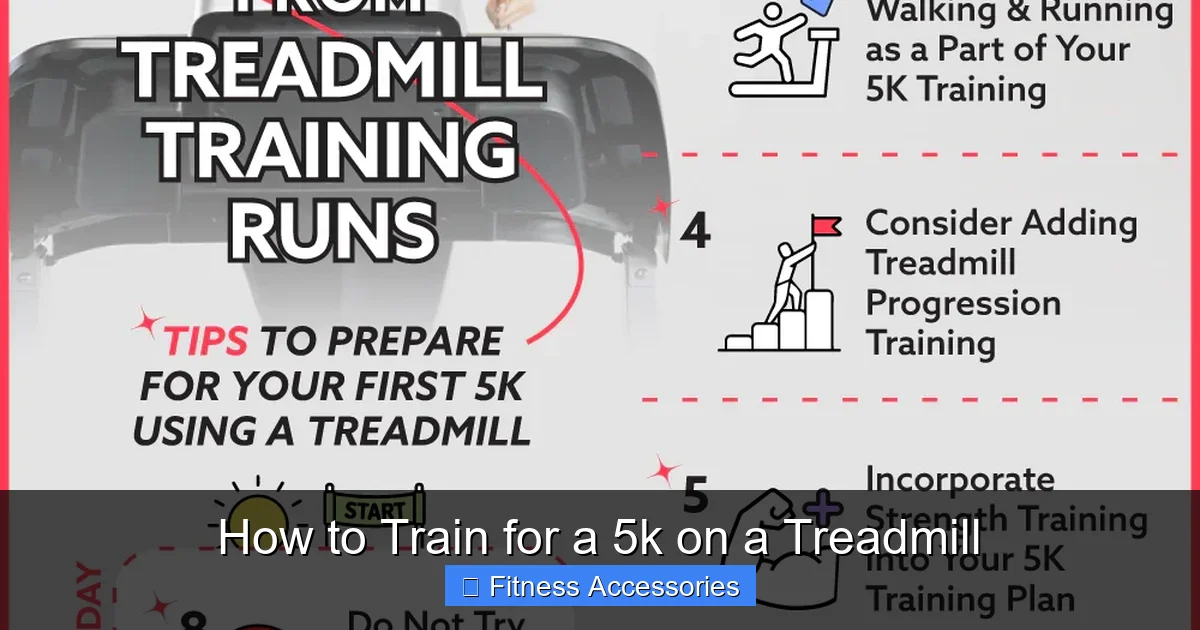
Visual guide about How to Train for a 5k on a Treadmill
Image source: cdn.shopify.com
Choosing Your Treadmill Settings: The 1% Rule
The single most important setting adjustment is the incline. Research and runner consensus suggest setting your treadmill to a 1% incline for most runs. Why? Outdoor running has natural wind resistance and terrain variations that a treadmill belt doesn’t. A 1% grade compensates for this, making your effort more equivalent to a flat outdoor run and building slightly more strength in your glutes and hamstrings. For very easy recovery runs, you can stick to 0.5% or even 0%. For hill-specific workouts, we’ll go much higher. Get in the habit of starting each run at 1%.
Your Essential Treadmill Toolkit
To make the experience productive and enjoyable, gather these items:
- Proper Running Shoes: This is non-negotiable. Even on a treadmill, your feet strike the deck repeatedly. Get fitted for shoes that suit your gait at a running store. Don’t use old, worn-out shoes.
- Hydration: Keep a water bottle within easy reach. The indoor environment can be deceptively dry, and you’ll sweat.
- Towel: For your face, neck, and to wipe the console.
- Entertainment: A tablet, phone, or magazine. But choose wisely! If you’re doing a speed workout, a complex TV show might distract you from pace. For long, steady runs, a captivating podcast or show is perfect.
- Heart Rate Monitor (Optional but Recommended): A chest strap or optical sensor gives you real-time effort data, which is more reliable than perceived effort, especially in a climate-controlled room.
- A Fan: Position a small fan to blow on you. Air movement is critical for thermoregulation. Running in stagnant, warm air is much harder and can lead to overheating.
Form Focus: Don’t Let the Belt Fool You
It’s easy to adopt a short, choppy stride on the treadmill, almost “hovering” over the belt. Fight this. Aim for a natural gait:
- Posture: Stand tall, eyes forward. Don’t lean on the front panel.
- Stride: Land with a mid-foot strike under your center of gravity. Let your stride length open up naturally; don’t overstride.
- Arm Swing: Keep your elbows at 90 degrees, swinging forward and back, not across your body. This drives your pace.
- Cadence: Strive for a quick, light turnover—around 170-180 steps per minute. You can use a metronome app or music with a matching BPM to help.
Periodically check in on your form, especially when fatigued. Good form is efficient and injury-preventative.
Building Your Aerobic Engine: The Base Phase (Weeks 1-4)
Your first month is about building a foundation. This is the most important phase. You are teaching your body to become efficient at using oxygen, strengthening your heart and capillaries, and adapting your muscles and tendons to the repetitive stress of running. The goal here is time on feet, not speed.
Visual guide about How to Train for a 5k on a Treadmill
Image source: treadmill.run
Run Frequency and Duration
Aim for 3-4 runs per week. If you’re a complete beginner, start with 3. If you have some running background, 4 is great. Your runs will follow this pattern:
- Two “Easy” Runs: These are your most important runs. You should be able to hold a conversation easily (the “talk test”). For this phase, start with 20-25 minutes and add 5 minutes each week until you’re comfortably completing 30-35 minutes. Pace doesn’t matter here; effort does.
- One “Long” Run: This is your weekly cornerstone. It’s slightly longer than your easy runs. Start at 30 minutes and build by 5 minutes per week, reaching 40-45 minutes by the end of week 4. Keep the effort easy to moderate. This builds endurance and mental toughness.
- One Optional Cross-Training/Strength Day: On your 4th day, do 30 minutes of cycling, swimming, elliptical, or a full-body strength routine. This supports your running without impact.
Example Week 1: Tue: Easy 20 min, Thu: Easy 25 min, Sat: Long 30 min.
Mastering the Easy Effort
This is the hardest pace for many people to nail. It should feel slow. If you’re gasping, you’re going too hard. Use the talk test. If you can’t speak in full sentences, slow down. On a treadmill, this means you might need to lower the speed significantly from what you think is “easy.” This low-intensity work is where mitochondrial and capillary density increases, setting you up for faster paces later. Embrace the slow run.
Adding Speed: Introducing Structured Workouts (Weeks 5-8)
Once your base is solid (you can comfortably run 45 minutes), it’s time to introduce speed. Speed work improves your running economy (how efficiently your body uses oxygen at a given pace) and lactate threshold (the point at which lactic acid builds up). This is how you get faster. We’ll use two primary types of workouts on the treadmill.
Visual guide about How to Train for a 5k on a Treadmill
Image source: treadmill.run
Fartlek (Speed Play) Workouts
“Fartlek” is Swedish for “speed play.” It’s a flexible, unstructured way to introduce speed. After a 10-minute warm-up jog, alternate between:
- 1 minute at a “comfortably hard” pace (where you can only speak a few words)
- 2 minutes of very easy jogging or walking to recover.
Repeat this 4-6 times. Finish with a 5-minute cool-down jog. The beauty of fartlek is you control the “hard” pace. It’s not an all-out sprint. It’s a pace that feels challenging but sustainable for the minute. This teaches your body to adapt to changes in pace, much like a race where you might surge.
Interval Training: The Classic 400s or 800s
Intervals are more structured and precise. They build raw speed and mental toughness. A classic starter is the 400-meter (approx. 0.25 mile) repeat.
- Warm-up: 10 minutes easy jog.
- The Set: Run 400 meters (about 2-2.5 minutes for many beginners) at a pace that is hard but controlled. You should feel like you could only say one or two words. Then, take a 1:2 or 1:3 recovery. For example, if your 400 took 2 minutes, jog or walk very slowly for 2-4 minutes.
- Repeat: Start with 4 repeats. Build to 6 over the weeks.
- Cool-down: 5-10 minutes easy jog.
Progression: As you get fitter, you can either shorten the recovery, lengthen the repeat (try 800m / 0.5 mile), or run the repeats slightly faster. The key is that the last repeat should feel almost as hard as the first.
Finding Your “Hard” and “Easy” Paces
Use recent race results or a timed mile on the treadmill to estimate. A good rule of thumb:
- Easy Pace: Your long run or recovery pace. Conversational.
- Hard/Interval Pace: Your current 5k race goal pace, or slightly faster (5-15 seconds per mile faster). This is your “comfortably hard” or “can only speak a few words” pace.
- All-Out Sprint: Reserve this for very short (30-60 sec) bursts. Not needed for 5k training.
Conquering the Hills: Strength and Power on the Belt
Even if your race is flat, hill training is a secret weapon. It builds leg strength, power, and cardiovascular fitness in a way flat running cannot. The treadmill’s incline button is your personal mountain.
The Treadmill Hill Repeat
This is a dedicated strength session. After a 10-minute warm-up at easy pace:
- Find a challenging but sustainable incline. Start with 4-5%.
- Run uphill for 60-90 seconds. Your pace will slow significantly. That’s the point. Focus on maintaining effort, not speed.
- Return the incline to 1% and jog for 2-3 minutes to recover fully.
- Repeat 4-6 times.
- Finish with a 5-10 minute easy jog cool-down.
You are simulating a short, steep hill. The effort should feel like a 7-8 out of 10. Your heart will pound, and your legs will burn. This builds mental and physical grit.
Progressive Long Runs
This is a fantastic way to build fatigue resistance. On your weekly long run day:
- Start at your normal easy pace (1% incline).
- Every 5-10 minutes, increase the incline by 0.5%.
- Continue until you’re at a 3-4% incline, then hold it for the final 10-15 minutes of your run.
- Gradually return the incline to 1% for your final cool-down minutes.
This mimics the feeling of a race where you get tired but have to keep pushing. It trains your body and mind to handle increasing effort on tired legs.
Race-Specific Preparation and Taper (Weeks 9-12)
You’ve built your base, added speed, and gotten strong. Now it’s time to sharpen and prepare for your specific goal. The final 4 weeks shift from building to peak performance.
Finding and Practicing Your Goal Pace
What’s your target? To finish? To run under 30 minutes? To beat a friend? Be specific. If you don’t have a recent race, do a time trial. After a good warm-up, run 1 mile or 1.5 miles on the treadmill at the hardest sustainable pace you can hold. Note the pace. Use a pace calculator to extrapolate your 5k goal. For example, if you run 1 mile in 9:30, a realistic 5k goal might be 30:00-31:00.
Now, practice it. Once a week, do a “tempo” or “steady” run. After a warm-up, run for 20-30 minutes at your goal 5k pace. This teaches your body the specific rhythm and effort of your target speed. It’s not an all-out effort; it’s a “comfortably hard, sustainable for 30+ minutes” pace.
The Dress Rehearsal Workout
Two weeks before your race, do a dress rehearsal:
- Wear exactly what you plan to wear on race day (shoes, socks, shorts/shirt, hat).
- Eat the same breakfast you plan to eat.
- Warm up for 10-15 minutes.
- Run 1 mile at your goal 5k pace.
- Cool down.
This builds confidence and eliminates race-day surprises. You’ll know how the shoes feel, how the breakfast sits, and that your goal pace is achievable.
The Art of the Taper
The final week before your 5k is not for more hard work. It’s for rest and recovery. This is when your body absorbs all the training and gets strong.
- 7 Days Out: Your last key workout. A short, sharp session: 6 x 400m at goal mile pace with full recovery, or a 20-minute run with 3-4 x 1-minute pick-ups at goal 5k pace.
- 3-4 Days Out: A very short, 20-minute easy jog with a few strides (30-second accelerations to 90% effort).
- 2 Days Before: Rest or very light cross-training (e.g., 20-minute walk).
- Day Before: Complete rest. Hydrate, eat clean carbs, sleep well.
Trust the taper. You will feel antsy and like you’re losing fitness. You’re not. You’re letting your body repair and store energy. You will feel fresh and ready on race day.
Conclusion: From Treadmill Belt to Finish Line
Training for a 5k on a treadmill is a powerful, disciplined approach that delivers results. You’ve learned that it’s not about mindlessly plodding along. It’s about intentionality: using the 1% incline to build strength, structuring varied workouts to develop all fitness components, and practicing your pace to build race-day confidence. You’ve built an aerobic engine with consistent base miles, added speed with intervals and fartleks, forged strength with hill repeats, and sharpened with goal-pace runs and a smart taper.
The treadmill is your controlled laboratory. It removes variables so you can focus purely on effort, form, and pacing. When you step off that belt and onto the race course—whether it’s a local park, a city street, or a virtual event—you will be prepared. You’ll know exactly what your goal pace feels like. You’ll have the endurance to push through the middle-mile wall and the strength to finish strong. So lace up those shoes, set that incline to 1%, and start your journey. That finish line is waiting for you, and you now have the perfect plan to reach it.
Frequently Asked Questions
Is running on a treadmill bad for your knees compared to outdoor running?
Treadmill decks are generally more forgiving than concrete or asphalt, which can reduce impact stress. However, the repetitive motion on the same surface can sometimes lead to overuse injuries. The key is wearing proper, supportive shoes and varying your stride slightly by occasionally using the side rails for light support or changing your music to alter cadence. Always listen to your body.
How do I avoid getting bored on long treadmill runs?
Boredom is the treadmill’s biggest challenge. Combat it with a strong entertainment plan: download a podcast series, create a high-energy playlist, watch a TV show, or use an app like Zwift or Peloton that offers guided runs and virtual scenery. Break the run into mental chunks (e.g., “just 5 more minutes until the next song”). Focus on your form and breathing. The run will pass.
Should I always use the 1% incline?
For the majority of your training runs—especially your easy and long runs—yes, the 1% incline is recommended to simulate outdoor conditions. For dedicated hill workouts, you’ll use much higher inclines (4-8%). For very slow recovery walks or cool-downs, you can drop it to 0.5% or 0%. Consistency with the 1% is the best habit to build.
How do I calculate my 5k goal pace for treadmill workouts?
If you have a recent race time, use an online pace calculator (like McMillan or VDOT) to find your equivalent 5k pace. If you’re new, run a hard 1-mile or 1.5-mile time trial on the treadmill after a warm-up. Take that average mile pace and add about 20-30 seconds per mile to get a conservative, sustainable 5k goal pace. You can adjust this as you get fitter.
What’s the biggest mistake beginners make when training for a 5k on a treadmill?
The biggest mistake is running all their workouts at the same, moderate pace. They never go slow enough on easy days to build an aerobic base, and they never go hard enough on speed days to stimulate improvement. This leads to plateaus and burnout. Embrace the slow easy runs and the hard interval runs. The contrast is where adaptation happens.
Can I really be race-ready if I only train on a treadmill?
Absolutely. The treadmill is a fantastic tool for 5k training. By incorporating incline, speed variations, and practicing your goal pace, you develop all the physiological systems needed. The main outdoor factor you can’t replicate is weather and surface variation, but you can prepare for the effort. Many runners set personal bests using primarily treadmill training due to the precise control and consistency it offers. Just be sure to do your dress rehearsal in your race shoes to ensure they’re broken in and comfortable.