Is It Okay to Walk Barefoot on a Treadmill
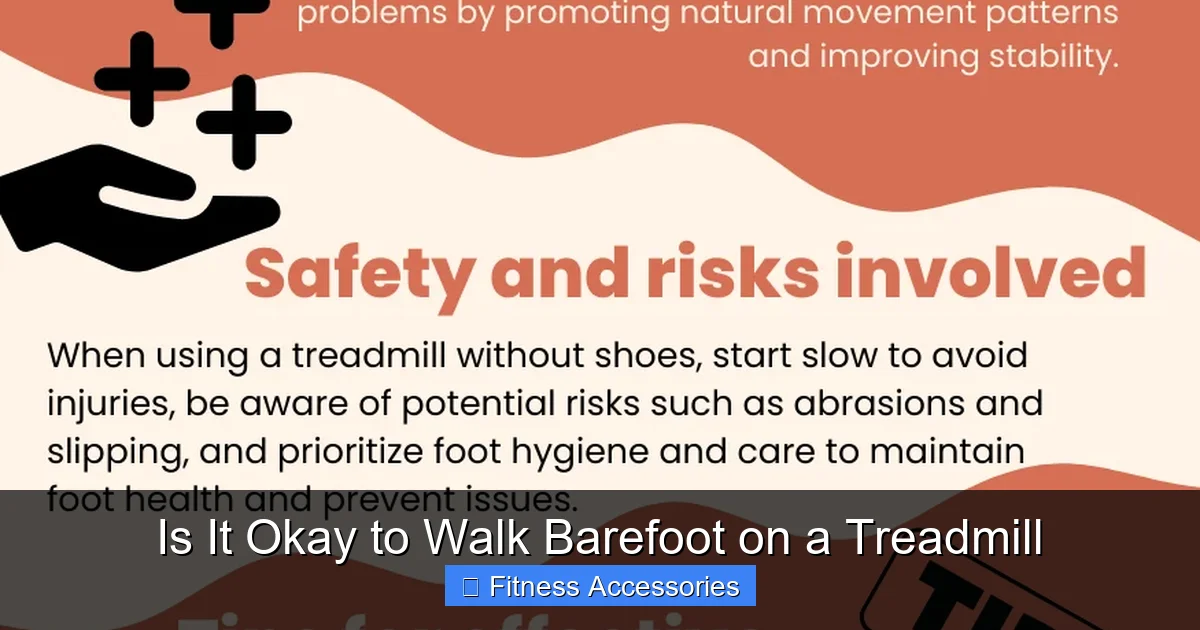
Walking barefoot on a treadmill is a practice with significant debate. While it can enhance foot strength, balance, and natural gait for some, it poses serious risks like burns, blisters, and joint stress for others. The safety and suitability depend entirely on your individual foot health, the treadmill’s belt material, and your workout intensity. This guide breaks down the biomechanics, pros, cons, and crucial best practices to help you decide if barefoot treadmill walking is right for you.
Key Takeaways
- Risk of Burns & Blisters: The friction from a moving treadmill belt can quickly cause painful burns or blisters on bare skin, especially on lower-quality belts.
- Improved Proprioception & Form: Going barefoot increases sensory feedback, potentially leading to better balance, a more natural gait, and stronger foot muscles.
- Hygiene is a Major Concern: Treadmills are public germ hotspots. Walking barefoot exposes you to fungi, bacteria, and viruses like athlete’s foot and plantar warts.
- Not for High-Impact or Speed: Barefoot walking should be limited to very slow speeds and gentle inclines. Running or brisk walking greatly increases injury risk.
- Foot Conditions Disqualify You: Anyone with diabetes, neuropathy, plantar fasciitis, or other foot sensitivities should never walk barefoot on a treadmill.
- Belt Material Matters: Smooth, low-friction belts (like some high-end models) are slightly safer than rough, abrasive belts, but risk never fully disappears.
- Start Extremely Cautiously: If you try it, begin with 1-2 minutes at a crawl, focusing intently on form and listening to your feet’s immediate feedback.
📑 Table of Contents
- The Great Barefoot Debate: To Shoe or Not to Shoe?
- Understanding the Biomechanics: What Happens to Your Feet?
- The Risks: Why Most Experts Say “Don’t Do It”
- The Potential Benefits: When *Might* It Be Considered?
- The Essential Best Practices (If You Must)
- The Verdict: A Highly Situational “No” for Most
The Great Barefoot Debate: To Shoe or Not to Shoe?
You’re at the gym, the treadmill is calling, and you forgot your shoes. Or maybe you’re at home, just popping on the machine for a quick warm-up. The thought crosses your mind: “Is it really so bad to just walk barefoot for a few minutes?” The answer, as with many fitness questions, is a firm “it depends.” The practice of walking barefoot on a treadmill sits at a fascinating crossroads of natural movement philosophy, modern gym safety, and personal biomechanics. It’s not simply “okay” or “not okay.” It’s a spectrum of risk versus reward that shifts dramatically based on who you are, what your feet are like, and what kind of treadmill you’re using.
This isn’t just about comfort; it’s about understanding the intense friction environment your feet are entering. A treadmill belt is a relentless, moving surface designed to grip the sole of a shoe. Without that protective layer, your skin is in a direct, high-friction relationship with a surface that can reach temperatures warm enough to cause thermal burns after prolonged contact. Add in the sweat from your own feet, and you have a recipe for blisters and abrasions. Yet, proponents of barefoot movement swear by the enhanced sensory feedback and muscle engagement. Let’s peel back the layers of this debate, examining the science, the risks, the potential benefits, and the non-negotiable rules if you ever consider it.
Understanding the Biomechanics: What Happens to Your Feet?
To grasp the implications, we first need to understand what a treadmill does to a bare foot. It’s a unique mechanical challenge unlike walking on a static floor.
Visual guide about Is It Okay to Walk Barefoot on a Treadmill
Image source: treadmillvibe.com
The Friction Factor: Your Skin vs. The Moving Belt
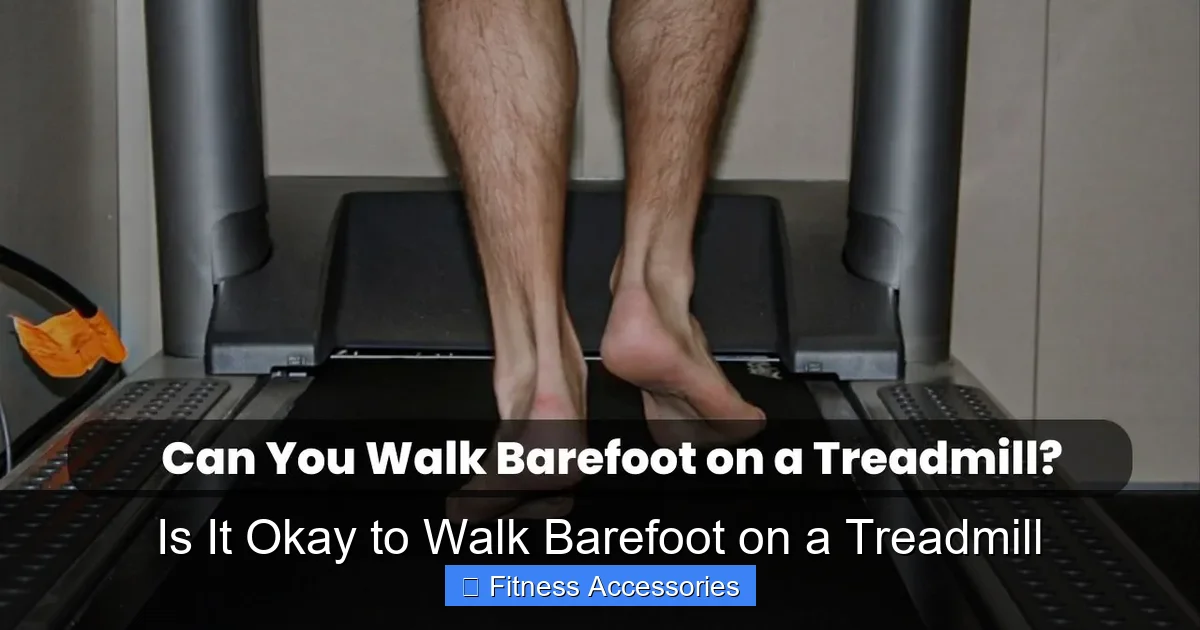
A treadmill belt is engineered to move under your weight with consistent resistance. This creates two primary forces on your bare foot: shear force (the belt trying to slide your skin backward) and abrasive force (the texture of the belt rubbing against your skin). Shoes are designed with rubber outsoles that have a high coefficient of friction, meaning they “grip” the belt efficiently and transfer force smoothly. Your foot’s skin has a much lower coefficient of friction on common belt materials like PVC or rubber. This mismatch means your skin can slide slightly within your stride, creating that dangerous shear that pulls at the layers of skin, leading to blisters. The heat generated from this constant, low-grade sliding is also a major cause of friction burns, often felt as a hot, stinging sensation long before you see visible damage.
Sensory Feedback and Gait Changes
On the positive side, the sole of your foot is packed with thousands of mechanoreceptors—sensory nerves that detect pressure, texture, and vibration. When encased in a cushioned shoe, these receptors are largely muted. Barefoot, they fire intensely. This flood of sensory information to your brain can lead to immediate, subconscious adjustments in your gait. People often report a shift from a heavy, heel-striking landing (common in cushioned shoes) to a lighter, mid-foot or fore-foot strike. The arch of the foot may engage more actively to stabilize, and the small intrinsic muscles of the foot and ankle get a workout they rarely get in shoes. This can, in theory, lead to improved balance, stronger feet, and a more efficient running or walking form over time—but this adaptation requires very gradual, mindful practice.
The Risks: Why Most Experts Say “Don’t Do It”
For the vast majority of people in typical gym settings, the risks of barefoot treadmill walking far outweigh any potential benefits. These risks are not theoretical; they are common injuries seen by podiatrists and physical therapists.

Visual guide about Is It Okay to Walk Barefoot on a Treadmill
Image source: images-wixmp-ed30a86b8c4ca887773594c2.wixmp.com
Friction Injuries: Burns and Blisters
This is the most immediate and common hazard. A treadmill belt moving at even 2-3 mph is constantly dragging against the sensitive skin of your sole. The ball of the foot and the heel are particularly vulnerable. A friction burn is essentially a superficial injury to the top layers of skin caused by heat and shear. It’s painful, takes days to heal, and can crack or become infected. Blisters form when shear force separates the epidermis from the dermis, and the space fills with fluid. A blister on the sole makes every subsequent step agony and can force you to alter your gait, potentially causing issues up the kinetic chain in your knees or hips.
Joint and Impact Stress Without Cushioning
Treadmills, despite their “cushioned” marketing, still deliver significant impact forces up the leg. A shoe’s midsole is designed to absorb and dissipate a portion of this shock. Without it, that impact travels directly into your joints—ankles, knees, and hips. For individuals with existing joint issues, arthritis, or even just a high body weight, this increased loading can exacerbate pain or contribute to overuse injuries like shin splints or stress fractures over time. The lack of heel-to-toe drop in bare feet can also strain the Achilles tendon and calf muscles if you’re not accustomed to it.
The Germ & Hygiene Nightmare
Consider this: a public gym treadmill is used by dozens of people daily, many of whom may have fungal infections (athlete’s foot), bacterial infections, or viral plantar warts (caused by HPV). The belt is a porous, often slightly moist surface that is a perfect breeding ground. Walking barefoot on it is essentially pressing your bare skin into a communal doormat for pathogens. Even in a pristine home gym, your own feet sweat, and the belt can become a damp, warm environment for microbes to grow if not cleaned meticulously after every use. The risk of contracting a foot infection is not trivial.
The Potential Benefits: When *Might* It Be Considered?
While the risks are severe, there is a nuanced context where controlled, barefoot treadmill work is employed by specific populations. It’s crucial to understand that these are exceptions, not the rule.

Visual guide about Is It Okay to Walk Barefoot on a Treadmill
Image source: t7fit.com
For Foot Strengthening and Rehabilitation (With Guidance)
Physical therapists and proponents of “natural foot” training sometimes use very slow, controlled treadmill walking as a tool. The goal is not cardio, but proprioception and muscle activation. At speeds of 1.0-1.5 mph, with a slight incline (1-2%), a person can focus intently on each step, feeling the ground and engaging their foot’s arch and intrinsic muscles. This is done for short durations (5-10 minutes) as part of a broader foot-strengthening regimen that includes exercises like toe spreads and marble pickups. It’s a diagnostic and strengthening tool, not a workout modality. This should only be attempted under the guidance of a professional if you have specific foot weakness or are intentionally retraining your gait.
For Gait Retraining and Form Focus
Some runners and walkers use barefoot treadmill time to “relearn” a proper, low-impact gait. Without the cushioning of a shoe, it’s impossible to land heavily on your heel without significant discomfort. This immediate biofeedback can teach you to land more softly, with your foot under your center of mass. However, this is a delicate process. The key is extremely slow speed and absolute attention to form. It’s a practice drill, not a training session. The moment you speed up or get tired, form breaks down, and injury risk skyrockets.
The Essential Best Practices (If You Must)
If, after understanding the risks, you still wish to experiment with barefoot treadmill walking, you must adhere to a strict protocol. Think of this as a high-risk activity with specific safety gear and rules.
Pre-Walk Foot and Treadmill Inspection
Before you even step on, conduct a thorough check. Your Feet: Are they completely dry? Any tiny cuts, calluses, or blisters? Even a microscopic abrasion will be agonizing on a treadmill. Trim your toenails short to prevent them from catching. The Treadmill: What is the belt material? Run your hand along it—is it smooth or rough/gritty? Smooth is marginally better. Is it clean? Wipe it down thoroughly with an antibacterial wipe, front to back, before and after your use. Ensure the belt is perfectly aligned and not frayed at the edges, which can create a snagging hazard.
The Golden Rules: Speed, Time, and Focus
- Speed: Never exceed 2.0 mph. For a first-time trial, start at 1.0 mph. This is a crawling pace. The goal is controlled movement, not cardio.
- Time: Begin with 60-90 seconds. Yes, seconds. Get off, feel your feet. If there is any hotness, tingling, or discomfort, stop. Do not push through. Gradually, over many weeks, you *might* work up to 5 minutes, but never treat this as a standard workout.
- Focus: This is not time to watch TV or read. Your entire attention must be on the feeling in your feet. Listen to your body. The moment you feel friction heat, stop immediately.
- Incline: Start at 0% incline. A slight incline (1-2%) can be introduced later to engage calves and glutes differently, but it increases load.
Post-Walk Care and Monitoring
After your brief session, inspect your feet closely in good light. Look for any redness (a sign of early friction burn), hot spots, or the beginning of a blister. Wash your feet with soap and water, dry them completely, and apply a moisturizer. Monitor your feet for the next 24 hours. Delayed blister formation is common. If you develop a hot, red, or painful area, treat it as a burn: cool it, don’t pop blisters, and keep it clean. If you experience any lingering pain in your joints or tendons the next day, you have exceeded your safe limit.
The Verdict: A Highly Situational “No” for Most
So, is it okay? For the average person in a commercial or shared home gym, the answer is a resounding no. The combination of high friction, germ exposure, and lack of cushioning creates an environment ripe for injury and infection. The potential benefits of proprioception and foot strengthening can be achieved far more safely through dedicated barefoot exercises on a matted or carpeted floor—not a moving belt. The treadmill is a machine designed for shoes. Its mechanics are inherently at odds with the delicate nature of bare skin.
For the small subset of people—those under professional guidance for specific rehabilitation, or advanced practitioners who have built up immense tolerance and own a meticulously maintained, smooth-belt treadmill—it can be a controlled, mindful practice. But this is the exception that proves the rule. Your time on the treadmill is an investment in your cardiovascular health and lower body strength. That investment is jeopardized by the high probability of a foot injury that will sideline you for days or weeks. The safe, effective, and hygienic choice is unequivocally to wear proper athletic shoes. They provide the necessary friction, cushioning, and barrier against germs that the treadmill environment demands.
Frequently Asked Questions
Can I get a serious burn from walking barefoot on a treadmill?
Yes. Friction burns from a treadmill belt are a common and painful injury. The moving belt generates heat against the skin, and without the protective rubber sole of a shoe, this can damage the outer layers of skin in minutes, especially at higher speeds or on rougher belt surfaces.
What about just for a minute or two as a warm-up?
Even a short duration carries risk. It only takes seconds of friction to start heating the skin, and you may not feel the damage until it’s already begun. The germ risk is also immediate. A proper warm-up can be done in shoes just as effectively and safely.
Are minimalist or “barefoot” shoes a better alternative?
Absolutely. Minimalist shoes with a thin, flexible sole and zero drop provide some protection from friction and germs while still allowing for significant sensory feedback and natural foot movement. They are a far safer bridge to barefoot training than going directly onto a treadmill belt.
I have strong, calloused feet from being barefoot often. Is it safe for me?
Callouses are actually a liability here. They can reduce friction momentarily but then cause the skin to slide and create shear underneath the callous, leading to painful blisters. Thick callouses also reduce your ability to feel harmful heat or abrasion, increasing your risk of a burn you won’t notice until it’s severe.
Does the type of treadmill matter?
It matters somewhat. Treadmills with a smooth, low-friction belt (often found on high-end, commercial models) are slightly less abrasive than cheap, textured belts. However, all moving belts generate shear and heat, so the fundamental risk remains regardless of the machine’s quality.
Is barefoot treadmill walking the same as barefoot running on a trail?
No, they are completely different. Trail running involves a static, varied, and often forgiving natural surface. A treadmill is a uniform, moving, high-friction conveyor belt. The forces and injury mechanisms are not comparable. Skills and adaptations from trail barefoot running do not safely transfer to a treadmill.