Is Running on the Elliptical Good for Weight Loss
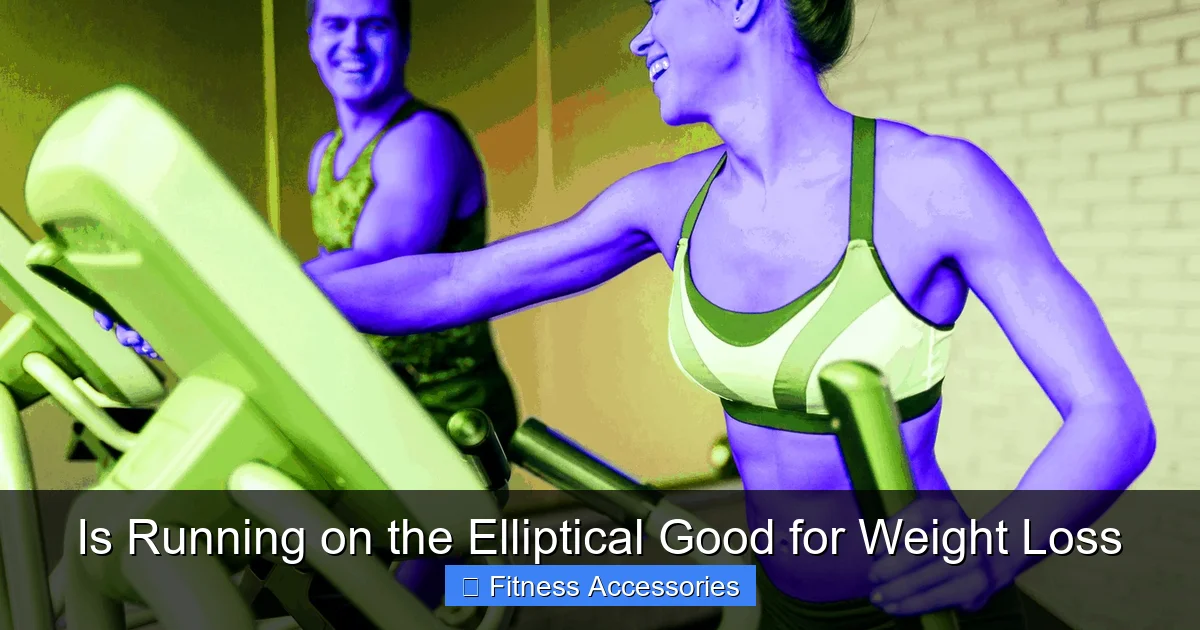
Yes, running on the elliptical is an effective, low-impact tool for weight loss. It burns a significant number of calories while being gentle on your joints, making it sustainable for long-term routines. The key to success lies in workout intensity, consistency, and pairing your elliptical sessions with a balanced, calorie-conscious diet to create the necessary deficit for fat loss.
Key Takeaways
- High Calorie Burn: A vigorous elliptical session can burn 300-500+ calories in 30 minutes, directly contributing to the calorie deficit needed for weight loss.
- Full-Body Engagement: Unlike treadmills, ellipticals work both your upper and lower body simultaneously, engaging more muscle mass and boosting metabolic demand.
- Joint-Friendly Cardio: The elliptical’s smooth, circular motion eliminates the high-impact pounding of running, reducing injury risk and allowing for more frequent, consistent workouts.
- Customizable Intensity: Resistance, incline, and speed settings let you easily adjust difficulty to challenge your body and prevent plateaus.
- Not a Magic Bullet: Weight loss success requires combining elliptical exercise with a healthy diet; you cannot out-train a poor diet.
- Sustainability is Key: Its low-impact nature makes the elliptical a practical choice for people of all fitness levels and those with joint concerns, supporting long-term adherence.
📑 Table of Contents
- Is Running on the Elliptical Good for Weight Loss? The Complete Breakdown
- How the Elliptical Works: More Than Just a Leg Machine
- Calorie Burn and Weight Loss: The Numbers Game
- Elliptical vs. Treadmill vs. Bike: Which is Best for Fat Loss?
- Crafting the Perfect Elliptical Workout for Weight Loss
- The Nutrition Equation: Why Diet Matters More Than the Machine
- Overcoming Plateaus and Staying Motivated
- Conclusion: Your Path to Sustainable Weight Loss
Is Running on the Elliptical Good for Weight Loss? The Complete Breakdown
Let’s settle this once and for all. You’ve seen the elliptical machines gathering dust in the corner of the gym, or maybe you have one at home. You’ve heard they’re “good cardio,” but when your primary goal is to shed pounds and see the scale move down, you might wonder: is running on the elliptical actually good for weight loss? The short answer is a resounding yes, but with some important nuances. It’s not just about hopping on and moving your legs. The elliptical is a powerful, versatile, and often misunderstood tool in the weight-loss arsenal. This guide will dive deep into the mechanics, the calorie math, the comparisons to other forms of cardio, and exactly how to structure your elliptical workouts to maximize fat burning and achieve your goals.
Many people dismiss the elliptical as an “easy” machine, but that perception is often based on using it incorrectly. Used with purpose and intensity, it can be one of the most efficient full-body workouts you can do. Its biggest advantage—being low-impact—is also a critical factor for sustainability. If you can’t workout consistently because your knees or back are in pain from high-impact running, weight loss becomes an impossible dream. The elliptical removes that barrier. So, let’s explore how to make it work brilliantly for you.
How the Elliptical Works: More Than Just a Leg Machine
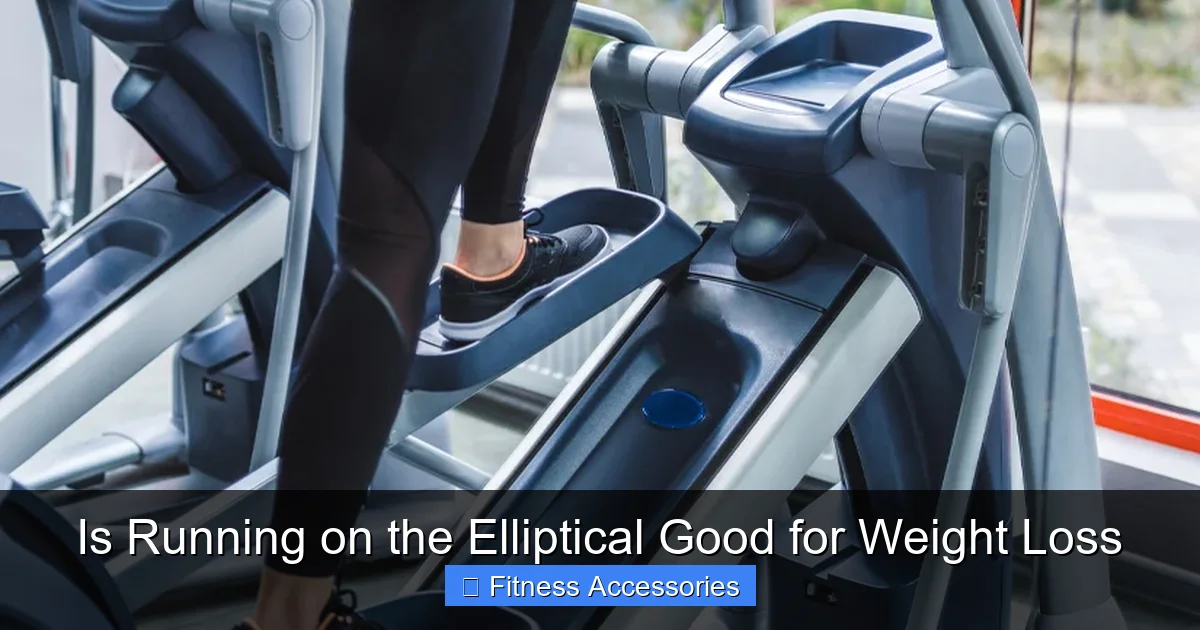
To understand its weight-loss potential, you first need to understand what the elliptical actually does. Unlike a treadmill, which primarily mimics walking or running with a belt, an elliptical moves in a smooth, oval (elliptical) path. Your feet ride on pedals that glide, and you push and pull against resistance. This motion engages two major movement patterns: hip and knee extension (pushing down and back) and hip and knee flexion (pulling up and forward).
Visual guide about Is Running on the Elliptical Good for Weight Loss
Image source: ellipticalking.com
Activating the Upper Body
This is the game-changer. Most ellipticals have movable handles. As you push the right pedal down and back, you simultaneously push the right handle forward and the left handle back. This creates a coordinated push-pull motion that actively recruits your chest, back, shoulders, and arms. You are literally working your entire upper body against resistance with every stride. More muscle mass working means a higher oxygen demand, which translates to a higher calorie burn per minute compared to a lower-body-only machine like a stationary bike or a treadmill where you typically don’t engage your arms (unless you’re vigorously pumping them, which is inefficient).
Joint-Friendly Mechanics
The elliptical’s path is designed to keep your feet in constant contact with the pedals. There is no “float” phase like in running where both feet are off the ground, and there is no hard heel strike. This eliminates the jarring impact that travels up through your ankles, knees, hips, and spine. For someone with osteoarthritis, past injuries, or significant weight to lose, this is monumental. It allows you to achieve a high heart rate and cardiovascular workload without the cumulative stress that leads to overuse injuries. This means you can work out more frequently—a crucial component of any successful weight-loss plan.
Calorie Burn and Weight Loss: The Numbers Game
Weight loss fundamentally boils down to calories in versus calories out. You must consume fewer calories than you burn to create a deficit, forcing your body to tap into stored fat for energy. Cardiovascular exercise like the elliptical is a powerful tool for increasing the “calories out” side of that equation.
Visual guide about Is Running on the Elliptical Good for Weight Loss
Image source: oglf.org
Estimating Your Burn
How many calories you burn on the elliptical depends on several factors: your body weight, age, gender, fitness level, and most importantly, intensity. A general estimate from Harvard Medical School suggests a 185-pound person can burn about 335 calories in 30 minutes of moderate elliptical use. At a vigorous intensity, that number can jump to 465 calories or more. Compare this to moderate jogging (12-minute mile), which burns about 356 calories for the same person in 30 minutes. The elliptical can be just as effective, if not more so, especially when you factor in the upper-body engagement.
However, these are just estimates. The most accurate way is to use the machine’s console (though these can be overly optimistic) or, better yet, a reliable heart rate monitor paired with a fitness app that uses your personal data. The key takeaway: a 30-60 minute session on the elliptical, done with purpose, creates a substantial calorie burn that directly supports your weight-loss deficit.
The Afterburn Effect (EPOC)
There’s another piece to the calorie puzzle: Excess Post-Exercise Oxygen Consumption (EPOC), often called the “afterburn.” After a particularly intense workout, your body’s metabolism remains elevated for hours as it works to restore oxygen levels, repair muscle tissue, and return to homeostasis. High-intensity interval training (HIIT) on the elliptical is exceptionally good at triggering a significant EPOC effect. This means you continue to burn extra calories for up to 24-48 hours after your workout is over, effectively boosting your total daily energy expenditure without any additional effort. This metabolic boost is a secret weapon for weight loss that steady-state, low-intensity elliptical sessions don’t provide as effectively.
Elliptical vs. Treadmill vs. Bike: Which is Best for Fat Loss?
The gym floor is a battleground of cardio machines. If weight loss is the mission, which vehicle should you choose? Let’s compare the elliptical to its two main rivals.

Visual guide about Is Running on the Elliptical Good for Weight Loss
Image source: oglf.org
Elliptical vs. Treadmill
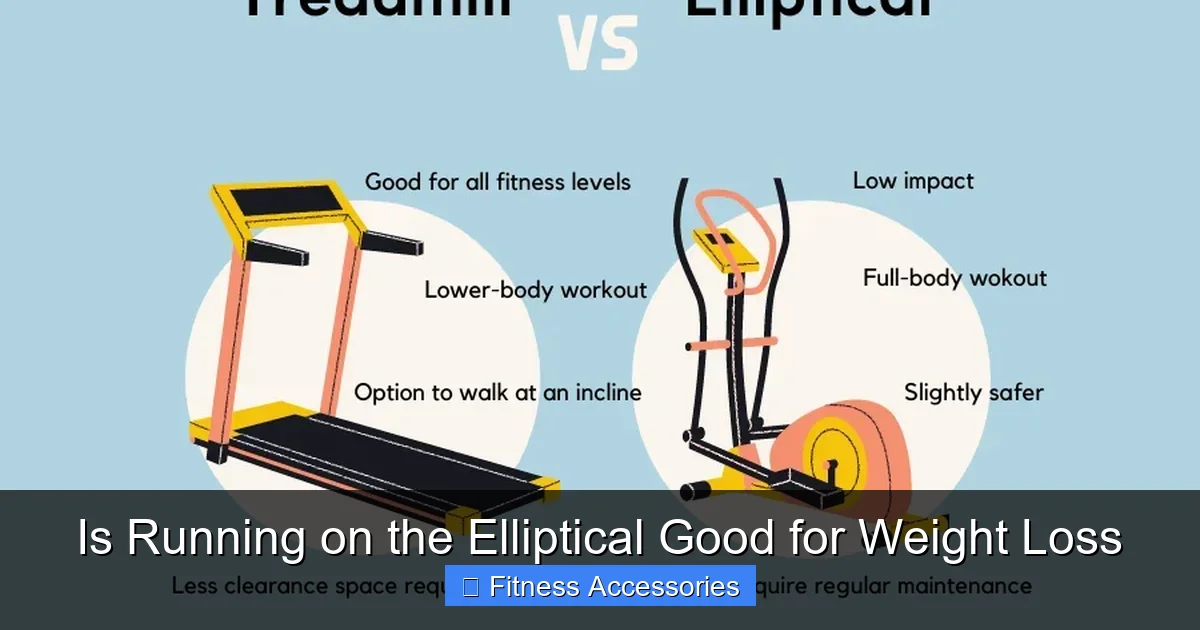
The treadmill is the classic for “running.” It burns calories efficiently and is weight-bearing, which is good for bone density. However, it’s high-impact. For someone carrying excess weight or with joint issues, that impact can lead to pain, injury, and ultimately, inconsistency. The elliptical offers a similar (or greater) calorie burn with a fraction of the impact. Furthermore, the elliptical’s upper-body engagement gives it a slight edge in total muscle recruitment and potential calorie burn per minute at moderate to high intensities. The treadmill’s advantage is specificity—if you’re training for a running race, you must run. But for pure, sustainable weight loss with minimal injury risk, the elliptical often wins.
Elliptical vs. Stationary Bike
Both are low-impact, but the bike (especially a recumbent) is even more joint-friendly and isolates the lower body. The standing, full-body nature of the elliptical generally leads to a higher heart rate and calorie burn for the same perceived effort. You can also typically achieve a higher peak power output on an elliptical by pushing with your arms and legs. For weight loss, the elliptical’s ability to engage more major muscle groups in a weight-bearing (though non-impact) stance gives it a metabolic advantage over the bike for most people.
The Verdict
For the individual whose primary goal is weight loss and long-term health, with a desire to avoid injury, the elliptical is arguably the best all-around cardio machine. It provides a high-calorie burn, full-body toning, and supreme sustainability. The “best” machine is ultimately the one you will use consistently and intensely, but the elliptical checks more boxes for a broader population.
Crafting the Perfect Elliptical Workout for Weight Loss
Mindlessly strolling while scrolling through your phone is not a weight-loss workout. To make the elliptical work for you, you need a plan. Here’s how to structure sessions that maximize fat burning.
Prioritize Intensity Over Time
While duration matters, intensity is the king of results. A 20-minute HIIT session will do far more for your metabolism and weight loss than a leisurely 45-minute stroll. Your goal should be to work in different heart rate zones:
- Fat-Burning Zone (60-70% max HR): Good for longer, steady-state sessions. Your body uses a higher percentage of fat for fuel here, but total calorie burn is lower.
- Cardio Zone (70-80% max HR): The sweet spot for most. You burn more total calories and improve cardiovascular fitness.
- High-Intensity Zone (80-90% max HR): Used in intervals. Maximizes calorie burn and triggers a powerful EPOC afterburn.
Sample Workout Structures
1. The HIIT Blast (20-25 minutes):
– 5 min warm-up (easy resistance, high RPM)
– 30 seconds ALL-OUT sprint (max resistance you can handle, drive with arms and legs)
– 60 seconds slow recovery (very light resistance)
– Repeat 8-10 times.
– 5 min cool-down
2. The Progressive Pyramid (30-40 minutes):
– 5 min warm-up
– 5 min at moderate resistance (Zone 2)
– Increase resistance every 3 minutes for the next 15 minutes (Zone 3 to Zone 4)
– 5 min at peak resistance (Zone 4/5)
– 5-10 min gradual decrease in resistance to cool down
3. The Incline Challenge (30 minutes):
– Set the elliptical to a high incline (if your machine has this feature). This dramatically increases glute and hamstring engagement and calorie burn.
– Maintain a steady, challenging pace for 20-25 minutes.
– Use the handles actively, pulling yourself into the motion.
Form is Non-Negotiable
Perfect form maximizes efficiency and prevents injury. Stand tall, core engaged. Don’t lean forward or grip the handles for support. Let your arms move naturally, but actively push and pull. Your feet should be flat on the pedals. If you’re on your toes, lower the resistance. The motion should come from your hips and knees, not just your quadriceps. Imagine you’re driving your heels down and back on the push phase.
The Nutrition Equation: Why Diet Matters More Than the Machine
Here is the most critical, often-ignored truth: you cannot out-exercise a bad diet. The elliptical is a fantastic tool for creating a calorie deficit, but if you consume more calories than you burn in a day, you will not lose weight. It’s a physiological certainty. Exercise, including elliptical training, creates the opportunity for fat loss by increasing your energy expenditure. Nutrition controls the reality of that deficit.
Fueling for Fat Loss
Your focus should be on a diet rich in whole, unprocessed foods: lean proteins (chicken, fish, tofu, legumes) to support muscle repair and satiety, complex carbohydrates (oats, sweet potatoes, quinoa) for sustained energy, and healthy fats (avocado, nuts, olive oil) for hormone function. Prioritize protein intake, especially around your workouts. Most importantly, be mindful of portion sizes and liquid calories (sodas, fancy coffees, alcohol), which can easily sabotage your deficit.
Synergy is Everything
When you combine consistent, intense elliptical sessions with a slight, sustainable calorie deficit (typically 300-500 calories below your maintenance level), you create the perfect environment for fat loss. The exercise preserves your muscle mass, ensuring that the weight you lose is predominantly fat, not muscle. This leads to a healthier, more toned physique as you lose weight. View the elliptical not as a punishment for what you ate, but as the powerful engine that, when fueled correctly by your diet, drives your transformation.
Overcoming Plateaus and Staying Motivated
Even with a perfect setup, your body adapts. The same 30-minute workout that melted fat in Month 1 might yield minimal results in Month 3. This is a plateau, and it’s a normal part of the process. The key is to continually challenge your body.
Progressive Overload Applied to Cardio
The principle of progressive overload—gradually increasing the demands on your body—applies to cardio just as it does to weightlifting. On the elliptical, you can progress by:
- Increasing Resistance: This is the most direct way to make your muscles work harder.
- Increasing Incline: If available, this shifts the workload to larger posterior chain muscles (glutes, hamstrings).
- Increasing Speed/RPM: For a given resistance, moving your legs faster increases power output.
- Lengthening Duration: Add 5-10 minutes to your steady-state sessions.
- Decreasing Rest Intervals: In HIIT, shorten the recovery time between sprints.
Variety is the Spice of (Weight Loss) Life
Don’t let your body get comfortable. Every 4-6 weeks, change your workout structure. If you’ve been doing steady-state, switch to HIIT. If you always use the same resistance program, try a pre-set “interval” or “fat burn” program on the console. Listen to music, podcasts, or an audiobook to make the time fly. Track your workouts—note the resistance, time, and how you felt. Seeing your progress on paper (or an app) is a huge motivator and helps you plan your next progressive step. Remember, the elliptical is a tool. Your consistency, effort, and intelligent programming are what will ultimately determine your weight-loss success.
Conclusion: Your Path to Sustainable Weight Loss
So, is running on the elliptical good for weight loss? The evidence is overwhelming: yes, it absolutely is. It is a highly effective, calorie-torching, full-body workout that is accessible to nearly everyone and gentle enough to perform daily without breaking down your body. It empowers you to control intensity, engage more muscle, and build a heart-healthy, sustainable fitness habit.
But it is not a standalone miracle. The elliptical is the vehicle, but you must provide the fuel (a healthy diet) and the direction (consistent, progressive effort). Start by assessing your current fitness level. Begin with shorter, moderate sessions to build a habit, then systematically introduce more intensity through intervals, resistance, and incline. Pair this with mindful eating, and you create an unstoppable combination for fat loss. Ditch the notion that you need to beat your joints into submission with hard pavement running. Embrace the smooth, powerful motion of the elliptical, push with your arms and legs, and watch as it becomes a cornerstone of your successful, long-term weight management journey. Lace up your sneakers, hop on, and take that first stride.
Frequently Asked Questions
Can the elliptical help me lose belly fat specifically?
No exercise can target fat loss from a specific area (spot reduction is a myth). The elliptical will help you lose overall body fat, which includes belly fat, as you create a calorie deficit. Combined with a healthy diet, you will see fat loss from your midsection along with the rest of your body.
How often should I use the elliptical for weight loss?
Aim for 3-5 days per week for at least 30 minutes per session. Consistency is key. For optimal results, mix intense HIIT days (2-3 times) with longer, steady-state days (1-2 times). Always include at least one full rest or active recovery day per week for your body to repair.
Does using the incline on the elliptical make a big difference for weight loss?
Yes, significantly. Increasing the incline dramatically increases the workload on your glutes and hamstrings—some of your largest muscle groups. Engaging larger muscles requires more energy (calories) and leads to a greater metabolic demand, boosting your calorie burn during and after the workout.
Is the elliptical actually better for weight loss than running on a treadmill?
For most people, especially those with joint concerns or higher body weight, the elliptical is more sustainable and can provide a comparable or greater calorie burn due to upper-body engagement. The treadmill’s advantage is in training specificity for running events. For pure, low-impact, full-body weight loss, the elliptical often has the edge.
Will the elliptical tone my arms and legs?
Yes. The active push-pull motion of the handles provides resistance training for your chest, back, shoulders, and arms. The leg motion, especially with higher resistance, works your quadriceps, hamstrings, glutes, and calves. You will see improved muscle tone and definition in these areas as you lose fat.
I’m very overweight. Is the elliptical a good starting point?
It is one of the best starting points. Its low-impact, full-body nature allows you to burn a significant number of calories without the crushing joint stress of running or even brisk walking on a hard surface. Start with short, comfortable sessions at low resistance to build confidence and endurance, then gradually increase as your fitness improves.