Internal Temperature of Turkey Guide for Perfect Results
Finding the right internal temperature of turkey is the key to juicy, safe, and delicious results every time. Whether you are roasting a whole bird or cooking individual cuts, knowing the exact temperature prevents dry meat and foodborne illness. This guide covers safe temperatures for every part of the turkey, from breast to thigh, with easy tips for perfect doneness.
Cooking a turkey can feel intimidating. There is so much to keep track of. Temperature, timing, and technique all matter. But the most important factor is the internal temperature of turkey. Getting this right means juicy meat, crispy skin, and a safe meal for your family. Whether you are a beginner or a seasoned cook, understanding the right temperatures will change your results forever.
The internal temperature of turkey determines everything. It tells you when the meat is safe to eat. It tells you when the texture is perfect. And it takes the guesswork out of cooking. In this guide, we break down every temperature you need to know. We cover the breast, the thighs, the stuffing, and the whole bird. You will also learn common mistakes, pro tips, and simple tricks to check doneness like a professional chef.
Many people rely on color or juice color to judge doneness. That method is not reliable. The only accurate way to know your turkey is done is with a meat thermometer. A good thermometer removes all the stress from your holiday cooking. You will feel confident and in control. Let us dive into everything you need to know about the internal temperature of turkey for perfect results every single time.
Key Takeaways
- Safe Internal Temperature: Always cook turkey to 165°F (74°C) for food safety.
- Breast vs. Thigh: Breast meat is best at 160-165°F, while thighs are tender at 175-180°F.
- Use a Meat Thermometer: A reliable thermometer is the only way to check temperature accurately.
- Rest the Turkey: Let the bird rest for 20-30 minutes to redistribute juices.
- Stuffed Turkey Needs Care: Stuffing must also reach 165°F for safe eating.
- Carryover Cooking: Temperature rises 5-10°F after removing from the oven.
📑 Table of Contents
Understanding Internal Temperature of Turkey
Why Temperature Matters So Much
The internal temperature of turkey is the single most important measurement when cooking this bird. Turkey is a poultry product, and poultry carries a higher risk of foodborne illness if undercooked. Bacteria like salmonella and campylobacter thrive in undercooked meat. Cooking to the right temperature kills these harmful organisms.
But temperature is not just about safety. It is also about quality. Turkey breast meat dries out quickly if you overcook it. On the other hand, undercooked turkey is unsafe and unpleasant. The internal temperature of turkey strikes the perfect balance between safety and juiciness. It is the difference between a dry, tough bird and a moist, flavorful masterpiece.
Think about it this way. When you exercise, your body temperature rises. You know when you are pushing too hard because you feel the heat. Cooking turkey works similarly. Heat transforms the proteins in the meat. Too little heat and the meat stays unsafe. Too much heat and the meat becomes dry and chalky. The internal temperature of turkey is your sweet spot for the best results.
The Science Behind Cooking Turkey
When heat hits the turkey, several things happen. The proteins in the meat begin to denature. This means they unwind and tighten. As they tighten, moisture gets squeezed out. That is why overcooked turkey feels dry. The internal temperature of turkey controls how much moisture stays in the meat.
Different parts of the turkey have different ideal temperatures. The breast is lean and delicate. It needs lower heat to stay tender. The thighs are fattier and more forgiving. They can handle higher temperatures without drying out. Understanding this difference is key to cooking a perfect turkey every time.
Carryover cooking also plays a role. After you remove the turkey from the oven, the temperature continues to rise. This is because the outer layers are hotter than the center. The heat slowly moves inward. This rise can be 5 to 10 degrees Fahrenheit. You need to account for this when checking the internal temperature of turkey. Pulling the bird out a few degrees early gives you the perfect final result.
Safe Internal Temperature of Turkey
The USDA Recommended Temperature
The United States Department of Agriculture sets clear guidelines for poultry safety. The safe internal temperature of turkey is 165°F (74°C). This applies to all parts of the bird. The breast, the thighs, the wings, and the stuffing all need to hit this mark.
At 165°F, harmful bacteria are destroyed. The meat is safe to eat. This is the temperature you should aim for every time. Do not guess. Do not rely on color or texture alone. Use a meat thermometer turkey to confirm the reading. This is the most reliable method for food safety.
Some cooks pull the turkey out at 160°F. This works because of carryover cooking. The temperature will rise to 165°F during resting. If you prefer this approach, make sure your thermometer is accurate. A quick-read digital thermometer works best for checking the internal temperature of turkey at the end of cooking.
Temperature for Different Parts of the Turkey
Not all parts of the turkey cook at the same rate. The breast cooks faster than the thighs. The wings cook faster than the body. Understanding these differences helps you cook each part to its ideal temperature.
The turkey breast temperature should reach 160-165°F. The breast is lean, so it dries out quickly past 165°F. Pulling it at 160°F gives you a buffer for carryover cooking. The result is tender, juicy breast meat that everyone loves.
The turkey thigh temperature can go higher. Thighs are best at 175-180°F. The higher fat content and connective tissue in thighs need more heat to break down. At 175°F, the meat becomes tender and flavorful. The collagen melts into gelatin. This gives you that rich, succulent texture that makes thighs so delicious.
If you are cooking a stuffed turkey, the stuffed turkey temperature matters even more. The stuffing inside the cavity must also reach 165°F. This can be tricky because the stuffing cooks slower than the meat. Check the stuffing temperature in multiple spots. Make sure it is uniformly hot throughout before serving.
How to Check Turkey Temperature
Using a Meat Thermometer Correctly
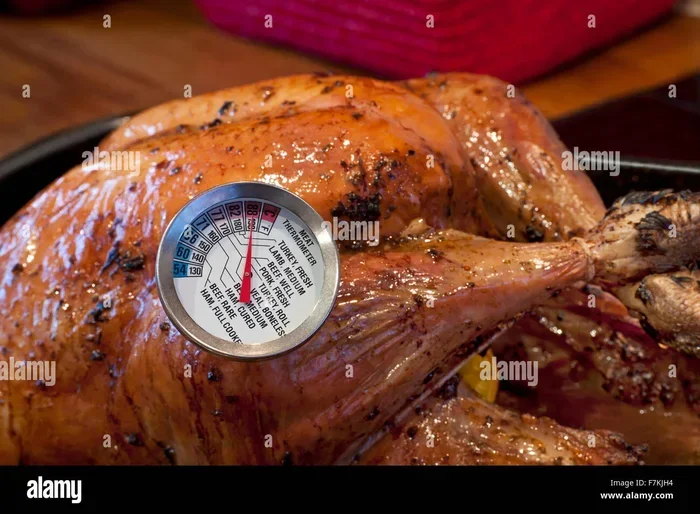
A meat thermometer is the single best tool for checking the internal temperature of turkey. There are several types available. Digital instant-read thermometers give fast, accurate results. Dial thermometers are slower but still useful. Probe thermometers with timers are great for long cooks.
No matter which type you use, the key is proper placement. Insert the thermometer into the thickest part of the meat. Avoid touching the bone. The bone conducts heat differently and can give you a false reading. For the breast, insert the probe horizontally into the thickest section.
For the thighs, insert the probe into the innermost part of the thigh. Check multiple spots if your turkey is a larger bird. Uneven cooking is common, especially with bigger turkeys. Checking more than one location ensures even doneness throughout. This simple step makes a huge difference in your roasted turkey temperature results.
Where to Insert the Thermometer
Placement matters a lot when checking the internal temperature of turkey. Here are the key spots to measure:
- Breast: Insert into the thickest part, away from the bone and the cavity.
- Thigh: Go deep into the inner thigh, near the joint but not touching bone.
- Wing: Check the thickest part of the wing drumette.
- Stuffing: Insert into the center of the stuffing in the body cavity.
- Drumstick: Check near the joint where the drumstick meets the thigh.
Taking readings from multiple spots gives you a complete picture of the bird. If one area is cooler than another, you know to keep cooking or to rotate the pan. This attention to detail separates good cooks from great ones. The internal temperature of turkey varies from spot to spot, and checking everywhere ensures nothing is undercooked.
Common Mistakes When Cooking Turkey
Relying on Color Alone
One of the biggest mistakes home cooks make is judging doneness by color. Many people look at the juices and assume clear juices mean the turkey is done. This is not always true. The internal temperature of turkey is the only reliable indicator of doneness.
Turkey can look done on the outside but still be undercooked inside. The outer layers brown faster than the inner meat. This is especially true with larger birds. The skin turns golden brown long before the center reaches 165°F. Relying on color alone can lead to unsafe eating.
Similarly, pink meat does not always mean undercooked. Sometimes the myoglobin in the meat reacts with cooking juices and creates a pinkish hue. This can happen even when the internal temperature of turkey is well above 165°F. Always trust your thermometer over your eyes. It is the most accurate tool you have.
Overcooking the Breast
The breast is the most overcooked part of the turkey. Many cooks leave the bird in the oven too long to make sure the thighs are done. By that time, the breast has dried out completely. This is a common and avoidable mistake.
The solution is to remove the turkey when the breast reaches 160°F. The thighs will continue to cook while the bird rests. By the time you carve the turkey, the breast will be at a safe 165°F and still moist. This technique takes a little planning but the results are worth it. Your internal temperature of turkey strategy should always prioritize the breast.
Another mistake is not letting the turkey rest after cooking. Resting allows the juices to redistribute throughout the meat. If you cut into the turkey immediately, the juices run out and the meat dries up. Give your bird at least 20 to 30 minutes of rest before carving. This is one of the simplest ways to improve your turkey every time.
Tips for Juicy and Perfect Turkey
Resting the Turkey Properly
Resting is one of the most overlooked steps in turkey cooking. After you pull the bird from the oven, tent it loosely with foil. Let it sit for at least 20 minutes. During this time, the internal temperature of turkey continues to rise slightly due to carryover cooking.
The juices inside the meat relax and redistribute. When you cut into a rested turkey, the meat stays moist on the plate. When you skip resting, the juices run out immediately. The result is drier meat. A simple 20-minute rest makes a noticeable difference in texture and flavor.
Understanding Carryover Cooking
Carryover cooking is a crucial concept for the internal temperature of turkey. After removing the bird from the oven, residual heat continues to cook the meat. The outer layers transfer heat to the center. This can raise the internal temperature by 5 to 10 degrees.
Because of carryover cooking, you should pull the turkey out before it reaches the target temperature. If you want the breast at 165°F, pull it when it reads 160°F. If you want the thighs at 175°F, pull them when they read 170°F. This small adjustment accounts for the temperature rise during resting. It is a simple trick that transforms your cooking results.
Brining for Moisture
Brining is a popular technique for preparing turkey. Soaking the bird in a saltwater solution before cooking helps the meat retain moisture. The salt changes the protein structure, allowing the meat to hold more water during cooking. This is especially helpful for lean breast meat.
A dry brine works too. Simply rub the turkey with salt and let it rest uncovered in the fridge overnight. The salt draws out moisture, which then gets reabsorbed into the meat. This creates a juicier result with crispier skin. Brining is one of the best ways to ensure your internal temperature of turkey stays in the safe zone without drying out the meat.
Equipment You Need for Perfect Turkey
Choosing the Right Meat Thermometer
A good thermometer is essential for checking the internal temperature of turkey. Not all thermometers are created equal. Digital instant-read thermometers are fast and accurate. They give you a reading in about 10 seconds. This is the type most home cooks should use.
Leave-in probe thermometers are another great option. You insert the probe before cooking and monitor the temperature throughout. Some models connect to your phone via Bluetooth. This lets you track the internal temperature of turkey from across the room. It is especially helpful during long cooking sessions when you want to avoid opening the oven door too often.
If you are building a home kitchen setup, investing in quality tools matters. Think of it like setting up a home gym. Just as people research the average cost of a treadmill before buying fitness equipment, you should invest in reliable kitchen tools. A quality thermometer is one of the best kitchen investments you can make.
Choosing the Right Roasting Pan
The size of your roasting pan affects how evenly the turkey cooks. A pan that is too small crowds the bird and blocks heat circulation. A pan that is too large lets the turkey sit too low and can affect cooking time.
Think about the average width of a treadmill when choosing your pan. You want enough space for the turkey to fit comfortably with room for air to flow around it. A general rule is to choose a pan that is at least 2 inches wider than the turkey on each side. This allows for even heat distribution and proper air circulation.
V-rack inserts are also helpful. They elevate the turkey and allow hot air to circulate underneath. This promotes even browning and cooking. A V-rack is a small investment that makes a big difference in your internal temperature of turkey consistency.
Kitchen Safety Tips for Turkey Cooking
Proper Kitchen Footwear
Safety in the kitchen matters more than many people realize. When handling a hot turkey, you need sturdy, closed-toe shoes. Just as proper footwear matters when using the right shoes for a treadmill, kitchen safety starts with what you wear on your feet.
Hot grease, boiling liquids, and heavy cookware are all part of turkey cooking. A slip or a dropped pan can cause serious injury. Wear shoes with good grip and solid construction. Avoid sandals or flip-flops in the kitchen. This simple step protects you and your family while you prepare the meal.
Handling Raw Turkey Safely
Raw turkey can carry harmful bacteria. Always wash your hands thoroughly after handling raw meat. Use separate cutting boards for raw poultry and other foods. Clean all surfaces and utensils that come into contact with raw turkey.
Thaw frozen turkey safely in the refrigerator, not on the counter. A whole turkey can take several days to thaw in the fridge. Plan ahead and allow enough time. Cooking a frozen turkey is possible but increases cooking time and can lead to uneven results. Always check the internal temperature of turkey in multiple spots to ensure even cooking after thawing.
Conclusion
The internal temperature of turkey is the foundation of great turkey cooking. It ensures safety, quality, and consistency every time you cook this bird. From the breast to the thighs to the stuffing, each part has its own ideal temperature range. Using a reliable meat thermometer removes all the guesswork and stress from your cooking.
Remember the key principles. Cook to 165°F for safety. Pull the breast at 160°F for juiciness. Let the thighs reach 175°F for tenderness. Rest the bird for 20 to 30 minutes. Account for carryover cooking. And always check multiple spots for even doneness.
With these tips and techniques, you will cook turkey like a pro. The internal temperature of turkey is your guide to perfect results every single time. Practice these methods, trust your thermometer, and enjoy a delicious, safe, and juicy turkey that your whole family will love. Happy cooking!
Frequently Asked Questions
What is the safe internal temperature of turkey?
The safe internal temperature of turkey is 165°F (74°C) according to the USDA. This applies to all parts of the bird including the breast, thighs, wings, and stuffing. Always use a meat thermometer to confirm this temperature for food safety.
What should the internal temperature of turkey breast be?
The turkey breast temperature should reach 160-165°F. The breast is lean and dries out quickly, so pulling it at 160°F allows for carryover cooking to bring it up to the safe 165°F while keeping it moist and tender.
What is the ideal temperature for turkey thighs?
Turkey thighs are best cooked to 175-180°F. The higher fat content and connective tissue in thighs need more heat to become tender. At this temperature, the collagen breaks down and the meat becomes juicy and flavorful.
How do you check the internal temperature of turkey?
Insert a meat thermometer into the thickest part of each section, avoiding the bone. Check the breast, thighs, wings, and stuffing in multiple spots. A digital instant-read thermometer gives the most accurate and fastest readings for checking internal temperature of turkey.
Does turkey continue cooking after removing from the oven?
Yes, this is called carryover cooking. The internal temperature of turkey continues to rise 5-10 degrees after removing from the oven. This is why you should pull the turkey out a few degrees before your target temperature to account for this rise during resting.
Can turkey be pink even when fully cooked?
Yes, turkey can remain slightly pink even when the internal temperature of turkey has reached 165°F. This is due to myoglobin in the meat reacting with cooking juices. Always trust your thermometer over color when determining doneness.