The Best Braciole Recipe You Will Ever Want to Make
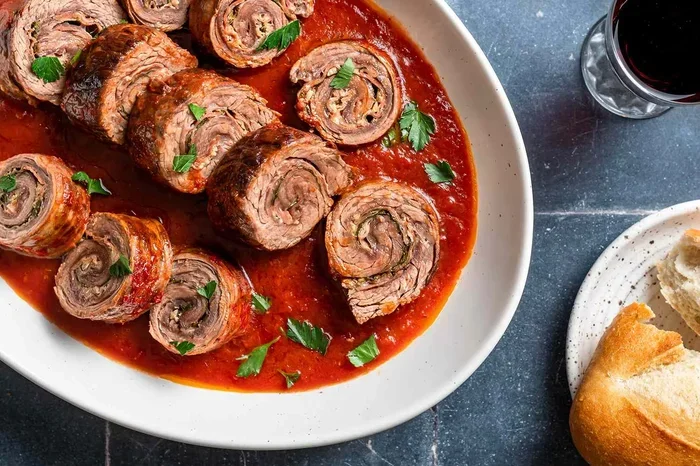
This braciole recipe delivers tender, juicy Italian beef rolls packed with flavor. You will learn how to prepare the filling, roll the meat, and braise it to perfection in tomato sauce. Whether you are a beginner or a seasoned cook, this guide makes it easy to create a classic Italian comfort meal at home.
There is something magical about a braciole recipe that turns simple ingredients into a masterpiece of Italian cooking. This dish has been passed down through generations of Italian families, and for good reason. It is hearty, flavorful, and deeply satisfying on a cold evening.
Braciole are thin slices of beef rolled around a delicious filling of garlic, cheese, breadcrumbs, and herbs. They simmer slowly in rich tomato sauce until the meat becomes fork-tender and full of flavor. If you have never tried making them at home, you are in for a real treat.
This braciole recipe is designed to be easy to follow, even if you are new to Italian cooking. You do not need fancy equipment or hard-to-find ingredients. Just a few simple steps and some patience, and you will have a dish that tastes like it came straight from a traditional Italian kitchen.
Key Takeaways
- Simple Ingredients: You only need beef round, garlic, cheese, breadcrumbs, and a few pantry staples for this braciole recipe.
- Step-by-Step Method: The guide walks you through every step from preparing the filling to braising the rolls low and slow.
- Versatile Dish: You can make braciole on the stovetop, in a slow cooker, or in the oven depending on your schedule.
- Rich Italian Flavor: The combination of tomato sauce, garlic, herbs, and cheese creates an authentic Italian taste that the whole family will love.
- Meal Prep Friendly: Braciole tastes even better the next day, making it perfect for Sunday meal prep or holiday dinners.
- Easy to Customize: You can swap fillings, use different cuts of beef, or adjust the sauce to match your taste preferences.
📑 Table of Contents
- What Is Braciole?
- The Best Braciole Recipe: Ingredients You Will Need
- How to Make Braciole Step by Step
- Cooking Methods for Braciole
- Tips for the Best Braciole
- Serving Suggestions for Braciole
- Common Mistakes to Avoid When Making Braciole
- Storing and Reheating Braciole
- Why This Braciole Recipe Works
- Frequently Asked Questions
- Conclusion
What Is Braciole?
Braciole (pronounced brah-choh-LEH) is a classic Italian dish made from thin slices of beef that are wrapped around a savory filling. The word “braciole” comes from the Italian word “braccio,” which means arm. Over time, the dish evolved into the rolled beef preparation we know and love today.
This dish is different from other braised beef recipes. Instead of cooking a large roast whole, braciole uses thin cutlets that are rolled and tied. This creates more surface area for the flavors to penetrate the meat. The result is a dish that is rich, aromatic, and incredibly tender.
Many people confuse braciole with roulade or beef wellington. While they share some similarities, braciole has its own unique character. The filling is typically simpler, relying on garlic, breadcrumbs, and cheese rather than complex sauces or pastry. This simplicity is what makes braciole so special.
In Italian-American kitchens, braciole often appears in Sunday gravy. The rolls simmer for hours in a rich tomato sauce, absorbing all the flavors and becoming meltingly soft. It is the kind of dish that fills your home with the most wonderful aroma.
The Best Braciole Recipe: Ingredients You Will Need
One of the best things about this braciole recipe is how few ingredients you need. You probably already have most of them in your pantry. Here is what you will need to get started.
For the Meat
- Beef round or chuck roast: About 2 pounds, sliced thin
- Garlic cloves: 6 to 8, minced finely
- Salt and black pepper: To taste
- Olive oil: A couple of tablespoons for searing
For the Filling
- Breadcrumbs: About 1/2 cup (Italian style works best)
- Parmesan cheese: 1/2 cup, grated finely
- Mozzarella cheese: 1/2 cup, shredded (optional but delicious)
- Fresh parsley: 1/4 cup, chopped
- Egg: 1 large, to bind the filling
For the Sauce
- Canned crushed tomatoes: One 28-ounce can
- Onion: 1 large, diced
- Carrot and celery: 2 stalks each, diced
- Tomato paste: 2 tablespoons
- Italian seasoning: 1 teaspoon
- Bay leaves: 2 to 3
- Beef broth: 1 cup
The beauty of Italian beef rolls like braciole is that you can adjust the filling to suit your taste. Some families add pine nuts, while others prefer a simpler garlic and herb blend. The key is to keep the filling moist so the rolls stay juicy during cooking.
How to Make Braciole Step by Step
Now let us get into the fun part. This braciole recipe is straightforward, but it does require a little time and care. Follow these steps, and you will have perfect results every time.
Step 1: Prepare the Meat
Start by slicing your beef roast into thin pieces, about 1/4 inch thick. You can ask your butcher to do this for you, or you can do it at home with a sharp knife. Place each slice between two sheets of plastic wrap and pound it gently with a meat mallet until it is thin and even.
The goal is to create a flat surface that is easy to roll. Do not pound the meat too thin, or it will tear when you add the filling. Aim for a consistent thickness of about 1/8 inch throughout.
Step 2: Make the Filling
In a large bowl, combine the breadcrumbs, Parmesan cheese, mozzarella, parsley, egg, and minced garlic. Mix everything together with your hands until it is well blended. The mixture should be moist but not wet. If it seems dry, add a splash of water or broth.
Season the filling with salt and pepper to taste. This is your chance to add extra flavor, so do not be shy. Some cooks like to add a pinch of red pepper flakes for a little heat.
Step 3: Spread and Roll
Lay out one slice of beef on your cutting board. Spread about 2 to 3 tablespoons of filling evenly across the surface, leaving about an inch of space on each end. Roll the meat tightly from the short end, like a jelly roll.
Once rolled, tie each braciole securely with kitchen twine. Use several pieces of string in a crisscross pattern to keep the roll tight during cooking. The tighter you tie them, the better they will hold their shape.
Step 4: Sear the Rolls
Heat olive oil in a large Dutch oven or heavy-bottomed pot over medium-high heat. Sear each braciole roll on all sides until you get a nice golden-brown crust. This step is important because it locks in the juices and adds flavor to the final dish.
Remove the rolls from the pot and set them aside on a plate. You will use the same pot to build your sauce, so do not wash it yet.
Step 5: Build the Sauce
In the same pot, add the diced onion, carrot, and celery. Cook until the vegetables are softened, about 5 minutes. Stir in the tomato paste and cook for another minute. Add the crushed tomatoes, beef broth, Italian seasoning, and bay leaves.
Stir everything together and bring the sauce to a gentle simmer. Return the braciole rolls to the pot, nestling them into the sauce. The sauce should cover about three-quarters of the rolls.
Step 6: Braise Low and Slow
Cover the pot with a tight-fitting lid and reduce the heat to low. Let the braciole simmer gently for about 2.5 to 3 hours. Check on them occasionally and give the pot a gentle shake to prevent sticking.
The braciole slow braised in tomato sauce will become incredibly tender. The meat will pull apart easily when you press it with a fork. This slow cooking process is what gives the dish its deep, rich flavor.
Cooking Methods for Braciole
One of the great things about this braciole recipe is that you can cook it in several different ways. Each method brings its own advantages, so choose the one that works best for your schedule and kitchen setup.
Braising on the Stovetop
This is the traditional method and what I recommend for the best flavor. You use a heavy Dutch oven or pot, sear the rolls, build the sauce, and let everything simmer on the stovetop. The constant gentle heat creates a beautiful sauce and perfectly tender meat.
The downside is that you need to stay nearby and monitor the heat. You do not want the sauce to boil too aggressively. A low simmer is what you are aiming for.
Slow Cooker Braciole
If you prefer to set it and forget it, the slow cooker is a great option. After searing the rolls and building the sauce, transfer everything to your slow cooker. Cook on low for 6 to 8 hours or on high for 3 to 4 hours.
Slow cooker braciole is perfect for busy days. You can start it in the morning and come home to a ready-made dinner. The meat will be just as tender, though the sauce may not be as concentrated as the stovetop method.
Oven-Baked Braciole
For a more hands-off approach, you can also bake braciole in the oven. Sear the rolls, build the sauce, cover the pot tightly with foil, and bake at 325°F for about 2.5 to 3 hours.
Oven-baked braciole cooks evenly and allows the sauce to reduce slightly more than the stovetop method. This creates a thicker, more flavorful sauce that is perfect for spooning over pasta.
Tips for the Best Braciole
Making great braciole is all about technique and attention to detail. Here are some expert tips that will elevate your braciole recipe from good to outstanding.
- Use a meat mallet: Pounding the beef evenly ensures that the rolls cook at the same rate. Uneven slices lead to some rolls being overcooked while others are still tough.
- Do not skip the searing step: Searing adds a layer of flavor that you cannot get any other way. It creates a Maillard reaction on the surface of the meat that deepens the overall taste.
- Let the rolls rest in the sauce: After cooking, turn off the heat and let the braciole sit in the sauce for at least 30 minutes. This allows the meat to absorb more flavor and become even more tender.
- Use quality Parmesan: Real Parmigiano-Reggiano makes a noticeable difference in the filling. It adds a nutty, salty depth that enhances the entire dish.
- Make extra sauce: The sauce is just as important as the meat itself. A rich, slow-simmered tomato sauce with garlic, onion, and herbs is what makes braciole truly special.
- Cook the day before: Braciole slow cooker or braised braciole tastes even better the next day. The flavors have time to meld together, and the meat becomes more tender as it sits.
Serving Suggestions for Braciole
Braciole is a complete meal on its own, but it pairs beautifully with several sides. Here are some serving ideas that will make your Italian pot roast dinner unforgettable.
- Pasta: Serve the braciole and sauce over spaghetti, rigatoni, or penne. The sauce soaks into the pasta and creates a heavenly combination.
- Crusty bread: Use Italian bread to soak up the leftover sauce. This is a must at any Italian dinner table.
- Roasted vegetables: Pair the braciole with roasted zucchini, eggplant, or bell peppers for a complete Italian-style meal.
- Polenta: Creamy polenta is a traditional pairing that complements the rich sauce perfectly.
- Garlic bread: A simple garlic bread on the side adds crunch and extra flavor to the meal.
For a true Italian experience, serve the braciole as part of a larger feast. Add a simple green salad, some antipasto, and maybe a glass of Chianti. This is the kind of meal that brings people together and creates lasting memories.
Common Mistakes to Avoid When Making Braciole
Even experienced cooks can make mistakes with braciole. Here are some common pitfalls and how to avoid them.
- Overfilling the rolls: Too much filling makes the rolls difficult to roll and can cause them to burst open during cooking. Stick to 2 to 3 tablespoons per slice.
- Skipping the twine: Without kitchen twine, the rolls will unravel during cooking. Always tie them securely, even if you are using a slow cooker.
- Cooking on too high heat: Braciole needs gentle, low heat to become tender. High heat will make the meat tough and chewy.
- Not enough sauce: The sauce is a key part of the dish. Make sure you have enough to cover at least three-quarters of the rolls during cooking.
- Rushing the process: Braciole is a slow-cooked dish. Trying to rush it will result in tough meat and underdeveloped flavors. Give it the time it needs.
Storing and Reheating Braciole
One of the best things about braciole is that it stores beautifully. You can make it ahead of time and reheat it for a quick and delicious meal whenever you want.
Let the cooked braciole cool completely before storing. Place the rolls and sauce in an airtight container and refrigerate for up to 4 days. You can also freeze braciole for up to 3 months. Wrap the rolls individually in plastic wrap and foil, then place them in a freezer-safe bag.
To reheat, place the rolls in a saucepan with some sauce and warm them over low heat. You can also reheat them in the microwave, but the stovetop method gives better results. The sauce may thicken when stored, so add a splash of broth or water when reheating to loosen it up.
Why This Braciole Recipe Works
This braciole recipe has been carefully designed to deliver consistent, outstanding results every time. The combination of simple techniques and quality ingredients creates a dish that is far more impressive than the effort it takes to make it.
The slow braising process breaks down the collagen in the beef, transforming it from tough to melt-in-your-mouth tender. The filling adds moisture and flavor with every bite. And the tomato sauce ties everything together with its rich, savory depth.
Whether you are cooking for a family dinner, a holiday gathering, or a cozy weekend meal, this braciole recipe will not disappoint. It is the kind of dish that earns compliments and requests for seconds.
Frequently Asked Questions
Can I use a different type of meat for braciole?
Yes, you can use pork loin or chicken breast as alternatives to beef. Pork braciole is very popular in Southern Italy and cooks quickly. Just adjust the cooking time accordingly. Chicken will cook much faster, so keep an eye on it to prevent drying out.
Can I make braciole without cheese?
Absolutely. While cheese adds richness and helps bind the filling, you can omit it if needed. The braciole will still be flavorful thanks to the garlic, herbs, and breadcrumbs. Some traditional Southern Italian versions skip the cheese entirely.
How do I know when braciole is done?
The best way to check is to insert a fork into the thickest part of the roll. If the meat shreds easily and feels tender, it is done. You can also use a meat thermometer and aim for an internal temperature of 200°F for the most tender results.
Can I freeze cooked braciole?
Yes, cooked braciole freezes very well. Let the rolls cool completely, then wrap each one individually in plastic wrap and foil. Place them in a freezer-safe bag and freeze for up to 3 months. Reheat gently in the sauce on the stovetop for best results.
What is the difference between braciole and roulade?
The main difference is in the filling and sauce. Roulade often includes a more complex filling with mustard, herbs, and sometimes bacon. Braciole uses a simpler filling of breadcrumbs, cheese, and garlic, and is always cooked in tomato sauce. Both are delicious, but braciole has a distinctly Italian character.
Can I use store-bought breadcrumbs for the filling?
Yes, store-bought breadcrumbs work fine in a pinch. However, fresh breadcrumbs made from stale Italian bread will give you a better texture and flavor. They absorb moisture more evenly and blend more seamlessly with the other filling ingredients.
Conclusion
The braciole recipe is one of those dishes that truly captures the heart of Italian home cooking. It is simple, comforting, and packed with flavor. Once you make it a few times, it will become a staple in your kitchen rotation.
Remember that the key to great braciole is patience. Let the meat braise slowly, let the flavors develop, and do not rush the process. The results are well worth the effort.
Try this braciole recipe this weekend and see how easy it is to create a restaurant-quality Italian meal at home. Your family and guests will be impressed, and you will have a new go-to dish for every occasion. Italian comfort food at its finest, right from your own kitchen.