How to Hold Chopsticks the Right Way Every Single Time
Learning how to hold chopsticks is easier than you think with the right technique and a little practice. This guide breaks down the proper chopstick grip, common mistakes, and pro tips so you can eat with confidence. Whether you are a beginner or looking to refine your skills, you will find everything you need here.
Have you ever watched someone eat with chopsticks and thought, “How do they make it look so easy?” You are not alone. How to hold chopsticks is one of those skills that seems simple but can feel incredibly frustrating when you first try it. The good news is that anyone can learn with the right approach and a bit of patience.
Whether you are dining at a Japanese restaurant, enjoying a bowl of ramen at home, or simply trying to eat healthier with smaller portions, knowing the proper chopstick technique changes everything. This guide will walk you through every step, from the basic hand position to advanced tips that will make you look like a pro. Let us get started.
Key Takeaways
- Correct Grip Matters: Holding chopsticks the right way gives you better control and makes eating much more enjoyable.
- Start with the Dominant Hand: Your dominant hand should always manage the upper chopstick while the lower one stays steady.
- Practice Makes Perfect: Regular chopstick exercises build muscle memory and improve your fine motor skills over time.
- Avoid Common Mistakes: Gripping too tightly or crossing the chopsticks are errors that slow your progress.
- Choose the Right Chopsticks: Bamboo and wooden chopsticks are ideal for beginners because they offer a better grip.
- Etiquette Adds Confidence: Knowing basic chopstick etiquette helps you feel comfortable in any dining setting.
- Patience Is Key: Everyone learns at their own pace, so stay positive and keep practicing daily.
📑 Table of Contents
- Why Learning How to Hold Chopsticks Properly Is Important
- The Basic Chopstick Grip Step by Step
- Common Mistakes People Make When Holding Chopsticks
- Types of Chopsticks and How They Affect Your Grip
- Chopstick Etiquette: Tips for Dining with Confidence
- Exercises to Improve Your Chopstick Skills
- How Long Does It Take to Master Holding Chopsticks?
- Quick Tips for Better Chopstick Control
- Conclusion
Why Learning How to Hold Chopsticks Properly Is Important
Chopsticks are more than just a tool for eating. They are a cultural symbol used across many Asian countries for thousands of years. When you learn how to use chopsticks correctly, you show respect for the tradition and the people who created this elegant dining method.
Beyond culture, holding chopsticks the right way offers real benefits. You gain better control over the food you pick up, which means fewer dropped bites and less frustration. Proper chopstick grip also reduces hand fatigue, so you can enjoy a full meal without your fingers cramping up.
There are different chopstick holding methods depending on the region and the type of food you are eating. But all of them start with one thing: getting the basic grip right. Once you nail the foundation, everything else becomes much simpler.
The Basic Chopstick Grip Step by Step
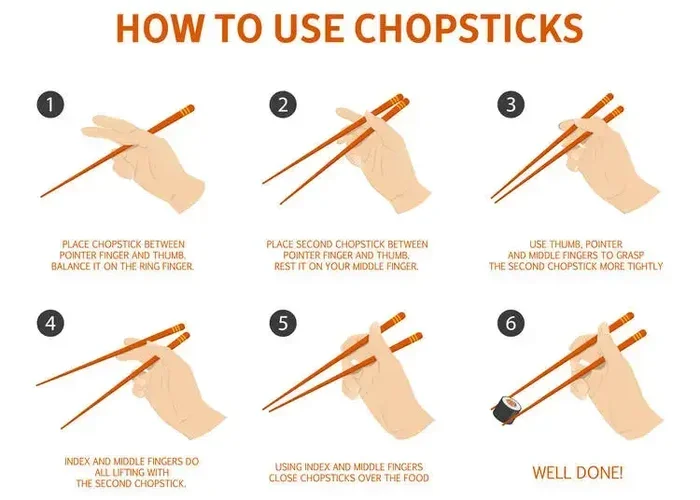
The most common way to hold chopsticks is called the “basic grip” or “standard grip.” Here is exactly how to do it, broken down into simple steps.
Step 1: Position the First Chopstick
Place the first chopstick between your thumb and the base of your index finger. Rest it against your ring finger. This chopstick stays mostly still and acts as the anchor. Think of it as the “bottom” stick that does not move much while you eat.
Step 2: Hold the Second Chopstick
Now pick up the second chopstick with your thumb, index finger, and middle finger. This is the chopstick that moves. Your index finger should rest on top of it, giving you control to open and close the tips. The chopstick hand position is similar to how you would hold a pencil, but a little higher up.
Step 3: Align the Tips
Make sure the tips of both chopsticks line up evenly. They should form a small opening at the top, almost like a pair of tweezers. If the tips are uneven or crossing, you will struggle to pick up food. Adjust your fingers until everything lines up neatly.
Step 4: Practice Opening and Closing
Move only the upper chopstick by bending and straightening your index finger. The lower chopstick stays put. Practice opening and closing until the movement feels smooth and natural. Start with larger objects like pieces of vegetable or tofu before moving to smaller items like rice.
Common Mistakes People Make When Holding Chopsticks
Even with good instructions, many people fall into the same traps. Here are the most common mistakes and how to fix them.
- Gripping too tightly: Squeezing the chopsticks drains your hand energy fast and makes it harder to control the tips. Keep a light, relaxed hold.
- Placing the chopsticks too far back: Holding them near the very end gives you less leverage and control. Move them about one-third from the top for the best grip.
- Crossing the tips: When the chopstick tips cross each other, you cannot pinch food properly. Always keep the tips parallel.
- Using the wrong hand: If you are right-handed, use your right hand for the upper chopstick. Switching hands randomly slows down your progress.
- Stiff fingers: Your fingers should move freely and naturally. If they feel locked in place, relax your grip and start over.
Chopstick control improves fast once you stop making these errors. Focus on one correction at a time, and you will see progress quickly.
Types of Chopsticks and How They Affect Your Grip
Not all chopsticks are the same, and the type you use can make how to hold chopsticks easier or harder.
| Type | Material | Best For | Grip Feel |
|---|---|---|---|
| Bamboo | Wooden composite | Beginners | Textured, warm, grippy |
| Wooden | Natural wood | Beginners | Slightly rough, good friction |
| Plastic | Synthetic resin | Casual dining | Smooth, can be slippery |
| Metal | Stainless steel | Advanced users | Very smooth, hard to grip |
| Ceramic | Glazed clay | Decorative or ceremonial | Heavy, requires firm hold |
If you are just starting out, choose bamboo chopsticks or wooden chopsticks. They have a slightly textured surface that gives your fingers more friction, which makes the grip much easier. Avoid metal chopsticks until you have built solid chopstick skills with wooden ones first.
Chopstick Etiquette: Tips for Dining with Confidence
Knowing how to hold chopsticks is only half the battle. Proper chopstick etiquette shows respect and makes you feel confident at the table.
- Never stick chopsticks upright in rice: This resembles a funeral ritual and is considered disrespectful in many Asian cultures.
- Do not pass food chopstick to chopstick: This is another funeral-related gesture that people avoid at the table.
- Do not spear your food: Chopsticks are for pinching and lifting, not stabbing. Use a fork if you need to.
- Rest chopsticks on the holder: When you take a break, place them on the provided rest or on your plate, never directly on the table.
- Do not wave them around: Keep your chopstick movements controlled and deliberate at the table.
Following these simple rules of proper dining etiquette makes a big difference. It shows that you care about the culture and the people you are dining with, and it makes the whole experience more enjoyable for everyone.
Exercises to Improve Your Chopstick Skills
Want to get better fast? Try these simple chopstick exercises that build dexterity and strength in your fingers.
- The Rice Drill: Place a handful of rice on a plate and practice picking up individual grains one at a time. This builds precision and patience.
- The Tweezer Challenge: Use chopsticks to pick up small objects like peas, peanuts, or beans. Move them from one bowl to another for 60 seconds.
- The Chopstick Squeeze: Hold a soft rubber ball or stress ball between the tips of the chopsticks and squeeze gently for five seconds. Repeat ten times.
- The Speed Round: Once you are comfortable, set a timer and see how many pieces of food you can pick up in one minute. Track your progress each day.
These exercises work on your fine motor skills and build the muscle memory you need for effortless chopstick use. Even five minutes of daily practice leads to noticeable improvement within a week or two.
How Long Does It Take to Master Holding Chopsticks?
Everyone learns at a different pace, but most people can pick up the basics within a few days of regular practice. If you practice for 10 to 15 minutes daily, you should feel confident using chopsticks for eating within two weeks.
Advanced techniques, like the “pinning” method used in some regional styles, take longer. But honestly, the basic grip is all you need for most dining situations. Focus on comfort and control rather than speed, and the speed will come naturally with time.
One of the best chopstick tips for beginners is to stay relaxed. Tension in your hand and fingers is the number one enemy of smooth chopstick movement. Breathe, take your time, and enjoy the process of learning something new.
Quick Tips for Better Chopstick Control
- Keep your wrist straight: A straight wrist gives you more precise control over the upper chopstick.
- Use your fingertips, not your palm: The finer the control, the better your grip will be.
- Start with bigger food pieces: Do not try to pick up tiny grains of rice right away. Work your way up to smaller items gradually.
- Watch your elbow position: Keep your elbow close to your body for a stable base.
- Use chopstick rests: They keep your chopsticks clean and your table tidy.
These small adjustments make a huge difference in your chopstick technique. Try incorporating them into your next meal and notice the improvement right away.
Conclusion
Learning how to hold chopsticks the right way is a skill that opens up a whole world of dining experiences. From the basic grip to proper etiquette and daily exercises, every step brings you closer to eating with confidence and ease. Remember to keep a light grip, practice regularly, and choose the right type of chopsticks for your skill level.
Proper chopstick technique is not about being perfect from day one. It is about building good habits and enjoying the journey. So grab a pair of bamboo chopsticks, find something to pick up, and start practicing today. Your chopstick skills will thank you.
Frequently Asked Questions
What is the correct way to hold chopsticks?
The correct way involves resting the first chopstick on your ring finger and holding the second chopstick with your thumb, index, and middle fingers. Only the upper chopstick should move while the lower one stays steady. This basic grip gives you the best control and comfort.
How do beginners practice holding chopsticks?
Beginners should start with bamboo or wooden chopsticks and practice picking up larger food items like pieces of vegetable or tofu. Simple drills like the rice drill or the tweezer challenge build dexterity quickly and make the learning process fun and rewarding.
Why do my chopsticks keep crossing when I try to pick up food?
Crossing usually happens because you are gripping too tightly or not aligning the tips properly. Relax your grip, make sure the tips are parallel, and focus on moving only the upper chopstick. Practice opening and closing slowly until the movement feels natural.
Can I use chopsticks if I am left-handed?
Absolutely. Left-handed people can hold chopsticks just as effectively by using their left hand for the upper chopstick and their right hand to stabilize the lower one. The technique is the same, just mirrored. Practice with patience and you will master it.
What type of chopsticks is best for beginners?
Bamboo and wooden chopsticks are the best for beginners because their textured surface provides more friction and grip. Avoid metal or ceramic chopsticks at first since they are smooth and harder to control. Once you build confidence, you can explore other materials.
Is there a proper chopstick etiquette I should know?
Yes, several key rules include never sticking chopsticks upright in rice, not passing food chopstick to chopstick, and always resting them on a holder when you take a break. Following these simple etiquette rules shows respect and helps you feel more confident at the table.