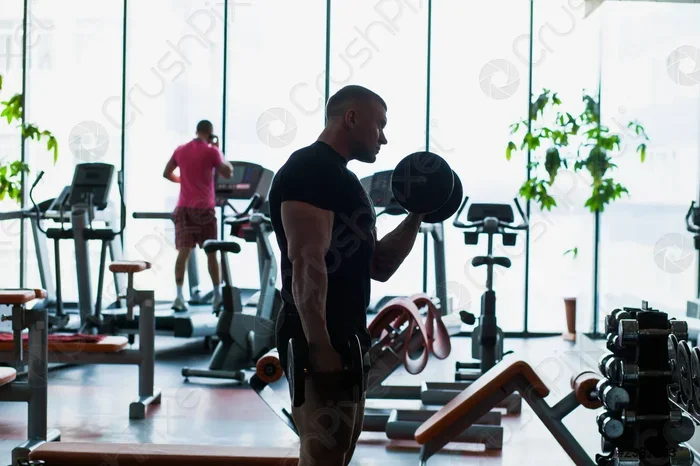
How to Do Clean and Press with Dumbbells

The clean and press with dumbbells is one of the most effective compound exercises for building full-body strength and power. This guide breaks down the proper technique, common mistakes, and proven variations so you can master this explosive movement safely and effectively.
Key Takeaways
- Full-Body Exercise: The clean and press with dumbbells targets nearly every major muscle group, making it incredibly efficient.
- Proper Form Matters: Mastering the clean movement pattern before adding the press is essential for safety and effectiveness.
- Start Light: Beginners should use lighter dumbbells to learn the technique before progressing to heavier weights.
- Common Mistakes: Rounding the back, using excessive momentum, and improper elbow positioning are the top errors to avoid.
- Variations Help Growth: Single-arm, double-arm, and tempo variations keep your muscles challenged and prevent plateaus.
- Program Smart: Include 3-4 sets of 6-10 reps in your strength training sessions for best results.
📑 Table of Contents
What Is the Clean and Press With Dumbbells?
The clean and press with dumbbells is a powerful compound exercise that combines two distinct movements into one fluid action. First, you clean the dumbbells from the floor to your shoulders. Then, you press them overhead. That’s it. Simple concept, serious results.
This exercise has deep roots in old-school strength training. Olympic weightlifters have used the clean and press for over a century. It was once a competitive lift. Today, it remains one of the best full-body workouts you can do with just a pair of dumbbells.
Why is it so popular? Because it builds functional strength that transfers to real life. You pick something heavy off the ground (the clean), then push it above your head (the press). That pattern mimics how you actually move during daily activities. It also burns a ton of calories and boosts explosive power.
Whether you are a fitness beginner or a seasoned lifter, the clean and press with dumbbells deserves a spot in your routine. Let’s break it all down.
Muscles Worked During the Clean and Press
The beauty of the dumbbell clean and press is that it works almost your entire body. This is not a single-muscle exercise. It is a multi-joint movement that fires up dozens of muscles at once.
Primary Muscles
- Legs: Your quadriceps, hamstrings, and glutes power the initial pull from the floor. Think of this like a dumbbell deadlift motion.
- Back: Your lats, traps, and rhomboids stabilize the dumbbells during the clean. A strong bent over row pattern is involved here.
- Shoulders: The pressing phase heavily targets the deltoids. This is similar to an overhead press or shoulder press.
- Core: Your abs and obliques brace hard to keep your torso stable throughout both phases.
Secondary Muscles
- Upper back: The trapezius and rhomboids keep your shoulders packed during the press.
- Forearms and grip: Your grip must hold the dumbbells through every rep. This builds serious grip strength.
- Triceps: They lock out the pressing phase at the top.
- Hip flexors: They assist during the transition from clean to press.
As you can see, the clean and press with dumbbells is a true compound exercise. It builds muscle building and strength training benefits across multiple muscle groups simultaneously. That kind of efficiency is hard to beat.
Step-by-Step Guide to the Dumbbell Clean and Press
Getting the technique right is everything with this lift. The dumbbell clean and press has two main phases: the clean and the press. Let’s walk through each one slowly.
Phase 1: The Clean
The clean is the part where most people struggle. It is an explosive movement that requires coordination. If you are new to this, practice the clean separately before adding the press.
- Stand with feet: Place your feet shoulder-width apart. Your toes should point slightly outward. Hold a dumbbell in each hand at arm’s length by your sides.
- Hinge at the hips: Push your hips back and bend your knees. Keep your chest up and your back straight. This is the same starting position as a deadlift.
- Pull the dumbbells: Drive through your legs and hips to pull the dumbbells up along your body. Use your leg drive, not your arms. Think about jumping slightly off the floor.
- Shrug and rotate: As the dumbbells rise, shrug your shoulders high. At the top, quickly rotate your wrists so your palms face your body. The dumbbells should “land” at shoulder height.
- Catch at shoulders: Let the dumbbells rest lightly against your shoulders. Your elbows should be high and pointed forward. Stand tall.
Once you are comfortable with the clean, you are ready for the press.
Phase 2: The Press
- Set your base: Keep your feet shoulder-width apart. Brace your core. The dumbbells should be resting at shoulder height with palms facing inward.
- Dip and drive: Bend your knees slightly. Then drive upward through your legs while pressing the dumbbells overhead. This leg drive helps you lift heavier weights safely.
- Press to lockout: Push the dumbbells fully overhead. Your arms should be straight but not locked. Your biceps should be near your ears.
- Control the descent: Lower the dumbbells back to shoulder height slowly. Do not let them drop.
Putting It All Together
The full clean and press with dumbbells flows like one continuous movement. Clean up. Press up. Lower down. That is one rep. Keep the tempo controlled but brisk. Aim for 6 to 10 reps per set for strength and power.
Pro tip: If you want to learn more about the pressing portion, check out our guide on how to do chest press with dumbbells at home for additional pressing technique tips.
Common Mistakes to Avoid When Cleaning and Pressing
The dumbbell clean and press is highly effective, but it is also easy to mess up. These are the most common mistakes lifters make.
Using Your Arms to Clean
This is the number one error. The clean is a lower body movement. Your arms are just hooks. If you pull with your biceps, you will strain your elbows and shoulders. Focus on driving with your hips and legs instead.
Rounding the Back
Never let your lower back round during the clean. This puts huge pressure on your spine. Keep your chest proud and your back neutral throughout. If you need lighter dumbbells to maintain proper posture, use them.
Letting the Elbows Drop During the Press
During the press phase, keep your elbows slightly in front of the dumbbells. If they drop too low, the load shifts to your shoulders in an unsafe way. Think about leading with your elbows as you press up.
Using Excessive Momentum
Some lifters swing the dumbbells wildly to get them overhead. This is dangerous and wastes energy. Smooth, controlled reps build more pressing strength and keep you safe. If you cannot control the weight, it is too heavy.
Not Bracing the Core
Your core is your midsection’s seatbelt. Before every rep, take a deep breath into your belly and brace hard. This protects your spine and keeps the dumbbells close to your body during the clean.
For more tips on avoiding common lifting errors, our article on how to workout with dumbbells at home for beginners is a great resource.
Variations and Progressions for All Levels
One reason the clean and press with dumbbells stays relevant is its versatility. You can adjust it for any fitness level. Here are some excellent variations.
Single-Arm Clean and Press
Instead of using two dumbbells, use one. This challenges your core stability even more because your body must resist rotation. It also lets you focus on one side at a time, which helps fix imbalances.
Slow Tempo Clean and Press
Perform each rep in slow motion. Take 3 to 4 seconds on the way up and 3 to 4 seconds on the way down. This time under tension builds serious muscle and forces you to fix weak points in the movement.
Hang Clean and Press
Start with the dumbbells at knee height instead of the floor. This removes the initial pull and focuses purely on the explosive hip extension. It is a great way to build explosive power.
Half-Kneeling Clean and Press
Kneel on one knee and perform the press from this position. This eliminates leg drive and isolates the shoulder stability and pressing muscles. It is excellent for shoulder health and rehabilitation.
Adding a Squat Before the Press
After you clean the dumbbells to your shoulders, perform a squat before pressing. This adds a leg exercise into the mix and makes it a true full body workout. It also builds leg strength under fatigue.
If you want to explore more explosive movements, our guide on how to do kettlebell swings with a dumbbell covers similar power-building patterns.
How to Program the Clean and Press Into Your Routine
Knowing how to perform the clean and press with dumbbells is only half the battle. You also need to program it correctly. Here is how to get the most out of this exercise.
Sets and Reps
- For strength: 4 sets of 5-6 reps with heavier dumbbells. Rest 2-3 minutes between sets.
- For muscle building: 3-4 sets of 8-10 reps with moderate weight. Rest 60-90 seconds.
- For conditioning: 3 sets of 12-15 reps with lighter weight. Rest 30-45 seconds.
Frequency
Aim to perform the clean and press 2 to 3 times per week. This gives your muscles enough recovery time. Pair it with lower body days or full-body training sessions for best results.
Warm-Up First
Never jump straight into heavy reps. Warm up your shoulders, hips, and thoracic spine. Do some light arm circles, hip circles, and a few reps with very light dumbbells. This prevents injury and improves performance.
Pair With Complementary Exercises
The clean and press with dumbbells works well alongside these exercises:
- Squats: Builds leg strength that supports the clean.
- Bent over rows: Strengthens your back for a cleaner movement.
- Shoulder shrugs: Improves trap strength for the clean catch.
- Push-ups: Complements the pressing pattern with horizontal push strength.
Quick Tips for Better Results
- Film yourself to check your form. You often cannot feel your own mistakes.
- Use wrist wraps if the dumbbells tend to rotate in your hands.
- Focus on breathing. Exhale on the press, inhale on the way down.
- Progress slowly. Add 2-5 pounds at a time once you can complete all sets with clean form.
- Rest adequately between sessions. Muscles grow during recovery, not during the workout.
Conclusion
The clean and press with dumbbells is a beast of an exercise. It builds strength, power, muscle, and coordination all at once. It works your legs, back, shoulders, core, and arms in a single movement. There is very few exercises that can match that kind of efficiency.
Start with lighter weights and master the technique. The clean takes practice, but once it clicks, everything else falls into place. Avoid the common mistakes we covered, try different variations, and program it smartly into your weekly routine.
Whether you are training for muscle building, strength training, or functional fitness, the clean and press with dumbbells delivers. Add it to your next workout and feel the difference. Your whole body will thank you.
Frequently Asked Questions
What weight dumbbells should I use for the clean and press?
Start with a weight you can control for at least 6 clean reps. For most beginners, this means 15 to 25-pound dumbbells. Men often start around 30 to 40 pounds, while women commonly begin with 15 to 25 pounds. Focus on form first. Increase the weight gradually once your technique is solid and consistent.
Is the clean and press with dumbbells safe for beginners?
Yes, it can be safe for beginners as long as you start light and learn the movement pattern slowly. Practice the clean separately from the press. Use a mirror or film yourself to check your form. If you have any pre-existing back or shoulder issues, consult a doctor before attempting this exercise. A proper warm-up is essential.
Can I do the clean and press with one dumbbell?
Absolutely. The single-arm clean and press is one of the most popular variations. It challenges your core even more because your body must resist rotation. You can alternate arms each rep or do all reps on one side before switching. This is a great option if you only have one dumbbell available.
How does the dumbbell clean and press compare to the barbell clean and press?
The barbell version allows you to lift heavier weights and is more common in competitive weightlifting. However, the dumbbell version offers more natural wrist positioning and allows each arm to move independently. Dumbbells also reduce the risk of imbalances and are easier to rack at home. Both are excellent choices depending on your equipment and goals.
What is the difference between a clean and a deadlift?
Both start from the floor and use a hip hinge pattern similar to a deadlift. The key difference is that in a clean, you pull the weight to your shoulders rather than to hip level. The clean also involves a wrist rotation and a slight shrug at the top. Think of the clean as a deadlift that transitions into a front-rack position.
How can I improve my clean technique?
Practice the hip hinge and leg drive from a deadlift position. Focus on pulling the dumbbells close to your body rather than away from it. Do tempo cleans at half speed to build awareness. Adding exercises like dumbbell shrugs and bent over rows strengthens the muscles used during the clean. Consistent practice is the best teacher here.