How to Do Single Leg Deadlift with Dumbbells
The single leg deadlift with dumbbell is a powerful unilateral exercise that targets your hamstrings, glutes, and core while improving balance and stability. This move helps fix muscle imbalances, boosts athletic performance, and requires only one dumbbell. You will learn the proper form, common mistakes, and helpful variations to get the most out of every rep.
The single leg deadlift with dumbbell is one of the best exercises you can add to your lower body routine. It looks simple, but it works wonders for your legs, hips, and core. Whether you are a beginner or a seasoned lifter, this move deserves a spot in your program.
Unlike traditional deadlifts that work both legs equally, the single leg version forces each side of your body to work independently. This means you build strength, improve balance, and catch weaknesses you might not even know you have. Single leg deadlift dumbbell training is a game changer for anyone serious about functional fitness.
In this guide, we will walk you through everything you need to know. You will learn the correct form step by step, discover the muscles it targets, avoid common mistakes, and find helpful variations. Let us get into it.
Key Takeaways
- Works multiple muscle groups: The single leg deadlift with dumbbell hits your hamstrings, glutes, lower back, and core all at once.
- Improves balance and stability: Training one leg at a time builds proprioception and strengthens stabilizer muscles.
- Fixes muscle imbalances: Unilateral training ensures both sides of your body work equally, reducing injury risk.
- Simple equipment needed: You only need one dumbbell and a small space to perform this exercise effectively.
- Easy to scale: Beginners can start light, while advanced lifters can increase weight or add pauses for more challenge.
- Great for home workouts: This exercise fits perfectly into a home dumbbell routine with minimal setup.
📑 Table of Contents
- What Is the Single Leg Deadlift with Dumbbell?
- Muscles Worked by the Single Leg Deadlift
- Step-by-Step Guide to Proper Form
- Benefits of the Single Leg Deadlift with Dumbbell
- Common Mistakes to Avoid
- Variations and Progressions
- How to Program the Single Leg Deadlift into Your Routine
- How It Compares to Other Single Leg Exercises
- Final Thoughts
What Is the Single Leg Deadlift with Dumbbell?
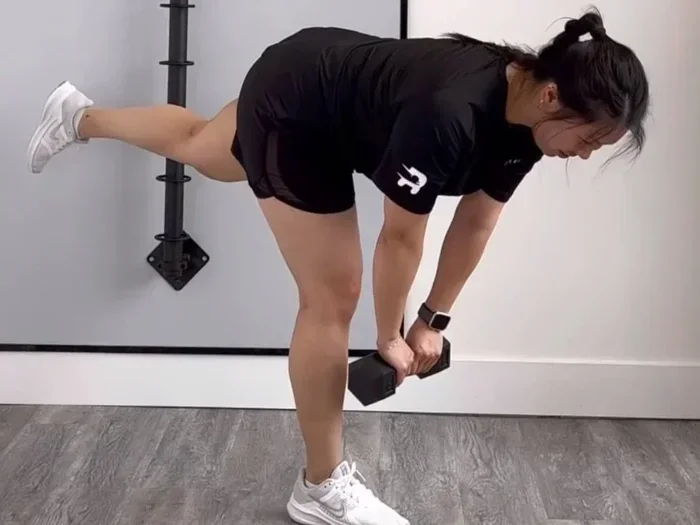
The single leg deadlift dumbbell is a unilateral exercise where you hinge at the hips while standing on one leg. You hold a dumbbell in one or both hands and lower it toward the ground as your free leg extends behind you. It is sometimes called the unilateral deadlift or the one-leg dumbbell deadlift.
This exercise is a staple in many strength and conditioning programs. It combines a hip hinge pattern with balance and stability demands. The result is a movement that builds real-world strength and helps you move better in daily life and sports.
If you have ever tried the single leg deadlift with kettlebell, the dumbbell version follows the same movement pattern. The only difference is the equipment you use. Both are excellent choices for building posterior chain strength.
Muscles Worked by the Single Leg Deadlift
The beauty of the single leg deadlift with dumbbell lies in how many muscles it engages. Let us break down the primary and secondary muscle groups.
Primary Muscles
- Hamstrings: The hamstrings do the heavy work during the hip hinge. They control the lowering phase and power you back up.
- Glutes (Gluteus Maximus and Medius): Your glutes drive hip extension and keep your pelvis stable on the standing leg.
- Erector Spinae: These muscles along your spine keep your back straight throughout the movement.
Secondary Muscles
- Core Muscles: Your abs and obliques work hard to prevent you from tipping over.
- Hip Abductors: These muscles stabilize your pelvis and prevent your hip from dropping.
- Calves and Ankles: Your lower leg works constantly to maintain balance on one foot.
- Forearms and Grip: If you hold the dumbbell in one hand, your grip and forearm muscles stay engaged the entire time.
Because so many muscles fire during this exercise, it is incredibly efficient. One set of single leg deadlifts gives you strength, balance, and stability training all at once.
Step-by-Step Guide to Proper Form
Getting the form right is the most important part of the single leg deadlift with dumbbell. Poor form can lead to injury and reduced results. Follow these steps carefully.
Step 1: Set Up Your Starting Position
Stand tall on your left leg. Hold a dumbbell in your right hand and let it hang at your side. Keep your left knee slightly bent. Your shoulders should be back and down. Look straight ahead at a spot on the floor about two feet in front of you.
Step 2: Begin the Hip Hinge
Push your hips back while keeping your back flat. Let the dumbbell slide down your right leg. At the same time, extend your left leg straight behind you. Your body should form a straight line from your head to your back heel.
Step 3: Reach the Bottom Position
Lower the dumbbell until you feel a strong stretch in your hamstring. Your torso should be nearly parallel to the floor. Your left leg should be extended straight back. Keep your core tight the entire time. Do not let your back round.
Step 4: Return to Standing
Drive through your standing heel to pull yourself back up. Squeeze your glutes as you rise. Keep the dumbbell close to your body throughout the movement. Pause at the top and repeat for the desired number of reps before switching legs.
Quick Tips for Perfect Form
- Keep the dumbbell close to your leg. Think of it brushing your thigh as it lowers.
- Do not rotate your hips open. Keep them square to the floor.
- Breathe out as you hinge down and breathe in as you return.
- Start with a light dumbbell to master the movement before adding weight.
- If you lose balance, lightly touch a wall with your free hand.
Proper form is what separates results from injuries. Take your time learning the movement. If you want more guidance on deadlift form, check out our guide on how to do a proper deadlift with kettlebell. The same hip hinge principles apply.
Benefits of the Single Leg Deadlift with Dumbbell
Why should you add the single leg deadlift dumbbell to your routine? Here are the top benefits backed by fitness science and real-world experience.
1. Fixes Muscle Imbalances
Most people have a stronger side and a weaker side. Bilateral exercises like squats and standard deadlifts let the strong side take over. Unilateral exercises like the single leg deadlift force each leg to work independently. This helps correct imbalances and prevents one side from becoming dominant.
2. Improves Balance and Coordination
Standing on one leg while moving challenges your balance in a big way. Over time, your proprioception improves. This means your body gets better at knowing where it is in space. Better balance translates to better performance in sports, running, and everyday activities.
3. Strengthens the Posterior Chain
The posterior chain includes your hamstrings, glutes, and lower back. The single leg deadlift with dumbbell targets all of these muscles effectively. A strong posterior chain improves posture, reduces back pain, and enhances athletic performance.
4. Boosts Core Stability
Your core works overtime to keep you stable on one leg. The anti-rotation demand builds deep core strength that carries over to other exercises and daily movements.
5. Requires Minimal Equipment
You only need one dumbbell and enough floor space to stand on one leg. This makes it perfect for home workouts and small gym spaces. It is also one of the best exercises in a lower body workout with dumbbells routine.
6. Enhances Athletic Performance
Many sports require single-leg strength and stability. Sprinters, basketball players, and soccer players all benefit from unilateral training. The single leg deadlift builds the foundation for explosive, powerful movements.
Common Mistakes to Avoid
Even though the single leg deadlift looks simple, small mistakes can reduce its effectiveness or cause injury. Watch out for these errors.
Mistake 1: Rounding Your Back
This is the most common mistake. When your back rounds, it puts unnecessary stress on your spine. Keep your chest up and your core braced throughout the movement. Think of making a flat table surface with your back.
Mistake 2: Letting the Hips Rotate
Your hips should stay square to the floor. If your hip drops or rotates open, you lose stability and put extra strain on your lower back. Focus on keeping your pelvis level.
Mistake 3: Using Too Much Weight Too Soon
Balance is the hardest part of this exercise. Adding heavy weight before you have mastered the movement is a recipe for poor form. Start light and progress gradually.
Mistake 4: Rushing the Movement
The single leg deadlift is not a speed exercise. Slow and controlled reps give you better results and reduce injury risk. Take two to three seconds on the way down and one to two seconds on the way up.
Mistake 5: Lifting the Standing Leg Heel
Keep your standing foot flat on the ground. Lifting your heel shifts the load and reduces glute activation. If you struggle with balance, lightly touch a wall or chair for support.
Variations and Progressions
Once you master the basic single leg deadlift with dumbbell, you can keep challenging yourself with these variations.
Variation 1: Dumbbell Single Leg RDL
The Romanian deadlift (RDL) variation focuses more on the hamstrings. Instead of lowering all the way to the ground, you stop when you feel a strong stretch in your hamstrings. This is a great starting point for beginners.
Variation 2: Single Leg Deadlift with Pause
Hold the bottom position for two to three seconds before returning to standing. This increases time under tension and builds more strength and stability.
Variation 3: Double Dumbbell Single Leg Deadlift
Hold a dumbbell in each hand instead of just one. This increases the load on your core and challenges your balance even more.
Variation 4: Single Leg Deadlift to Knee Drive
At the top of the movement, bring your back knee forward and up toward your chest. This adds a dynamic element and engages your hip flexors.
Variation 5: Overhead Single Leg Deadlift
Hold the dumbbell overhead with both hands. This dramatically increases the core stabilization demand and tests your balance at a higher level.
For more lower body dumbbell exercises that build leg strength, check out our guide on how to build leg muscles at home with dumbbells. It includes several complementary exercises to pair with the single leg deadlift.
How to Program the Single Leg Deadlift into Your Routine
Adding the single leg deadlift dumbbell to your workout plan is easy. Here are some practical programming tips.
For Beginners
- Start with bodyweight only. Master the hinge pattern before adding a dumbbell.
- Use a light dumbbell (5 to 10 pounds).
- Perform 2 to 3 sets of 6 to 8 reps per leg.
- Train once or twice per week with at least one rest day between sessions.
For Intermediate Lifters
- Use a moderate dumbbell (15 to 30 pounds).
- Perform 3 to 4 sets of 8 to 10 reps per leg.
- Add a one-second pause at the bottom position.
- Include this exercise in your lower body or full-body routine twice per week.
For Advanced Lifters
- Use heavier dumbbells or a barbell.
- Perform 3 to 5 sets of 6 to 8 reps per leg.
- Try the paused or overhead variations.
- Pair this exercise with other unilateral movements like lunges or step-ups.
The single leg deadlift with dumbbell fits well into any program focused on strength, balance, or functional fitness. It pairs great with glute and hamstring exercises, core work, and cardiovascular training.
How It Compares to Other Single Leg Exercises
There are many single leg exercises out there. Here is how the single leg deadlift stacks up against a few popular alternatives.
| Exercise | Primary Focus | Equipment Needed | Balance Demand |
|---|---|---|---|
| Single Leg Deadlift with Dumbbell | Hamstrings, glutes, balance | One dumbbell | High |
| Bulgarian Split Squat | Quads, glutes, balance | Dumbbells, bench | Medium |
| Pistol Squat | Quads, glutes, core | Bodyweight | Very High |
| Single Leg Hip Thrust | Glutes, hamstrings | Bench, dumbbell | Low |
| Step-Up with Dumbbell | Quads, glutes, balance | Dumbbells, bench | Medium |
Each exercise has its place. The single leg deadlift stands out for its focus on the posterior chain and hip hinge pattern. It is also one of the most accessible single leg exercises because it requires minimal equipment.
If you are looking for more dumbbell-based leg and glute work, our guide on how to do a squat with a kettlebell covers another excellent unilateral and bilateral lower body movement. Both exercises complement each other well in a balanced training program.
Final Thoughts
The single leg deadlift with dumbbell is one of the most effective and efficient exercises you can do. It builds leg strength, fixes imbalances, improves balance, and requires almost no equipment. Whether you train at home or in a gym, this move deserves a permanent spot in your routine.
Start with bodyweight to master the hinge pattern. Then add a light dumbbell and focus on perfect form. As you get stronger, progress to heavier weights and advanced variations. The key is consistency and patience. Your legs, glutes, and core will thank you.
Remember that every rep counts. The single leg deadlift dumbbell is not just an exercise. It is a movement that builds a stronger, more balanced, and more resilient body. Get started today and feel the difference it makes in your training.
Frequently Asked Questions
Can beginners do the single leg deadlift with dumbbell?
Yes, beginners can absolutely do this exercise. Start without any weight and focus on mastering the hip hinge and balance. Once you feel confident, add a light dumbbell. The movement is simple but requires practice to get right, so be patient with yourself.
How heavy should the dumbbell be for single leg deadlifts?
Start with a light dumbbell, around 5 to 10 pounds. As your balance and strength improve, you can gradually increase the weight. The goal is to maintain proper form throughout every rep. If your form breaks down, the weight is too heavy.
Is the single leg deadlift better than the regular deadlift?
Both exercises have unique benefits. The single leg deadlift excels at fixing muscle imbalances, improving balance, and building stabilizer strength. The regular deadlift allows you to lift heavier loads. A well-rounded program includes both types of movements for the best results.
Can I do single leg deadlifts every day?
It is best to train this exercise two to three times per week with rest days in between. Your muscles and nervous system need time to recover and adapt. Daily training can lead to overuse injuries, especially in the hamstrings and lower back.
What is the difference between a single leg deadlift and a Romanian deadlift?
The Romanian deadlift (RDL) is typically performed on two legs with a slight knee bend and a focus on the hamstrings. The single leg deadlift adds a balance component by requiring you to stand on one leg. Both are hip hinge movements, but the single leg version demands more stability and coordination.
Will single leg deadlifts help with running performance?
Yes, they can. Single leg deadlifts build hamstring and glute strength while improving balance and hip stability. These qualities are essential for runners. Stronger single-leg strength helps with stride power, reduces the risk of common running injuries, and improves overall running economy.