How to Hit Long Head Tricep with Dumbbells
Hitting the long head of the tricep is essential for building bigger, more defined arms. This guide covers the best dumbbell exercises, proper form cues, and workout plans to target the long head effectively. Whether you are a beginner or intermediate lifter, you will find actionable steps to add mass and strength to your triceps.
Key Takeaways
- The long head is the largest tricep head: It makes up the majority of your tricep mass and is key to arm size.
- Overhead movements are king: Exercises like overhead extensions stretch and activate the long head better than any other angle.
- Dumbbells offer unique advantages: They allow a greater range of motion and help fix muscle imbalances.
- Form matters more than weight: Using too much weight ruins your mind muscle connection and increases injury risk.
- Progressive overload drives growth: Gradually increasing weight or reps keeps your triceps adapting and growing.
- Train 2 to 3 times per week: This frequency gives enough stimulus without overtraining your arms.
- Pair tricep work with compound movements: Exercises like close grip presses complement isolation work for maximum arm development.
📑 Table of Contents
- How to Hit Long Head Tricep with Dumbbells
- Why the Long Head Matters for Arm Size
- Best Dumbbell Exercises for the Long Head
- How to Use Proper Form for Maximum Results
- Sample Long Head Tricep Workout
- Common Mistakes to Avoid
- How to Build a Long Head Tricep Routine That Works
- Expert Tips for Faster Tricep Growth
- Conclusion
How to Hit Long Head Tricep with Dumbbells
Your triceps make up about two thirds of your upper arm mass. That means if you want bigger arms, you need to train your triceps hard. But not all tricep exercises are created equal. The long head of the tricep is the largest of the three heads, and it gives your arms that horseshoe shape from the side. Many lifters skip it or train it wrong, and that holds back their progress.
Dumbbells are one of the best tools for hitting the long head. They let you move freely, stretch the muscle fully, and focus on each arm individually. In this guide, you will learn exactly how to hit long head tricep with dumbbells using the most effective exercises, the right form, and a smart training plan. You will also learn common mistakes to avoid so you get the most out of every rep.
The long head of the tricep starts at your shoulder blade and runs down to your elbow. This unique attachment point means it is active during both shoulder extension and elbow extension. That is why overhead movements are so powerful for this muscle. When your arm is raised above your head, the long head gets a deep stretch that no other angle can match. Combine that with the freedom dumbbells give you, and you have a recipe for serious tricep growth.
If you want to go deeper into training the long head specifically, check out our detailed guide on how to train long head of triceps with dumbbells for even more exercise variations and programming tips.
Why the Long Head Matters for Arm Size
Most people think bigger arms mean bigger biceps. But your triceps actually contribute more to arm size than your biceps do. The long head is the star player here. It is the outermost head of the tricep and creates the dramatic shape you see when someone flexes their arm.
When the long head is well developed, your arms look full and round from every angle. When it is underdeveloped, your arms look flat and narrow. No matter how much you train your biceps, you will not get that impressive arm size without building the long head of your triceps.
The long head also plays a big role in pressing movements. It helps you lock out during bench presses and overhead presses. A stronger long head means better performance in all your pushing exercises. So training it is not just about looks. It also makes you stronger overall.
The Three Heads of the Tricep
Your tricep has three heads: the long head, the lateral head, and the medial head. Each one has a different job and a different look. The long head is the biggest and gives your arm thickness from the side. The lateral head is on the outer arm and creates that peaked look when you flex. The medial head sits deeper and helps with pressing movements.
Most dumbbell exercises hit all three heads to some degree. But to really build the long head, you need exercises that stretch it under load. That means movements where your arm goes behind your body or overhead. Standard tricep pushdowns mostly work the lateral and medial heads. They do not give the long head the stretch it needs to grow.
If you want balanced arm development, you should also check out how to get bigger biceps and triceps with dumbbells for a complete arm training approach.
Best Dumbbell Exercises for the Long Head
Now let us get into the exercises. These are the most effective dumbbell movements for targeting the long head of the tricep. Each one has a unique benefit, and together they give you a complete long head workout.
Overhead Dumbbell Extension
The overhead dumbbell extension is the number one exercise for the long head. It places the tricep under a deep stretch while you extend your arm. This stretch under load is what triggers the most muscle growth.
To do it, sit on a bench or chair. Hold one dumbbell with both hands behind your head. Keep your elbows close to your ears. Extend your arms upward until they are straight. Lower the dumbbell slowly back behind your head. Do not let it drop too fast. Control the weight on the way down.
You can do this exercise with one dumbbell or two. Single dumbbell versions let you focus more on each rep. Two dumbbells give you a balanced load. Either way, keep your upper arms still. Only your forearms should move. This isolation is what makes the exercise so effective.
Tricep Kickback
The tricep kickback is a classic exercise that hits the long head from a different angle. It works the muscle through full range of motion and gives you a strong squeeze at the top.
Start by bending forward at the waist. Keep your back flat and your chest up. Hold a dumbbell in each hand. Pull your elbows back so they are at about 90 degrees. This is your starting position. Now extend your arms straight back. Squeeze your triceps at the top. Hold for a second. Then lower the dumbbells back down slowly.
The key to kickbacks is not swinging the weight. Use a slow and controlled motion. Many people cheat by using momentum. That takes the work away from your triceps. Focus on the squeeze. Feel the long head contracting at the top of each rep.
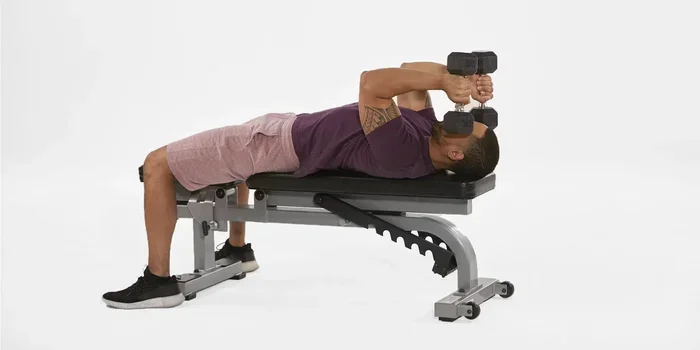
Skull Crusher with Dumbbells
Skull crushers are a powerful tricep exercise that most lifters love. When done with dumbbells, they give you more freedom of movement and a deeper stretch than barbell versions.
Lie on a flat bench. Hold a dumbbell in each hand above your shoulders with arms straight. Slowly bend your elbows and lower the dumbbells toward your temples. Keep your elbows pointing up and do not let them flare out. Lower until your forearms are at about 90 degrees. Then press the dumbbells back up to full extension.
This exercise hits all three heads of the tricep. But the long head gets significant work because of the shoulder position. To emphasize the long head even more, you can do skull crushers on an incline bench. The incline increases the stretch on the long head at the bottom of the movement.
Close Grip Dumbbell Floor Press
The close grip floor press is a compound movement that builds mass on the triceps. It is simpler than a bench press and safer because your range of motion is limited by the floor.
Lie on the floor. Hold a dumbbell in each hand with your hands about shoulder width apart. Lower the dumbbells to your chest. Keep your elbows tucked close to your body. Press the weights back up. At the top, squeeze your triceps hard.
This exercise is great for building strength and size at the same time. It also pre-exhausts your triceps before you move to isolation work. Pair it with overhead extensions for a complete long head routine.
How to Use Proper Form for Maximum Results
Form is everything when it comes to hitting the long head. Bad form means wasted reps and missed gains. Good form means every rep counts. Here are the most important form cues to keep in mind.
Control the Negative
The lowering part of every rep is where most of the muscle growth happens. When you lower the dumbbell, take at least two to three seconds. Do not let gravity do the work. Resist the weight as it comes down. This eccentric phase creates more muscle damage, which signals your body to rebuild the muscle bigger and stronger.
Keep Your Upper Arms Still
For isolation exercises like extensions and kickbacks, your upper arms should not move. Only your forearms move. If your upper arms are swinging or shifting, you are using momentum instead of muscle. Lock your upper arms in place and focus on the tricep contraction.
Squeeze at the Top
At the point of full extension, squeeze your triceps hard. Hold that squeeze for one to two seconds. This peak contraction increases blood flow to the muscle and enhances the mind muscle connection. Over time, this simple cue can dramatically improve your results.
Do Not Use Too Much Weight
This is the most common mistake lifters make. They grab heavy dumbbells and swing them around. The weight is too heavy to control, so they cheat. Choose a weight where you can complete all reps with clean form. You can always increase the weight later. But if you sacrifice form, you are just setting yourself back.
If you are new to dumbbell training, you might want to start with lighter weights and build up. Check out our guide on how to workout with dumbbells at home for beginners to build a solid foundation.
Sample Long Head Tricep Workout
Here is a complete workout designed specifically to target the long head of the tricep. You can do this routine two to three times per week with at least one rest day between sessions.
Workout A
- Overhead Dumbbell Extension: 3 sets of 10 to 12 reps
- Tricep Kickback: 3 sets of 12 to 15 reps per arm
- Dumbbell Skull Crusher: 3 sets of 10 to 12 reps
- Close Grip Floor Press: 3 sets of 8 to 10 reps
Workout B
- Dumbbell Skull Crusher (Incline): 3 sets of 10 to 12 reps
- Overhead Dumbbell Extension (Single Arm): 3 sets of 10 to 12 reps per arm
- Tricep Kickback: 3 sets of 12 to 15 reps per arm
- Close Grip Floor Press: 3 sets of 8 to 10 reps
Rest 60 to 90 seconds between sets. Focus on feeling the long head work during every exercise. If you do not feel it, reduce the weight and slow down your reps. The mind muscle connection is one of the most underrated tools in muscle building.
To keep your triceps growing over time, you need progressive overload. That means adding a little weight or a few extra reps each week. Your muscles grow when they are challenged beyond what they are used to. Track your workouts in a notebook or app. Write down every weight and rep. Then try to beat those numbers next session.
For more exercises and routines to build bigger triceps at home, check out our guide on how to get bigger triceps at home with dumbbells.
Common Mistakes to Avoid
Even experienced lifters make mistakes with tricep training. Here are the errors that keep people from building the long head properly.
Using Momentum Instead of Muscle
Swinging the dumbbell or using your shoulders to move the weight takes the tension off your triceps. This is the fastest way to waste a set. Slow down. Control every rep. If you cannot do that with your current weight, go lighter.
Flaring Your Elbows
During extensions and presses, your elbows should stay close to your body. If they flare out, your shoulders take over and your triceps get less work. Keep those elbows tucked. Think about squeezing a pencil between your upper arm and your side.
Skipping the Stretch
The long head grows best when it is stretched under load. Do not skip the deep stretch at the bottom of overhead extensions. That stretched position is where the magic happens. Many people go too fast and barely get any stretch at all.
Training Too Often Without Rest
Your muscles grow when you rest, not when you train. Training your triceps every single day will lead to overtraining and stalled progress. Give them 48 to 72 hours to recover between sessions. Sleep well and eat enough protein to support muscle repair and growth.
Neglecting the Mind Muscle Connection
Your brain needs to talk to your muscles for growth to happen. If you are scrolling through your phone between sets or thinking about what to cook for dinner, you are not maximizing your workout. Focus on the muscle you are training. Feel it working. Visualize the long head contracting and stretching with every rep.
How to Build a Long Head Tricep Routine That Works
Building a routine that targets the long head consistently is the key to long term results. Here is how to structure your training for the best outcomes.
Start with compound movements first. Exercises like close grip presses fatigue your triceps and prepare them for isolation work. Then move to overhead extensions and kickbacks. These hit the long head from different angles and ensure full development.
Aim for 10 to 16 total sets per tricep session. This is enough volume to stimulate growth without overtraining. Spread those sets across 4 to 5 different exercises. Train each exercise for 3 sets of 8 to 15 reps depending on the movement.
Progressive overload is your best friend. Add 2.5 to 5 pounds to your dumbbells every one to two weeks. Or add one or two extra reps to each set. Small consistent improvements add up to big gains over time. Do not chase quick fixes. Trust the process and stay consistent.
If you are serious about building overall arm size, you should also focus on building all your arm muscles. Check out our guide on how to build arm muscles at home with dumbbells for a complete arm training program.
Expert Tips for Faster Tricep Growth
Here are some bonus tips from experienced lifters and coaches that can accelerate your long head development.
- Use a slow rep tempo: Try a 3-1-2 tempo. Three seconds down, one second pause at the stretch, two seconds up. This keeps constant tension on the long head.
- Train to near failure: Your last one or two reps should be very challenging. This signals your body to grow. But do not fail completely. Leave one or two reps in the tank to protect your joints.
- Vary your grip: Pronated grip, supinated grip, neutral grip. Changing your hand position shifts the emphasis slightly and hits the muscle fibers differently.
- Add a stretch set: End your workout with one set of overhead extensions using a light weight. Focus purely on the stretch. This technique can boost growth and improve flexibility in the muscle.
- Train after chest or shoulders: Your triceps are already pre-exhausted from pressing movements. Training them after compounds gives you fresh energy for isolation work.
These tips are simple but powerful. They separate a good workout from a great one. Try adding one or two of these techniques to your next session and see the difference.
Conclusion
Building bigger arms starts with training the long head of the tricep properly. Dumbbells give you the perfect tool to target this muscle from multiple angles with full control and freedom of movement. The exercises in this guide, from overhead extensions to kickbacks and skull crushers, are proven methods that work when you use them consistently.
Focus on form over weight. Control every rep. Feel the long head working. And make sure you are training with enough volume and frequency to stimulate growth. Avoid the common mistakes that hold most people back. And remember, patience is key. Real muscle growth takes time, but the results are worth it.
Now you know exactly how to hit long head tricep with dumbbells. The only thing left is to put this knowledge into action. Grab your dumbbells, follow the workout plan, and start building the bigger, stronger arms you have been working toward. Your long head triceps will thank you.
Frequently Asked Questions
What is the long head of the tricep and why is it important?
The long head is the largest of the three tricep heads and runs from your shoulder blade down to your elbow. It gives your arms their horseshoe shape and contributes the most to overall arm size. Training it properly is essential for building bigger, more defined arms.
How many times per week should I train my long head triceps?
Training your long head triceps two to three times per week is ideal for most people. This frequency gives your muscles enough stimulus to grow while allowing proper recovery. Make sure you leave at least 48 hours between sessions for the best results.
Can I build long head triceps with dumbbells at home?
Absolutely. Dumbbells are one of the best tools for long head tricep development at home. Exercises like overhead extensions and kickbacks require nothing more than a pair of dumbbells and a bench or chair. You can build serious arm size without ever stepping into a gym.
What is the best dumbbell exercise for the long head?
The overhead dumbbell extension is widely considered the best exercise for the long head. It places the tricep under a deep stretch while you extend your arm, which is the primary stimulus for long head growth. Other excellent options include tricep kickbacks and incline skull crushers.
How long does it take to see results in the long head triceps?
Most people start to notice visible changes in their triceps within four to six weeks of consistent training. Significant muscle growth takes eight to twelve weeks or more. Your results depend on training consistency, nutrition, sleep, and genetics. Stay patient and trust the process.
Should I use heavy or light weights for long head tricep exercises?
A moderate weight that allows you to maintain proper form is ideal. The long head responds best to controlled movements with a full range of motion. Using too much weight leads to cheating and poor muscle activation. Focus on feeling the muscle work rather than lifting the heaviest weight possible.