How to Do Weighted Push Ups with Dumbbells
Weighted push ups with dumbbells are a powerful way to build chest, shoulder, and tricep strength beyond bodyweight limits. This guide walks you through proper form, safe techniques, and creative variations you can do at home. You will learn how to choose the right weight, avoid common mistakes, and progress steadily for real results.
Weighted push ups with dumbbells are one of the best ways to take your upper body workout to the next level. If you have been doing regular push ups and feel like you have hit a plateau, adding weight is the simplest way to challenge your muscles again. This exercise targets your chest, shoulders, and triceps while also engaging your core for stability.
What makes weighted push ups with dumbbells so appealing is their simplicity. You do not need a fancy gym setup or expensive machines. A pair of dumbbells and a flat surface are all you need. Whether you are a beginner looking to build strength or an advanced lifter chasing muscle growth, this movement fits your needs.
In this guide, we cover everything you need to know. You will learn the correct form step by step, discover the top benefits, explore easy variations, and find tips to avoid common mistakes. By the end, you will feel confident adding weight to your push ups right away.
Key Takeaways
- Weighted push ups add resistance to a familiar movement, making them one of the most effective upper body exercises you can do at home.
- Using dumbbells as weights is a safe and accessible method that does not require a barbell or specialized equipment.
- Proper form is essential to protect your shoulders and wrists while maximizing muscle activation in the chest and triceps.
- Multiple variations exist to target different muscle groups and match your fitness level, from beginner to advanced.
- Progressive overload drives results, so gradually increasing weight or reps is key to continued strength gains.
- Common mistakes like sagging hips or flared elbows can cause injury and reduce the effectiveness of the exercise.
- Consistency and recovery matter as much as the exercise itself for building bigger, stronger muscles over time.
📑 Table of Contents
- Why Weighted Push Ups with Dumbbells Work So Well
- How to Do Weighted Push Ups with Dumbbells: Step by Step
- Benefits of Adding Dumbbells to Your Push Ups
- Common Mistakes to Avoid
- Variations to Keep Your Workouts Fresh
- How to Progress Safely Over Time
- Frequently Asked Questions
- Final Thoughts on Weighted Push Ups with Dumbbells
Why Weighted Push Ups with Dumbbells Work So Well
Push ups are already a fantastic bodyweight exercise. They build functional strength and work multiple muscle groups at once. But your body eventually adapts to the load. Adding dumbbells increases the resistance, which forces your muscles to work harder and grow stronger.
The Science Behind Adding Weight
Muscles grow when they face resistance beyond what they are used to. This principle is called progressive overload. When you place dumbbells on your back during a push up, you increase the load your chest and arms must push against. This triggers muscle fibers to repair and grow back stronger.
Weighted push ups also improve your core stability more than regular push ups. Because the extra weight shifts your center of gravity, your abdominal muscles and lower back must work harder to keep your body in a straight line. This makes the exercise a true full-body movement.
Muscles Targeted by Weighted Push Ups
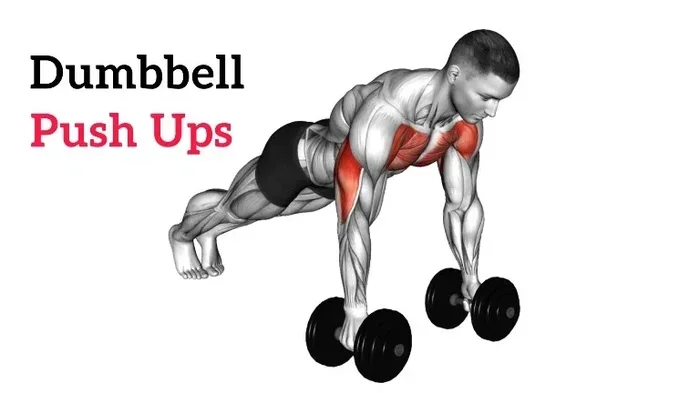
Understanding which muscles you are working helps you train smarter. Here are the primary muscles activated during dumbbell push ups:
- Pectoralis major and minor (chest muscles) — the primary movers
- Anterior deltoids (front shoulders) — assist with the pressing motion
- Triceps brachii (back of arms) — extend the elbows during each rep
- Core muscles (abs and obliques) — stabilize your spine throughout the movement
- Serratus anterior (side of ribcage) — helps with shoulder blade movement
Because weighted push ups with dumbbells recruit so many muscles, they are highly efficient. One set delivers a compound workout that isolates nothing and works everything at once.
How to Do Weighted Push Ups with Dumbbells: Step by Step
Proper form is the most important part of any exercise. Getting it right ensures you get the results you want while staying safe. Follow these steps carefully every time you perform this movement.
Step 1: Set Up Your Dumbbells
Place two dumbbells on the floor shoulder-width apart. Choose weights that challenge you but still allow you to complete the full range of motion. If you are new to this exercise, start lighter than you think you need. You can always add more weight next session.
Step 2: Get Into Position
Stand over the dumbbells and grip each handle firmly. Walk your feet back until your body forms a straight line from head to heels. Keep your feet about hip-width apart for balance. Tighten your core and glutes before you begin.
Step 3: Lower Your Body
Bend your elbows and slowly lower your chest toward the ground. Keep your elbows at about a 45-degree angle from your body. Do not let them flare out wide, as this puts unnecessary stress on your shoulder joints. Lower until your chest is just above the floor or lightly touches the ground.
Step 4: Push Back Up
Press through your palms and straighten your arms to return to the starting position. Exhale as you push up. Keep your body rigid the entire time. Do not let your hips sag or your lower back arch.
Step 5: Repeat for Reps
Aim for 8 to 12 repetitions per set. Rest for 60 to 90 seconds between sets. As you get stronger, you can increase the number of sets or add more weight to the dumbbells.
Quick Tip: Keep your neck neutral. Do not look straight up or let your head drop. Find a spot on the floor about a foot in front of your hands and keep your gaze there throughout the movement.
Benefits of Adding Dumbbells to Your Push Ups
Simply adding weight to a familiar exercise might seem basic, but the benefits are significant. Here is why weighted push ups with dumbbells deserve a spot in your routine.
1. Increased Upper Body Strength
The extra resistance builds raw strength faster than bodyweight push ups alone. Over time, you will notice improvements in other pressing movements like the bench press and overhead press.
2. Better Muscle Hypertrophy
For those looking to build muscle size, added weight creates the mechanical tension needed for hypertrophy. Your chest and shoulders will respond to the increased load by growing bigger and stronger.
3. Improved Core Stability
The extra weight forces your core to work overtime to maintain proper alignment. This translates to better performance in sports, daily activities, and other gym exercises.
4. Scalable Difficulty
Unlike machines that lock you into a fixed path, dumbbells allow you to adjust the weight in small increments. This makes weighted push ups suitable for every fitness level.
5. No Gym Membership Required
You can do this exercise at home, in a park, or anywhere you have a flat surface and a pair of dumbbells. It is one of the most convenient upper body workouts you can perform.
Common Mistakes to Avoid
Even simple exercises can go wrong when form breaks down. Here are the most common mistakes people make with weighted push ups with dumbbells and how to fix them.
Mistake 1: Sagging Hips
This is the number one error. When your hips drop, pressure builds in your lower back and your core stops working. Always squeeze your glutes and brace your abs before each rep. If you feel your hips tilting, stop and reset.
Mistake 2: Flaring Elbows Too Wide
Wide elbows put excessive strain on your shoulder joints and reduce chest activation. Keep your elbows at roughly 45 degrees from your torso. Think about pulling your elbows slightly toward your hips as you push up.
Mistake 3: Using Too Much Weight Too Soon
Adding heavy dumbbells before your body is ready leads to sloppy form and injury. Start with a manageable weight and focus on clean reps. Increase the load gradually over several weeks.
Mistake 4: Partial Range of Motion
Some people cheat by only lowering partway down to squeeze out extra reps. This reduces the effectiveness of the exercise. Always lower until your chest nearly touches the ground for full muscle engagement.
Mistake 5: Neglecting Wrist Position
Place your hands directly under your shoulders with wrists stacked in line. If your wrists bend backward or sideways, you risk strain and discomfort. Adjust your hand position until it feels stable and pain-free.
Variations to Keep Your Workouts Fresh
Doing the same push up variation every workout can get boring. The good news is that weighted push ups with dumbbells can be modified in many creative ways to target different muscles and keep things interesting.
Decline Weighted Push Ups
Place your feet on an elevated surface like a bench or step. This shifts more focus to your upper chest and front shoulders. Combine this with dumbbells on your back for a serious upper body challenge.
Wide-Grip Weighted Push Ups
Widen your hand placement beyond shoulder width. This variation places more emphasis on the outer chest and shoulders. Keep the dumbbells secure on your upper back and maintain a straight body line throughout.
Single-Leg Weighted Push Ups
Lift one foot off the ground to increase the demand on your core and hip stabilizers. This is a great progression for advanced trainees who want to challenge their balance and strength simultaneously.
Pause Reps
Hold the bottom position of each push up for 2 to 3 seconds before pressing up. This eliminates momentum and forces your chest muscles to do all the work. Pause reps are one of the most effective ways to break through plateaus.
If you want even more variety in your upper body training, check out our guide on push-ups with dumbbells for additional ideas on how to incorporate dumbbells into your routine. You can also explore our collection of chest exercises at home with dumbbells for more options to build a well-rounded chest workout.
How to Progress Safely Over Time
The beauty of weighted push ups with dumbbells is that they scale with your strength. You do not need to stay at the same weight forever. Here is how to progress safely and continuously.
Week 1 to 2: Master the Form
Start with very light dumbbells or even unweighted push ups if you are a complete beginner. Focus entirely on perfect technique. Your goal is to build a strong mind-muscle connection and move through a full range of motion.
Week 3 to 4: Add Reps and Sets
Once your form feels solid, increase your volume. Add one extra set or 2 to 3 more reps per workout. This builds endurance and prepares your joints and connective tissues for heavier loads.
Week 5 and Beyond: Increase Weight Gradually
Add 5 to 10 pounds to your dumbbells every two weeks, depending on how you feel. Listen to your body. If your form starts to break down, reduce the weight slightly and focus on quality reps.
For those who want to build a bigger chest at home, weighted push ups are a cornerstone exercise. Pair them with a balanced routine that includes other chest exercises at home with dumbbells for the best results. You can find more guidance on building a bigger chest at home in our dedicated resources.
Frequently Asked Questions
Can beginners do weighted push ups with dumbbells?
Yes, beginners can start with very light dumbbells or even no weight at all. The key is mastering proper form before adding any load. Start with 5 to 8 reps using light weights and focus on keeping your body in a straight line throughout each rep.
How much weight should I use for weighted push ups?
Start with 10 to 20 pounds total (5 to 10 pounds per dumbbell) if you are new. As you get stronger, gradually increase the weight. A good rule of thumb is to choose a weight that allows you to complete 8 to 12 reps with proper form while still feeling challenged.
Are weighted push ups better than bench presses?
Both exercises have unique benefits. Weighted push ups work your chest, shoulders, and triceps while also engaging your core for stability. Bench presses allow you to lift heavier weights and isolate the chest more directly. The best approach is to include both in your routine for balanced development.
Can I use a backpack instead of dumbbells for weighted push ups?
Yes, a weighted backpack is a great alternative if you do not have dumbbells. Just make sure the weight is evenly distributed and secured tightly. However, dumbbells offer a more stable and balanced load, which makes them the preferred choice for progressive training.
How often should I do weighted push ups?
Two to three times per week is ideal for most people. This gives your muscles enough stimulus to grow while allowing adequate recovery time between sessions. Make sure you rest at least 48 hours between weighted push up workouts targeting the same muscle groups.
What should I do if I feel wrist pain during weighted push ups?
Wrist pain often comes from poor hand placement or insufficient wrist mobility. Try positioning your hands directly under your shoulders and pressing through your entire palm. You can also use dumbbell handles or push up handles to keep your wrists in a more neutral position. If pain persists, reduce the weight or consult a healthcare professional.
Final Thoughts on Weighted Push Ups with Dumbbells
Weighted push ups with dumbbells are one of the most effective, accessible, and practical upper body exercises you can do. They build real strength, sculpt your chest and shoulders, and improve your core stability — all without needing a gym membership.
The key to success is consistency and proper form. Start light, master the movement, and progress gradually. Avoid the common mistakes outlined in this guide, and try different variations to keep your workouts challenging and fun.
Remember that no single exercise will transform your body on its own. Combine weighted push ups with a balanced training plan, proper nutrition, and adequate rest. Over time, you will see noticeable improvements in your strength, muscle definition, and overall fitness.
Now that you know exactly how to do weighted push ups with dumbbells safely and effectively, there is nothing stopping you from starting today. Grab a pair of dumbbells, get into position, and push yourself toward stronger, bigger muscles. Your upper body will thank you.