How to Do a Hammer Curl with Dumbbells
The hammer curl with dumbbells is one of the best exercises for building bigger biceps and forearms. This guide shows you the correct form, common mistakes, and effective variations to maximize your arm gains. Whether you are a beginner or looking to refine your technique, you will find everything you need right here.
Key Takeaways
- Proper form is key: Keeping your elbows pinned to your sides ensures maximum bicep and forearm activation.
- Hammer curls target the brachialis: This muscle sits under the bicep and adds overall arm size and strength.
- Multiple variations exist: You can use alternating arms, both arms together, or an incline bench for added challenge.
- Common mistakes hurt progress: Swinging your back, using too much weight, and flaring your elbows reduce results.
- Hammer curls complement other arm exercises: They pair well with bicep curls, tricep work, and forearm training.
- Start light and progress gradually: Focus on controlled reps before increasing your dumbbell weight.
📑 Table of Contents
How to Do a Hammer Curl with Dumbbells
The hammer curl with dumbbells is a staple arm exercise that almost every lifter should know. Unlike a traditional bicep curl, this movement keeps your palms facing each other throughout the exercise. This small change shifts the focus to the brachialis and brachioradialis muscles, which add thickness and strength to your arms.
If you want bigger arms and better forearm definition, the hammer curl is one of the most efficient ways to get there. You can do it at home, in the gym, or anywhere you have a pair of dumbbells. Let us walk through everything you need to know.
Hammer curls are simple to learn but hard to master. The movement looks easy, but small form errors can limit your results or cause injury. This guide breaks down every detail so you can train with confidence and see real progress.
Why Hammer Curls Matter for Arm Growth
Most people focus only on the biceps brachii when training arms. But your arm has several important muscles that deserve attention. The brachialis sits underneath the bicep and pushes the arm up from the side. This creates that coveted arm thickness you see on well-developed lifters.
The brachioradialis runs along your forearm and helps with elbow flexion. Strengthening this muscle improves your grip and overall forearm size. Hammer curls hit both of these muscles hard. They also build functional strength that carries over to everyday tasks and other lifts.
If you are doing bicep curls but skipping hammer curls, you are leaving gains on the table. A balanced arm workout includes both supinated and neutral grip movements. The hammer curl fills the gap that standard curls miss.
Step-by-Step Form Guide
Getting the form right is the most important part of any exercise. Follow these steps carefully to get the most out of every rep.
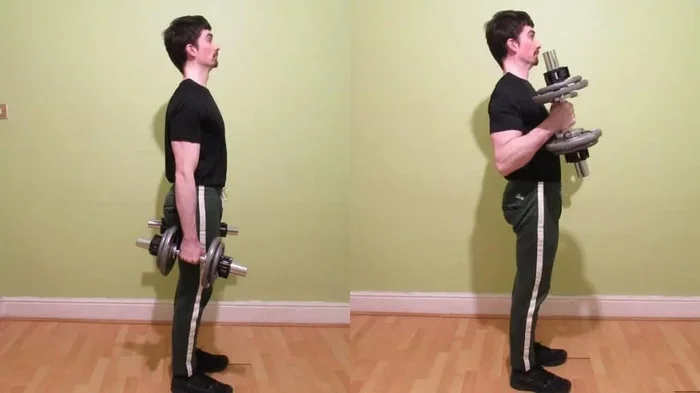
- Stand tall with your feet shoulder-width apart. Hold a dumbbell in each hand with your arms fully extended at your sides.
- Keep your palms facing each other. Your thumbs should point forward. This is the neutral grip that makes the hammer curl unique.
- Pin your elbows to your torso. Do not let them drift forward or swing backward during the movement.
- Curl one dumbbell up by flexing your elbow. Keep your wrist firm and do not let it bend backward.
- Squeeze at the top for one second. Feel the tension in your bicep and forearm.
- Lower the dumbbell slowly. Control the weight on the way down. Do not let it drop quickly.
- Repeat on the other arm. Alternate between sides for the desired number of reps.
Breathe out as you curl up. Breathe in as you lower the weight. This simple breathing pattern helps you maintain stability and power throughout each rep.
Common Mistakes to Avoid
Even though hammer curls look straightforward, many people make avoidable errors. Here are the most common ones:
- Swinging your body: Using momentum to lift the weight takes tension off your muscles. Keep your back straight and still.
- Flaring your elbows: Letting your elbows drift outward reduces bicep activation. Keep them tucked close to your sides at all times.
- Using too much weight: Heavy weights cause poor form. Choose a weight that lets you complete each rep with full control.
- Rotating your wrist: Your palm should stay facing inward the entire time. Wrist rotation changes the muscle focus and reduces effectiveness.
- Rushing the reps: Fast, jerky movements do not build muscle. Slow and controlled reps deliver better results.
Fixing these mistakes will immediately improve your hammer curl with dumbbells results. Focus on quality over quantity every time you train.
Hammer Curl Variations to Try
Once you master the basic form, you can add variety to keep your muscles guessing. Here are some effective variations.
Alternating Hammer Curl — This is the most common version. You curl one arm at a time, alternating between your left and right side. It lets you focus on each arm individually and helps fix strength imbalances.
Double Hammer Curl — Curl both dumbbells at the same time. This saves time and adds intensity by working both arms together. Use it when you want to finish your set quickly.
Incline Hammer Curl — Sit on an incline bench set to about 45 degrees. Let your arms hang back behind your torso. This stretched position creates more tension on the bicep and brachialis at the bottom of the movement.
Seated Hammer Curl — Sit on a flat bench with your back pressed firmly against the pad. This removes any leg drive and forces your arms to do all the work. It is a great way to isolate the target muscles.
You can find more effective arm exercises in our guide on How To Get Bigger Biceps At Home With Dumbbells to complement your hammer curl routine.
Muscles Worked by Hammer Curls
Understanding which muscles you are training helps you build smarter workout plans. Here is a breakdown of the primary and secondary muscles involved.
| Muscle | Role in Hammer Curl |
|---|---|
| Brachialis | Primary mover. It flexes the elbow and adds arm thickness. |
| Brachioradialis | Secondary mover. It powers the forearm and improves grip strength. |
| Biceps Brachii | Assists in elbow flexion and contributes to the bicep peak. |
| Forearm Muscles | Stabilize the wrist and handle throughout the movement. |
| Core Muscles | Engaged lightly to keep your torso upright and stable. |
The hammer curl is a compound forearm and upper arm exercise. It builds both size and functional strength. For a complete arm workout, pair hammer curls with tricep extensions and shoulder exercises.
Want a full list of the best dumbbell exercises? Check out What Are The Best Exercises To Do With Dumbbells for a complete overview.
Programming Hammer Curls Into Your Routine
Knowing how to perform the exercise is only half the battle. You also need to train it smartly. Here are some programming tips to get the best results.
For Beginners: Start with 3 sets of 10 to 12 reps on each arm. Use a light dumbbell and focus entirely on form. Rest for 60 seconds between sets.
For Intermediate Lifters: Try 4 sets of 8 to 12 reps. Add the incline variation once a week to increase the range of motion. Increase your weight gradually every two weeks.
For Advanced Lifters: Use drop sets or supersets. Pair hammer curls with How To Get Bigger Arms At Home With Dumbbells exercises like close-grip bench press or tricep kickbacks for a devastating arm finisher.
Train your arms 2 to 3 times per week. Allow at least 48 hours of rest between sessions. Your muscles grow during recovery, not during the workout itself.
Benefits of Hammer Curls Beyond Bigger Arms
Hammer curls offer benefits that go beyond just building bigger biceps. Here are some reasons to make them a regular part of your routine.
- Improved grip strength: The neutral grip position strengthens your forearms and hands. This helps with other lifts like deadlifts and rows.
- Better elbow stability: Strong brachialis and brachioradialis muscles support healthy elbow joints.
- Balanced arm development: Hammer curls complement standard curls. Together they create well-rounded arm size.
- Injury prevention: Strengthening the forearm muscles helps prevent common elbow and wrist injuries.
- Functional strength: The movement pattern mimics real-life pulling and lifting tasks.
These benefits make the hammer curl a valuable addition to any dumbbell workout routine. Whether your goal is aesthetics or functional strength, this exercise delivers.
For more forearm-focused training, visit our guide on How To Get Bigger Forearms At Home With Dumbbells to expand your routine even further.
Quick Tips for Better Results
Here are some quick tips that can instantly improve your hammer curl performance:
- Use a slow tempo. Take 2 seconds to curl up and 3 seconds to lower the weight.
- Squeeze hard at the top of each rep. This maximizes muscle contraction.
- Keep your shoulders down and back. Shrugging your shoulders reduces effectiveness.
- Train to near failure on your last set. This sends a strong growth signal to your muscles.
- Use chalk or lifting straps if your grip gives out before your muscles do.
Small adjustments like these make a big difference over time. Consistency and attention to detail are what separate good results from great results.
Conclusion
The hammer curl with dumbbells is a simple, effective, and essential exercise for anyone who wants bigger, stronger arms. It targets the brachialis, brachioradialis, and biceps in ways that standard curls cannot. With proper form, smart programming, and consistent effort, you will see real results in both size and strength.
Start with the basic form. Master it completely. Then add variations and progressive overload to keep challenging your muscles. Avoid the common mistakes we covered, and always prioritize quality reps over heavy weight.
Your arm journey starts with the right technique. Now that you know exactly how to do a hammer curl with dumbbells, it is time to pick up those weights and get to work. Your future, bigger, stronger arms will thank you.
Frequently Asked Questions
What muscles do hammer curls work?
Hammer curls primarily target the brachialis and brachioradialis muscles. These are located on the upper arm and forearm respectively. They also engage the biceps brachii and forearm stabilizers to a lesser degree.
Can beginners do hammer curls with dumbbells?
Absolutely. Hammer curls are one of the most beginner-friendly arm exercises. Start with a light weight and focus on mastering the neutral grip. Once you feel confident, you can gradually increase the load.
How often should I do hammer curls?
Training your arms 2 to 3 times per week is ideal for most people. Allow at least 48 hours of rest between sessions. This gives your muscles enough time to recover and grow stronger.
Are hammer curls better than regular bicep curls?
They are not better or worse. They target different muscles. Hammer curls focus on the brachialis and forearm, while regular curls emphasize the biceps brachii. A well-rounded arm routine includes both movements for balanced development.
What weight should I use for hammer curls?
Choose a weight that allows you to complete 10 to 12 reps with proper form. If you cannot maintain a controlled tempo, the weight is too heavy. Start lighter and increase gradually over several weeks.
Can I do hammer curls every day?
It is not recommended to train the same muscle group every day. Muscles need rest to recover and grow. Stick to 2 to 3 arm sessions per week with at least one rest day between them. This approach will give you the best long-term results.