How to Do a Row with a Barbell
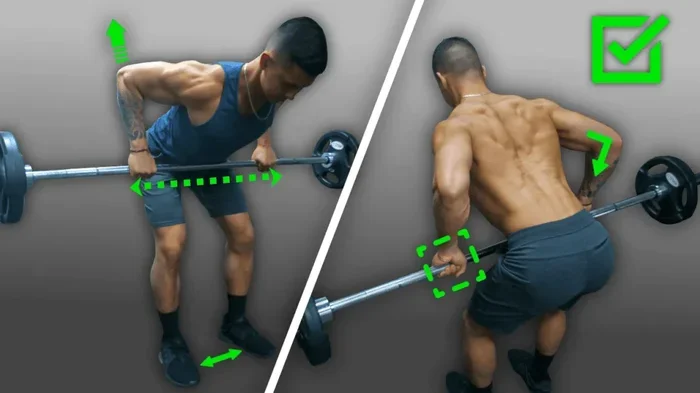
The barbell row is one of the best exercises for building a thick, strong back. This guide shows you the proper form, common mistakes, and variations to get the most out of every rep. Whether you are a beginner or experienced lifter, you will find clear tips to improve your rowing technique today.
The barbell row is a classic compound exercise that builds a powerful, well-defined back. It is a staple in strength training programs and a favorite among lifters who want to add thickness and width to their upper body. If you have been looking for a simple, effective way to train your back, the barbell row should be at the top of your list.
In this guide, we break down everything you need to know. You will learn the correct barbell row form, the muscles it targets, common mistakes, and how to vary the movement for different goals. We also share programming tips so you can start seeing real results in the gym.
Whether you are new to weight training or looking to refine your technique, this article gives you a complete picture. Let us dive into the details of one of the most rewarding back exercises you can do.
Key Takeaways
- Proper form is everything: A correct barbell row protects your lower back and maximizes muscle engagement.
- Multiple muscles work together: The barbell row targets your lats, rhomboids, traps, and biceps simultaneously.
- Variations keep things fresh: Try bent over, T bar, and chest supported rows to challenge your back differently.
- Avoid these common mistakes: Rounding your back, using too much weight, and shrugging too much can cause injury.
- Programming matters: Train barbell rows 1-2 times per week with controlled reps for steady strength gains.
- Progressive overload drives results: Gradually increase weight or reps over time to keep building back strength.
📑 Table of Contents
What Is a Barbell Row and Why Does It Matter?
A barbell row is a pulling exercise where you row a loaded barbell toward your torso while bent over. It is a compound exercise, meaning it works multiple joints and muscle groups at the same time. This makes it incredibly efficient for building overall upper body strength.
The movement is a cornerstone of many strength programs. It helps you build a stronger back, improve posture, and increase pulling power. Many athletes use the barbell row to supplement their main lifts like the deadlift and squat.
Back exercises like the barbell row also play a big role in injury prevention. A strong back supports your spine during daily movements and other heavy lifts. Adding rows to your routine can help balance out push movements like bench presses and overhead presses.
The Barbell Row as a Compound Movement
Unlike isolation exercises that target one muscle, the barbell row engages your entire posterior chain. Your lats, traps, rhomboids, rear delts, and biceps all fire during each rep. This makes it a time-efficient way to train your upper body.
The barbell row also builds grip strength because you have to hold a heavy weight for each set. Over time, this translates to better performance in other lifts and real-world activities like carrying groceries or moving furniture.
Muscles Worked During the Barbell Row
Understanding which muscles the barbell row targets helps you appreciate the exercise even more. Here is a breakdown of the primary and secondary muscles involved.
Primary Muscles
- Latissimus dorsi (lats): These are the large muscles on the sides of your back. They are the main drivers of the rowing motion.
- Rhomboids: Located between your shoulder blades, these muscles pull your shoulders back during each rep.
- Trapezius (mid and lower traps): These stabilize your shoulder blades and support scapular retraction.
Secondary Muscles
- Erector spinae: These muscles run along your spine and keep your torso stable throughout the movement.
- Biceps brachii: Your arms assist in pulling the barbell toward your body.
- Rear deltoids: These shoulder muscles help with the pulling motion and improve shoulder health.
- Forearms and grip muscles: They work hard to keep the barbell in your hands during every set.
Because so many muscles are involved, the barbell row is a fantastic upper body workout that saves time in the gym. You can train your entire back and arms in just a few sets.
Step-by-Step Barbell Row Form
Proper exercise form is the single most important factor in getting results and staying injury-free. Follow these steps carefully for every set.
Step 1: Set Up Your Stance
Stand with your feet shoulder-width apart. Your toes should point slightly outward. Keep a slight bend in your knees. This base gives you stability throughout the movement.
Step 2: Hinge at the Hips
Push your hips back and bend forward at the waist. Your torso should be at about a 45-degree angle to the floor. Keep your back straight and your core tight. Do not let your lower back round at any point.
Step 3: Grip the Barbell
Grab the barbell with an overhand grip, slightly wider than shoulder-width apart. Your hands should hang straight down from your shoulders. Wrap your thumbs fully around the bar for a secure hold.
Step 4: Pull the Barbell to Your Torso
Initiate the pull by driving your elbows back toward the ceiling. Lead with your elbows, not your hands. Row the barbell until it touches your lower chest or upper abdomen. Squeeze your shoulder blades together at the top of the movement.
Step 5: Lower the Barbell with Control
Slowly extend your arms and let the barbell return to the starting position. Control the descent for a full range of motion. Do not let the weight drop quickly.
Quick Tips for Better Form
- Keep your head in a neutral position. Do not look up or down excessively.
- Breathe out as you pull the barbell toward you.
- Breathe in as you lower the barbell back down.
- Avoid using momentum to swing the bar up.
- Focus on squeezing your back muscles, not just your arms.
Common Barbell Row Variations
Variety is the spice of training. Changing up your rowing technique prevents plateaus and keeps your workouts interesting. Here are some popular variations to try.
Bent Over Barbell Row
This is the classic version most people think of when they hear “barbell row.” You bend over at the hips with a slight knee bend and row the barbell from a standing position. This variation builds overall back thickness and is excellent for strength training.
If you want detailed cues for this version, check out our guide on How To Do A Bent Over Row With Barbell for a deeper breakdown of setup and execution.
Chest Supported Barbell Row
In this variation, you lie face down on an incline bench and row the barbell. The bench supports your chest and removes strain from your lower back. This is a great option for people with back issues or those who want to isolate the back muscles more.
T Bar Row
The T bar row uses a special bar or landmine attachment. You stand with your chest against a pad and row the handle toward your torso. This variation allows for a deep stretch and contraction of the back muscles. It is a favorite among bodybuilders looking for back thickness.
For a detailed walkthrough on this variation, see our article on How To Do T Bar Rows With A Barbell.
Single Arm Dumbbell Row
While not a barbell exercise, this variation is worth mentioning. You row a dumbbell with one arm at a time, often supported by a bench. It helps correct imbalances between your left and right sides and is a great accessory exercise.
| Variation | Best For | Difficulty Level |
|---|---|---|
| Bent Over Barbell Row | Overall back strength and thickness | Intermediate |
| Chest Supported Row | Lower back relief and isolation | Beginner |
| T Bar Row | Deep back stretch and contraction | Intermediate |
| Single Arm Dumbbell Row | Addressing muscle imbalances | Beginner |
Common Mistakes to Avoid
Even experienced lifters make mistakes with the barbell row. Avoiding these errors will help you get better results and stay safe.
Mistake 1: Rounding Your Lower Back
This is the most dangerous mistake you can make. When your lower back rounds, it places excessive stress on your spinal discs. Always maintain a neutral spine and brace your core before each rep.
Mistake 2: Using Too Much Weight
Lifting too heavy often leads to poor form and cheating reps. Choose a weight that allows you to complete each rep with full control. Focus on the mind-muscle connection rather than just moving the load.
If you are unsure about how much weight to use, our article on How Much Should I Be Able To Barbell Row can help you set realistic expectations.
Mistake 3: Shrugging Your Shoulders
Excessive shrugging shifts the work away from your back and toward your upper traps. Keep your shoulders pulled down and back throughout the movement. Think about squeezing a pencil between your shoulder blades.
Mistake 4: Using Momentum
Swinging the barbell up with your body takes the work off your back muscles. Each rep should be slow and deliberate. Pause briefly at the top to fully engage your back before lowering the weight.
Mistake 5: Neglecting the Eccentric Phase
The lowering portion of the rep is just as important as the pull. Control the barbell as you extend your arms. This eccentric phase builds more muscle and improves strength over time.
Expert Insight
Most coaches recommend keeping your reps between 6 and 12 for barbell rows. This rep range balances strength and muscle growth. If you can do more than 12 reps with good form, consider adding weight. If you cannot hit 6 reps, reduce the load.
How to Program Barbell Rows Into Your Routine
Knowing how to train barbell rows is just as important as knowing how to perform them. The right programming ensures consistent progress and reduces the risk of overtraining.
Frequency
Train barbell rows 1 to 2 times per week. This gives your back muscles enough time to recover between sessions. Your back is a large muscle group that needs adequate rest to grow.
Sets and Reps
For strength, aim for 3 to 5 sets of 4 to 6 reps with heavier weight. For muscle building, do 3 to 4 sets of 8 to 12 reps with moderate weight. For endurance and technique practice, try 2 to 3 sets of 12 to 15 reps with lighter weight.
Placement in Your Workout
Barbell rows work best as a compound movement early in your workout. Place them after your main lift (like squats or deadlifts) but before isolation exercises. This ensures your back muscles are fresh and you can lift with proper intensity.
Progressive Overload
Gradually increase the weight, reps, or sets over time. This principle, called progressive overload, is the key to continuous gains. Even adding 2.5 pounds per week adds up to significant strength improvements over months.
Quick Programming Tips
- Warm up your back with light rows or band pull-aparts before heavy sets.
- Rest 2 to 3 minutes between heavy sets for full recovery.
- Track your workouts in a journal or app to monitor progress.
- Pair barbell rows with push exercises like bench press for balanced upper body development.
- Listen to your body. If your lower back feels strained, reduce the weight or switch to a chest supported variation.
Benefits of the Barbell Row
The barbell row offers a wide range of benefits that go beyond just building a bigger back. Here are some of the key advantages.
- Improved posture: Strong back muscles counteract the effects of sitting and hunching over a desk all day.
- Better athletic performance: A strong back improves your pulling power in sports like wrestling, rowing, and climbing.
- Increased grip strength: Holding heavy weights during rows strengthens your hands and forearms.
- Balanced physique: Rows complement pressing movements and help create a proportional, muscular physique.
- Injury prevention: Strengthening the muscles around your shoulders and spine reduces the risk of common injuries.
The barbell row truly is a multi-benefit exercise that belongs in almost every training program. It is simple, effective, and scalable for all fitness levels.
Final Thoughts on the Barbell Row
The barbell row is one of the most effective back exercises you can perform. It builds strength, muscle, and functional fitness in a single movement. By following the proper form outlined in this guide, you can train safely and effectively for years to come.
Remember to focus on quality over quantity. Every rep should be controlled and deliberate. Avoid the common mistakes discussed above, and do not be afraid to experiment with variations to keep your training fresh.
Start adding barbell rows to your routine this week. Your back will thank you. With consistency and patience, you will notice improved strength, better posture, and a more defined physique. The barbell row is a timeless exercise for a reason, and now you have everything you need to make it work for you.
Frequently Asked Questions
What is the difference between a barbell row and a bent over row?
The terms are often used interchangeably, but “bent over row” typically refers to the classic standing barbell row with a slight forward bend. The barbell row is the broader category that includes variations like chest supported rows and T bar rows. Both target similar muscles and share the same basic pulling motion.
How heavy should I go when barbell rowing?
Start with a weight you can control for 8 to 12 reps with perfect form. As your strength improves, gradually increase the load. A good rule of thumb is to choose a weight where your last two reps of each set feel challenging but still achievable without compromising your form.
Can barbell rows help with lower back pain?
When performed correctly, barbell rows strengthen the muscles that support your spine, which can help reduce lower back pain over time. However, if you already have a back injury, consult a healthcare professional before attempting this exercise. Start with lighter weights and consider the chest supported variation for added spinal protection.
How often should I do barbell rows?
Training barbell rows once or twice per week is sufficient for most people. Your back muscles need 48 to 72 hours to recover between sessions. If you are training full body, you can include rows in two separate sessions per week for optimal results.
Are barbell rows better than dumbbell rows?
Both exercises have unique benefits. Barbell rows allow you to lift heavier loads, which is great for building raw strength. Dumbbell rows offer a greater range of motion and help correct side-to-side imbalances. Ideally, include both in your routine for well-rounded back development.
Do barbell rows build a wider back?
Barbell rows primarily build back thickness and width by targeting the latissimus dorsi and surrounding muscles. For a wider appearance, combine barbell rows with pulling exercises like pull-ups and lat pulldowns. Consistency and progressive overload are the keys to achieving a wider, more defined back over time.
=== CONCLUSION ===
The barbell row is a foundational exercise that deserves a permanent spot in your training program. It builds a strong, thick back, improves posture, and enhances overall upper body strength. With the proper form, smart programming, and consistent effort, you will see noticeable improvements in both your gym performance and everyday function.
Use the tips and variations from this guide to keep your rows fresh and effective. Avoid the common mistakes that hold most people back, and always prioritize quality over quantity. Your back is one of the most important muscle groups in your body, and the barbell row is one of the best ways to train it.
Start today, stay consistent, and enjoy the process of building a stronger, more powerful back with the barbell row.